
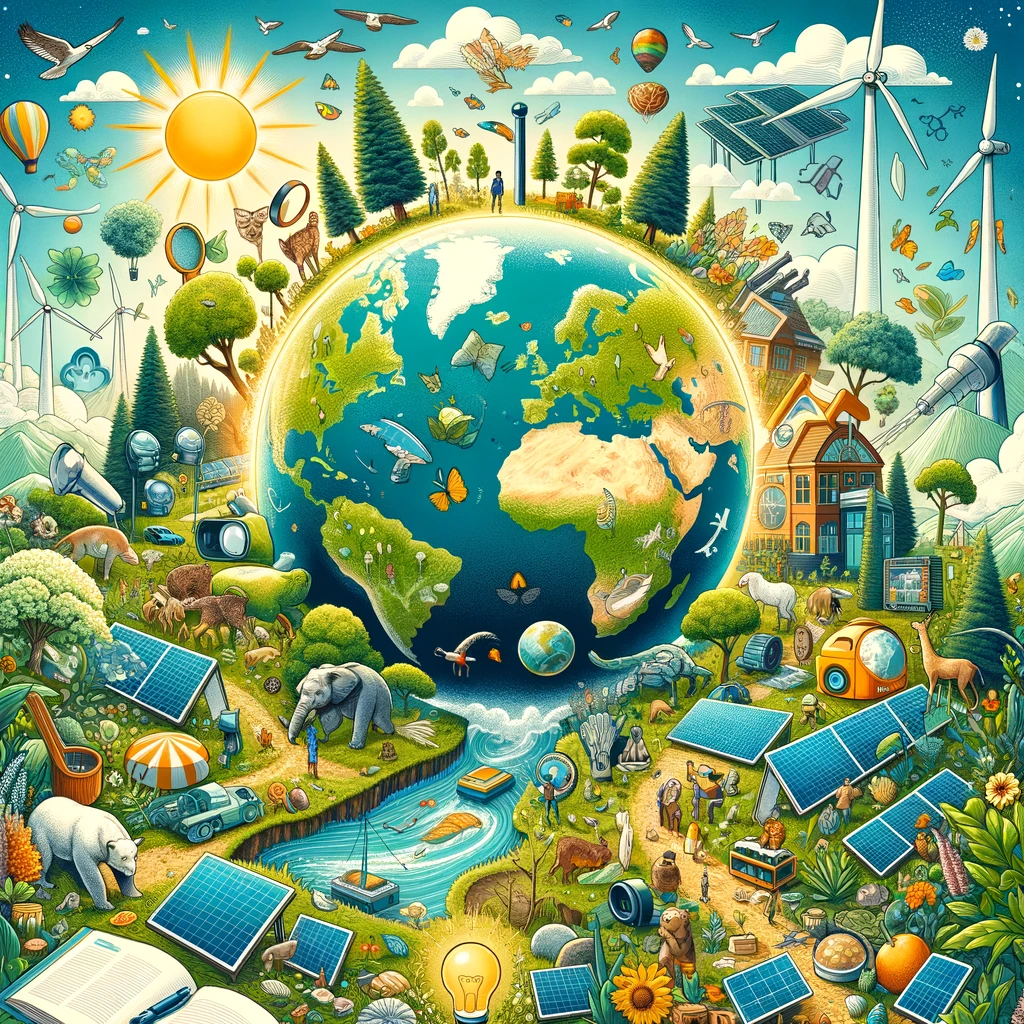
Earth Day, observed on April 22nd each year, is a global event dedicated to environmental protection and awareness. It’s a day when communities around the world engage in activities and discussions about the health of our planet. For English as a Second Language (ESL) learners, Earth Day presents a unique opportunity to expand vocabulary and knowledge in the realm of environmental conservation. This article explores essential environmental terms and phrases, providing a platform for ESL learners to participate in these crucial conversations.
The Importance of Environmental Vocabulary in ESL Education
Understanding environmental vocabulary is not just about language proficiency; it’s about being an informed global citizen. As climate change and environmental issues become increasingly prominent, the ability to discuss these topics in English is vital. ESL learners who grasp this vocabulary can engage in meaningful dialogues, comprehend global news, and contribute to the sustainability movement.
Key Environmental Vocabulary for ESL Learners
- Climate Change: A long-term change in the Earth’s overall temperature with massive and permanent ramifications.
- Global Warming: An increase in Earth’s average surface temperature due to rising levels of greenhouse gases.
- Ecosystem: A biological community of interacting organisms and their physical environment.
- Biodiversity: The variety of life in the world or in a particular habitat or ecosystem.
- Renewable Energy: Energy from a source that is not depleted when used, such as wind or solar power.
- Sustainability: The ability to be maintained at a certain rate or level, particularly concerning the environment.
- Recycling: The process of converting waste materials into new materials and objects.
- Conservation: The action of conserving something, in particular, preservation, protection, or restoration of the natural environment.
- Carbon Footprint: The total amount of greenhouse gases produced to directly and indirectly support human activities, usually expressed in equivalent tons of carbon dioxide (CO2).
- Deforestation: The action of clearing a wide area of trees.
Activities and Games to Learn Environmental Vocabulary
A. Vocabulary Matching Games
Create flashcards with environmental words and their definitions. Learners can match words to their corresponding meanings, enhancing retention.
B. Role-play Scenarios
Simulate situations where learners must use environmental vocabulary. Scenarios could include a debate on climate change, planning a sustainable city, or discussing ways to reduce carbon footprint.
C. Word Creation Puzzles
Use letters from long environmental words (like ‘biodiversity’) to create as many smaller words as possible. This activity enhances spelling and broadens vocabulary.
D. Environmental Vocabulary in Context
Incorporate vocabulary words into sentences or paragraphs. This activity helps learners understand how these terms are used in real-life contexts.
Incorporating Earth Day Themes in ESL Curriculum
1. Themed Reading Comprehension
Select texts that focus on environmental topics. This method not only introduces new vocabulary but also improves reading comprehension skills.
2. Discussion and Debate
Encourage learners to discuss environmental issues using the newly learned vocabulary. This fosters critical thinking and language skills.
3. Writing Assignments
Ask learners to write essays or reports on environmental topics. This exercise aids in mastering new vocabulary and expressing complex ideas in English.
4. Guest Speakers
Invite environmental experts to speak in ESL classes. This interaction provides learners with a real-life context for using their environmental vocabulary.
Understanding Cultural Contexts
Understanding environmental issues also involves cultural awareness. Different cultures may have varying perspectives on sustainability and conservation. ESL educators should encourage learners to share their own cultural insights on environmental practices, fostering a multicultural understanding of environmental issues.
Advanced Environmental Vocabulary for ESL Learners
As learners advance, they can delve into more complex terms:
- Carbon Neutral: Having no net release of carbon dioxide into the atmosphere.
- Bioaccumulation: The accumulation of substances, such as pesticides, in an organism.
- Geothermal Energy: Heat energy generated and stored in the Earth.
- Hydroponics: The process of growing plants in sand, gravel, or liquid, with added nutrients but without soil.
- Greenhouse Effect: The trapping of the sun’s warmth in the planet’s lower atmosphere due to the greater transparency of the atmosphere to visible radiation from the sun than to infrared radiation emitted from the planet’s surface.

Teaching Strategies for Environmental Vocabulary in ESL
Interactive Teaching Techniques
- Group Discussions: Encourage group discussions on topics like recycling, renewable energy, and climate change. This not only helps in using the vocabulary in a practical setting but also develops speaking skills.
- Field Trips: Organize visits to local environmental organizations or parks. These trips provide a real-world context for the vocabulary.
- Use of Multimedia: Integrate videos and documentaries related to environmental issues. Visual aids can be extremely effective in helping students understand and remember new words.
- Project-Based Learning: Assign projects where students research an environmental issue and present their findings. This approach combines language learning with real-world problem-solving skills.
Assessment and Feedback
- Vocabulary Tests: Regular quizzes and tests can help in assessing the retention of environmental vocabulary.
- Peer Review: Encourage students to give feedback on each other’s use of vocabulary in written and spoken forms. This peer interaction can be very beneficial.
- Self-Assessment: Ask students to reflect on their learning and identify areas where they need more practice.
- Oral Presentations: Assess students’ proficiency through oral presentations on environmental topics, focusing on the use of relevant vocabulary.
The Role of Technology in Learning Environmental Vocabulary
- Language Learning Apps: Utilize apps that focus on vocabulary building. Many apps are available that can be tailored to include specific sets of vocabulary, like environmental terms.
- Online Forums and Discussion Boards: Encourage participation in online communities where learners can discuss environmental issues in English.
- Virtual Reality (VR) and Augmented Reality (AR): These technologies can offer immersive experiences, like virtual field trips to different ecosystems, enhancing the learning experience.
Celebrating Earth Day in the ESL Classroom
- Organize an Earth Day Event: Plan activities like planting trees, cleaning up a local park, or a poster-making competition using environmental vocabulary.
- Guest Lectures or Workshops: Invite environmentalists or experts to conduct workshops or talks in English, providing an authentic learning experience.
- Earth Day Pledge: Have students make pledges about how they will contribute to the environment using the new vocabulary they have learned.
Conclusion
Incorporating environmental vocabulary into ESL education is not just about language acquisition; it’s about creating informed and responsible global citizens. As our world faces increasing environmental challenges, the ability to communicate about these issues becomes ever more critical. By integrating these words and concepts into ESL learning, we equip students with the tools they need to engage in meaningful discussions about our planet’s future.
This Earth Day, let us commit to enriching our ESL curriculum with environmental vocabulary, fostering a generation of learners who are not only proficient in English but are also advocates for a sustainable and healthy planet.





