
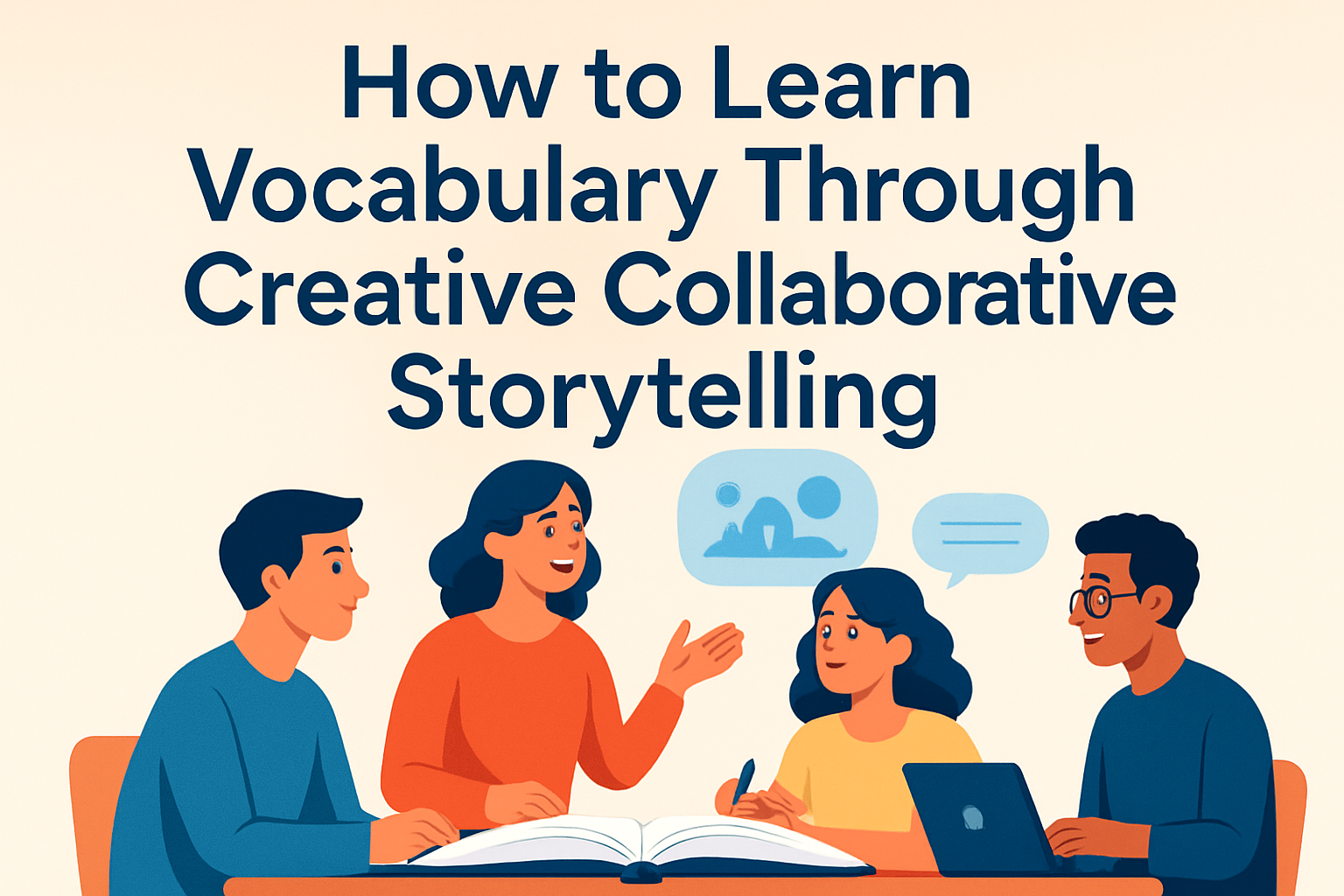
Creative collaborative storytelling is an innovative method for learning vocabulary that transforms the mundane act of memorizing words into an engaging and interactive experience. This approach involves multiple participants working together to craft a story, whereby each member adds sentences or paragraphs, incorporating designated vocabulary terms. Key terms include “creative storytelling,” which refers to the process of narrating stories rich in imagination and expressiveness, and “collaborative,” which emphasizes joint participation and effort. But why does this matter? Traditional vocabulary learning often relies on rote memorization and repetitive tasks which can be uninspiring, particularly for those who struggle to find motivation. Collaborative storytelling employs creativity, teamwork, and narrative pacing, making the learning process more dynamic and memorable. This technique is particularly effective for language learners as it provides context to words, enlivens the learning sessions, and enhances retention through association and narrative flow.
The Mechanics of Creative Collaborative Storytelling
At the heart of this technique is the creation of a compelling narrative that integrates vocabulary learning with creativity. The process usually starts with a group of learners selecting or being given a list of vocabulary words to incorporate into their story. Each participant is responsible for crafting a part of the story that includes these vocabulary words, ensuring that the terms are used accurately and effectively within the context of the narrative. This requires not just a good grasp of the words’ meanings, but also an understanding of how those words interact with others in the context of their surroundings.
Example of Creative Collaborative Storytelling in Practice
Consider a group of students learning English as a second language. They might be provided with a list of vocabulary words related to emotions, such as “elated,” “melancholy,” “apathetic,” and “jubilant.” Their task could be to weave a tale around a character experiencing various life scenarios that elicit these emotions. One student might start the story with a paragraph about the character feeling jubilant at a festival, while another student might develop a scene where the character becomes melancholic after receiving some bad news. Through this exercise, students come to understand not only the dictionary definitions of the words but also their connotations and appropriate usage. The storytelling process makes the entire experience more relatable and memorable.
Implementing in Classroom or Group Settings
Educators and facilitators can implement creative collaborative storytelling in various settings, from traditional classrooms to online learning environments. Begin by creating or choosing sets of vocabulary words that align with the learners’ current skill levels. These can be compiled into lists categorized by themes such as emotions, activities, or settings. Facilitate the storytelling session by outlining the framework: designate the length of the narratives, the specific format (whether it will be a written or oral story), and the number of vocabulary terms that must be included. Encouraging feedback and group critique sessions after the storytelling facilitates deeper learning and better understanding.
Benefits of Contextual Learning
One significant advantage of this method is the contextual learning it offers. Vocabulary words are not learned in isolation but are examined in relation to the story’s characters, plot, and setting. This context helps embed the words in meaningful scenarios, thereby improving retention. For example, understanding the difference between “frigid” and “chilly” becomes clearer when describing a character’s experience in a bitter winter setting compared to a cool autumn afternoon. Stories create emotional and cognitive connections that are hard to establish through rote memorization alone.
Enhancing Critical Thinking and Creativity
Collaborative storytelling also stimulates critical thinking and creativity. Participants are not only learning vocabulary but also engaging in the creative process of story-making, which requires them to think critically about plot development, character arcs, and narrative coherence. Constructing and refining a story necessitates a deeper analysis of language structure and word function, reinforcing the learners’ understanding of syntax and grammar. Furthermore, the collaborative aspect fosters an environment where learners can share ideas, receive diverse perspectives, and engage in problem-solving activities.
Reducing Language Anxiety and Boosting Confidence
Collaborative storytelling in learning vocabulary can significantly reduce language anxiety, a common barrier faced by language learners. In a shared creative space, learners often feel more comfortable and less pressured than in traditional testing environments. As they contribute to a shared narrative, they practice language skills in a supportive setting, which boosts their confidence. Success in using new vocabulary correctly in a story can bolster learners’ belief in their language capabilities, encouraging them to experiment more with language use in future endeavors.
Technical Aspects and Tools
Today, technology offers numerous tools that can facilitate creative collaborative storytelling. Online platforms like Google Docs provide a shared space for participants to co-author stories, offering real-time feedback and editing suggestions. Language learning apps may incorporate storytelling features, enabling users to be both story creators and readers, thus expanding vocabulary through immersion in stories written by others. Furthermore, digital platforms can easily integrate multimedia elements such as images and audio to deepen the storytelling experience, making vocabulary learning even more dynamic and enriching.
| Context | Vocabulary Word | Example Sentence |
|---|---|---|
| Emotions | Elated | She felt elated when she heard the exciting news about her promotion. |
| Weather | Frigid | The frigid air of the early morning chilled her to the bone as she waited for the bus. |
| Character Description | Brave | The brave knight ventured into the cave, undeterred by the ominous growls emanating from within. |
Real-World Impact and Long-term Benefits
The real-world impact of learning vocabulary through creative collaborative storytelling extends beyond language acquisition. It aids in the development of interpersonal skills, such as effective communication and teamwork. As participants negotiate plot points and provide constructive feedback, they hone their ability to articulate thoughts and consider alternative viewpoints. Moreover, this method fundamentally alters learners’ relationships with language, molding them into active users who engage with words thoughtfully and with reverence for linguistic nuance. This practice does not terminate in the classroom; it fosters a lifelong love for storytelling and language exploration, evidenced in personal, academic, and professional settings.
Summing Up the Technique
To sum up, creative collaborative storytelling is a profoundly effective method of vocabulary acquisition. It leverages the human affinity for stories, marries it with the cognitive demands of language learning, and promotes a collaborative environment conducive to engagement and creativity. Through storytelling, learners engage with vocabulary in a lively and context-rich manner, which enhances retention, aids in the understanding of word usage, and emboldens learners with newfound confidence in their language skills.
Encouraging Embrace of Creative Vocabulary Learning
For educators, language enthusiasts, or anyone eager to learn vocabulary, it is time to step away from rigid lists and monotonous drills. Embrace this creative, collaborative approach. Create or join a storytelling group, set interesting vocabulary challenges, and let your imagination explore the boundaries of language. The world of vocabulary is rich with possibilities, and creative collaborative storytelling offers a bridge to explore this wondrous landscape. Dive into the art of storytelling today, and watch your vocabulary grow in an enriching and memorable way.
Frequently Asked Questions
1. What exactly is creative collaborative storytelling?
Creative collaborative storytelling is a dynamic and interactive approach to learning vocabulary by engaging a group of participants in crafting a story together. Each participant contributes sentences or paragraphs, weaving designated vocabulary words into their narratives. It’s an approach that breathes life into the dry task of memorizing words by turning it into a lively group activity. This method not only enhances vocabulary through context but also fosters creativity, teamwork, and dynamic communication among learners.
2. How does creative collaborative storytelling help in learning vocabulary more effectively?
The primary advantage of creative collaborative storytelling in vocabulary learning is the contextual learning environment that it creates. Words are not just isolated terms to be memorized, but elements of a broader, imaginative narrative. Through this method, learners can better grasp the meanings and nuances of vocabulary by using them in context. This both aids in retention and deepens their understanding. When learning new words, storytelling encourages cognitive processing that makes new vocabulary terms more memorable.
3. What are some steps to implement creative collaborative storytelling in a vocabulary learning session?
To start with creative collaborative storytelling, you can follow these steps:
1. Assemble a group of learners and decide on a theme or main plot for the story to ensure that everyone starts on the same page.
2. Identify the vocabulary words you want to focus on. Ensure these are shared with all participants.
3. Begin the storytelling with one participant starting the story, incorporating one of the designated vocabulary words.
4. Continue the story, passing it around so each participant adds a segment, each time using another of the designated vocabulary words.
5. Encourage creativity and imagination, allowing the story to naturally and organically take shape.
6. Once complete, review the story. Discuss how each vocabulary term was used, addressing any misconceptions and reinforcing correct usage.
This process not only enhances vocabulary retention but also encourages teamwork and improves writing skills.
4. Can storytelling really be engaging for learners of all ages?
Absolutely! Storytelling is a timeless and universal form of communication enjoyed by people of all ages, and this makes it an effective tool for learning. Its power lies in its ability to engage emotion, imagination, and intellect simultaneously. For younger learners, the imaginative aspect of storytelling can turn learning vocabulary into a game-like experience, while adults can appreciate the creative and collaborative elements that make the learning process more engaging and enjoyable. With storytelling, you can cater to different age groups by adjusting the story’s complexity and themes, ensuring that all participants stay interested and involved.
5. What are some challenges one might face with collaborative storytelling, and how can they be overcome?
Like any collaborative activity, creative collaborative storytelling has its challenges. One common issue is unequal participation, where some may feel shy or unsure of their language abilities, while others might dominate the storytelling. To overcome this, it’s important to create an inclusive and supportive environment. Set clear guidelines that encourage participation and listening. Teachers or facilitators can draw in quieter participants by encouraging small contributions to start. Another challenge might be staying on task; storytellers can become sidetracked or forget the assigned vocabulary words. To address this, keep a visible list of vocabulary on hand, and provide gentle reminders or prompts as needed. With patience and practice, these challenges can be skillfully managed, leading to an enjoyable and productive learning experience for everyone involved.





