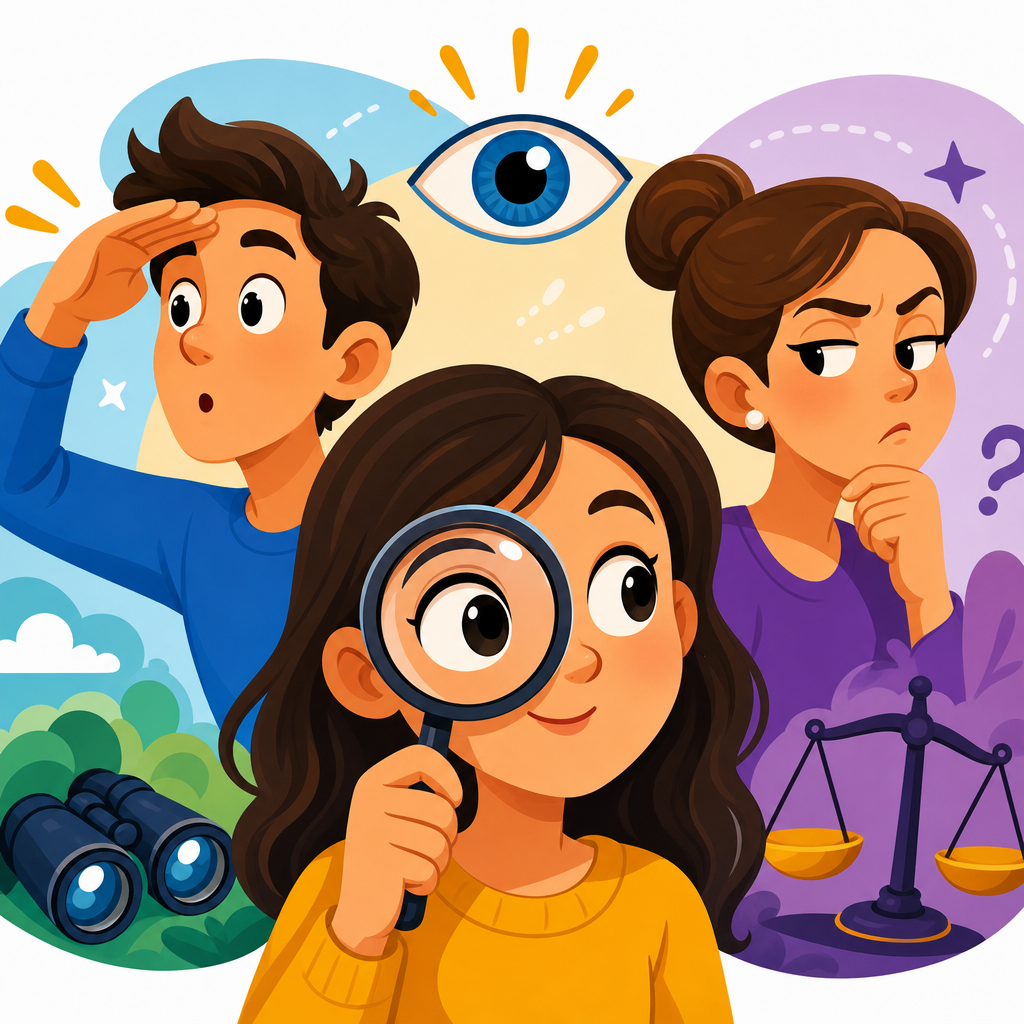
Eye idioms are some of the most vivid expressions in English because they turn a physical act—looking—into a social meaning about attention, judgment, and curiosity. When someone says “keep an eye on it,” “see eye to eye,” or “have an eye for detail,” the speaker is not really describing vision. They are using a compact phrase to talk about focus, evaluation, trust, suspicion, taste, or interest. In everyday conversation, business meetings, classrooms, and media commentary, these idioms appear constantly, and small differences in wording can change the tone from supportive to critical.
That is why eye idioms matter for serious learners. They help you understand implied meaning, not just dictionary definitions. In my work with English learners, I have seen people understand every individual word in a sentence and still miss the speaker’s intention because the phrase was idiomatic. “Turn a blind eye,” for example, is not about eyesight problems; it means deliberately ignoring something. “In the public eye” does not describe a literal eye at all; it means being visible to the public. Learning these expressions improves listening accuracy, reading comprehension, and natural speaking because you begin to hear how English packages judgment and emotion into short, memorable images.
This article focuses on eye idioms that cluster around three common functions. First, some idioms express attention: watching carefully, noticing details, or failing to notice what matters. Second, others express judgment: agreement, taste, fairness, criticism, or deliberate avoidance. Third, a large group expresses curiosity: interest, investigation, and the urge to know more. Understanding those categories makes the idioms easier to remember and easier to use appropriately. It also prevents the common mistake of translating them word for word from another language, which often produces unnatural English.
Eye idioms for attention: watching, noticing, and staying alert
The most practical eye idioms describe attention. “Keep an eye on” means watch something carefully for a period of time. You can say, “Can you keep an eye on my bag while I order coffee?” In offices, managers say, “Keep an eye on the budget,” meaning monitor it for changes or risks. The phrase is flexible because it works for people, objects, deadlines, performance, and even developing situations. A close relative is “have your eye on,” which usually means your attention is already directed toward something specific: “We have our eye on a new supplier.”
Another high-value idiom is “catch someone’s eye.” It means attract attention visually. A red sign in a shop window catches your eye; a typo on a contract catches your eye because it stands out. In presentations, I often tell learners that this idiom is useful because it can be positive, neutral, or slightly romantic depending on context. “An unusual headline caught my eye” is neutral. “She caught his eye across the room” may suggest attraction. The core idea is the same: something becomes noticeable immediately.
“With an eye to” is more formal and means with attention to a future purpose. A company may redesign packaging with an eye to reducing waste. A student may choose electives with an eye to graduate school admissions. This phrase appears often in journalism and business writing because it shows intention and planning. If you want a broader idiom foundation for body-part expressions, see the main guide on hand idioms in English, which complements eye idioms well.
Some attention idioms warn that a person is missing obvious information. “Have your eyes glued to” means look fixedly at something, often a screen: “The kids had their eyes glued to the tablet.” “Not take your eyes off” suggests intense concentration or concern: “Don’t take your eyes off the pot.” By contrast, “there’s more to it than meets the eye” means the visible facts are incomplete. Investigators, journalists, and teachers use it when a simple explanation is misleading. It is especially useful because it trains learners to hear hidden complexity in spoken English.
Eye idioms for judgment: agreement, taste, criticism, and selective blindness
Eye idioms often move from simple seeing to evaluation. “See eye to eye” means agree fully. If two business partners see eye to eye on pricing, they share the same view. This idiom is common in workplace English because it sounds more natural than repeatedly saying “agree.” Its opposite is usually expressed with other phrases, but speakers may say, “We don’t exactly see eye to eye on that issue,” which softens disagreement while keeping the message clear. It is useful in professional settings because it is direct without sounding aggressive.
“Have an eye for” describes good judgment or sensitivity in a specific area. A designer has an eye for color. An editor has an eye for inconsistency. A recruiter has an eye for talent. The phrase implies reliable discernment developed through experience, not random preference. I encourage learners to notice that this idiom is praise. When you say someone has an eye for detail, you are saying they detect subtle but important differences. In hiring, management, and creative industries, that is a strong compliment.
By contrast, “give someone the eye” can imply a meaningful look, often suspicious, flirtatious, or disapproving depending on context and tone. Because the meaning shifts, learners should use it carefully. “The security guard gave me the eye” suggests scrutiny or suspicion. “He was giving her the eye at dinner” may suggest romantic interest. This idiom depends heavily on situation, facial expression, and relationship between speakers, so it is better understood passively before using it actively.
One of the most important judgment idioms is “turn a blind eye.” It means intentionally ignore wrongdoing, risk, or an unpleasant fact. Regulators who turn a blind eye to safety violations are not simply unaware; they choose not to act. That distinction matters. The idiom carries moral criticism and is common in news reporting, legal commentary, and workplace complaints. A related expression, “in the blink of an eye,” is not about judgment but speed; learners sometimes confuse the two because both contain eye imagery. Memorizing them in context prevents that error.
| Idiom | Core meaning | Typical context | Example |
|---|---|---|---|
| see eye to eye | agree completely | work, relationships | We see eye to eye on hiring standards. |
| have an eye for | show strong judgment | design, editing, recruiting | She has an eye for clean layout. |
| turn a blind eye | deliberately ignore | ethics, compliance, politics | The manager turned a blind eye to overtime abuse. |
| give someone the eye | look meaningfully | social interaction | The waiter gave us the eye when we stayed late. |
Eye idioms for curiosity: interest, investigation, and wanting to know more
Curiosity-related eye idioms are common because looking is the first step in learning. “Have an eye on” can signal interest as well as attention: “She has her eye on a promotion” or “They have their eye on the house next door.” In these cases, the phrase means desire combined with observation. You are not just watching; you are considering a future move. It is especially common in real estate, shopping, and career conversations.
“Open someone’s eyes” means make them understand something they did not realize before. A documentary may open your eyes to food waste. Working abroad may open your eyes to communication differences. This idiom is powerful because it combines information with perspective change. When learners use it, I advise them to reserve it for meaningful insight, not trivial facts. “That article opened my eyes to hidden bank fees” sounds natural; “The menu opened my eyes to pizza toppings” sounds exaggerated.
Another useful phrase is “keep your eyes peeled,” which means stay alert and look carefully for something expected. Event staff keep their eyes peeled for fake tickets. Drivers keep their eyes peeled for detour signs. The expression is informal but common, especially in spoken English. “Keep your eyes open” is slightly more neutral and broadly interchangeable, though “peeled” adds a stronger sense of active searching. Both are valuable when giving instructions.
Finally, “the apple of someone’s eye” shows affectionate attention rather than investigation. It means a person or thing is especially cherished. Parents may call a child the apple of their eye; founders may use it about a flagship project. Although older in style, it remains widely understood. For learners, its value lies in recognizing tone: it is warm, personal, and emotionally positive. Used alongside sharper idioms like “turn a blind eye” or “give someone the eye,” it demonstrates how eye expressions can move across very different emotional registers.
How to use eye idioms naturally without sounding forced
The key to mastering eye idioms is not memorizing a long list; it is matching each phrase to a communicative purpose. Use “keep an eye on” for monitoring, “catch your eye” for quick notice, “see eye to eye” for agreement, “have an eye for” for skilled judgment, and “keep your eyes peeled” for active searching. That functional grouping reflects how fluent speakers actually retrieve idioms. Corpus evidence from major learner dictionaries such as Cambridge and Collins also shows that these phrases recur in stable patterns, which is why collocation matters so much.
A second rule is to notice register. “With an eye to” suits reports, proposals, and analytical writing. “Keep your eyes peeled” fits speech and informal emails. “Turn a blind eye” is strong and often accusatory, so it should be used carefully in professional settings unless you intend that force. I have also found that learners improve faster when they collect one authentic example for each idiom from a news article, podcast transcript, or workplace email. Real context teaches tone better than isolated definition lists.
Eye idioms make English more precise because they compress complex social meaning into memorable phrases. They tell you whether someone is attentive, perceptive, indifferent, aligned, suspicious, or intrigued. That is their real value. Learn them by function, study them in context, and practice them in short sentences you might actually say. Start with five core idioms—“keep an eye on,” “catch your eye,” “see eye to eye,” “have an eye for,” and “keep your eyes peeled”—then add others as you encounter them. With steady exposure, these expressions stop feeling figurative and start feeling natural.
Frequently Asked Questions
What are eye idioms, and why are they so common in English?
Eye idioms are expressions that use the idea of seeing or looking to communicate something beyond literal vision. In most cases, they describe attention, judgment, curiosity, agreement, suspicion, taste, or awareness rather than the physical act of using the eyes. Phrases such as “keep an eye on,” “see eye to eye,” “catch someone’s eye,” and “have an eye for detail” are all examples of this pattern. They are common because sight is one of the most immediate and powerful human experiences, so English naturally uses it as a metaphor for understanding and social behavior.
These idioms are especially useful because they compress complex meanings into short, memorable phrases. Instead of saying “please monitor this situation carefully,” a speaker can simply say “keep an eye on it.” Instead of explaining that two people share the same opinion, English offers “see eye to eye.” That efficiency makes eye idioms practical in everyday conversation, professional settings, journalism, and storytelling. They are vivid, flexible, and easy for listeners to understand once the figurative meaning is familiar.
Do eye idioms usually refer to attention, judgment, or curiosity?
Yes, and that is one reason they are so versatile. Many eye idioms fall into one of those three broad categories, even though some overlap. Idioms about attention include expressions like “keep an eye on,” “have all eyes on,” and “with an eye to,” all of which suggest focus, monitoring, or purposeful awareness. These are common in workplaces, classrooms, parenting, and sports because they help describe where concentration is directed.
Idioms about judgment often involve evaluation, taste, or agreement. For example, “have an eye for detail” suggests strong observational skill, while “have an eye for quality” or “have an eye for design” points to refined judgment. “See eye to eye” moves into the area of shared perspective, meaning two people agree or understand each other clearly. Curiosity appears in idioms such as “cast an eye over,” “have one’s eye on,” or expressions that imply interest, watchfulness, or quiet investigation. In real usage, these categories blend together, which is part of what makes eye idioms so expressive.
What does “see eye to eye” really mean, and how is it used correctly?
“See eye to eye” means to agree fully or to share the same view on a subject. It usually refers to opinions, values, plans, or interpretations rather than literal observation. If coworkers see eye to eye on a strategy, they are aligned. If parents and teachers do not see eye to eye on discipline, they disagree about the best approach. The idiom is especially common when discussing relationships, teamwork, negotiation, and decision-making.
It is most often used in sentences about whether agreement exists or does not exist. For example, “We see eye to eye on most issues” means there is strong agreement, while “They don’t always see eye to eye” suggests recurring differences. The phrase sounds natural in both formal and informal English, which makes it highly useful. It is important not to interpret it literally. A speaker using this idiom is talking about shared understanding, not the direction of anyone’s gaze. Because it is so widely recognized, it works well in speech, writing, and professional communication.
How is “keep an eye on” different from other eye idioms?
“Keep an eye on” is one of the most practical and frequently used eye idioms because it expresses active attention and responsibility. It means to watch, monitor, or supervise something carefully. The tone can range from casual to serious depending on context. A parent might say, “Keep an eye on the kids,” a manager might say, “Keep an eye on the numbers,” and a friend might ask, “Can you keep an eye on my bag?” In every case, the idea is not just seeing but staying alert and ready to respond if needed.
What makes this idiom different from many others is its strong sense of ongoing oversight. “See eye to eye” is about agreement, “catch someone’s eye” is about attracting attention, and “have an eye for detail” is about skill in noticing things. By contrast, “keep an eye on” implies continuous watchfulness. It often carries trust as well, because the speaker is assigning someone the job of noticing problems early. That is why it appears so often in business, caregiving, security, and daily life. It is direct, flexible, and immediately understandable.
How can learners use eye idioms naturally without sounding forced?
The best way to use eye idioms naturally is to match each expression to the context where native speakers actually use it. Start with the most common and useful ones, such as “keep an eye on,” “see eye to eye,” “catch someone’s eye,” and “have an eye for detail.” Learn them as complete phrases rather than trying to build them word by word. That helps you remember both the meaning and the grammar. For example, “keep an eye on” is usually followed by a person, object, or situation, while “see eye to eye” is often followed by “with” when naming the other person.
It also helps to notice tone. Some eye idioms are neutral and professional, while others feel more conversational. In meetings, “We don’t fully see eye to eye yet” sounds polished and diplomatic. In everyday speech, “Can you keep an eye on this for me?” sounds natural and friendly. Reading articles, listening to interviews, and watching workplace or classroom conversations can show how these expressions appear in real settings. The key is moderation. Using one well-chosen idiom can make your English sound vivid and fluent, but using too many in the same paragraph can feel unnatural. Focus on clarity first, and let the idiom support the meaning rather than dominate it.