
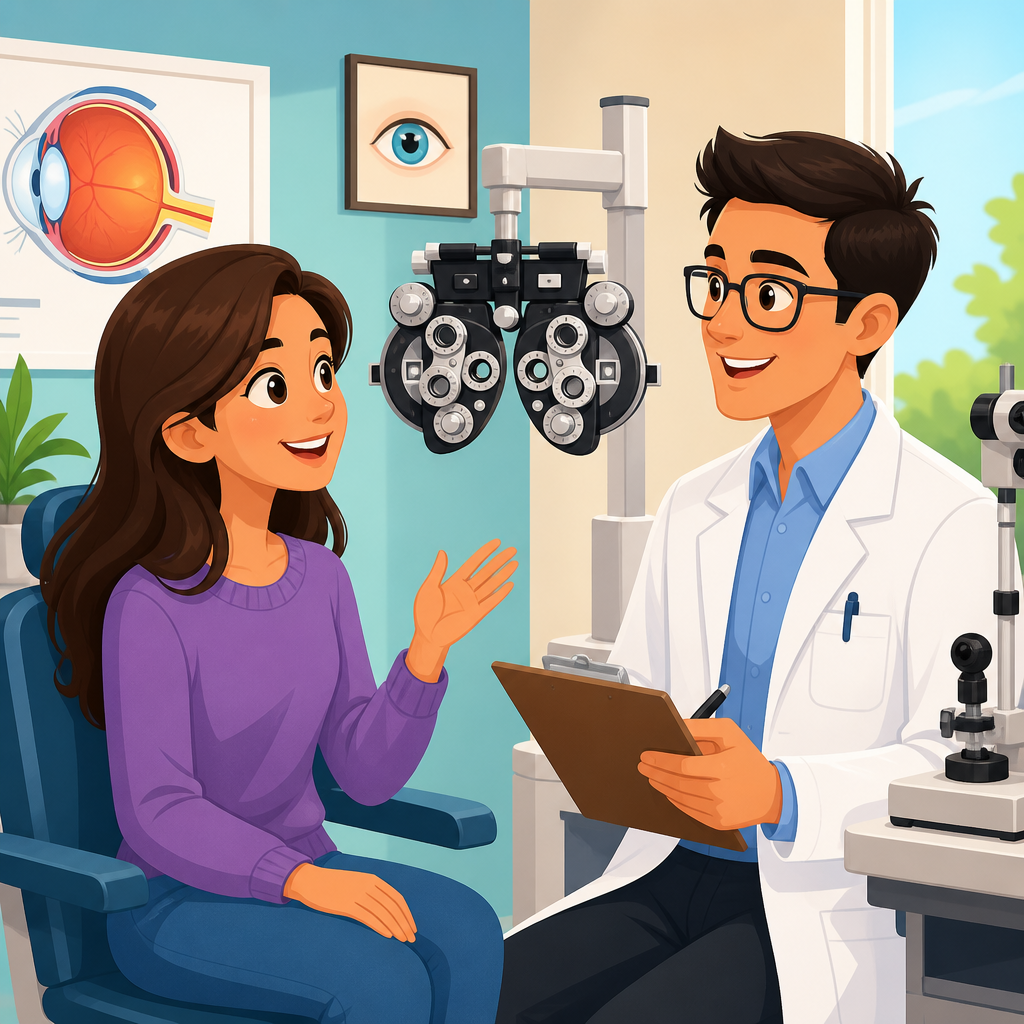
Knowing what to say at a vision exam or eye clinic makes the appointment faster, more accurate, and less stressful, especially if you need to describe symptoms, answer medical questions, or understand instructions about glasses, contact lenses, or treatment. In practical terms, this means using clear language for why you booked the visit, how your eyes feel, what changes you have noticed, and what help you need from the optometrist, ophthalmologist, or clinic staff. A vision exam usually checks visual acuity, refraction, eye pressure, and overall eye health, while an eye clinic visit may also address infections, injuries, dry eye, allergies, floaters, or follow-up care after a diagnosis. I have helped learners prepare for medical appointments, and eye visits cause a specific kind of anxiety because people worry about using the wrong words when describing blurred vision, headaches, light sensitivity, or contact lens problems. The right phrases matter because eye care depends heavily on symptom history; a clinician cannot measure everything from a chart alone. If you can clearly explain when symptoms started, whether one or both eyes are affected, and what makes the problem better or worse, the clinician can make faster, safer decisions. Good communication also helps you ask better questions about prescriptions, test results, warning signs, and next steps.
What to say when checking in and explaining why you are there
At reception, your goal is simple: state the purpose of the visit clearly and give any time-sensitive details. The most useful opening line is, “I’m here for a routine eye exam,” or “I have an appointment for an eye exam at 10 a.m.” If the visit is problem-based, be direct: “I’m here because my vision has been blurry for three days,” “My right eye is red and painful,” or “I think I have something in my eye.” Staff need this information early because sudden vision loss, flashes of light, eye trauma, and severe pain may require urgent triage. If you wear glasses or contacts, say so immediately. A practical phrase is, “I wear contact lenses every day, and my eyes have felt dry since yesterday.” That sentence gives the clinic three important facts at once: your correction method, the symptom, and the timeline.
You may also need to discuss forms, insurance, or referral details. Common useful phrases include, “This is my first visit here,” “I was referred by my family doctor,” and “I brought my current glasses and contact lens prescription.” If your English is limited, a respectful sentence such as “Could you please speak slowly?” or “Could you write that down for me?” prevents mistakes. When learners practice appointment English, I always recommend preparing one reason for the visit, one symptom sentence, and one practical request. That structure works reliably in eye clinics because front-desk communication is brief and task-focused. If you also want broader appointment phrases for scheduling and confirming visits, see the main guide on English for booking a doctor’s appointment by phone.
How to describe eye symptoms clearly and accurately
Eye clinicians depend on symptom language that is specific, not dramatic. Instead of saying, “My eyes feel weird,” say exactly what you notice: blurry vision, double vision, dryness, itching, burning, discharge, redness, swelling, light sensitivity, floaters, flashes, or pressure behind the eyes. The most effective symptom description follows a reliable pattern: what the problem is, when it started, where it happens, how severe it is, and what affects it. For example: “My left eye has been itchy and red for two days, especially in the morning,” or “I see floaters in both eyes, but today I also noticed flashes in my right eye.” That level of detail is clinically useful because itchiness often points toward allergy, while pain, light sensitivity, and reduced vision can suggest more serious inflammation or infection.
Be careful with words that are often confused. Blurry vision means things are out of focus. Double vision means you see two images. A blind spot is a missing area in vision. Eye strain usually describes tired, sore, or heavy eyes after reading or screen use. If your complaint is linked to screens, say, “My vision gets blurry after several hours on the computer, and I need to blink a lot.” The American Optometric Association has long noted that prolonged digital device use is associated with dry eye symptoms and visual fatigue, so this description gives useful context rather than sounding vague. If your symptom is urgent, use strong but precise language: “I suddenly lost part of my vision,” “I had a chemical splash in my eye,” or “My eye pain is severe.” Sudden change is often more important than discomfort level.
How to answer the clinician’s questions during the exam
Most vision exams follow a predictable interview. You will be asked why you came, whether you have had recent vision changes, what medications you take, whether you have diabetes or high blood pressure, and whether eye disease runs in your family. Good answers are short, factual, and complete. If asked, “Has your vision changed?” you can say, “Yes, distance vision is worse, especially when I drive at night,” or “Reading small print has become harder over the past six months.” If asked about frequency, answer with time markers such as always, sometimes, every morning, or only after wearing contacts for more than eight hours. Clinicians often assess patterns before they assess severity.
Family history matters more in eye care than many patients realize. Glaucoma, macular degeneration, retinal detachment risk, and certain inherited disorders can affect testing decisions and follow-up intervals. Say, “My mother has glaucoma,” or “There is no known family history of eye disease.” Medication history matters too because antihistamines, isotretinoin, steroids, and some antidepressants can worsen dryness or raise other concerns in specific contexts. Previous surgery and trauma are equally important. A sentence like, “I had LASIK in 2019,” or “I was hit in the eye while playing basketball last week,” gives the examiner essential context. When I prepare patients for these visits, I tell them not to guess. If you do not know a medication name, say, “I’m not sure of the name, but I can show it on my phone.” Accuracy beats confidence.
Useful phrases for glasses, contact lenses, and test results
Many people attend a vision exam mainly because their glasses no longer feel right or their contact lenses are uncomfortable. Clear phrasing helps the clinician separate prescription issues from eye health problems. You can say, “My current glasses are fine for reading, but distance signs are less clear,” or “My contact lenses feel dry by the afternoon.” If the issue is adaptation, try, “I got new glasses last week, and I feel dizzy when I walk,” which may suggest lens power, axis, segment height, or progressive lens adjustment problems. If you are worried about cost or options, ask directly: “Do I need glasses all the time or only for driving?” or “Are daily contact lenses a better option for dry eyes?”
The table below shows practical phrases patients can use in common situations.
| Situation | What to Say | Why It Helps |
|---|---|---|
| Routine exam | I’m here for a routine eye exam and an updated prescription. | States the visit purpose clearly. |
| Blurry vision | My vision has been blurry at a distance for about two months. | Gives symptom type, location, and timeline. |
| Contact lens discomfort | My contacts feel dry and uncomfortable after a few hours. | Helps assess fit, material, and dry eye. |
| Emergency warning sign | I suddenly saw flashes and a lot of new floaters in one eye. | Signals possible retinal urgency. |
| Prescription question | Has my prescription changed, and when should I wear these glasses? | Prompts practical explanation. |
When discussing results, ask for meaning, not just numbers. “Did my prescription change much?” is useful, but “What does this result mean for daily life?” is better. If the clinician mentions astigmatism, intraocular pressure, dilation, or retinal findings, ask for plain language: “Can you explain that in simple terms?” That request is reasonable and smart. Eye care instructions are only effective when you understand them.
Questions to ask before you leave the eye clinic
The end of the appointment is where many patients miss important information. Before leaving, confirm the diagnosis, treatment plan, warning signs, and follow-up timing. The most useful questions are practical: “What is causing this problem?” “Is it temporary or ongoing?” “How should I use these eye drops?” and “When should I come back?” If you were dilated, you may also need to ask, “Will my vision stay blurry for the rest of the day?” If you were prescribed drops, ask about schedule and technique: “Should I use one drop or two?” “How long should I wait between different drops?” and “Can I keep wearing contact lenses?” Those details prevent common mistakes.
Ask specifically about red-flag symptoms. Good wording includes, “What changes would mean I should call right away?” This matters because eye conditions can worsen quickly. For example, a patient treated for conjunctivitis may need urgent reassessment if pain intensifies or vision decreases, because routine irritation and serious corneal involvement are not the same thing. If your prescription changed, confirm use cases: “Are these glasses for distance, reading, computer work, or all day?” If follow-up is needed, repeat the plan back: “So I should use the drops four times a day and return in two weeks, correct?” This technique, often called teach-back in clinical communication, reduces misunderstandings and is widely used in safer patient education.
What to say at a vision exam or eye clinic comes down to clarity, sequence, and confidence. Start with the reason for the visit, describe symptoms with specific details, answer history questions accurately, and ask practical questions about treatment, prescriptions, and follow-up. The most effective phrases are simple: what changed, when it started, which eye is affected, how often it happens, and whether it is getting better or worse. In my experience, patients who prepare these points before arriving communicate better and leave with fewer doubts. That matters because eye care decisions often depend on the story you tell as much as the tests you take. Use direct language, avoid guessing, and speak up if you do not understand an instruction or term. A short written note on your phone can help you remember dates, symptoms, medications, and questions. The benefit is immediate: a smoother appointment, clearer answers, and a better chance of getting the right care quickly. Before your next eye visit, practice three sentences: why you are there, what symptoms you have, and what you want clarified before you leave.
Frequently Asked Questions
What should I say when I first arrive at a vision exam or eye clinic?
When you first arrive, the most helpful thing you can do is clearly explain why you booked the appointment. A simple, direct statement helps the clinic staff and eye doctor understand your main concern right away. For example, you might say, “I’m here for a routine eye exam,” “I’ve been having blurry vision when I read,” “My eyes have been dry and irritated for the past two weeks,” or “I need an updated prescription for glasses or contact lenses.” If you are seeing the doctor for a specific problem, mention when it started, whether it is getting worse, and whether it affects one eye or both.
It is also useful to share practical details early in the visit. You can tell staff if you already wear glasses or contacts, if you brought your current prescription, or if you have noticed changes such as headaches, double vision, trouble driving at night, sensitivity to light, redness, watering, flashes, floaters, or eye pain. If English is not your first language, if you are hard of hearing, or if you need written instructions, it is completely appropriate to say so. Clear communication at check-in sets the tone for the rest of the appointment and makes it easier for the optometrist, ophthalmologist, or technician to focus on the right tests and questions.
How do I describe my eye symptoms clearly so the doctor understands me?
The best way to describe eye symptoms is to be specific and organized. Instead of saying only “My eyes feel weird,” try to explain exactly what you notice. Mention whether your vision is blurry, cloudy, dim, patchy, doubled, or difficult to focus. Describe physical sensations too, such as burning, itching, dryness, pressure, sharp pain, aching, grittiness, or the feeling that something is in your eye. If your eyes are red, watery, swollen, or unusually tired, say that directly. The more precise your wording is, the easier it is for the eye doctor to narrow down possible causes.
It also helps to explain timing and patterns. Tell the doctor when the symptom started, whether it came on suddenly or gradually, how often it happens, and what seems to trigger it. For instance, you might say, “My vision gets blurry after two hours on the computer,” “I wake up with dry eyes every morning,” or “The irritation is worse when I wear my contact lenses.” If symptoms happen only at night, while reading, during screen use, or while driving, include that detail. You should also mention anything that improves or worsens the problem, such as eye drops, rest, bright light, wind, allergies, or contact lens wear. This kind of clear description helps make the exam more accurate and often leads to faster answers and better treatment recommendations.
What medical and personal information should I be ready to tell the eye doctor?
You should be prepared to answer questions about your general health, eye history, and family history because all of these can affect your vision and eye health. The doctor may ask whether you have diabetes, high blood pressure, autoimmune disease, migraines, thyroid problems, allergies, or past eye injuries. They may also ask if you have ever had eye infections, surgeries, laser procedures, or previous problems such as glaucoma, cataracts, macular degeneration, retinal tears, or lazy eye. Even if a condition seems unrelated, it is still worth mentioning, because many medical issues and medications can influence the eyes.
Bring or be ready to state the names of any medicines you take, including prescription drugs, over-the-counter products, supplements, and eye drops. Some medications can cause dry eyes, blurry vision, or pressure-related changes. Family history matters too, so tell the doctor if close relatives have had glaucoma, retinal disease, severe nearsightedness, cataracts at an early age, or other major eye conditions. You should also mention your daily habits and vision demands, such as long hours on a computer, frequent night driving, sports, detailed close-up work, or contact lens use. Sharing this information gives the clinic a fuller picture of your needs and helps the doctor recommend the right exam, prescription, and follow-up care.
What should I say if I need glasses, contact lenses, or help understanding my prescription?
If your goal is to update your glasses or contact lenses, say that clearly at the start of the appointment. You might say, “I think my glasses prescription has changed,” “My contacts feel uncomfortable,” or “I want to know whether glasses or contacts would work better for me.” If you already wear corrective lenses, explain what is and is not working. For example, tell the doctor if distance vision is fine but reading is harder, if your eyes feel strained by the end of the day, or if your contact lenses become dry after a few hours. These details help the doctor match your prescription and lens options to your real-life needs.
If you do not understand the prescription or the doctor’s instructions, it is always appropriate to ask for clarification. You can say, “Can you explain what these numbers mean?” “Should I wear these glasses all the time or only for driving and reading?” or “What are the pros and cons of daily versus monthly contacts?” If you are choosing between lens types, ask about comfort, convenience, cost, screen use, UV protection, night driving, and dryness. A good eye care professional expects these questions and should be able to explain your options in plain language. Speaking up ensures you leave the clinic knowing exactly how to use your glasses or contacts and what results to expect.
What questions should I ask before I leave the eye clinic?
Before leaving, make sure you understand the doctor’s findings, your prescription if one was given, and any next steps. Good questions include, “Did you find anything unusual in my exam?” “Has my vision changed since my last visit?” “Do I need new glasses or a new contact lens prescription?” and “When should I come back for my next exam?” If you were diagnosed with a condition such as dry eye, eye strain, infection, or elevated eye pressure, ask what it means, how serious it is, and what symptoms should prompt you to call the office right away.
You should also ask for clear instructions about treatment and follow-up care. For example, you can say, “How often should I use these eye drops?” “Are there side effects I should watch for?” “Can I still wear contact lenses during treatment?” or “Should I avoid screens, makeup, swimming, or driving for a period of time?” If your pupils were dilated or additional testing was done, ask whether there are temporary effects and whether you need any special precautions. Leaving with a clear understanding of your diagnosis, treatment plan, and follow-up schedule helps prevent confusion later and gives you more confidence about managing your eye health after the appointment.





