
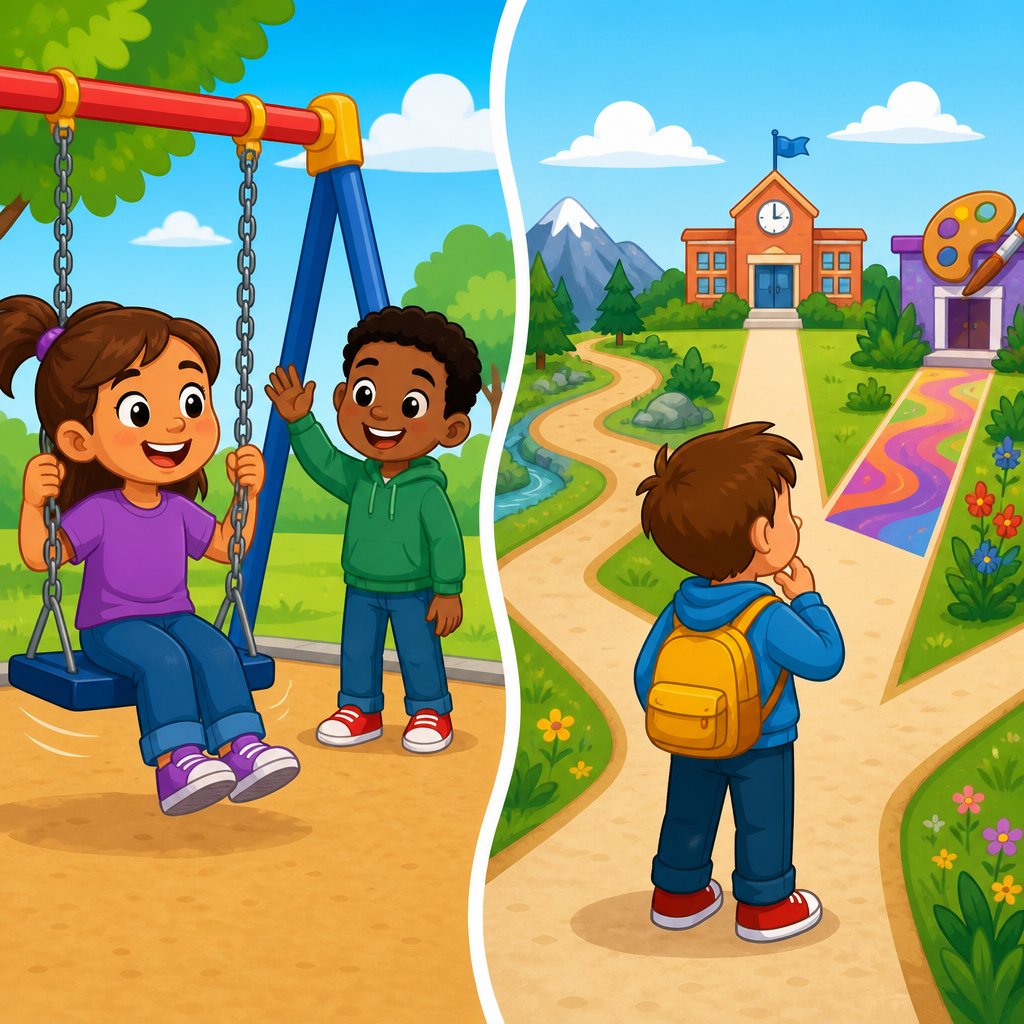
Writers often treat alternate and alternative as interchangeable, but the difference matters because one word usually points to taking turns while the other points to another option. In grammar and usage, confusing words are terms that look similar, sound related, or overlap in meaning enough to cause mistakes in speech and writing. This article focuses on alternate vs alternative, then places that pair inside the broader confusing words category so it can serve as a practical hub for grammar learners, editors, teachers, and business writers. I have had to correct this mix-up in marketing copy, policy documents, software interfaces, and academic drafts, and the pattern is consistent: people choose the longer word when they mean a substitute, and they choose the shorter word when they mean a rotating sequence, but uncertainty remains because dictionaries record overlap.
The core distinction is straightforward. Alternate most often means every other one, occurring by turns, or arranged in succession. Alternative most often means another possible choice, substitute, or available course of action. If students attend class on alternate days, they go Monday, Wednesday, and Friday or Tuesday and Thursday. If students are given alternative assignments, they can choose one task instead of another. That contrast matters because readers use these signals to understand timing, structure, and decision-making. A hospital schedule, legal contract, product manual, or school notice can become unclear if the wrong term appears. Precise usage also improves search visibility, readability scores, and editorial consistency across a site’s grammar content.
As a hub article under Grammar and Confusing Words, this page does more than define two terms. It shows how the distinction works in real sentences, explains where standard dictionaries allow overlap, and identifies the contexts where style guides and careful editors still prefer a sharper line. It also points readers toward the larger skill behind the question: choosing the right word when near-synonyms carry different implications. Mastering confusing words is not about memorizing trivia. It is about understanding meaning, context, register, and audience expectations so your writing sounds deliberate rather than approximate.
The basic rule: alternate means by turns; alternative means another choice
If you need a fast answer, use alternate for rotation and alternative for option. Alternate can be an adjective, verb, or noun. As an adjective, it means every second one or occurring in turns: alternate seats, alternate weekends, alternate layers. As a verb, it means to happen one after the other: rain and sun alternate in spring. As a noun, especially in formal settings, it can mean a substitute person, such as an alternate delegate. Alternative is usually an adjective or noun tied to choice: an alternative route, an alternative explanation, a cheaper alternative.
Examples make the distinction clear in plain terms. “We meet on alternate Thursdays” describes a schedule. “We need an alternative supplier” describes a substitute option. “Black and white stripes alternate” describes a pattern. “If the printer fails, use the alternative machine downstairs” describes a backup choice. In editing practice, I ask one question: Is the sentence about sequence or selection? If it is about sequence, alternate is usually correct. If it is about selection, alternative is usually correct. That single test resolves most cases quickly and reliably.
Why people confuse these words
The confusion exists for three reasons. First, the words share the same Latin root idea of “other” or “one after another,” so they are historically related. Second, some dictionaries include overlapping senses, especially for alternate as a noun meaning substitute. Third, everyday speech often softens distinctions that formal writing still values. For example, someone may say, “We need an alternate plan,” meaning a backup plan. Many readers understand it, and some dictionaries accept that use, particularly in American English. Yet many editors still prefer “alternative plan” because it states the meaning more directly.
Usage also varies by field. In education and child custody contexts, alternate commonly appears in time-based expressions such as alternate Mondays or alternate weekends. In transportation, alternative route is the standard phrase because drivers are choosing among options. In entertainment, alternative music refers to a genre, not a pattern of taking turns. In elections or committees, alternate may describe a replacement member. Because both words can suggest “something different from the first thing,” writers drift toward interchangeability. Good grammar instruction restores the useful distinction that context often demands.
Standard usage, overlap, and where precision matters most
Major dictionaries such as Merriam-Webster and Cambridge recognize overlap, but recognition does not erase the value of precision. In polished writing, alternate is best when things switch back and forth, and alternative is best when one thing stands in place of another. Precision matters most in technical, legal, medical, and instructional writing because ambiguity carries a cost. “Take the medicine on alternate days” means skip every other day. “Take the medicine as an alternative treatment” means it is another treatment option. One wrong word changes the meaning entirely.
Style guides generally favor clarity over permissive dictionary overlap. In-house editorial standards at publishers, universities, and companies often instruct writers to reserve alternate for turn-taking and alternative for choice. I recommend that rule because it reduces friction for readers and creates cleaner internal linking across grammar resources about confusing words. It also aligns with how people scan content online. When a heading says “alternative methods,” users expect choices. When it says “alternate rows,” users expect a repeating pattern. Clear labels prevent misreading before a paragraph even begins.
| Word | Best use | Example | Meaning |
|---|---|---|---|
| alternate | rotation, sequence, every other | Employees work alternate Saturdays. | They take turns working Saturdays. |
| alternate | substitute person in formal roles | The committee named an alternate. | A replacement member can step in. |
| alternative | choice, option, substitute thing | We need an alternative vendor. | We need another vendor to choose or use. |
| alternative | different method or explanation | Here is an alternative approach. | Here is another possible way. |
Common phrases, common mistakes, and edited examples
Some phrases strongly favor one form. Use alternate days, alternate weeks, alternate routes only when routes are used in rotation, alternate layers, alternate turns, and alternate voting years. Use alternative energy, alternative medicine, alternative school, alternative investment, alternative format, and alternative hypothesis when the meaning is another kind, option, or model. A frequent error appears in workplace writing: “Please contact the alternate representative if no one answers.” If the meaning is backup representative, many editors would revise to “alternative contact” only if the person is one of several options, or to “backup representative” if substitution is the real point. Sometimes the best fix is not choosing between the two words at all.
Here are practical revisions. Weak: “Try an alternate solution.” Better: “Try an alternative solution.” Weak: “The children stay with each parent on alternative weekends.” Better: “The children stay with each parent on alternate weekends.” Weak: “We painted the wall in alternative stripes of blue and gray.” Better: “We painted the wall in alternate stripes of blue and gray.” Weak: “Use the alternate entrance if the main door is locked.” Better in most contexts: “Use the alternative entrance” or simply “Use the side entrance.” Clear writing is not just about dictionary legality; it is about selecting the term that makes the reader pause least.
How this pair fits into the larger Confusing Words hub
Alternate vs alternative belongs to a larger family of confusing words that challenge even experienced writers because the differences are semantic rather than purely grammatical. Similar pairs include affect vs effect, farther vs further, historic vs historical, continual vs continuous, and imply vs infer. In each case, two forms overlap enough to create uncertainty, yet each carries a preferred use in standard edited English. That is why a Confusing Words hub is useful: readers can learn one decision pattern and apply it widely. Ask what exact meaning the sentence needs, what part of speech is being used, what the audience expects, and whether a simpler synonym would serve better.
For students, this category builds exam accuracy and stronger essays. For professionals, it improves client communication, documentation, and brand credibility. For publishers, it supports a coherent grammar architecture where subtopics interlink naturally: word choice, usage notes, style distinctions, and sentence-level editing. If you manage a content library, this article should connect to related pages on synonyms, commonly misused words, plain English alternatives, and editing checklists. The broader lesson is durable: when two words are close, the right choice usually emerges from function, context, and convention, not from guesswork.
How to remember the difference and use it correctly
A simple memory aid works well. Think of alternate as an alternating pattern: ABAB, every other, back and forth. Think of alternative as an available option: plan B, another path, a substitute choice. If the sentence could be paraphrased with every other or by turns, use alternate. If it could be paraphrased with another option or a different possible choice, use alternative. This test is easy to teach, easy to edit by, and accurate in most professional contexts.
The key takeaway is not that one word is always right and the other always wrong. English allows overlap, and usage changes over time. Still, careful writers benefit from maintaining the distinction because it improves clarity fast. Use alternate for turns, sequence, and repeating order. Use alternative for options, substitutes, and different possible solutions. If a sentence still feels awkward, replace both with a more precise term such as backup, substitute, rotating, every other, choice, or option. Review your own writing for these two words today, and tighten any sentence where the meaning could be sharper.
Frequently Asked Questions
What is the main difference between alternate and alternative?
The core difference is this: alternate usually relates to taking turns, switching back and forth, or appearing in succession, while alternative usually refers to another choice, option, or possibility. If something happens on one day and then on the next, repeating in a pattern, that is typically alternate. If you are choosing between one plan and another plan, that is typically alternative. This distinction matters because the two words overlap enough to sound interchangeable in casual speech, but they do not always communicate the same idea in precise writing.
For example, “We meet on alternate Fridays” means the meetings happen every other Friday. By contrast, “We need an alternative date” means you need a different date to choose instead of the current one. In other words, alternate often points to rotation or sequence, and alternative points to substitution or choice. Good writers pay attention to that contrast because using the wrong word can subtly change the meaning of a sentence.
When should I use alternate in a sentence?
Use alternate when you mean that two or more things are happening by turns, in rotation, or in an every-other pattern. It is the right word when the emphasis is on succession rather than selection. Common examples include phrases such as “alternate weeks,” “alternate routes” in the sense of routes taken in rotation, or “players alternate positions” when they switch roles back and forth. The key idea is not simply difference, but a pattern of alternating order.
You may also see alternate used as a noun for a substitute, especially in formal contexts, such as “an alternate juror” or “an alternate delegate.” In those cases, the word refers to a person who can take the place of someone else if needed. That usage is correct, but it is more specialized than the common “taking turns” sense. To choose the right word confidently, ask yourself whether you mean sequence, rotation, or every-other occurrence. If you do, alternate is probably the better fit.
When is alternative the better word choice?
Alternative is the better choice when you mean another option, another possible solution, or something available instead of the original. This is the word to use in discussions of decisions, comparisons, and substitutes. For example, “We need an alternative plan” means the current plan may not work, so another choice is necessary. “Alternative energy sources” refers to different energy options beyond traditional ones. In each case, the focus is on a possible replacement or additional option, not on a turn-taking pattern.
This word appears often in academic, business, and everyday writing because people frequently discuss options and outcomes. It is especially useful when you want to emphasize that more than one course of action exists. If your sentence could naturally be rephrased with “another choice,” “another option,” or “a different possibility,” then alternative is usually the word you want. That makes it an essential term not only in grammar discussions, but also in clear, practical communication.
Why do writers confuse alternate and alternative so often?
Writers confuse these words because they are closely related in form, meaning, and usage history. They share the same linguistic family, they sound similar, and in some contexts they both suggest something different from the original. That overlap is exactly what makes them part of the broader category of confusing words in English. Confusing words are terms that look alike, sound related, or have meanings close enough to invite mistakes. Alternate and alternative fit that pattern perfectly.
The confusion becomes even more common in informal speech, where precision is often less important than general understanding. Many people say alternate when they really mean “another option,” or use alternative when they mean “every other.” Readers may still understand the sentence, but the phrasing can sound imprecise or awkward. For grammar learners and careful writers, this pair is a useful reminder that small differences in word choice can sharpen meaning. Learning the distinction helps not only with these two words, but also with recognizing similar traps across the wider confusing-words category.
How can I remember the difference between alternate and alternative while writing?
A simple memory trick is to connect alternate with a pattern and alternative with a choice. If something is happening every other time, switching places, or taking turns, think alternate. If someone is picking a different option, backup plan, or substitute, think alternative. This quick test works well because it reduces the decision to two practical questions: “Is this about rotation?” or “Is this about another option?”
It also helps to test the sentence with a replacement phrase. If you can swap in “every other” or “by turns,” then alternate is likely correct. If you can swap in “another choice” or “another possibility,” then alternative is likely correct. For instance, “We travel on alternate weekends” becomes “We travel every other weekend,” which confirms alternate. “We need an alternative vendor” becomes “We need another vendor option,” which confirms alternative. This kind of self-check is especially useful for students, editors, and professionals who want writing that is both natural and precise.





