
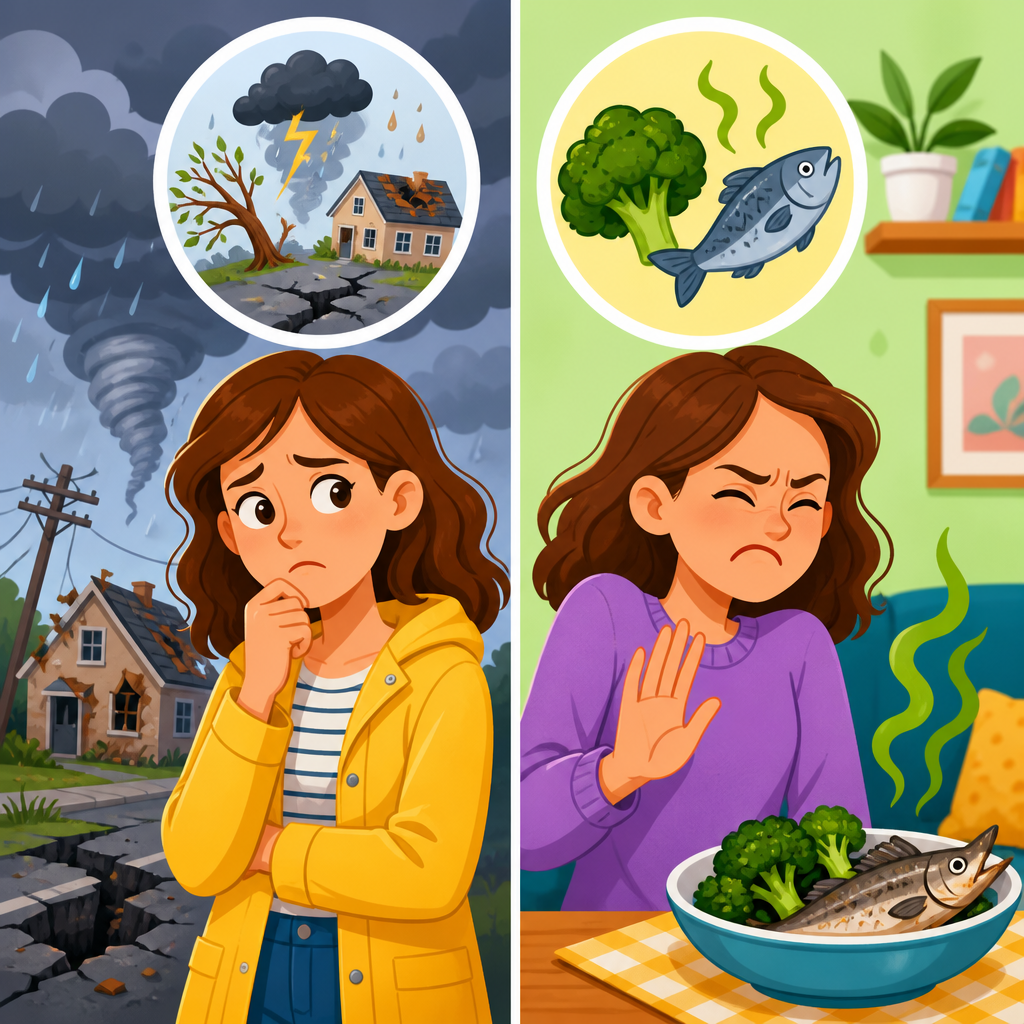
Adverse vs averse is one of the most common confusing word pairs in English because the terms look similar, sound related, and both often appear in formal writing. They are not interchangeable. Adverse describes harmful, unfavorable, or opposing conditions, while averse describes a person’s strong dislike or resistance toward something. This distinction matters in grammar, business writing, legal documents, academic work, and everyday communication, because using the wrong word changes the meaning of a sentence immediately. I have edited reports, essays, and website copy where this exact mix-up weakened credibility, especially when writers meant to describe difficult circumstances but accidentally described a personal preference. If you write “averse weather,” for example, you signal dislike rather than damaging conditions, and the phrase sounds plainly incorrect to careful readers.
As a grammar topic, adverse vs averse belongs squarely within confusing words: terms that share spelling patterns, roots, pronunciation features, or context, yet carry different meanings and grammatical roles. A hub article on confusing words should do more than define two terms. It should explain usage, show patterns, answer common search questions, and connect this pair to broader editing habits that improve clarity across your writing. That is the purpose of this guide. You will learn the exact meaning of each word, how to remember the difference, where writers usually make mistakes, and how this pair relates to other lookalike terms such as affect vs effect, imply vs infer, and farther vs further. Once you master this distinction, you can apply the same method to many other troublesome pairs and edit with more confidence.
The simplest way to remember the core difference is this: adverse modifies things like conditions, effects, decisions, markets, reactions, or circumstances; averse usually describes people, organizations, or groups that feel opposed to or strongly reluctant about something. Adverse is about external harm or disadvantage. Averse is about internal attitude. Both words appear often in professional contexts, which is why the error survives. Many people encounter them first in health warnings, insurance policies, economics coverage, or management writing, not in casual conversation. That exposure makes them look specialized and interchangeable when they are not. A practical grammar guide must therefore define the words clearly, place them in realistic contexts, and give readers durable cues they can use under deadline pressure.
What adverse means and how to use it correctly
Adverse is an adjective meaning unfavorable, harmful, hostile, or working against success. It usually modifies nouns that describe situations or outcomes rather than people’s feelings. Common combinations include adverse weather, adverse effects, adverse conditions, adverse reaction, adverse ruling, and adverse market movements. In medicine, an adverse event is a harmful or unintended result associated with treatment or exposure. In law, adverse possession is a recognized doctrine with a technical meaning. In finance, analysts refer to adverse economic conditions when inflation, unemployment, or declining demand harms performance. In each case, the word points to damage, risk, or opposition in circumstances.
Examples make the pattern obvious. “The hikers faced adverse weather on the mountain” means the weather was dangerous or unfavorable. “The drug caused an adverse reaction” means the reaction was harmful. “Small businesses struggled under adverse credit conditions” means borrowing conditions were difficult. Notice that none of these examples describe emotion or preference. Adverse does not mean unwilling, hesitant, or disliking. It describes negative external realities. If you can replace the word with unfavorable, harmful, or detrimental, adverse is usually the correct choice. That substitution test is one of the fastest editing tools available for this pair.
What averse means and how to use it correctly
Averse is also an adjective, but it describes a person or group that is strongly opposed to, reluctant about, or disinclined toward something. It commonly appears after a linking verb and is usually followed by the preposition to. Standard patterns include averse to risk, averse to change, averse to conflict, and averse to publicity. A hiring manager may be averse to vague resumes. Investors may be averse to speculative assets. A child may be averse to vegetables. The key idea is dislike, resistance, or unwillingness, not harmful conditions.
Usage matters here because averse often requires a human or humanlike subject. “She is averse to long commutes” is correct because it describes her attitude. “The board was averse to unnecessary spending” is also correct because a board can act as a decision-making body with preferences. By contrast, “the forecast was averse” sounds wrong because forecasts do not possess dislike. Writers also sometimes confuse averse with adverse because both can appear near words like risk, policy, and change. The sentence “The company is adverse to risk” is incorrect if the intended meaning is reluctance. The correct version is “The company is averse to risk.”
Adverse vs averse at a glance
The fastest way to choose between adverse and averse is to ask two questions: Is the sentence describing harmful circumstances, or is it describing someone’s dislike or reluctance? If the answer is harmful circumstances, use adverse. If the answer is dislike or reluctance, use averse. In editing workshops, I tell writers to identify the target noun first. If the word modifies conditions, events, effects, or outcomes, adverse is likely right. If it describes the stance of a person, team, institution, or audience, averse is likely right.
| Word | Core meaning | Typical subject or noun | Common pattern | Example |
|---|---|---|---|---|
| Adverse | Harmful, unfavorable | Conditions, effects, events, rulings | Adverse + noun | Adverse weather delayed the flight. |
| Averse | Strongly opposed, reluctant | People, groups, organizations | Averse to + noun/gerund | The client is averse to taking on debt. |
A reliable memory trick is spelling-based. Adverse contains the ending seen in words tied to events and outcomes, while averse is commonly followed by to, as in “averse to.” Another helpful cue is that adverse often appears in fixed professional phrases, including adverse effects and adverse conditions, whereas averse appears in attitude phrases, including averse to risk and averse to change. These are not arbitrary habits. They reflect the true semantic difference between the words.
Common mistakes, edge cases, and editing checks
The most frequent error is substituting one word for the other in formal writing. Business writers often misuse adverse in sentences about decision-making: “Our leadership team is adverse to rapid hiring.” That should be “averse to rapid hiring,” because the team has a preference. Another mistake goes the other direction: “Workers endured averse conditions at the site.” That should be “adverse conditions,” because the conditions were harmful. Standardized tests, workplace assessments, and college essays often exploit this confusion because the misspoken version can seem plausible at first glance.
There are also edge cases worth noting. Some organizations or systems can be described as averse when the writer is attributing institutional preference, as in “the company is averse to litigation.” That is acceptable because the organization is acting through decision-makers. Adverse, meanwhile, can describe abstract effects with precision: adverse selection in insurance and economics refers to market distortion caused by asymmetrical information. This technical phrase is important because it shows adverse has established domain-specific uses. When a term has a recognized meaning in law, medicine, or economics, writers should preserve that standard use rather than swap in a near lookalike.
For proofreading, use a three-step check. First, identify whether the sentence concerns conditions or attitude. Second, test a substitution: unfavorable for adverse, opposed to for averse. Third, inspect the grammar around the word. If you see “to” immediately after the adjective, averse is often the intended choice. This method works well beyond this pair and is useful across the wider category of confusing words.
Why this pair matters in the larger confusing words hub
Adverse vs averse is not an isolated grammar problem. It represents a broader pattern that defines confusing words as a subtopic: visual similarity masks functional difference. Readers searching this hub usually need more than a single answer; they need an editing framework they can reuse. The same habits that solve adverse vs averse also help with accept vs except, complement vs compliment, discreet vs discrete, and principal vs principle. In each case, precision depends on understanding meaning, grammar, and collocation together rather than memorizing one-line definitions.
That is why a hub page should point readers toward families of confusion. Some pairs differ by sound, like than vs then. Others differ by grammatical role, like affect vs effect. Others differ by idiomatic pairing, like bear with me vs bare with me. Adverse vs averse combines all three pressures: similar spelling, similar pronunciation for many speakers, and overlap in formal contexts. Learning this pair trains your eye to spot exactly the kind of near-match error that slips through spellcheck but not through careful human review.
In practical terms, mastering confusing words improves accuracy, authority, and reader trust. Clear usage helps job applicants write stronger cover letters, helps students avoid deduction-worthy mistakes, and helps businesses publish cleaner policies and reports. If this article is your starting point, continue building your grammar reference set around high-confusion pairs and review them in examples, not isolation. The payoff is cumulative. You write faster because you hesitate less, and you edit better because you know what to test. Adverse conditions may affect your results, but being averse to careful proofreading should not. Use this hub as your next stop for confusing words and keep refining your precision.
Frequently Asked Questions
What is the difference between “adverse” and “averse”?
The difference is straightforward once you focus on what each word describes. Adverse refers to something harmful, unfavorable, negative, or opposed to success. It is usually used to describe conditions, effects, circumstances, outcomes, or decisions. For example, you might read about adverse weather conditions, adverse side effects, or adverse market trends. In each case, the word points to something that creates difficulty or works against a desired result.
Averse, by contrast, describes a person’s strong dislike of something or resistance toward it. It is commonly followed by to. For example: She is averse to taking unnecessary risks or He is averse to public speaking. Here, the word expresses attitude, preference, or personal reluctance rather than an outside condition.
A simple way to remember the distinction is this: adverse = bad conditions, while averse = personal opposition or dislike. They may look similar, but they do completely different jobs in a sentence. If you swap them, the meaning changes immediately. Saying adverse to change is incorrect in standard usage, while saying averse conditions is also wrong because conditions do not “dislike” anything.
How can I tell whether I need “adverse” or “averse” in a sentence?
A reliable test is to ask what exactly the word is describing. If it describes a situation, event, effect, environment, consequence, or external factor that is harmful or unfavorable, the correct word is adverse. If it describes a person, group, or decision-maker who feels strong dislike, reluctance, or resistance, the correct word is averse.
For example, in the sentence The company faced adverse economic conditions, the word describes economic conditions, so adverse is correct. In the sentence The board is averse to making sudden policy changes, the word describes the board’s attitude, so averse is correct. One word names an external problem; the other names an internal reaction.
Another practical clue is grammar. Averse often appears in the pattern averse to + noun/gerund, such as averse to conflict or averse to spending more money. Adverse usually appears directly before a noun, such as adverse ruling, adverse reaction, or adverse conditions. If you can replace the word with unfavorable or harmful, you probably need adverse. If you can replace it with reluctant, opposed, or strongly disliking, you probably need averse.
Why do people confuse “adverse” and “averse” so often?
These words are frequently confused because they are visually and phonetically similar. They share most of their letters, they both sound formal, and they often appear in serious contexts such as academic writing, business reports, legal language, and journalism. When two words look this close, many writers assume they are variations of the same idea. In reality, they belong to different meaning categories.
Part of the confusion also comes from the fact that both words can involve something “negative.” Adverse expresses negativity in the sense of harmful circumstances. Averse expresses negativity in the sense of unwillingness or strong dislike. Because both can appear in discussions about conflict, risk, or difficulty, writers sometimes substitute one for the other without noticing that the sentence meaning shifts.
Another reason is that people often learn these words through reading before hearing detailed explanations of usage. That can lead to vague familiarity rather than precise understanding. For example, someone may know that both words are associated with formal English but not know that one usually modifies conditions and the other describes people’s attitudes. That is why memorizing a quick contrast helps: adverse conditions, but averse people. Once you anchor each word to the kind of thing it describes, the confusion becomes much easier to avoid.
Can you give examples of correct and incorrect usage of “adverse” and “averse”?
Yes, and seeing them side by side is one of the best ways to master the distinction. Correct use of adverse includes sentences like: The patient experienced adverse effects after treatment, Flights were delayed due to adverse weather, and The new regulation had an adverse impact on small businesses. In all of these, the word describes harmful or unfavorable conditions or results.
Correct use of averse includes: She is averse to confrontation, Many investors are averse to unnecessary risk, and He remains averse to changing the original plan. Here, the word clearly refers to a person’s or group’s attitude of dislike, resistance, or reluctance.
Common mistakes include sentences such as She is adverse to criticism or They faced averse conditions during the project. These are incorrect because adverse should not be used to describe personal dislike, and averse should not be used to describe harmful circumstances. The corrected versions would be She is averse to criticism and They faced adverse conditions during the project. If you remember that adverse modifies situations and averse describes people’s feelings or stances, these errors become much easier to catch during editing.
Why does using the right word matter in business, legal, academic, and everyday writing?
Using the correct word matters because these two terms are not interchangeable, and substituting one for the other can distort meaning. In business writing, saying a company is averse to expansion means leadership is resistant to expanding, while saying the company faces adverse market conditions means outside factors are creating difficulty. Those are very different ideas, and the distinction can affect decision-making, reporting, and interpretation.
In legal and academic writing, precision is even more important. A phrase such as adverse possession has a specific legal meaning, and adverse effects in research or policy writing refers to harmful consequences. Meanwhile, risk-averse describes behavior or attitude, not environmental conditions. Choosing the wrong word in these settings can make writing seem careless, reduce credibility, or create ambiguity where exact wording is essential.
Even in everyday communication, the difference matters because word choice shapes clarity. If someone says, I’m adverse to long commutes, many readers will understand the intended meaning, but the phrasing is still nonstandard and can distract from the message. Saying I’m averse to long commutes is precise and natural. Good writing depends on choosing words that match the idea exactly, and this pair is a perfect example of how one letter can change a sentence from correct and polished to inaccurate and confusing.





