
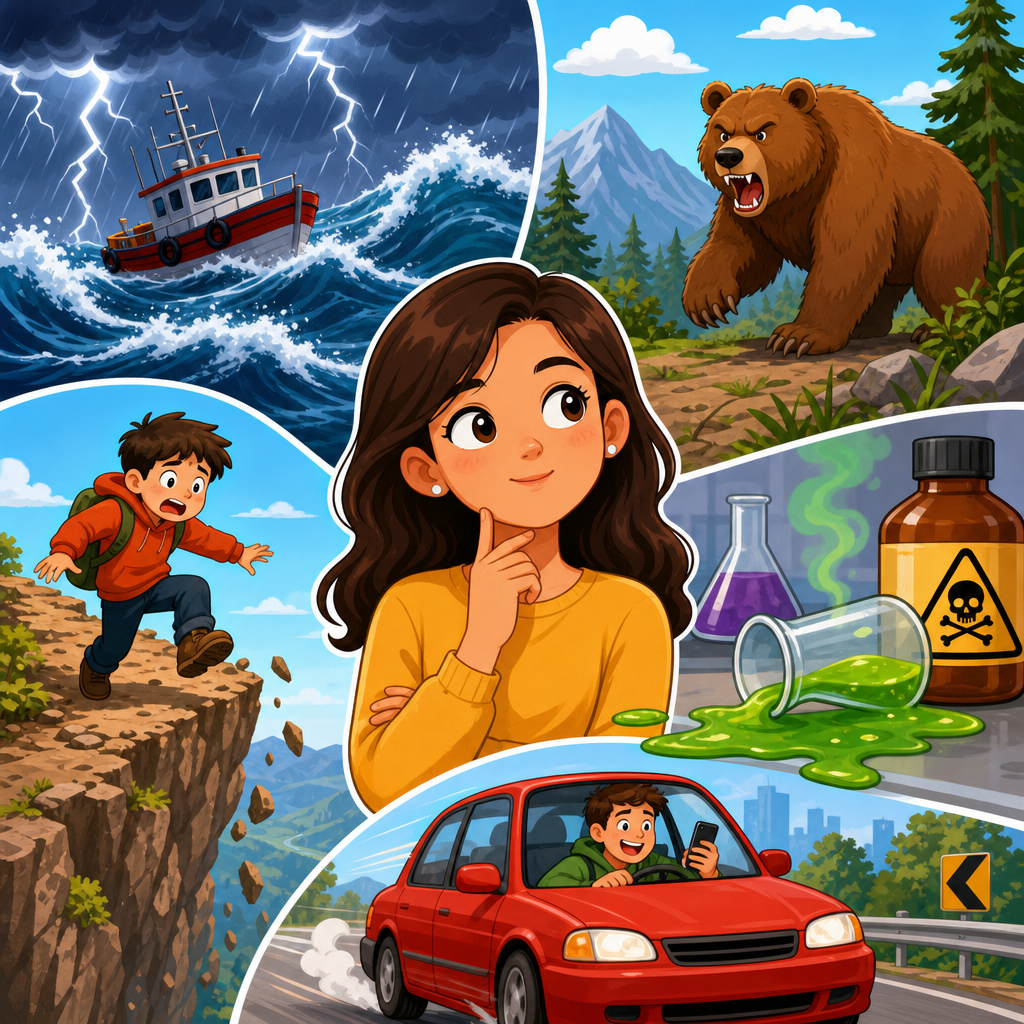
Learning better ways to say “dangerous” helps English learners sound more precise, natural, and confident. “Dangerous” is a common adjective that describes something likely to cause harm, injury, damage, or serious risk. It works in many situations, but native speakers often choose more specific words depending on the type of threat. In my teaching and editing work, I have seen the same pattern repeatedly: learners know “dangerous,” use it for everything, and then struggle to explain whether they mean physically risky, legally risky, emotionally risky, or potentially harmful in a general sense. Expanding this part of your vocabulary improves speaking, writing, listening, and reading because many news articles, stories, conversations, and exams use synonyms instead of repeating the same word.
This topic matters for both fluency and accuracy. If a road is icy, “hazardous” may fit better than “dangerous.” If a person is violent, “threatening” or “deadly” may be stronger. If a plan could hurt your career, “risky” is often the natural choice. These differences affect tone, grammar, and meaning. They also help you understand collocations, which are words that commonly appear together, such as “hazardous chemicals,” “risky investment,” or “perilous journey.” A strong vocabulary page should therefore do more than list synonyms. It should explain how each word is used, what level of intensity it carries, what common mistakes learners make, and how to choose the right word in context. This hub article covers the most useful miscellaneous synonyms, example sentences, and practical usage notes so you can build a more flexible vocabulary and connect to related learning across this section.
How to Choose the Right Synonym for “Dangerous”
The best synonym depends on three things: the kind of danger, the seriousness of the risk, and the context. In plain terms, ask yourself: What could go wrong? How severe is it? Where is this word usually used? For example, “risky” often describes choices, activities, or decisions with uncertain outcomes. “Hazardous” is common in formal English, especially for workplaces, materials, weather, and public safety notices. “Deadly” usually suggests that death is possible or likely. “Perilous” is more literary and often appears in dramatic descriptions of travel, rescue, war, or historical writing.
I advise learners not to memorize synonyms as perfect replacements. English rarely works that way. A “dangerous dog” sounds natural, but a “hazardous dog” does not. “A risky dog” is also wrong unless you mean owning the dog is a risk. In contrast, “hazardous waste” is standard, while “dangerous waste” is less precise in technical contexts. This is why example sentences matter. They show not only meaning, but also pattern and register. Register means whether a word sounds informal, neutral, formal, literary, or technical. Knowing register prevents awkward sentences and helps you match the language to a conversation, email, presentation, or exam answer.
Common Synonyms and When to Use Them
Here are the most useful alternatives to “dangerous” for ESL learners. “Risky” means involving the possibility of failure, loss, or harm. Example: The company made a risky decision by investing all its money in one product. “Hazardous” means involving serious danger, often in formal or technical situations. Example: Workers must wear protective clothing when handling hazardous chemicals. “Deadly” means likely to cause death. Example: The snake’s bite can be deadly without immediate treatment. “Threatening” describes something that suggests possible harm and creates fear. Example: The man made threatening remarks during the argument.
Other strong choices include “unsafe,” “perilous,” “treacherous,” “menacing,” and “volatile.” “Unsafe” is simple and practical, especially for beginners. Example: The bridge was declared unsafe after the storm. “Perilous” means full of great danger and appears often in books and formal storytelling. Example: The climbers began a perilous ascent before sunrise. “Treacherous” often describes roads, weather, terrain, or conditions that are unexpectedly dangerous. Example: Black ice made the mountain road treacherous. “Menacing” emphasizes a threatening appearance or feeling. Example: Dark clouds hung over the sea in a menacing way. “Volatile” is especially useful for unstable situations, chemicals, and political conditions. Example: The region remained volatile after the ceasefire collapsed.
| Word | Best Use | Example |
|---|---|---|
| risky | choices, plans, investments | Quitting without another job was risky. |
| hazardous | materials, jobs, conditions | The lab stores hazardous substances securely. |
| deadly | diseases, weapons, animals | The infection can become deadly quickly. |
| unsafe | general daily situations | The building felt unsafe at night. |
| perilous | journeys, dramatic events | They survived a perilous sea crossing. |
| treacherous | roads, weather, terrain | Winter made the pass treacherous. |
Example Sentences by Real-World Situation
Grouping synonyms by situation makes them easier to remember. For travel and weather, use “treacherous,” “hazardous,” or “perilous.” Example: Driving through the canyon in heavy rain was hazardous. Example: The hikers turned back because the trail had become treacherous after snow fell. Example: In the nineteenth century, sailors faced a perilous journey around Cape Horn. For health and science, “hazardous,” “toxic,” and “deadly” are common. Example: Long-term exposure to asbestos is hazardous to human health. Example: The gas is toxic if inhaled in large amounts. Example: Without treatment, rabies is almost always deadly.
For people and behavior, “threatening,” “violent,” “menacing,” and sometimes “dangerous” remain the best options. Example: The police removed a threatening individual from the station. Example: He has a history of violent behavior when intoxicated. Example: The dog was not attacking anyone, but its posture looked menacing. For business, finance, and decision-making, “risky” is often the most natural choice. Example: Borrowing heavily during a slowdown is a risky strategy. Example: It is risky to rely on one supplier for critical parts. For politics and conflict, “volatile” and “dangerous” both work, but they are not identical. A dangerous situation can cause harm; a volatile situation can change suddenly and become dangerous very fast. Example: The border remained volatile despite peace talks.
Nuance, Collocations, and Mistakes ESL Learners Make
The biggest mistake is using a strong synonym in the wrong context. Learners sometimes write “deadly exam” when they mean “difficult exam.” In standard English, “deadly” usually connects to literal death or, in informal British usage, sometimes boredom, but that use is advanced and context-dependent. Another common error is choosing a formal word where a simple one sounds better. In everyday conversation, “unsafe neighborhood” is usually more natural than “hazardous neighborhood.” I recommend learning collocations because they reduce these errors. Native speakers commonly say “hazardous waste,” “deadly weapon,” “risky move,” “unsafe conditions,” “treacherous waters,” and “volatile market.” These fixed patterns are powerful vocabulary shortcuts.
There are also differences in grammar and emphasis. “Threatening” often modifies behavior, language, gestures, or atmosphere: threatening message, threatening tone, threatening crowd. “Menacing” is similar but more visual and descriptive; it often appears in fiction and journalism. “Perilous” usually comes before nouns like journey, position, path, climb, or escape. “Risky” is frequently followed by infinitives and clauses: It is risky to drive that fast; It is risky if the backups are not tested. Corpus tools such as the Corpus of Contemporary American English and the British National Corpus are useful for checking how these words really appear in authentic English. Good learner dictionaries, including Cambridge, Longman, and Oxford, also show collocations, register labels, and example sentences that clarify subtle differences.
How This Miscellaneous Vocabulary Hub Supports Wider Learning
This page works as a hub for the miscellaneous area of Vocabulary because “dangerous” connects to many everyday themes: travel, crime, health, science, work, nature, news, and decision-making. Once learners understand these synonyms, they can move more easily into related articles on adjectives for risk, emergency vocabulary, weather words, crime and safety language, and formal versus informal word choice. In practice, this kind of hub structure helps learners review one concept from different angles instead of studying isolated lists. A student preparing for IELTS, TOEFL, or Cambridge exams may need “hazardous” for an academic reading passage, “risky” for an essay about finance, and “threatening” for a listening task about public safety.
It also supports stronger writing. Repetition is one reason learner paragraphs sound flat. If every sentence says “dangerous,” the writing loses precision. Compare these two versions: “The trip was dangerous. The road was dangerous. The weather was dangerous.” A stronger version is: “The trip was perilous. The road was treacherous. The weather created hazardous driving conditions.” The second version sounds more natural because each adjective matches the noun and gives the reader clearer information. That is the central benefit of this vocabulary area: not bigger words for the sake of sounding impressive, but better word choice that communicates exact meaning.
Better ways to say “dangerous” give ESL learners more control over meaning, tone, and accuracy. The key lesson is simple: choose the synonym that matches the kind of risk. Use “risky” for uncertain decisions, “hazardous” for formal safety contexts, “deadly” for life-threatening harm, “unsafe” for general everyday situations, “treacherous” for roads and conditions, “perilous” for dramatic high-danger events, and “threatening” or “menacing” for people, language, and atmosphere. When you learn each word with collocations and example sentences, you stop translating directly and start using English more naturally.
This miscellaneous vocabulary hub is designed to help you build that precision across related topics. Review the examples, notice which nouns each adjective usually follows, and practice writing your own sentences about travel, health, work, and daily life. If you want to improve your vocabulary fast, do not just memorize lists. Study words in context, compare near-synonyms carefully, and revisit this hub as you explore the rest of the Vocabulary section.
Frequently Asked Questions
1. Why should ESL learners use synonyms for “dangerous” instead of repeating the same word every time?
Using synonyms for “dangerous” helps ESL learners communicate with much more accuracy and confidence. The word “dangerous” is correct in many situations, but it is also very broad. Native speakers often choose a more specific adjective to show exactly what kind of risk they mean. For example, a “hazardous” chemical, a “risky” investment, a “deadly” disease, and a “threatening” situation are all dangerous in different ways, but each word gives the listener clearer information. When learners rely on “dangerous” for everything, their meaning can sound vague or unfinished.
There is also a style benefit. Repeating the same common word again and again can make speaking and writing sound basic, even when the grammar is correct. Learning alternatives allows students to sound more natural and more flexible. For example, instead of saying “It is dangerous to drive on this road,” a learner might say, “It is risky to drive on this road in heavy rain,” or “This road can be hazardous in winter.” Those small changes make the sentence more precise and more fluent. In short, synonyms are not just advanced vocabulary for tests. They are practical tools that help learners express the exact level and type of danger they want to describe.
2. What are some common synonyms for “dangerous,” and how are they different?
Several useful synonyms for “dangerous” appear often in real English, but they are not interchangeable in every context. “Risky” usually describes a choice, action, or plan that could lead to loss, failure, or harm. For example: “It is risky to invest all your money in one company.” “Hazardous” is more formal and is often used for materials, environments, or work conditions that present a serious safety risk. For example: “The workers must wear special clothing when handling hazardous waste.” “Deadly” means something can cause death, so it is much stronger than “dangerous.” For example: “That snake has a deadly bite.”
Other useful words include “unsafe,” “threatening,” and “perilous.” “Unsafe” is practical and common when something is not secure or does not meet safety standards, as in: “The bridge is unsafe after the storm.” “Threatening” often describes behavior, language, weather, or situations that seem likely to cause harm soon, as in: “He received several threatening messages.” “Perilous” is more literary or dramatic, but it is still worth recognizing, especially in books, news features, and formal writing. For example: “The climbers faced perilous conditions near the summit.” The key is to connect each synonym with the kind of danger it usually describes, not just with the dictionary meaning.
3. How can I choose the best synonym for the exact kind of danger I want to describe?
The best way to choose the right synonym is to ask what kind of harm is involved. Is the danger physical, financial, medical, emotional, legal, or immediate? If the danger comes from a decision or gamble, “risky” is often the best fit. Example: “Skipping insurance was a risky decision.” If the danger comes from a substance, location, or technical condition, “hazardous” may be more natural. Example: “The factory was closed because of hazardous fumes.” If the harm could kill someone, “deadly” is appropriate. Example: “Carbon monoxide can be deadly in enclosed spaces.”
You should also think about tone and context. Some words are more conversational, while others are more formal. “Unsafe” is simple and useful in everyday English: “This neighborhood feels unsafe at night.” “Perilous” sounds much more dramatic and is less common in ordinary conversation: “The rescue team crossed a perilous mountain path.” “Threatening” works well when the danger comes from signals, behavior, or atmosphere rather than a direct physical object: “The sky looked dark and threatening.” A good habit is to learn each synonym with a typical noun or situation. Instead of memorizing long word lists, learn combinations such as “risky move,” “hazardous material,” “deadly weapon,” “unsafe building,” and “threatening tone.” That approach makes correct usage much easier.
4. What mistakes do English learners often make when using synonyms for “dangerous”?
One very common mistake is choosing a synonym based only on translation, without checking how native speakers actually use it. Two words may seem similar in a dictionary, but their natural contexts can be very different. For example, learners sometimes use “deadly” when they simply mean “not safe,” but “deadly” is much stronger and usually suggests death, not just risk. Saying “This staircase is deadly” may sound exaggerated unless the danger is truly extreme. In many cases, “unsafe” or “dangerous” would be more accurate. In the same way, “hazardous” is often used well in technical, workplace, environmental, or legal contexts, but it can sound too formal in casual conversation.
Another common mistake is collocation problems, which means combining a word with nouns it does not normally go with. For instance, “hazardous decision” sounds unnatural, while “risky decision” sounds normal. “Threatening chemical” also sounds odd, but “hazardous chemical” is correct. Learners may also overuse dramatic vocabulary because it sounds impressive. Words like “perilous” or “deadly” are useful, but if they are used too often, the writing may sound unnatural or exaggerated. A smart strategy is to study example sentences and notice patterns. Compare: “It is dangerous to swim here,” “The current is hazardous,” “It would be risky to swim alone,” and “The storm created threatening conditions.” Each sentence points to a slightly different idea, and that difference is exactly what learners should practice.
5. What is the best way to learn and remember synonyms for “dangerous” with confidence?
The most effective method is to learn synonyms in context, not as isolated vocabulary items. Instead of making a list that says dangerous = risky = hazardous = deadly, collect short example sentences that show real usage. For example: “It is risky to drive without sleep.” “The lab stores hazardous chemicals.” “That infection can become deadly if untreated.” “The building was declared unsafe.” “She felt threatened by his aggressive behavior.” When you study words this way, you do not just remember meaning. You remember grammar, tone, collocations, and realistic situations.
It also helps to group the vocabulary by type of danger. Make one group for physical safety, one for health, one for choices and decisions, and one for atmosphere or behavior. Then practice by rewriting simple sentences. Start with a basic sentence like “This is dangerous,” and change it depending on the situation: “This climb is risky,” “These materials are hazardous,” “The gas leak could be deadly,” or “The structure is unsafe.” Finally, use the words in your own speaking and writing. If you create personal examples, you are more likely to remember them. For instance: “It would be risky for me to travel without checking the weather,” or “The road near my house becomes hazardous during heavy snow.” Repeated, meaningful practice builds confidence much faster than memorizing synonyms once and hoping to recall them later.





