
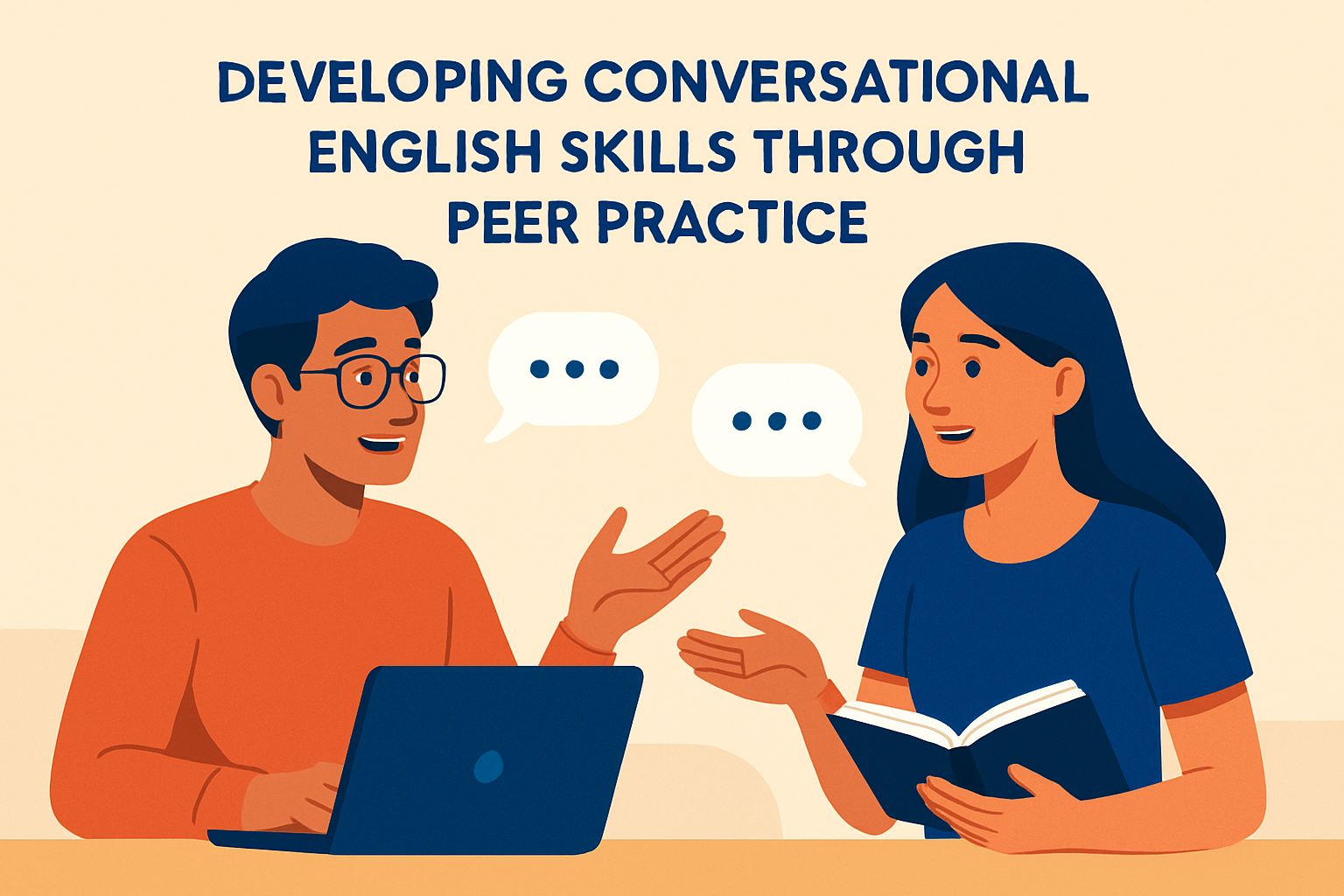
In today’s interconnected world, the ability to communicate effectively in English has become increasingly important. As a global lingua franca, English is often essential in academic settings, the workplace, and even casual interactions. Many individuals seeking to improve their English skills focus on aspects such as grammar and vocabulary, often neglecting an equally crucial element: conversational proficiency. Conversational English refers to the ability to communicate naturally and fluently with others in spoken English. This skill is not just about the words you use, but also about understanding context, tone, and cultural nuances.
Developing conversational English skills is particularly vital for non-native speakers who wish to integrate smoothly into English-speaking environments. The challenge often lies in transitioning from textbook English to real-world communication. One effective and often overlooked method to enhance these skills is through peer practice. This approach involves engaging with others, typically in informal settings, to practice speaking and listening in English. This article will explore how peer practice can be a powerful tool for developing conversational English skills, and why it matters.
Understanding the Benefits of Peer Practice
Peer practice is an interactive and dynamic method of learning that allows individuals to engage with their peers and improve language skills. It creates a learning environment that is collaborative rather than competitive, ensuring both participants have the opportunity to learn from each other. The relaxed setting often associated with peer practice reduces the anxiety and self-consciousness that can hinder language acquisition, making it easier for learners to express themselves freely.
For instance, consider the example of a university language exchange program where students pair up based on their native languages. A French-speaking student learning English and an English-speaking student learning French might meet regularly to practice each other’s languages. Through these sessions, the students would not only learn new vocabulary and phrases but also gain insights into cultural context and pronunciation nuances.
Moreover, peer practice allows learners to hear English as it is actually spoken in everyday situations, rather than the often stilted examples found in textbooks. This exposure to natural speech is invaluable for learning intonation, rhythm, and colloquial expressions that are critical for conversing fluently.
Implementing Structured Peer Sessions
While informal conversations can undoubtedly be beneficial, implementing a structured format for peer practice sessions can further enhance learning outcomes. Structured sessions involve setting specific goals and topics for each meeting, allowing participants to focus on particular areas they wish to improve.
A real-world example is a language club where members agree to discuss a different topic each week, such as travel, technology, or current events. These topics provide a framework for conversation, enabling participants to prepare relevant vocabulary and questions beforehand. Additionally, members can set personal goals like mastering five new idiomatic expressions or improving the clarity of their pronunciation.
During the sessions, it’s productive to alternate roles between speaker and listener. This practice ensures that everyone has equal opportunities to articulate thoughts and process the language comprehensively. It also helps participants develop better listening skills, which are just as crucial for effective conversation as speaking abilities.
Using Technology to Facilitate Peer Practice
The advent of technology has significantly broadened the scope of peer practice for English learners. Online platforms and mobile applications now allow users to connect with language partners from around the world, overcoming geographical barriers.
Take a platform like Tandem, an app that connects users with similar language interests globally. A Japanese learner of English might find a partner in Canada who is learning Japanese. This setup facilitates peer practice through text, audio, and video chat capabilities, enabling real-time communication. The app also often includes features like translational tools and error correction aids, supporting learners in overcoming language challenges.
The use of technology fosters consistency in practice by providing a convenient way to find partners and schedule sessions. With the flexibility to practice at any time and place, learners can more easily integrate language practice into their daily routines.
Overcoming Challenges in Peer Practice
While peer practice boasts numerous benefits, it is not without its challenges. Recognizing and choosing to overcome these hurdles can make the experience more rewarding and effective. A common issue faced by many learners is the potential imbalance in language proficiency levels between partners. This imbalance can impede learning if one participant consistently dominates the conversation or if discussions become one-sided.
To address this concern, it’s crucial to initiate conversations about individual learning goals and proficiency levels at the outset. Establishing a mutual understanding can help set boundaries and balance participation. For instance, allocating equal amounts of time to speak and listen can ensure fair engagement. Furthermore, using a timer for alternating turns can maintain this balance.
Another obstacle is sustaining motivation and consistency over time. Participants must remain committed and patient, recognizing that language acquisition is a gradual process. Setting short-term milestones alongside long-term goals can drive motivation. Additionally, incorporating variety into sessions, such as switching between fun topics and more demanding ones, can keep the practice both enjoyable and challenging.
A Practical Example of Peer Practice in Action
Consider an English Language Institute where conversation corners are organized every week. In these sessions, students of various nationalities gather to discuss predetermined topics. For instance, they might role-play real-life scenarios, such as ordering food at a restaurant or conducting a job interview.
This practical application not only aids in language acquisition but also encourages cultural exchange and understanding. Participants gain confidence as they practice scenarios they may encounter in everyday life. Here is a simple breakdown of a conversation corner setup:
- Topic of the Day: Job Interviews
- Preparation: Review common interview questions and answers
- Activity: Pair up to role-play an interview session
- Feedback Phase: Partners provide constructive feedback on language use and demeanor.
Such organized exercises prove beneficial by highlighting practical language use, offering immediate feedback, and fostering an engaging learning environment.
Measuring Progress and Continuous Improvement
One of the key aspects of improving conversational English skills through peer practice is measuring progress. Regular evaluation helps learners recognize improvements and identify areas that require further attention. This could be achieved through peer feedback, self-assessment, or language proficiency tests.
A valuable resource for self-assessment is the European Language Portfolio, which provides templates for language learners to track their language experiences and skills. Evaluating tangible factors such as vocabulary growth, fluency, and comprehension accuracy indicates how effectively the peer practice is serving the learner’s objectives.
Sustaining an attitude of continuous improvement is fundamental for ongoing language enhancement. Language learners should strive for incremental, achievable improvements while maintaining enthusiasm for the practice itself. Whether by setting new goals or revisiting and refining old ones, consistent effort is critical to achieving and maintaining proficiency.
Summary of Key Takeaways
To develop conversational English skills, one of the most effective approaches is peer practice. This method alleviates the isolation often experienced in language learning by fostering a shared, interactive space where learners can engage and enhance their language skills. It helps build fluency, expose learners to real-world language use, and encourage cultural exchange. By structuring sessions, employing technology, and setting clear goals, participants can derive the maximum benefit from peer practice. Overcoming challenges and measuring progress ensures that the pursuit of language proficiency remains effective and rewarding.
As a reader seeking to improve your English, consider starting a peer practice routine of your own. Connect with peers through local language groups or online platforms and set achievable and tailored goals. In doing so, you’ll take a significant step towards not just learning English, but living it. Embrace the journey, and before long, you’ll find yourself engaging in conversations with greater confidence and fluency.
Frequently Asked Questions
1. Why is conversational English important in today’s world?
Conversational English is a fundamental component of effective communication in our increasingly globalized world. As English is the most commonly spoken language internationally, achieving proficiency in it opens numerous doors. Mastering conversational English goes beyond the textbook rules and vocabulary; it is about building the ability to interact naturally, which is essential for meaningful connections in various spheres. In academic contexts, it can facilitate collaboration with peers from different backgrounds. In professional settings, conversational skills can distinguish candidates in job interviews and aid in daily workplace communication. In casual interactions, it can enhance personal relationships and cultural exchanges. Hence, neglecting this aspect can lead to missed opportunities and potential misunderstandings.
2. How can peer practice help in enhancing conversational English skills?
Peer practice is a highly effective method for improving conversational English skills because it provides a real-world context. Engaging with peers allows individuals to apply and reinforce what they have learned about English in a dynamic manner. Through peer interactions, learners can experiment with language in a safe environment, receive instant feedback, and adapt to different communication styles and accents. This practical approach helps in building confidence, as it mimics natural conversations, pushing learners to think spontaneously and respond in real time. Moreover, peer practice encourages active listening, which is crucial for understanding context, tone, and nuances in conversations. Friends or fellow learners practicing together can also share strengths and weaknesses, fostering an environment of mutual support and growth.
3. What are some effective peer practice activities to improve conversational English?
There are numerous engaging activities that peers can undertake to improve their conversational English. Role-playing can be particularly beneficial, as it encourages learners to assume different personas, scenarios, and dialogues. This activity enhances vocabulary and adaptability to various social contexts. Conversation clubs can provide a structured yet relaxed environment where topics can range widely, giving participants the chance to express opinions and practice argumentation. Language exchange partnerships with native English speakers or those proficient in English can offer valuable cultural insights and authentic expressions. Additionally, activities like storytelling, debates, and group discussions are excellent for developing fluency and understanding how to articulate thoughts clearly and coherently.
4. How can someone overcome fear or anxiety when practicing conversational English with peers?
Fear and anxiety are common barriers but can be overcome with time and strategic approaches. Firstly, it’s important to acknowledge that making mistakes is a natural part of the learning process. Establishing a supportive peer group that encourages and reassures one another can significantly alleviate stress. It’s also beneficial to start practicing in low-pressure environments, gradually building complexity and confidence. Setting realistic goals, such as focusing on certain phrases or topics, can help learners track their progress and stay motivated. Regular exposure to the language by listening to podcasts, watching films, or engaging in English-speaking communities can build familiarity and ease apprehension. Mindfulness techniques, like deep breathing and visualization exercises, can also be effective in calming nerves before engaging in conversations.
5. How can one measure improvement in conversational English through peer practice?
Measuring progress in conversational English can be subtle and varies among learners. One of the most straightforward methods is self-assessment, where individuals reflect on their confidence and willingness to participate in conversations compared to when they began. Peer feedback plays a crucial role, as discussing progress with peers can provide external insights on areas of improvement and achievements. Recording and listening to conversations can also help in identifying specific areas needing improvement, such as pronunciation or fluency. Keeping a journal of conversations, noting vocabulary used and new expressions learned, serves as a tangible record of development. As learners become increasingly comfortable discussing complex topics or engaging with diverse conversational partners, the improvement will become apparent. Participation in formal language assessments or certifications can also quantify progress and provide an objective measure of conversational skills.





