
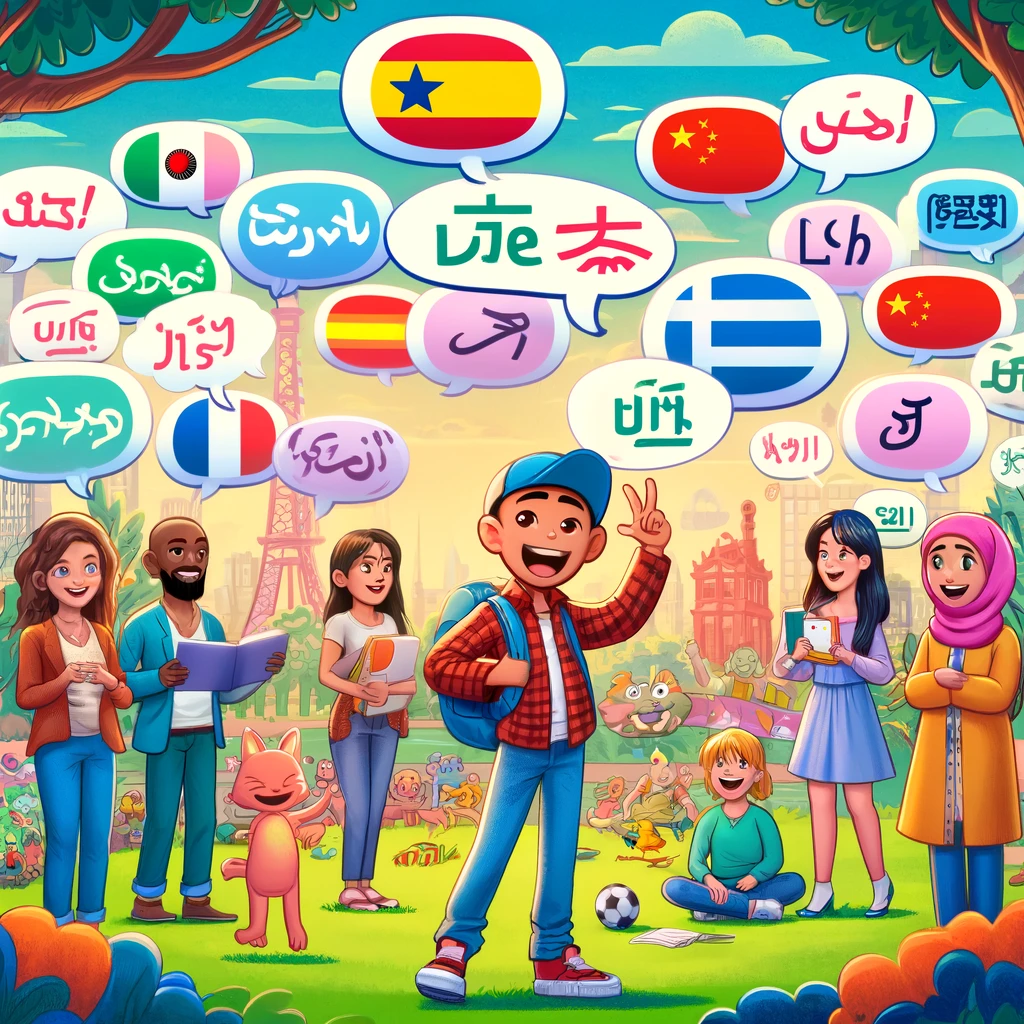
In today’s globalized world, the ability to speak more than one language is more than just a communication tool—it’s a gateway to a host of benefits that can enhance your personal, academic, and professional life. Multilingualism, the capacity to communicate in multiple languages, offers advantages that go beyond the mere ability to converse with a wider range of people. Here, we explore how learning additional languages can positively impact your cognitive abilities, career prospects, cultural understanding, and even health.
Cognitive Advantages
Learning and using more than one language has significant cognitive benefits. Research shows that multilingual individuals often have better problem-solving skills, enhanced creativity, and improved multitasking abilities. When you speak multiple languages, your brain constantly switches between different linguistic systems. This mental juggling strengthens your executive functions, which are crucial for planning, focusing attention, and performing multiple tasks simultaneously.
Moreover, multilingualism can enhance your memory. Regular use of multiple languages exercises your brain, helping to improve both your short-term and long-term memory capabilities. This can be particularly beneficial in academic settings, where retaining information accurately is crucial.
Educational Benefits
Multilingual individuals often have a distinct advantage in educational settings. The skills developed through learning additional languages, such as enhanced memory and improved analytical skills, contribute to better academic performance across various subjects. Additionally, multilingual students tend to have a deeper understanding of language mechanics, which can lead to better writing and communication skills in all languages they speak.
Language learning also exposes students to different sentence structures and vocabularies, which can broaden their linguistic and cognitive horizons. This exposure not only aids in language-related tasks but also in understanding complex concepts in subjects like math, science, and social studies.
Professional Opportunities
In the professional realm, multilingualism can open doors to numerous opportunities. Many employers today value linguistic diversity, particularly in roles that involve communication, cultural sensitivity, or international markets. Being able to speak multiple languages can make you a more attractive candidate in the global job market.
Multilingual employees can also negotiate higher salaries and are often given more significant roles in projects involving international collaboration. Furthermore, multilingualism allows for better networking opportunities, giving you access to a broader spectrum of professional contacts and resources.
Cultural Understanding and Sensitivity
One of the most enriching aspects of multilingualism is the deep cultural understanding that comes with it. Each language carries its nuances, expressions, and ways of seeing the world. By learning a new language, you gain insights into the customs, traditions, and social norms of the cultures associated with that language. This can lead to a greater appreciation for diversity and a more inclusive attitude towards people from different backgrounds.
Furthermore, cultural sensitivity honed through language learning is invaluable in today’s diverse global environment. It enables more effective communication and collaboration across cultures, which is crucial in both personal and professional contexts.
Health Benefits
There are also long-term health benefits associated with multilingualism. Studies have shown that the mental challenge of managing multiple languages can help keep the brain sharp and resilient. This cognitive reserve is linked to a delayed onset of age-related mental decline and can reduce the risk of developing dementia and Alzheimer’s disease.
The ability to speak multiple languages is an invaluable skill that can significantly enhance your mental flexibility, cultural understanding, and professional marketability. Whether through improved cognitive functions, educational advantages, professional opportunities, or health benefits, multilingualism opens up a world of possibilities that go far beyond simple communication.
By embracing multilingualism, you not only gain the ability to communicate with more people but also open yourself up to a richer, more understanding, and connected life. As our world becomes increasingly interconnected, the ability to navigate multiple languages and cultures will continue to be a crucial skill, enriching your life in countless ways.

Personal Growth and Enhanced Life Experiences
Beyond the cognitive, educational, and professional benefits, being multilingual can profoundly influence personal growth and life experiences. Speaking multiple languages allows for deeper and more meaningful interactions when traveling or living abroad. It enables you to engage directly with different people and immerse yourself fully in their lifestyle, which can lead to a more authentic and enriching experience.
Multilingual individuals often report feeling more confident and adaptable in new environments. This adaptability is not just beneficial when traveling—it also enhances one’s ability to navigate various social and professional situations at home. Learning a new language opens up a multitude of social circles and can lead to lifelong friendships and connections that might never have formed otherwise.
Enhanced Communication Skills
Multilingual people tend to develop superior communication skills. By learning how languages can differ in structure, tone, and expression, they become more adept at choosing the right words and constructing clear and effective communication. This skill is invaluable not just in personal interactions but also in professional settings, where clear and precise communication is often essential for success.
The ability to understand and convey subtle nuances in different languages can also lead to improved empathy. Multilingual individuals are often better at reading social cues and adjusting their communication style to fit the context and audience. This can lead to more effective and harmonious interactions both in the workplace and in personal relationships.
Economic Benefits
On a broader scale, multilingualism can also have significant economic benefits. For countries, a multilingual population can enhance international trade and open up additional avenues for economic development. Companies that embrace linguistic diversity have a better reach into global markets and can provide more effective customer service and support.
Furthermore, multilingualism can boost tourism, as tourists are often more comfortable visiting countries where they can speak their own language or find information readily available in multiple languages. This inclusivity can enhance the tourist experience, leading to increased visitor numbers and boosting local economies.
Challenges of Multilingualism
While the benefits of multilingualism are significant, it is also important to acknowledge the challenges that can come with it. Learning a new language is a time-consuming and often challenging endeavor, especially for adults. It requires dedication, resources, and sometimes financial investment in lessons and materials.
Additionally, in multilingual families, maintaining a balance between languages so that each language is sufficiently developed can be challenging. There is often a dominant language that can overshadow the others, particularly in settings where one language is predominantly spoken.
Encouraging Multilingualism
Given the numerous benefits of being multilingual, it is beneficial for individuals and societies to promote language learning. Schools can support language programs from an early age, which can help children develop proficiency in multiple languages more naturally. Governments and institutions can also play a role by providing resources and creating policies that encourage multilingual education and public services.
Final Thoughts
The journey to becoming multilingual is one of the most rewarding endeavors one can undertake. It opens up new horizons in every aspect of life—from cognitive and professional to personal and cultural. As the world continues to become more interconnected, the value of multilingualism only grows. Embracing multiple languages is not just about learning to speak another language; it’s about opening doors to a more connected, understanding, and enriched life.
Multilingualism is not merely a skill; it’s a lifelong asset that enhances every aspect of your life, equipping you with the tools to succeed in a global society. Whether you are seeking to enhance your career, enrich your education, or expand your cultural horizons, the effort to learn new languages is undoubtedly a worthwhile investment.





