

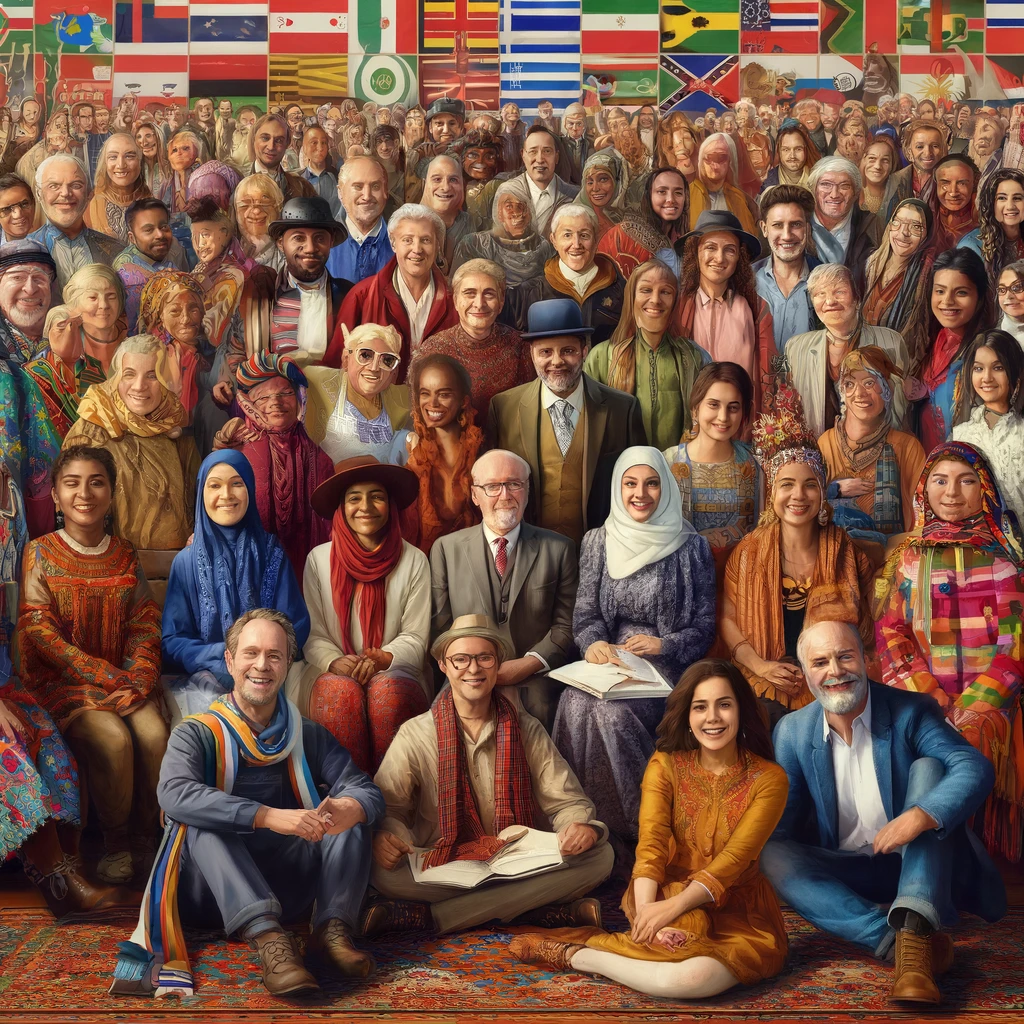
The English language is a global tapestry, intricately woven with threads of diverse cultures, histories, and perspectives. From its Anglo-Saxon roots to its current status as a lingua franca, English mirrors the human capacity for adaptation and communication. Celebrating the diversity of English involves acknowledging its dynamic nature and the numerous voices that contribute to its ongoing evolution.
For many, English serves as a second language, intertwined with their native tongues. This fusion has birthed unique English varieties, reflecting the grammars and vocabularies of local languages. Such diversity, far from being non-standard, enriches English, underscoring its ability to adapt and evolve.
Literary and Artistic Expressions
English’s literary heritage is vast, with writers like Chinua Achebe, Salman Rushdie, and Toni Morrison using it to articulate their distinct cultural narratives. In music, cinema, and visual arts too, English is a bridge, connecting creative expressions across cultures.
The Digital Age and English
The advent of digital communication has revolutionized English usage. Text-speak and internet slang are reshaping the language, as global interactions via social media and forums spur rapid linguistic changes.
Challenges and Opportunities
The widespread use of English also presents challenges. Its dominance can overshadow local languages and dialects, raising concerns about linguistic diversity and cultural sensitivity. Efforts to promote multilingualism and preserve linguistic diversity are crucial to balance the global influence of English.
Language Learning in Classrooms
In educational settings, language diversity is celebrated through initiatives like language portraits, where students reflect on their linguistic backgrounds, fostering a sense of belonging and understanding. These portraits can include elements like the languages students think in, use with family, or wish to learn, enhancing their awareness of their multilingual identities.
Personal Experiences with English
English learners often share their journeys and struggles with the language, highlighting its role as a crucial skill in today’s world. From seeking better job opportunities to integrating into new cultures, mastering English can be both a challenge and an opportunity for personal growth.
The Influence of Youth and Pop Culture
The evolution of English is significantly influenced by young people and popular culture. New slang, phrases, and colloquialisms often originate in youth cultures and online communities, eventually becoming part of mainstream language. This reflects a vibrant, ever-changing aspect of English, illustrating how each generation contributes to the language’s ongoing transformation.
English in Education
The role of English in education cannot be overstated. It is often the primary language of instruction in international contexts, providing a key to global educational resources and scientific research. For many non-native speakers, proficiency in English is a gateway to vast knowledge and opportunities.
Non-Native Speakers and Global Communication
English serves as a bridge to the global community for non-native speakers. It allows access to international dialogues, news, and collaborations. However, the predominance of English can create challenges, such as language barriers and the risk of overshadowing local languages. Balancing the spread of English with respect for linguistic diversity is essential.
The Digital Era’s Impact on English
The digital age has dramatically transformed English usage. The internet democratizes language, allowing diverse voices to influence its evolution. Platforms like social media and blogs are hotbeds of linguistic innovation, where English adapts rapidly to new communication forms.
Internet Slang and Emojis
The rise of internet slang and emojis has introduced a new lexicon, transcending traditional language barriers. Terms like “LOL,” “BRB,” and various emojis have gained universal recognition, showcasing English’s adaptability to digital communication modes.
English and Artificial Intelligence
In the realm of artificial intelligence (AI), English plays a pivotal role. As AI systems are mainly developed in English, the language’s nuances present both challenges and opportunities in natural language processing and machine learning.
Critiques and Challenges of English’s Dominance
English’s global stature brings numerous benefits, but it also faces criticism. Concerns include the marginalization of local languages and cultures, the homogenization of global communication, and the dominance of Anglo-American perspectives. Addressing these issues is key to celebrating English while maintaining cultural sensitivity.
Language Preservation and Linguistic Diversity
Promoting linguistic diversity and preserving languages are critical in the era of English’s global dominance. Encouraging multilingualism and supporting the learning of different languages are vital steps towards maintaining linguistic diversity.
Case Studies: The Diversity of English Language Learners
Consider the diverse experiences of English language learners like Marla and Alberto. Marla, needing intensive phonics and English vocabulary tutoring, and Alberto, facing challenges due to his transient lifestyle and language background, exemplify the varied needs of learners. Understanding these unique challenges is crucial for educators and policy-makers in developing effective language learning strategies.
The Unifying Power of English
Despite the challenges, the unifying power of English in today’s globalized world is undeniable. It enables cross-cultural communication and fosters understanding among people from different backgrounds. As English continues to evolve, influenced by technology, globalization, and cultural exchanges, its role as a global medium of exchange is expected to persist.
Conclusion
Celebrating the diversity of the English language is more than just recognizing its global reach; it is about appreciating its capacity to unify and adapt. It requires a balance between embracing English as a tool for global communication and respecting the linguistic heritage of various communities. By acknowledging the multifaceted nature of English, we can appreciate its role as a cultural bridge, an educational key, and a dynamic medium of expression. As we move forward, the future of English will likely continue to be shaped by global trends, technological advancements, and the rich tapestry of cultures that contribute to its ongoing evolution.
References:
5 Minute English (that’s us!)





