

Learning a new language, especially English as a Second Language (ESL), can be a challenging yet rewarding journey for children. The key to success in this endeavor lies in making the learning process engaging, interactive, and, most importantly, fun. This comprehensive guide provides a range of creative activities that can transform ESL learning for children into an enjoyable and effective experience.
Interactive Storytelling
Stories have always been a captivating way to engage young minds, and they serve as an excellent tool for teaching ESL. Interactive storytelling involves more than just reading a story; it includes activities that make the narrative come alive.
- Story Reenactment: After reading a story, encourage children to act it out. This helps with understanding plot, characters, and vocabulary. Costumes and props can add an extra layer of excitement.
- Story Creation: Let children create their own stories. This fosters creativity and allows them to practice vocabulary and grammar in a context they have created themselves.
Thematic Vocabulary Games
Vocabulary is a cornerstone of language learning. Games make the memorization of new words less tedious and more enjoyable.
- Word Bingo: Create bingo cards with ESL vocabulary words. As you call out the words, children mark them on their cards. This game is excellent for reinforcing new vocabulary.
- Pictionary: This classic game can be tailored for ESL learning. Children draw pictures representing words they have learned, while others guess the word in English.
Interactive Language Arts
Language arts activities encourage the use of English in creative and expressive ways.
- Poetry and Rhymes: Teaching children to write simple poems or rhymes in English can enhance their understanding of the language’s rhythm and structure.
- Journal Keeping: Encourage daily journaling in English. This helps with writing practice and allows children to express their thoughts and experiences in the new language.
Music and Songs
Songs are an effective and enjoyable way to learn a new language. They help with pronunciation, vocabulary, and understanding language rhythm.
- Sing-Along Sessions: Integrate popular English songs into the learning process. Choose songs with simple, repetitive lyrics that are easy for children to understand and memorize.
- Create a Song: Have children compose their own songs in English. This can be a group activity where each child contributes a line to the song.
Cooking and Food-Related Activities
Cooking is a fun and interactive way to learn language, as it involves following instructions and identifying ingredients.
- Recipe in English: Have children follow a recipe written in English. This helps them learn food-related vocabulary and gives them a sense of accomplishment as they create something edible.
- Food Diary: Encourage children to keep a diary of what they eat, written in English. This can be extended to include a description of the taste, texture, and their personal thoughts on the food.
Technology-Integrated Learning
In today’s digital age, technology plays a vital role in education. Integrating technology into ESL learning can make the process more engaging.
- Educational Apps and Games: Utilize apps and online games designed for ESL learning. These interactive tools can enhance vocabulary and grammar skills.
- Virtual Reality (VR) Experiences: VR can immerse children in English-speaking environments, allowing them to practice conversational skills in a simulated setting.
Art and Craft in English
Art and craft activities are not only enjoyable but also offer a medium through which language can be practiced.
- Art Projects with Instructions in English: Conduct art and craft sessions where instructions are given in English. This helps children associate words with actions and objects.
- Storybooks Creation: Have children create their own storybooks in English. This includes writing the story and illustrating it, which integrates both language and artistic skills.
Outdoor Language Games
Outdoor activities can be both refreshing and educational. They provide a change of scenery and a different context for language learning.
- Scavenger Hunt: Organize a scavenger hunt where clues are given in English. This encourages children to read and understand English in an active and engaging way.
- Language Sports Day: Incorporate English into physical education by using English commands and vocabulary during sports and outdoor games.
Cultural Exchange
Understanding the culture behind a language can significantly enhance the learning experience.
- International Day: Host an ‘International Day’ where children learn about countries where English is spoken. This can include food, traditional clothing, and basic phrases from those cultures.
- Pen Pals: Establish a pen pal program with children from English-speaking countries. This provides real-life practice in writing and reading English.
Reflection and Feedback Sessions
It’s important for children to reflect on their learning journey and receive feedback.
- Show and Tell: Regularly hold ‘Show and Tell’ sessions where children can present something they have learned in English.
- Feedback Circle: Create a positive environment where children can give and receive feedback on their use of English, fostering a supportive learning community.
Engaging children in ESL learning through fun activities not only aids in their language development but also instills a lifelong love for learning. By incorporating a variety of interactive, creative, and technology-based methods, we can provide young learners with a rich and diverse language learning experience.
Role-Playing and Drama
Drama and role-playing are excellent ways for children to practice speaking and listening in English. It encourages them to think on their feet and use language in a dynamic context.
- Role-Playing Scenarios: Create scenarios where children have to act out roles, such as at a restaurant, airport, or doctor’s office. This helps them learn practical, conversational English.
- Mini Dramas: Have children work in groups to create and perform short plays in English. This can include scriptwriting, which further enhances their writing skills.
Language-Based Field Trips
Field trips can provide an immersive English learning experience. They can be tied to the curriculum or simply be an opportunity to use English in a new environment.
- Museum Visits: A trip to a museum, with guides speaking in English or using English audio guides, can enhance vocabulary related to history, art, and science.
- Nature Walks: Organize nature walks where children have to describe their surroundings in English. This can include naming plants, animals, and geographical features.
Science Experiments in English
Conducting science experiments in English combines language learning with scientific inquiry, making both subjects more interesting.
- Experiment Instructions: Give instructions for simple experiments in English. This can include measuring ingredients, observing reactions, and noting results.
- Science Journals: Encourage children to keep a science journal in English, documenting their hypotheses, observations, and conclusions.
Language Learning Through Board Games
Board games can be a fun and effective way to learn language skills. Games that involve words or storytelling can be particularly useful.
- Scrabble and Word Games: Use games like Scrabble or other word-building games to enhance vocabulary and spelling skills.
- Storytelling Games: Games that involve creating stories can be great for practicing sentence structure and narrative skills.
Digital Storytelling
Digital storytelling involves using computer-based tools to tell stories, combining images, text, and audio.
- Create Digital Storybooks: Use software or apps where children can create their own digital storybooks in English.
- Animated Stories: Encourage children to create simple animations that tell a story, with voiceovers and dialogues in English.
Collaborative Learning Projects
Projects that involve collaboration with others can enhance communication skills and teamwork, alongside language learning.
- Group Presentations: Assign topics for groups to research and then present in English. This helps with both spoken and written English skills.
- Cultural Exchange Projects: Collaborate with schools in English-speaking countries on joint projects, allowing for cultural and linguistic exchange.
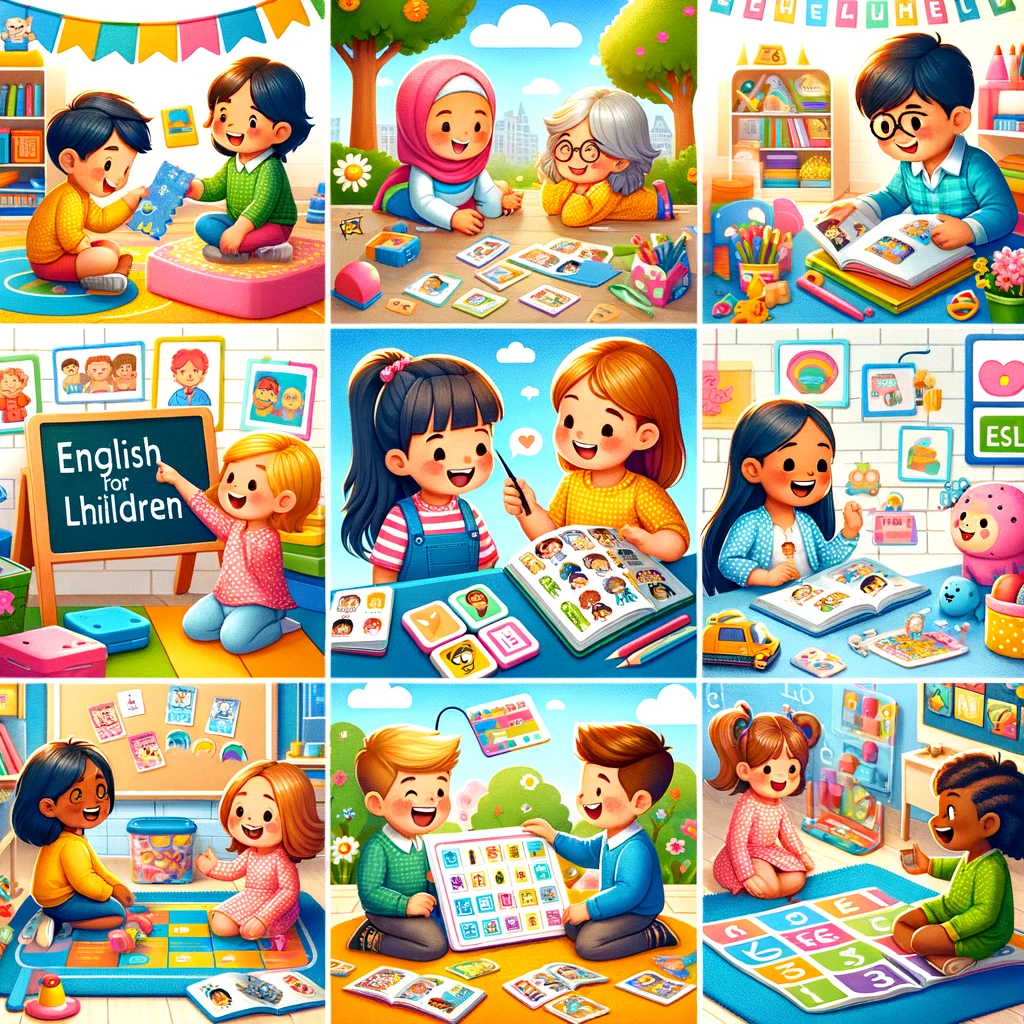
Language Learning Through Sensory Play
Younger children, in particular, benefit from sensory play which involves tactile experiences.
- English in Play-Dough: Use play-dough to form letters and words, combining tactile learning with language.
- Sensory Bins with English Objects: Fill sensory bins with objects that have labels in English, encouraging children to associate words with physical items.
Celebration of Progress
Recognizing and celebrating progress in learning English can be a huge motivator for children.
- Certificate of Achievement: Award certificates for reaching certain milestones in English learning.
- Language Learning Showcase: Hold an event where children can showcase what they have learned, be it through a play, a song, or a presentation.
Incorporating Parents and Guardians
Involving parents and guardians in the language learning process can reinforce the child’s learning at home.
- Family Language Nights: Organize evenings where families can come and participate in English language games and activities.
- Home Learning Kits: Provide materials and ideas for language activities that children can do at home with their families.
Incorporating these diverse and interactive activities into ESL teaching not only makes learning more enjoyable for children but also significantly enhances their language acquisition and retention. By engaging multiple senses, encouraging creativity, and providing real-life contexts for language use, we empower young learners to confidently communicate and express themselves in English.
These activities, while fun, also lay a solid foundation in English, which is crucial for children’s future academic and personal success in an increasingly globalized world. Remember, the goal is to create a positive and encouraging learning environment where children feel safe to experiment, make mistakes, and grow in their language abilities.





