
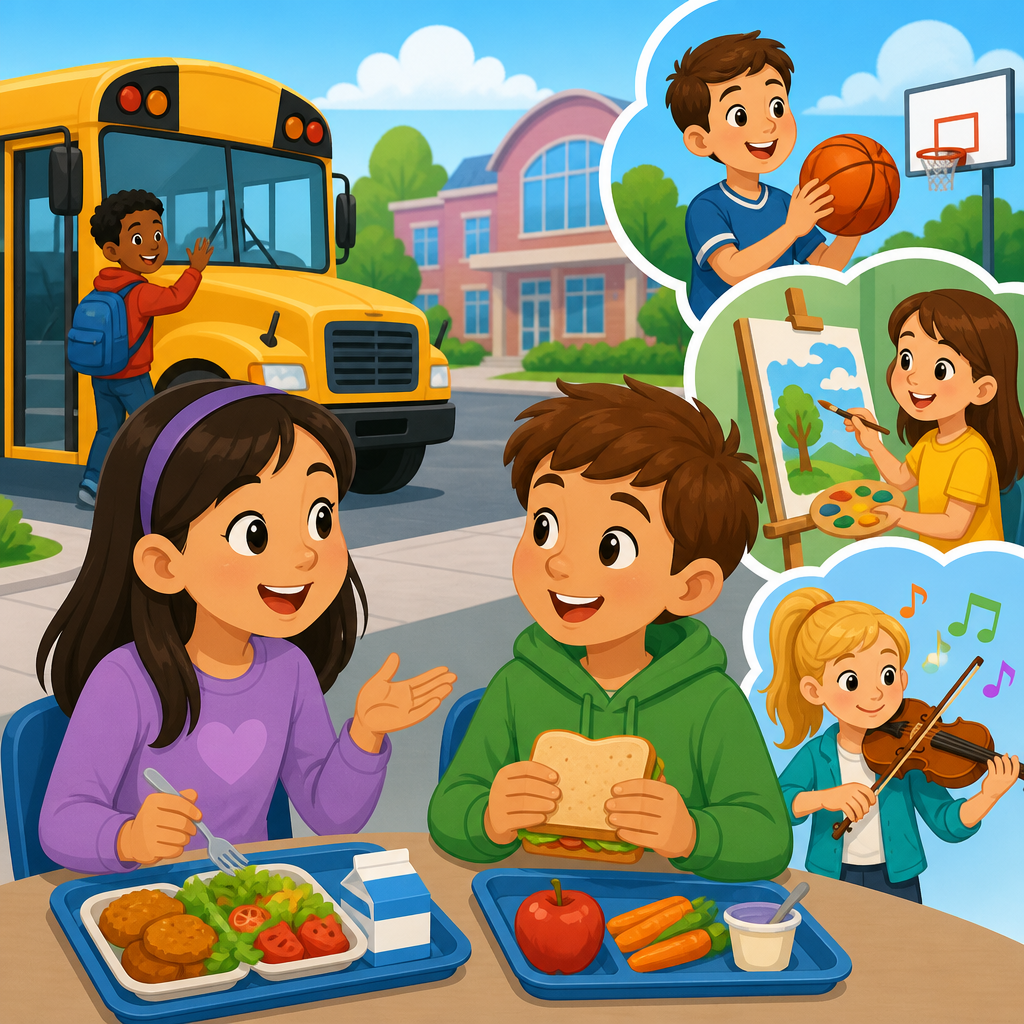
English for asking about school lunches, buses, and activities is practical language that helps parents, students, and caregivers handle daily school communication with confidence. In real school offices, front-desk staff answer the same core questions every day: What is for lunch, when does the bus arrive, how do I sign up for an activity, and who should I contact if something changes? Knowing the right words makes those conversations faster and clearer. It also reduces misunderstandings that can affect a child’s routine, safety, and participation.
In this context, school lunches means cafeteria meals, menus, payment accounts, allergy accommodations, and meal eligibility. Buses refers to routes, stops, pickup and drop-off times, delays, driver contact procedures, and transportation rules. Activities includes after-school clubs, sports, music, field trips, enrichment programs, and the forms or fees connected to them. These categories seem simple, but the language around them is often specific. Schools may use terms such as homeroom, dismissal, route number, eligibility, permission slip, late bus, and dietary restriction. If you do not know these terms, even a basic phone call can become stressful.
I have worked with school communication language in parent-support settings, and the same pattern appears again and again: families usually do not need advanced grammar, but they do need accurate phrases, predictable question formats, and the confidence to ask for repetition. This matters especially for nonnative English speakers entering a new school system. A parent might understand everyday English yet still struggle with a sentence like, “Transportation reassigned your student to an alternate stop pending capacity review.” Clear school English helps you decode messages like that, ask follow-up questions, and confirm the exact next step. The goal is not perfect English. The goal is getting correct information quickly.
How to ask about school lunches clearly
When asking about school lunches, start with the most direct question possible. Good examples include: “What is on the lunch menu today?” “Does the school offer a vegetarian option?” “How do I add money to my child’s lunch account?” and “Who should I speak to about a food allergy?” These questions work because they are specific and easy for office staff or cafeteria staff to answer. In my experience, vague questions such as “Can you help me with lunch?” usually lead to extra back-and-forth.
Useful lunch vocabulary includes menu, cafeteria, tray, meal account, free or reduced-price meals, allergy, ingredient list, substitute meal, and packed lunch. If your child has a medical or religious dietary need, say that early in the conversation. For example: “My child has a peanut allergy. Is there a safe lunch option, and do you need a doctor’s note?” or “We do not eat pork. Can you tell me which menu items are suitable?” Staff can answer better when they know the exact restriction.
It is also important to confirm process details. Ask, “Is the menu posted online every week?” “Can students buy extra snacks?” “What happens if my child forgets lunch money?” and “Does the cafeteria accept cash, or is it account only?” Many districts use payment tools such as MySchoolBucks or SchoolCafe, while others manage balances through the district portal. If the explanation is too fast, use a repair phrase: “Could you please repeat the website name?” or “Can you spell that for me?” Those short questions prevent costly mistakes and save time later.
How to ask about school buses and transportation
Transportation questions need precision because they affect safety and timing. The most useful opening questions are: “What bus does my child take?” “Where is the bus stop?” “What time is pickup and drop-off?” and “Who should I contact if the bus is late?” Ask for the route number, the stop location, and the scheduled time, then repeat the details back. A strong confirmation sentence is: “So the bus stop is in front of the library at 7:12 a.m., and the route number is 14. Is that correct?” Repeating details is a standard communication technique in schools because it catches errors immediately.
Parents also need language for changes and problems. If your child will not ride the bus one day, say, “My child will be a parent pickup today, not a bus rider. Do I need to notify the teacher and the office?” If you moved recently, ask, “We have a new address. When will transportation update the route?” If the bus is late, use direct factual language: “The bus has not arrived, and it is now 7:25. Has there been a delay?” Avoid emotional wording first; clear facts get faster results.
Some terms can confuse learners because schools use them differently from everyday speech. Dismissal means the time students are released. An alternate stop is a different approved bus stop. A late bus may be a delayed regular bus or a separate bus for after-school programs. If you need broader practice with school-related phone communication, the main pillar guide at https://5minuteenglish.com/english-for-booking-a-doctors-appointment-by-phone/ is a useful model for asking concise questions, confirming details, and ending calls clearly.
| Situation | Best question to ask | Useful follow-up |
|---|---|---|
| Bus stop location | “Where is my child’s assigned bus stop?” | “Can you give me the nearest address or landmark?” |
| Pickup time | “What time should my child be at the stop?” | “How early do you recommend arriving?” |
| Bus delay | “Has the bus been delayed today?” | “Approximately how many minutes late is it?” |
| Route change | “Has my child’s route number changed?” | “When does the new route start?” |
| After-school ride | “Is there a late bus for activities?” | “Which students are eligible to ride it?” |
How to ask about school activities, clubs, and sports
School activities often involve more hidden details than families expect. A parent may ask, “How do I sign my child up for chess club?” but the real issues are schedule, grade eligibility, fees, transportation, supervision, and deadlines. Start with one complete question: “My child is interested in the art club. What days does it meet, what time does it end, and how do I register?” That format gets the three facts families need most: timing, process, and commitment.
Common activity vocabulary includes club, tryout, practice, coach, advisor, season, fee, waiver, permission slip, pickup policy, and eligibility. If an activity has limited space, ask, “Is registration first come, first served?” For sports, ask, “Does my child need a physical exam before participating?” In many U.S. schools, athletics require a current physical, emergency contact forms, and sometimes academic eligibility standards. For music or field trips, you may need instrument rental forms or payment deadlines.
Use practical questions that anticipate problems before they happen. Ask, “Is transportation provided after the activity?” “Can my child join after the semester starts?” “What should students bring?” and “Who supervises students until pickup?” In my work with school communication, this last question matters more than many parents realize. A club may end at 4:15, but supervised pickup may end at 4:25. Knowing that difference prevents children from being left waiting.
If your child is shy or still learning English, you can ask for support directly. Say, “My child is interested but nervous. Is there someone who can help new students join?” That is a realistic and effective question. Advisors, counselors, and homeroom teachers often make introductions that ease participation. The best activity conversations are not only about forms; they are about making sure the child can actually take part successfully.
Useful phrases for phone calls, emails, and office visits
The same communication pattern works across lunches, buses, and activities: greet the staff member, identify the student, ask one focused question, confirm the answer, and note the next step. A strong opening is: “Hello, this is Maria Lopez, Ana Lopez’s mother in third grade. I’m calling to ask about the bus schedule.” This gives the school the identifying information it needs immediately. If you are writing an email, put the topic in the subject line, such as “Question about bus route for Ana Lopez.”
Several phrases consistently improve clarity. To ask politely: “Could you tell me…?” “Can you help me understand…?” and “Who should I contact about…?” To confirm: “Just to make sure I understood…” “So the deadline is Friday, correct?” and “Let me repeat that back.” To request repetition: “Could you say that more slowly?” “Could you spell the name?” and “Can you send that in writing?” These are high-value phrases because they turn partial understanding into complete understanding.
Office visits require concise speaking because school staff are often managing attendance, dismissal, and parent questions at the same time. Lead with the reason for your visit: “I’m here to ask about lunch account payments,” or “I need information about the late bus for robotics club.” Bring names, dates, and any forms you already have. Specific information helps staff solve the issue during one interaction instead of sending you elsewhere.
Common mistakes and how to avoid them
The most common mistake is asking broad questions without context. “What about the bus?” is too vague. Say, “What time does bus 22 pick up students at Maple Street?” Another common mistake is forgetting to identify the student. Many answers depend on grade level, route assignment, allergy records, or activity eligibility. Give the student’s full name and, if relevant, grade or homeroom.
A third mistake is not confirming numbers, times, and names. Transportation and activity details often change, especially at the start of the school year. Repeat back route numbers, room numbers, dates, and deadlines. A fourth mistake is assuming one staff member handles everything. Cafeteria managers, transportation departments, club advisors, nurses, and front-office staff all cover different tasks. Ask, “Are you the right person for this, or should I contact someone else?” That question saves time and shows professionalism.
Finally, do not be afraid to ask for plain English. If a staff member uses complex wording, say, “Could you explain that in a simpler way?” Schools would rather repeat information than have a family misunderstand a health form, a bus assignment, or an activity rule.
Strong English for asking about school lunches, buses, and activities is not academic English; it is action English. You need the words that help you get a menu answer, confirm a bus stop, understand a late pickup policy, or complete a registration correctly. The most effective approach is simple: ask specific questions, use the right school terms, confirm key details, and request written follow-up when needed. Those habits improve accuracy, reduce stress, and help children participate fully in school life.
Focus on the questions you are most likely to use this week. Practice them out loud, save them in your phone, and use the same clear structure in calls, emails, and office visits. When families communicate clearly with schools, routines run more smoothly and problems get solved faster. Start with one area—lunches, buses, or activities—and build confidence from there.
Frequently Asked Questions
1. What are the most useful English questions to ask about school lunch?
When asking about school lunch, it helps to use clear, simple questions that school staff hear every day. Useful examples include: “What is for lunch today?” “Where can I see the lunch menu?” “Does the school offer vegetarian or allergy-friendly meals?” “How much does lunch cost?” and “What should I do if my child brings lunch from home?” These questions are direct, polite, and easy for front-desk staff, cafeteria staff, or teachers to answer quickly.
You can also ask follow-up questions if you need more details. For example: “Does the menu change every week?” “Can my child buy milk separately?” “Who should I contact about food allergies?” or “What time is lunch for my child’s grade?” If you are a parent or caregiver, it is especially helpful to learn phrases such as “My child has a dairy allergy,” “My child cannot eat peanuts,” or “Can you tell me how to update lunch account information?” This kind of practical vocabulary makes communication smoother and helps prevent confusion.
In real situations, confidence matters as much as grammar. Even if your English is still developing, polite phrases such as “Could you help me?” “Can you explain that again?” and “I just want to confirm…” can make a big difference. School staff usually appreciate clear, respectful questions, and using common lunch-related vocabulary helps you get accurate answers faster.
2. How can I ask about school bus times, stops, and transportation changes in English?
To ask about school buses, start with the basic information you need most. Common questions include: “What time does the bus arrive?” “Where is the bus stop?” “Which bus does my child take?” and “What time does the bus leave school?” These are essential questions for daily routines, and they are easy for transportation staff or office staff to understand. If you need to be more specific, you can say, “I’m calling about my child’s afternoon bus,” or “I need information about morning pickup.”
Transportation changes are also very common, so it is useful to know how to explain them clearly. You might say, “My child will not ride the bus today,” “There is a change in pickup,” “Someone else will pick up my child,” or “Who should I contact if the bus is late?” These phrases help schools respond quickly, especially when plans change at the last minute. If you are unsure whether your message was understood, add a confirmation question such as, “Could you repeat that bus number, please?” or “Can you confirm the pickup location?”
It is also important to know the right vocabulary: bus stop, route, pickup, drop-off, dismissal, late bus, transportation office, and emergency contact. These words appear often in school communication. If the situation is urgent, be direct and calm: “The bus has not arrived yet,” “My child missed the bus,” or “I need help with transportation today.” Clear English helps staff solve the problem faster and reduces the chance of misunderstandings.
3. What should I say in English when asking about school clubs, sports, and other activities?
When asking about school activities, you usually want to know what is available, how to join, and what the schedule is. Good starter questions include: “What after-school activities are available?” “How do I sign up for a club?” “Is there a fee?” “When does the activity start?” and “Who is the teacher or coach in charge?” These questions give you the main practical details you need before making a decision.
If your child is interested in a specific program, you can ask more focused questions such as: “Is there space available in the art club?” “What days does soccer practice meet?” “Does my child need any special equipment?” “Is transportation provided after the activity?” or “What time should students be picked up?” These questions are especially useful because activities often involve schedule changes, permission forms, or extra planning for families.
Helpful activity-related vocabulary includes club, team, practice, rehearsal, sign-up form, permission slip, registration, advisor, coach, and schedule. You may also need phrases like “My child wants to join,” “We are interested in this program,” or “Can you tell me the deadline to register?” Using this language shows exactly what information you need. In many schools, activity communication can move quickly, so asking clear questions early helps families avoid missing forms, deadlines, or important updates.
4. Who should I contact at school if lunch, bus, or activity plans change?
The right contact depends on the situation, but in many schools the front office is the best place to start. If you are not sure who handles a problem, you can ask: “Who should I contact about lunch questions?” “Can you connect me to transportation?” or “Who is in charge of after-school activities?” Front-desk staff are often the first point of contact and can direct you to the cafeteria manager, transportation office, teacher, coach, or activity coordinator.
For lunch issues, you may need the cafeteria office, nutrition services department, or school secretary. For bus problems, the transportation office is often the most accurate source of route, stop, and delay information. For clubs and sports, the contact may be the teacher leading the club, the athletic department, or the school activities coordinator. If a same-day change affects student safety, such as a different pickup plan, it is important to notify the school office directly and as early as possible.
Useful phrases include: “I need to report a change,” “My child’s dismissal plan is different today,” “Please let the teacher know,” and “Who can help me update this information?” If you leave a message, include your child’s name, grade, teacher, and the exact change. Being specific helps the school act quickly. In busy school environments, concise and complete communication is one of the best ways to avoid mistakes.
5. How can parents, students, and caregivers speak more confidently in English during everyday school communication?
Confidence starts with learning the most common questions and practicing them before you need them. For example, you can prepare short, useful sentences such as “What is for lunch today?” “What time is the bus?” “How do I sign up for this activity?” and “Who should I contact if something changes?” These simple patterns cover many daily school situations. Once you know them well, it becomes easier to ask follow-up questions and understand the answers.
It also helps to memorize a few key support phrases. Try using: “Could you say that again, please?” “Can you speak a little more slowly?” “Can you write that down for me?” “I want to make sure I understand,” and “Thank you for your help.” These expressions are especially useful if you are speaking with office staff over the phone or during a busy school day. They give you time to process information and show that you are actively trying to communicate clearly.
Finally, remember that effective school communication does not require perfect English. What matters most is being polite, clear, and specific. Keep important school words in one place, such as lunch menu, allergy, bus stop, route, club, permission slip, and pickup. Practice with real school situations, and do not be afraid to ask for clarification. School staff are used to answering these questions every day, and the right English phrases can help parents, students, and caregivers handle lunch, transportation, and activities with much more confidence.





