
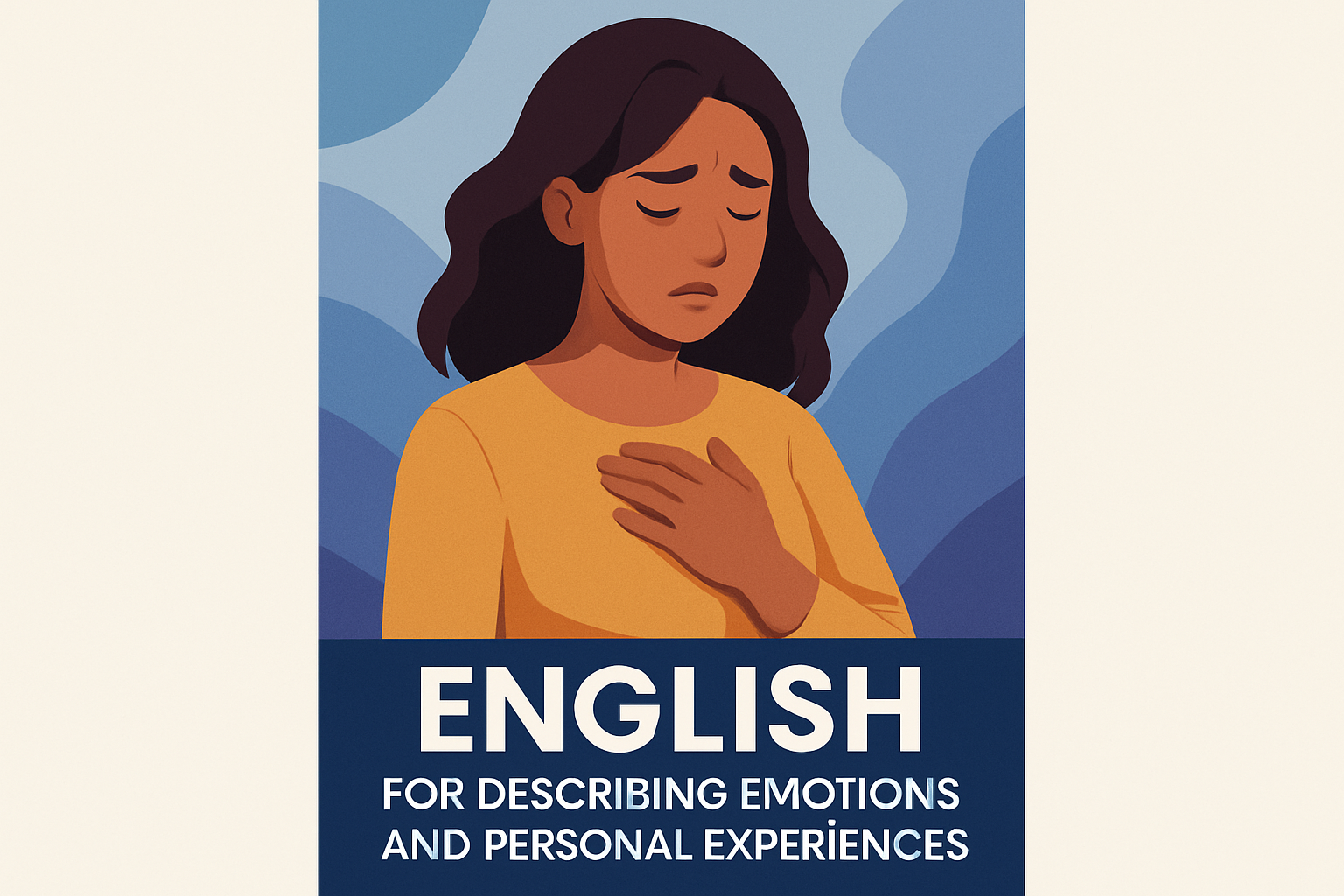
Language is a powerful way to convey emotions and experiences, and English offers a rich vocabulary for expressing the nuances of human feelings and events in life. From happiness and sadness to anger and empathy, being able to articulate emotions can profoundly impact personal relationships, career success, and overall self-awareness. This skill not only aids in effective communication but also promotes psychological well-being by allowing individuals to process their emotions and experiences more thoroughly. Understanding different ways to express emotions in English is thus essential for anyone looking to improve their personal and professional interactions.
Emotions are the psychological states that arise in response to internal or external events. They are often complex and layered, encompassing feelings such as joy, anger, sadness, fear, surprise, and more. Personal experiences, on the other hand, are the sum total of an individual’s life events, ranging from daily occurrences to significant milestones. These experiences often shape our emotions and, in turn, affect how we choose to express them. The language used to describe these emotions and experiences plays a pivotal role in how we connect with others and understand ourselves.
The ability to articulate emotions and personal experiences with precision and empathy is a skill that matters immensely in today’s interconnected world. Effective communication can lead to better interpersonal relationships and improved emotional intelligence, which is crucial for navigating both personal and professional realms. Furthermore, being able to describe emotions accurately can enhance storytelling, a skill that is valuable in fields such as writing, marketing, and public speaking. By mastering the language of emotions, individuals can convey their thoughts and feelings in ways that resonate with and influence their audiences.
Understanding Basic Emotional Vocabulary
Emotions are an integral part of the human experience, and understanding the basic vocabulary to describe them is the first step towards effective emotional expression. In English, numerous words exist to describe different emotional states, each with its nuances and shades of meaning. For instance, while words like ‘happy’ and ‘joyful’ both describe positive emotions, ‘joyful’ often implies a more intense or exuberant feeling than ‘happy.’ This distinction helps convey the precise intensity of an emotion, enhancing communication.
Consider a scenario where a friend has gotten a new job. Saying, “I’m happy for you,” implies a general sense of contentment with their success. However, “I’m thrilled for you!” indicates a higher level of excitement and enthusiasm. These choices in vocabulary can significantly affect the perceived sincerity and impact of the message. Understanding and using the correct emotional vocabulary leads to clearer and more genuine communication.
Using Metaphors to Describe Emotions
Metaphors can serve as powerful tools in describing emotions, providing imagery that captures the complexity of feelings more vividly than literal descriptions. In English, metaphors are often used to relate emotions to tangible experiences, making abstract feelings more understandable. For example, saying, “I have butterflies in my stomach,” vividly describes the nervous excitement one might feel before a big event.
Real-world experiences are constantly enriched by metaphorical expressions. Consider the common phrase, “walking on air,” used to describe the elation following a significant life event, such as getting engaged. This metaphor elevates the emotion from mere happiness to a sensation that feels otherworldly or ecstatic. Using such metaphors allows speakers to communicate rich emotional experiences in a relatable manner, enhancing the listener’s empathy and engagement.
Expressing Emotions Through Storytelling
Storytelling is a compelling method to convey emotions and personal experiences. By framing experiences in a narrative, individuals can share emotions in a structured and impactful way. English speakers often use stories to express emotions indirectly, allowing listeners to infer feelings through context and details.
For example, consider sharing the experience of a family reunion. Instead of simply stating, “I felt happy,” a narrative might describe the scene: “As I walked through the door and saw my grandmother’s warm smile, a wave of warmth washed over me, as if I were enveloped in a comforting hug.” This storytelling technique not only conveys happiness but also provides sensory details that bring the experience to life for the listener.
Structuring Conversations About Personal Experiences
Communicating personal experiences effectively requires more than just emotional vocabulary. It involves structuring conversations in a way that is coherent, engaging, and respectful. English speakers often rely on various frameworks to present personal stories effectively, including chronological order, thematic organization, and problem-solution formats.
To illustrate, consider the experience of moving to a new city. Using a chronological framework might involve recounting the initial excitement, followed by the challenges of adjustment, and concluding with the eventual sense of belonging. Here’s how it might look in conversational form:
- Excitement: “When I first moved to New York, the buzz of the city was exhilarating.”
- Challenges: “For a while, the hustle and bustle were overwhelming, making me feel isolated.”
- Resolution: “Over time, I discovered small communities and cozy spots, which made New York feel like home.”
This structured approach ensures that personal experiences are shared in a way that is easy for others to follow and engage with, thus fostering deeper connections.
Empathy and Active Listening in Emotional Conversations
Effective communication about emotions and experiences is a two-way street that demands both expression and listening. Active listening is a critical component of emotional communication, allowing for empathy and understanding. When engaged in a conversation about emotions, English speakers often use phrases that acknowledge the speaker’s feelings, such as, “It sounds like you’re going through a tough time,” or “I can imagine how exciting that must be.”
Real-world examples of empathy in action might include responding to a friend’s grief by saying, “I can’t begin to understand exactly what you’re going through, but I’m here for you.” Such responses not only validate the speaker’s feelings but also build trust and emotional rapport, reassuring the speaker that their emotions are being heard and respected.
Using Technology to Improve Emotional Expression
The advent of technology offers new avenues for expressing emotions and sharing personal experiences. Digital communication tools, such as social media, blogs, and vlogs, allow individuals to convey their emotions to a wider audience. When expressing emotions in writing or through videos, being articulate and thoughtful in selecting words is crucial, as these mediums do not allow for immediate clarification through tone or body language.
For instance, writing a blog post about a personal triumph, such as graduating from college, can communicate both the emotional journey and the end result. A post might include phrases such as, “The relief and pride I felt were like a weight lifted off my shoulders, knowing years of hard work had finally paid off.” In this context, the use of vivid language helps convey emotions to an audience that might not be physically present but can relate to the narrative.
| Emotion | Expression Example | Contextual Use |
|---|---|---|
| Happiness | “I’m on cloud nine.” | Used after significant achievements or joyful news. |
| Anger | “I’m seeing red.” | Used to express intense frustration or anger. |
| Surprise | “It caught me off guard.” | Used when something unexpected occurs. |
Cultural Influences on Emotional Expression
Emotional expression in English is often influenced by cultural nuances, and recognizing these differences can enhance cross-cultural communication. Cultures vary greatly in how they express emotions publicly; some might be reserved, while others are more open. Understanding these cultural contexts is vital for effective communication.
For example, in the United States, being open about one’s feelings is generally encouraged, which influences how emotions are expressed in conversations. This contrasts with cultures where emotional restraint is valued, potentially leading to misunderstandings if cultural differences are not acknowledged. Recognizing these distinctions allows individuals to tailor their communication, ensuring it is respectful and sensitive to cultural norms.
Conclusion: Mastering Emotional Expression in English
Mastering English for describing emotions and personal experiences can greatly enhance both personal and professional aspects of life. By developing a rich emotional vocabulary, using metaphors, structuring narratives, listening actively, leveraging technology, and understanding cultural nuances, individuals can express emotions with clarity and empathy. These skills not only improve individual communication abilities but also contribute to healthier interpersonal relationships and greater emotional intelligence.
The journey toward effective emotional expression in English involves continual learning and practice. By actively engaging in conversations, reflecting on personal experiences, and seeking feedback from others, individuals can refine their ability to articulate emotions and experiences accurately. By taking the step to improve one’s emotional vocabulary and storytelling skills, anyone can become a more effective communicator and empathetic listener. Embrace the challenge of honing these skills, and the rewards will be evident in every aspect of life where communication plays a role.
For those looking to deepen their understanding of emotional expression, consider exploring resources such as books on emotional intelligence, participating in storytelling workshops, or engaging in discussions with diverse groups of people. These next steps will further enhance your ability to connect, understand, and empathize with others, solidifying the impact of your communication skills in any setting.
Whether for personal reflection or public dialogue, the ability to describe emotions and personal experiences effectively is a valuable skill that enhances our connection to ourselves and others. With practice and dedication, anyone can master the intricacies of emotional communication in English, paving the way for more meaningful interactions and informed emotional awareness.
Frequently Asked Questions
1. Why is it important to express emotions in English?
Expressing emotions accurately is essential for clear communication and maintaining healthy relationships. In English, there is a vast array of vocabulary terms that allow individuals to articulate a wide range of feelings and personal experiences. This ability is crucial for several reasons. It helps in achieving emotional clarity, as putting feelings into words can often help individuals understand their emotions better. Furthermore, expressing emotions openly in English aids in resolving conflicts more effectively; when people understand each other’s feelings, they’re more likely to find common ground. In a professional setting, being articulate about emotions can contribute to leadership effectiveness and team dynamics, enhancing career opportunities. Additionally, the process of verbalizing emotions is linked to improved mental health because it encourages emotional introspection and self-awareness, leading to psychological well-being.
2. How can learning English improve the way I describe my personal experiences?
Learning English enhances one’s ability to describe personal experiences in a number of ways. Firstly, English presents a rich and diverse vocabulary that offers precise terms for specific emotions and situations, ensuring that experiences are conveyed with accuracy and depth. Moreover, English is a global language with numerous idiomatic expressions and phrases that can capture subtle emotions and cultural contexts that may not be directly translatable in other languages. By mastering English, you are also gaining access to literature, films, and media that can offer context and new perspectives on emotional expression. By engaging with such resources, individuals can expand their emotional vocabulary and learn varied ways to articulate their personal narratives, enriching their storytelling capability. Overall, English serves as a versatile tool for expressing life’s complexities and for connecting with a wider audience in international settings.
3. What strategies can I use to improve my emotional vocabulary in English?
Improving your emotional vocabulary in English involves a combination of study, practice, and engagement with the language. One effective strategy is reading widely, especially literature and poetry, where emotions are often depicted in expressive and nuanced ways. Pay attention to how authors describe characters’ feelings and the vocabulary they use. Another strategy is maintaining a personal emotion journal where you regularly write about your feelings, experiments with different words, and reflect on various personal experiences. Additionally, watching movies and listening to music or podcasts in English can expose you to different emotional contexts and expressions. Engaging in conversations with native speakers or language exchange partners also provides practical experience in using emotional vocabulary dynamically and responsively. Lastly, using online resources like vocabulary lists or language learning apps focused on emotions can reinforce learning and provide structured practice opportunities. Consistent and mindful practice will gradually enhance your emotional vocabulary and its effective use in real-life situations.
4. How can emotional expression in English affect my mental health?
Expressing emotions in English, as in any language, can have a significant impact on mental health. By learning to articulate feelings, you gain a better understanding of your emotional states, reducing feelings of confusion or emotional overwhelm. Verbalizing emotions can act as a therapeutic outlet, helping to release pent-up stress and acknowledge emotions that need to be dealt with rather than suppressed. In doing so, it serves as a self-soothing technique that promotes a sense of control and understanding over one’s inner world. Moreover, sharing emotions in English with others can foster deeper connections and support networks that are crucial during challenging times. When others understand your feelings, they can offer empathy and support, inherently enhancing your emotional resilience. Overall, emotional articulation in English contributes to improved emotional regulation, self-awareness, and a stronger sense of community, all of which play vital roles in maintaining and enhancing mental health.
5. How does describing emotions in English add value to professional development?
Incorporating emotional articulation in English within a professional setting offers numerous benefits. First and foremost, it encourages clear communication, which is a cornerstone of any successful workplace. When team members express their emotions and concerns clearly, it diminishes misunderstandings and fosters a more harmonious team environment. Additionally, leaders who are adept at expressing emotions can motivate and connect with their teams on a deeper level, driving engagement and productivity. On an individual level, being able to communicate emotions effectively can aid in building relationships with colleagues, clients, or stakeholders, which is often key to career advancement. Furthermore, the skill to discuss emotions appropriately can help during negotiations or conflict management, as it enables you to express needs and find mutually agreeable solutions more effectively. Lastly, emotional articulation can demonstrate empathy and emotional intelligence, qualities that are highly valued in leadership roles and increasingly sought after in various sectors. Overall, such skills contribute to a professional persona that is competent, relatable, and adaptable.





