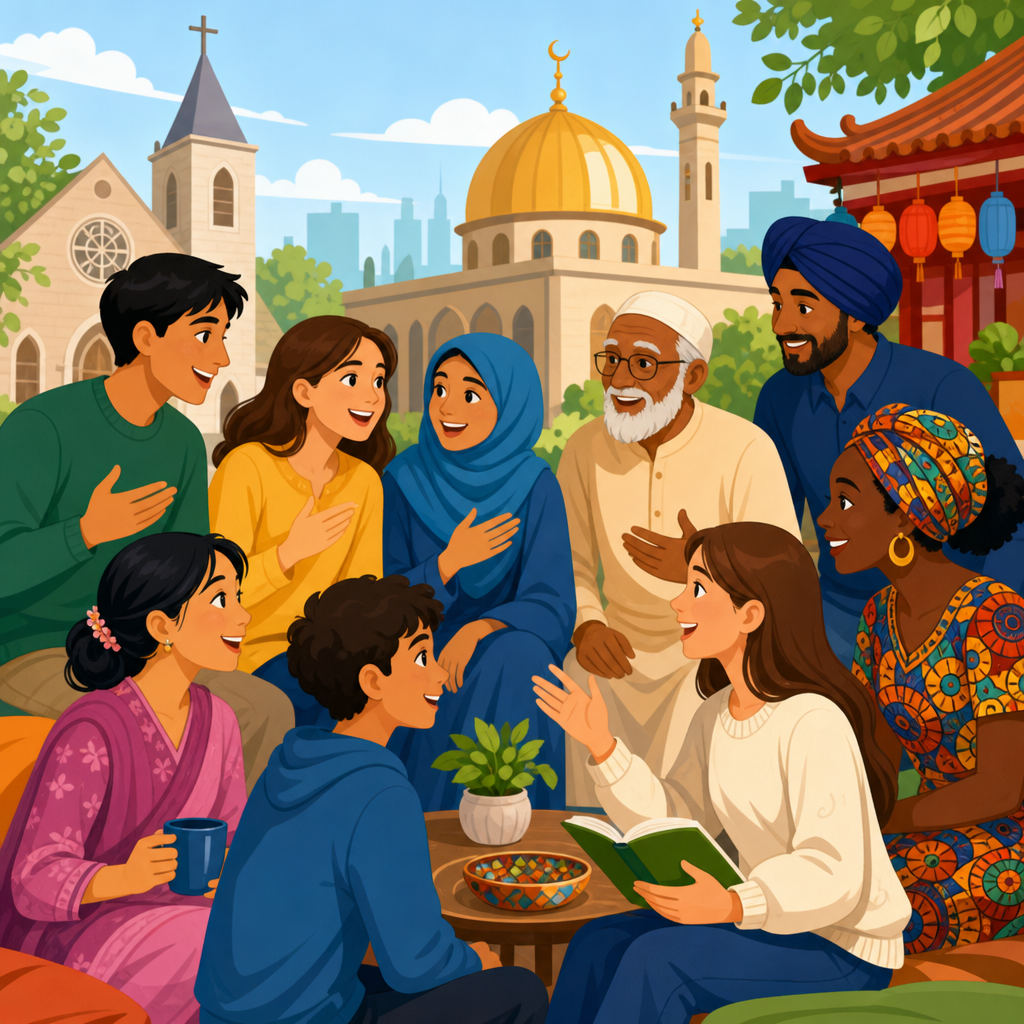
English for faith communities and cultural gatherings is the practical language people use to welcome newcomers, explain traditions, coordinate events, and build trust across different backgrounds. In this context, faith communities include churches, mosques, temples, synagogues, meditation groups, and interfaith organizations, while cultural gatherings include festivals, heritage celebrations, community dinners, language exchanges, and neighborhood ceremonies. The goal is not perfect grammar. The goal is respectful, clear communication that helps people participate with confidence. I have worked with adult English learners preparing to attend services, volunteer at food drives, and introduce family customs at school and community events, and the same questions appear every time: What should I say when I arrive? How do I ask about dress, food, or prayer? How do I explain my tradition without sounding awkward? These situations matter because belonging often begins with a short conversation at a doorway, a shared meal, or a brief introduction before a ceremony. Strong English in these moments reduces misunderstanding, lowers anxiety, and makes mixed-language groups more welcoming for everyone involved.
Many learners need language for highly specific tasks rather than general conversation. They may need to greet an elder respectfully, ask whether children are welcome, understand if a gathering is formal or casual, or explain dietary rules such as halal, kosher, vegetarian, or fasting practices. They may also need vocabulary for objects and actions: sermon, prayer hall, hymn, donation table, volunteer sign-up, procession, offering, host family, cultural performance, community kitchen, or remembrance ceremony. Clear phrasing matters because these settings are emotionally important. A confusing question can feel bigger than it would in an office or shop. At the same time, people should avoid memorizing stiff textbook lines that sound unnatural. Useful English for faith communities and cultural gatherings is simple, direct, and adaptable. It helps people show respect, ask for clarification, and participate without pretending expertise they do not have. That combination of humility and clarity is what makes communication work.
Core English for welcoming, introductions, and respectful participation
The first minutes of any gathering set the tone. A strong opener is warm, brief, and easy to answer. In practice, the most effective phrases are: “Hello, I’m here for the service,” “It’s my first time here,” “Thanks for welcoming me,” and “Could you tell me where to sit?” These sentences work because they communicate purpose and invite help. If the event is cultural rather than religious, learners can say, “I’m here for the festival,” “I was invited by a friend,” or “Could you explain how the program works?” When introducing yourself, give only the information needed for the moment: your name, who invited you, and whether you are new. Long explanations can create pressure for the listener, especially in busy entry areas.
Respectful participation also depends on knowing how to ask about expectations without sounding demanding. The best pattern is simple: ask permission, mention the topic, and show openness. For example, “May I ask about the dress code?” “Is there anything visitors should know before the prayer begins?” “Should shoes be removed here?” and “Is photography allowed during the ceremony?” These questions are practical, culturally sensitive, and easy for a host to answer. In groups where physical contact varies, learners should avoid assuming that handshakes, hugs, or direct eye contact are always appropriate. A neutral phrase such as “It’s nice to meet you” works almost everywhere. If someone uses unfamiliar language, respond with “Could you please say that another way?” or “I’m still learning the terms.” That keeps the conversation moving without embarrassment.
Listening is as important as speaking. In many communities, meaning is carried by ritual language, announcements, and small instructions from volunteers. Learners benefit from recognizing common signals such as “Please be seated,” “We’ll begin shortly,” “Everyone is welcome to join,” “Visitors may observe,” and “Food will be served afterward.” I often advise students to listen for time markers, location words, and permission words first, because those carry the most immediate meaning. If you hear “after,” “upstairs,” “outside,” “optional,” or “members only,” you can act correctly even if you miss the rest of the sentence. That approach is especially useful in large halls with background noise, children speaking, and multiple accents. Confidence grows when learners realize they do not need to understand every word to participate respectfully.
Useful language for questions about customs, food, clothing, and family participation
People often worry that asking about customs will seem rude, but silence usually creates more problems than a polite question. The safest wording is factual and nonjudgmental. Say, “I want to be respectful, so I have a quick question,” then ask directly. Good examples include: “Is this event formal?” “Do men and women sit separately?” “Are head coverings expected?” “Can children stay with their parents?” and “Is there a part of the ceremony that guests do not join?” This phrasing shows good intent and prevents accidental offense. It also helps hosts explain differences clearly instead of guessing what a newcomer already knows.
Food language is especially important because many gatherings center on shared meals. Learners should know how to explain needs without making the host feel criticized. Effective phrases include “I don’t eat pork,” “I’m vegetarian,” “I’m fasting today,” “Does this contain nuts?” and “Thank you, but I’ll wait until sunset.” If offering food to others, use simple and welcoming language: “Please help yourself,” “This dish is spicy,” “This is vegetarian,” or “Let me know if you have allergies.” In community kitchens and potluck settings, labeling dishes clearly prevents repeated questions and avoids awkward mistakes. I have seen mixed-faith events run much more smoothly when organizers prepare small signs listing ingredients and noting whether items are halal, kosher-style, vegan, or gluten-free.
| Situation | Clear English to Use | Why It Works |
|---|---|---|
| First visit | “It’s my first time here. Is there anything I should know?” | Invites guidance without assuming familiarity |
| Dress question | “Is there a dress code for guests?” | Direct, respectful, easy to answer |
| Food restriction | “Thank you. I don’t eat meat, but I’d love some salad.” | Declines politely while accepting hospitality |
| Family attendance | “Are children welcome for the whole program?” | Clarifies expectations for parents |
| Observing only | “I’d prefer to observe this part, if that’s okay.” | Sets a boundary without disrespect |
Family participation raises another set of communication needs. Parents may need to ask whether there is child care, whether children should be quiet during prayer, or whether teens can join volunteer activities. Elders may need seating assistance or hearing support. Simple phrases solve most of these issues: “Is there a quiet room for children?” “My mother needs a chair near the front,” “Do you have a printed program?” or “Could someone explain this part slowly?” These are not minor details. In real gatherings, access needs and family logistics often determine whether people return. Good English helps communities become easier to navigate, not just easier to talk about.
Explaining your own tradition, inviting others, and navigating sensitive topics
Many learners are comfortable answering questions but less confident explaining their own beliefs or customs. The key is to speak in layers. Start with a short overview, then add detail only if the listener wants more. For example: “This holiday is a time for family, prayer, and gratitude,” “We fast during the day and gather for the evening meal,” or “Our community celebrates with music, food, and a blessing.” These summaries are accurate without becoming defensive or overly technical. If someone asks for more, you can continue with one example: “Children bring candles,” “We visit relatives,” or “There is usually a reading followed by a shared meal.” In my experience, short explanations create better conversations than long lectures.
Invitations should also be clear about expectations. Instead of saying only “Come to our event,” say “You’re welcome to join us this Saturday at 6 p.m. There will be music, food, and a short ceremony. Guests can participate or simply observe.” That sentence answers the questions most people are too shy to ask. It covers time, format, and level of involvement. For informal outreach before an event, it helps to build confidence through everyday conversation. A useful resource for that skill is the main guide on small talk in English before a meeting or class, because the same techniques make introductions at community gatherings much easier.
Sensitive topics require calm, precise English. Discussions about belief, conversion, politics, gender roles, or historical conflict can become tense when vocabulary is vague. Use boundary-setting phrases early: “I’m happy to explain our custom, but I’d rather not debate it today,” “People in our community have different views,” or “I can share my experience, though I can’t speak for everyone.” These lines are honest and prevent one person from being treated as the official voice of an entire tradition. When misunderstandings happen, repair language matters. Say, “I may have used the wrong word,” “Let me rephrase that,” or “I didn’t mean to sound dismissive.” That kind of correction protects relationships better than silence. Good English in faith communities and cultural gatherings is not only about vocabulary. It is about using language to make room for dignity, curiosity, and peaceful participation.
The strongest communicators in these settings do three things consistently: they prepare key phrases before attending, they listen for practical cues during the event, and they follow up afterward with thanks or a question. That routine works across traditions because it is grounded in respect rather than performance. If you are learning English for faith communities and cultural gatherings, focus on useful sentences you can actually say, not perfect speeches you will never use. Practice greetings, customs questions, food explanations, and short descriptions of your own tradition. Learn the words that match your real life and the events you truly attend. Then use them. The reward is immediate: smoother conversations, fewer awkward moments, and a stronger sense of belonging for you and the people around you. Start by choosing five phrases from this article and practicing them before your next gathering.
Frequently Asked Questions
What does “English for faith communities and cultural gatherings” actually mean?
English for faith communities and cultural gatherings refers to the everyday language people use to participate, connect, and contribute in shared community spaces. It includes practical communication for welcoming guests, introducing people, explaining customs, giving directions, inviting participation, announcing schedules, coordinating volunteers, and answering respectful questions. In faith settings, this may include language used in churches, mosques, temples, synagogues, meditation groups, and interfaith events. In cultural settings, it can apply to festivals, heritage celebrations, community meals, neighborhood ceremonies, language exchanges, and other local gatherings.
The focus is on meaningful communication rather than perfection. Many people in these spaces are speaking with different accents, levels of fluency, and cultural expectations. What matters most is being able to say helpful, clear, respectful things such as “Welcome, we’re glad you’re here,” “This part of the event starts at 6 p.m.,” “Please let us know if you need help,” or “Would you like me to explain this tradition?” This kind of English supports inclusion, reduces confusion, and helps people feel safe and valued. It is language for real human connection, especially in diverse communities where trust is built one conversation at a time.
Why is practical English more important than perfect grammar in these community settings?
Practical English matters more than perfect grammar because the main goal in faith communities and cultural gatherings is understanding, not flawless performance. These settings are built around people, relationships, hospitality, and shared experience. If a volunteer can clearly greet a family, explain where to sit, describe what will happen next, or respond kindly to a question, then communication is already succeeding. A small grammar mistake usually does not prevent connection, but silence, confusion, or fear of speaking often does.
This is especially important in multicultural environments where many participants are not native English speakers. People may already feel nervous about entering an unfamiliar place, whether it is a place of worship, a cultural celebration, or a community event. Clear and simple language helps lower that stress. Short sentences, familiar words, and a calm tone are often more effective than advanced vocabulary or complex grammar. For example, saying “The meal is downstairs after the service” is often better than using a longer, more formal explanation that may confuse listeners.
Practical English also creates space for participation. When people are not worried about sounding perfect, they are more likely to volunteer, ask questions, introduce themselves, and join conversations. That openness strengthens the community. In real life, warmth, clarity, patience, and respect do far more to build trust than grammatical perfection ever could.
What kinds of phrases are most useful for welcoming newcomers and explaining traditions?
The most useful phrases are simple, polite, and easy to understand. Welcoming language should help newcomers feel noticed, respected, and comfortable. Strong examples include “Welcome, we’re happy you’re here,” “My name is Sarah, and I help with visitors,” “Please feel free to ask questions,” and “You can join as much or as little as you like.” These expressions remove pressure and make the environment feel more open, especially for people visiting for the first time.
When explaining traditions, it is best to use clear and neutral language without assuming prior knowledge. Helpful phrases include “This is a special prayer/song/reading in our tradition,” “In a few minutes, people will stand together,” “Some people cover their heads here, and I can explain if you’d like,” or “This celebration honors our community’s history and values.” These kinds of explanations give context without overwhelming the listener. They also show that questions are welcome.
It is also useful to know how to guide people through logistics. Phrases such as “The restrooms are down the hall,” “Food will be served after the ceremony,” “Children’s activities are in the next room,” and “The program begins at 3 p.m.” are essential because practical information often determines whether someone feels comfortable staying and participating. The best communication combines hospitality with clarity: greet warmly, explain briefly, and check whether the person needs anything else.
How can community members use English respectfully when people come from different faiths, cultures, or language backgrounds?
Respectful English begins with humility. In diverse community spaces, people should avoid assuming that everyone shares the same beliefs, customs, or communication style. Instead, use language that is welcoming and open. Phrases such as “Would you like me to explain?” “How do you prefer to participate?” “Please let us know if there is anything you need,” and “You are welcome here” communicate respect without pressure. This approach is especially valuable in interfaith and multicultural settings where participants may be observing, learning, or attending for social rather than religious reasons.
It is also important to choose words that are clear and nonjudgmental. Avoid slang, jokes that may not translate well, or insider expressions that only longtime members understand. If a tradition involves actions that may be unfamiliar, explain them gently and factually. For example, “Some people remove their shoes before entering this area,” or “During this part, many people remain silent.” These statements help people understand expectations without making them feel embarrassed or excluded.
Listening is another key part of respectful communication. Good English in these contexts is not only about speaking well; it is also about checking understanding and making room for others. You can ask, “Does that make sense?” “Would you like me to say that another way?” or “What questions do you have?” These phrases show patience and care. Respect grows when people feel heard, not corrected. In the end, the most effective communication combines simple language, cultural awareness, and genuine kindness.
How can someone improve their English specifically for volunteering, participating, or leading at these gatherings?
The most effective way to improve is to practice the language that matches real community tasks. Instead of studying only general grammar rules, focus on common situations: greeting visitors, giving directions, introducing speakers, explaining schedules, inviting people to activities, answering basic questions, and solving small problems politely. Create short phrases for each task and rehearse them until they feel natural. For example: “Welcome, please come in,” “The event starts in ten minutes,” “Let me show you where to go,” “Thank you for helping,” and “If you need anything, please ask.” This type of repetition builds confidence quickly because it prepares you for actual conversations.
It also helps to learn by observing experienced community members. Listen to how they welcome people, explain traditions, transition between activities, and respond to unexpected questions. Notice which words are simple, calm, and effective. Then practice those patterns aloud. Role-play can be especially useful. Two people can simulate common interactions such as welcoming a first-time guest, explaining a ceremony, giving instructions to volunteers, or speaking to families at a cultural festival. These exercises make spoken English more automatic and less stressful.
Finally, remember that progress comes from participation, not perfection. Speak regularly, even if your sentences are simple. Ask for feedback on clarity rather than on every small mistake. Keep a notebook or phone list of useful phrases you hear at events. Over time, your vocabulary will become more specific, your listening will improve, and your confidence will grow. In faith communities and cultural gatherings, the strongest communicators are often not the most academically advanced speakers. They are the people who can make others feel welcomed, informed, and included.