
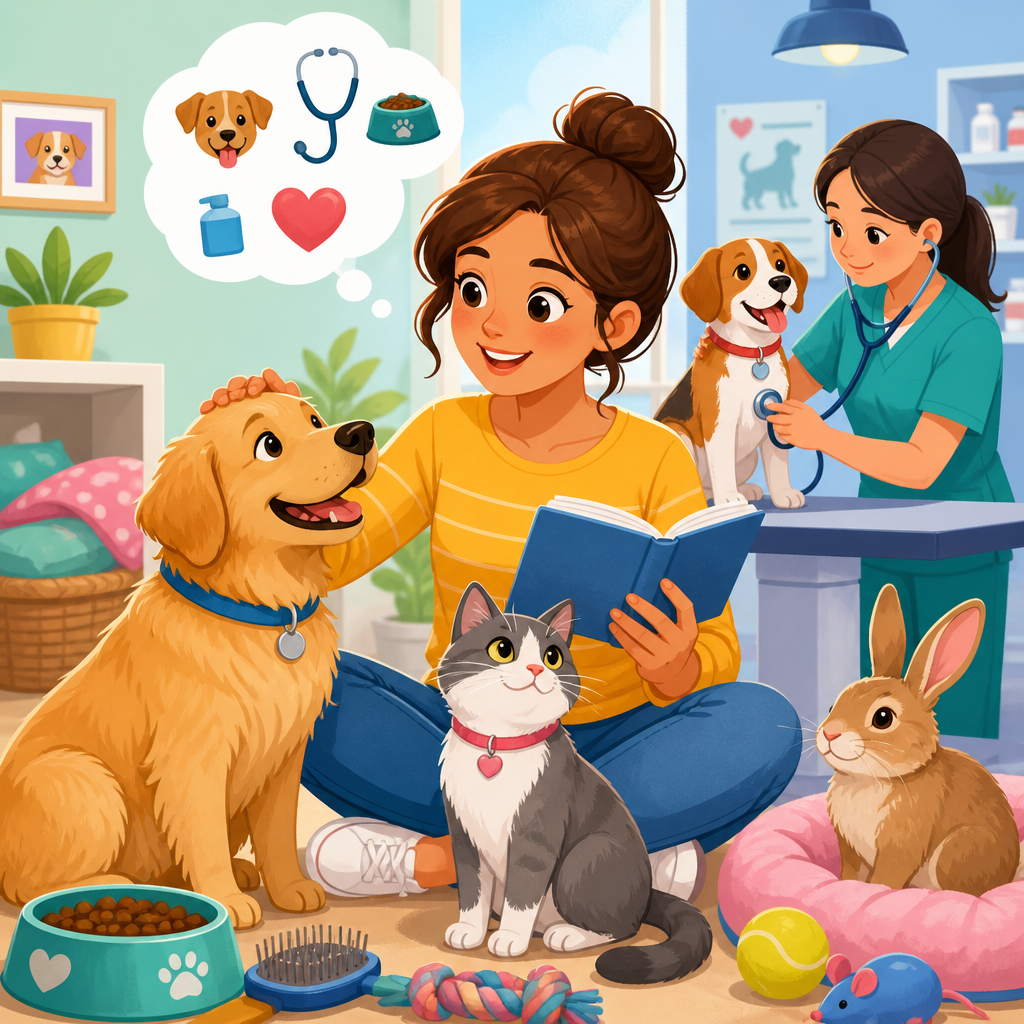
English for pets, vet visits, and daily care gives learners practical vocabulary for some of the most common real-life conversations they will have in an English-speaking environment. If you have a dog, cat, rabbit, or other companion animal, you will likely need to describe symptoms, understand feeding instructions, book appointments, read labels, and speak with groomers, neighbors, landlords, or emergency clinics. In this context, vocabulary is not academic. It affects your pet’s safety, your confidence, and your ability to act quickly when something is wrong.
When I help learners prepare for everyday English, pet-related language is often overlooked until a problem appears. Then the stakes become high. A pet owner may need to explain that a dog is limping, that a cat has stopped eating, or that medicine must be given twice daily with food. Small language gaps can create costly misunderstandings. Knowing the difference between words like appetite, dosage, vaccination, flea prevention, leash, litter, and spay or neuter makes routine care much easier and urgent care much clearer.
This topic matters because pet care combines household vocabulary, health vocabulary, scheduling language, and polite conversation. It also includes specific terms used by veterinary staff that may not appear in general English courses. In many clinics, receptionists ask concise questions such as, “Is your pet up to date on vaccines?” or “How long has this been going on?” Owners need direct, natural answers. The goal is not to sound technical. The goal is to be accurate, calm, and understood.
Core pet vocabulary for daily routines
Start with the language of daily care because it creates the foundation for every later conversation. Common nouns include pet, owner, collar, tag, leash, harness, crate, carrier, bed, bowl, litter box, scratching post, chew toy, treats, and grooming brush. Verbs you will use often are feed, refill, walk, groom, bathe, brush, train, supervise, exercise, clean up, and pick up after. For dogs, owners often say, “I take him out three times a day,” meaning outside for walks or bathroom breaks. For cats, a natural phrase is, “I scoop the litter box every morning.”
Food vocabulary is especially important. Dry food is often called kibble, while wet food comes in cans, trays, or pouches. Owners may say their pet is on a grain-free diet, a prescription diet, or a sensitive stomach formula. Portion means the amount served at one meal. Appetite refers to willingness to eat. Water intake means how much the animal drinks. If your pet suddenly refuses food, “He has no appetite today” is clearer than “He doesn’t like eating.” If a pet eats too fast, English speakers commonly say, “She gulps her food down.”
Behavior words also matter in normal conversation. Friendly, shy, anxious, reactive, house-trained, litter-trained, playful, destructive, and aggressive are common adjectives. These are not interchangeable. Reactive usually means a dog overresponds to triggers such as other dogs or strangers; it does not automatically mean dangerous. House-trained means the animal reliably uses the correct bathroom area. Learners who want broader practical language for home situations can also review this apartment vocabulary guide, because many pet discussions happen with landlords, roommates, and neighbors.
How to speak clearly at the veterinary clinic
Veterinary visits follow predictable patterns, and knowing the routine helps you understand both vocabulary and expectations. The front desk may ask for your pet’s name, species, breed, age, sex, weight, and reason for the visit. Species means dog, cat, rabbit, bird, and so on. Breed identifies the type, such as Labrador Retriever or Domestic Shorthair. Sex in this setting means male or female. Spayed refers to a female that has had reproductive surgery; neutered usually refers to a male, though some people use neutered more generally.
During the exam, the veterinarian will often ask when symptoms started, whether they are getting better or worse, and whether your pet is eating, drinking, urinating, and defecating normally. These clinical verbs are standard. In plain speech, owners may say pee and poop, but in a clinic, urinate and have bowel movements are also common. If a pet is vomiting, coughing, sneezing, shaking its head, scratching nonstop, or limping, say that directly. Time markers are essential: “She vomited twice this morning,” “He has been limping for three days,” or “The itching started after we changed his food.”
The clearest descriptions combine symptom, timing, frequency, and severity. Instead of saying, “My cat is sick,” say, “My cat has had diarrhea since last night and is hiding under the bed.” Instead of “My dog has a problem with his leg,” say, “My dog is putting less weight on his back left leg after running at the park.” This is the style veterinary staff need because it helps them assess urgency. In my experience, owners who prepare two or three exact observations get better and faster answers than owners who speak only in general terms.
Symptoms, medications, and treatment instructions
Pet health vocabulary becomes most important when symptoms are subtle or treatment is ongoing. Common symptom terms include lethargy, loss of appetite, dehydration, swelling, discharge, rash, hot spot, ear infection, dental disease, and parasites. Lethargy means unusual tiredness or low energy, not simply a calm mood. Discharge can come from the eyes, nose, or ears. A hot spot is a moist, inflamed area of skin, especially common in dogs. Parasites may include fleas, ticks, mites, roundworms, hookworms, or tapeworms.
Medication language must be understood exactly. Prescription means medicine authorized by a veterinarian. Dosage is the amount to give at one time. Frequency tells you how often, such as once daily, twice daily, every twelve hours, or as needed. Administer is the formal verb for giving medicine. Side effects are unwanted reactions. If a label says “Give one tablet by mouth every 12 hours with food,” that means two doses per day, ideally spaced evenly. If the clinic says “complete the full course of antibiotics,” do not stop early just because symptoms improve.
| Clinic phrase | What it means in plain English | Example you can say |
|---|---|---|
| Up to date on vaccinations | All required shots have been given on schedule | “Yes, she had her rabies booster in May.” |
| Monitor for changes | Watch closely and notice new or worse symptoms | “I’ll monitor his appetite and energy tonight.” |
| Administer orally | Give by mouth | “He spits tablets out, so I need a liquid option.” |
| Stool sample | A small feces sample for testing | “I brought a fresh stool sample from this morning.” |
| Fasting before surgery | No food for a set time before a procedure | “You said no food after midnight, correct?” |
Treatment instructions often involve follow-up care. You may hear rest, restrict activity, use an e-collar, apply ointment, clean the wound, return for recheck, or watch the incision site. An e-collar is the plastic recovery cone that prevents licking or chewing. A recheck is a follow-up appointment, not a full new consultation. Incision site refers to the surgical cut area. When owners misunderstand these terms, healing suffers. If you are unsure, ask direct questions: “How long should the cone stay on?” “Can she go for short walks?” “What signs mean I should call immediately?”
Useful English for emergencies, grooming, and prevention
Emergency vocabulary should be short and direct. If the situation is urgent, say what happened first: “My dog ate chocolate,” “My cat cannot urinate,” “My rabbit is not moving or eating,” or “My dog was hit by a car.” Then give timing and current condition. In triage, concise facts matter more than long explanations. Red-flag terms include seizure, collapse, trouble breathing, choking, poisoning, uncontrolled bleeding, bloated abdomen, and nonproductive retching, which is the repeated attempt to vomit without bringing anything up. In large deep-chested dogs, that can signal gastric dilatation-volvulus, a true emergency.
Not all pet care happens at a clinic. Groomers use their own routine vocabulary: matting, nail trim, de-shedding, undercoat, sanitary trim, anal glands, and flea bath. If a dog’s coat is badly tangled, groomers may say the fur is matted. A sanitary trim means trimming fur around areas that need to stay especially clean. For preventive care, common terms include microchip, annual exam, booster shot, heartworm prevention, flea and tick control, dental cleaning, and fecal test. Preventive language is easy to ignore because nothing seems wrong, but these are the words that appear on reminders, invoices, and care plans.
The most effective approach is to learn phrases in usable chunks instead of isolated words. Practice sentences you are likely to need: “He is eating less than usual,” “She scratches her ears at night,” “This medicine must be taken with food,” “He is due for vaccines,” and “I need to reschedule the appointment.” That kind of targeted vocabulary study builds fluency quickly because it mirrors real conversations. Keep a short list on your phone, read medication labels carefully, and rehearse symptom descriptions before appointments. Strong pet-care English helps you protect your animal and communicate with confidence when it matters most.
Frequently Asked Questions
Why is learning English for pets, vet visits, and daily care so important?
Learning English for pet care is important because many everyday situations require clear, specific communication. If your pet is sick, injured, stressed, not eating, vomiting, limping, scratching, or behaving differently, you may need to explain the problem quickly to a veterinarian, receptionist, emergency clinic, or pharmacist. In those moments, knowing practical words such as appetite, diarrhea, rash, coughing, sneezing, medication, dosage, appointment, vaccination, and allergy can make the conversation faster and more accurate. This is not just about improving language skills. It directly affects your pet’s comfort, safety, and access to proper care.
It also matters outside the clinic. Pet owners often need to read food labels, follow feeding directions, understand grooming instructions, ask about flea or tick prevention, discuss behavior concerns, and communicate with landlords, pet sitters, neighbors, and boarding staff. For example, you may need to say that your dog is friendly but nervous around strangers, that your cat is on a special diet, or that your rabbit needs fresh hay daily. These are common real-life interactions, and having the right vocabulary helps you avoid misunderstandings.
In English-speaking environments, pet-related communication is often practical, direct, and detailed. Staff may ask when symptoms started, how often they happen, whether your pet is eating and drinking normally, and whether there have been changes in energy, sleep, or bathroom habits. If you understand those questions and can answer clearly, you are much more likely to get helpful advice. In short, English for pets, vet visits, and daily care is useful because it supports responsible ownership and prepares you for the conversations that matter most.
What English vocabulary should I know before taking my pet to the vet?
Before a vet visit, it helps to learn vocabulary in a few key categories: body parts, symptoms, behavior, treatments, and appointment language. For body parts, common words include ear, eye, nose, mouth, teeth, paw, leg, tail, skin, stomach, and back. For symptoms, useful words include vomiting, diarrhea, coughing, sneezing, limping, swelling, bleeding, itching, scratching, rash, fever, tiredness, loss of appetite, and difficulty breathing. These are some of the most common terms used during basic consultations.
Behavior vocabulary is also important because many health concerns first appear as changes in routine. You may need to say that your pet is hiding, shaking, whining, growling, unusually quiet, restless, aggressive, or not using the litter box. For daily care and treatment, helpful words include prescription, medication, tablet, liquid medicine, dosage, vaccine, booster, neutered, spayed, microchipped, flea treatment, tick prevention, follow-up, and recovery. If you understand these terms, you can follow instructions more confidently after the visit.
It is equally useful to learn simple sentence patterns you can rely on under stress. For example: “My dog has been vomiting since last night.” “My cat is not eating.” “My rabbit has a swollen eye.” “He seems tired and is drinking more water than usual.” “She cries when I touch her leg.” These phrases are clear, natural, and easy for veterinary staff to understand. You do not need perfect grammar to communicate effectively. What matters most is being able to describe what changed, when it started, how often it happens, and whether it seems to be getting worse. That information is often more valuable than complicated language.
How can I describe my pet’s symptoms clearly in English during a vet appointment?
The best way to describe symptoms clearly is to keep your explanation organized. Start with the main problem, then explain when it began, how often it happens, and whether anything has changed. For example, instead of saying “My dog is not okay,” say “My dog has been coughing for three days, mostly at night, and today he seems more tired than usual.” That type of answer gives the vet useful details immediately. A simple structure to remember is: problem, timing, frequency, and changes. This works well in almost every appointment.
Try to use observable facts rather than guesses. Say “She has vomited twice today,” “He is limping on his back left leg,” or “She has not finished her food since yesterday,” instead of “I think something is very wrong.” Vets often need measurable information. If possible, be ready to mention your pet’s eating, drinking, urination, bowel movements, energy level, sleep, and behavior. You can also mention triggers or patterns, such as “He scratches more after going outside” or “She starts shaking when visitors come over.” These details help narrow down possible causes.
If you do not know a specific word, use simple plain English. You can say “the area around her eye is red,” “there is a lump under the skin,” or “he makes a strange sound when breathing.” Clear basic language is better than silence or confusion. It can also help to bring notes, photos, or short videos, especially if the problem comes and goes. Many pets behave differently at the clinic than they do at home, so a video of coughing, limping, or unusual behavior can be extremely helpful. The goal is not to sound advanced. The goal is to communicate enough accurate information for the vet to assess the problem safely and efficiently.
What kinds of everyday English do pet owners need outside the veterinary clinic?
Pet owners use practical English in many everyday situations, not just medical ones. Feeding and care language is especially common. You may need to understand phrases like serve twice daily, fresh water at all times, indoor use only, keep out of reach of children, grain-free formula, age-specific food, or suitable for small breeds. You may also need to talk about routines by saying things like “I feed him every morning and evening,” “She is on a wet food diet,” or “He cannot eat chicken because of an allergy.” Reading labels and following instructions correctly is an important part of daily pet care.
Communication with other people is another major area. You may need to talk to a groomer about coat type, nail trimming, matting, shedding, or skin sensitivity. You may need to speak with a landlord about pet policies, deposits, noise concerns, or proof of vaccination. In your neighborhood, you may need language for leashes, waste cleanup, barking, introductions with other animals, or basic safety. Common phrases include “He is friendly but excitable,” “Please ask before petting her,” “She does not get along with other dogs,” or “He needs to stay on a leash.” These expressions help prevent stressful or unsafe situations.
Pet owners may also need emergency and travel-related English. That includes booking appointments, asking for the nearest emergency clinic, understanding after-hours care, confirming whether a pet is microchipped, checking boarding requirements, or discussing travel carriers and vaccination records. Even simple phone calls can require important vocabulary: “I would like to make an appointment,” “My cat may have eaten something toxic,” or “Do you have an opening this afternoon?” In everyday life, practical pet English supports routine care, polite communication, and quick action when something unexpected happens.
How can English learners become more confident when talking about pets, emergencies, and daily care?
Confidence comes from learning the language you are most likely to use and practicing it in realistic situations. Start with high-frequency vocabulary related to your own pet: species, breed, age, food, habits, personality, common health needs, and any existing medical conditions. If you have a dog, focus on words like leash, walk, barking, paw, and grooming. If you have a cat, learn litter box, scratching post, indoor cat, shedding, and appetite. If you have a rabbit or another small animal, practice hay, enclosure, droppings, chewing, and handling. When the vocabulary connects to your real life, it becomes easier to remember and use.
It also helps to prepare short model sentences in advance. Useful examples include: “My pet is not eating normally.” “She takes this medicine once a day.” “He seems anxious around strangers.” “I need to refill this prescription.” “When should I come back for a follow-up?” “Is this symptom an emergency?” These kinds of sentences are practical and versatile. You can write them down, practice saying them aloud, and adapt them to different situations. Repeating common phrases reduces hesitation and makes stressful conversations easier.
Finally, build confidence by using support tools wisely. Keep your pet’s medical information, vaccine history, medications, allergies, and emergency contacts in one place. Learn how to pronounce important words you may need on the phone. Read labels, appointment reminders, and clinic forms in English whenever possible. If you are unsure during a conversation, it is completely acceptable to say, “Could you please repeat that?” or “Can you explain the instructions more slowly?” Good communication does not mean speaking perfectly. It means asking clear questions, understanding essential information, and making sure your pet gets the care it needs. With a small set of practical vocabulary and repeated real-world practice, most learners become much more confident very quickly.





