
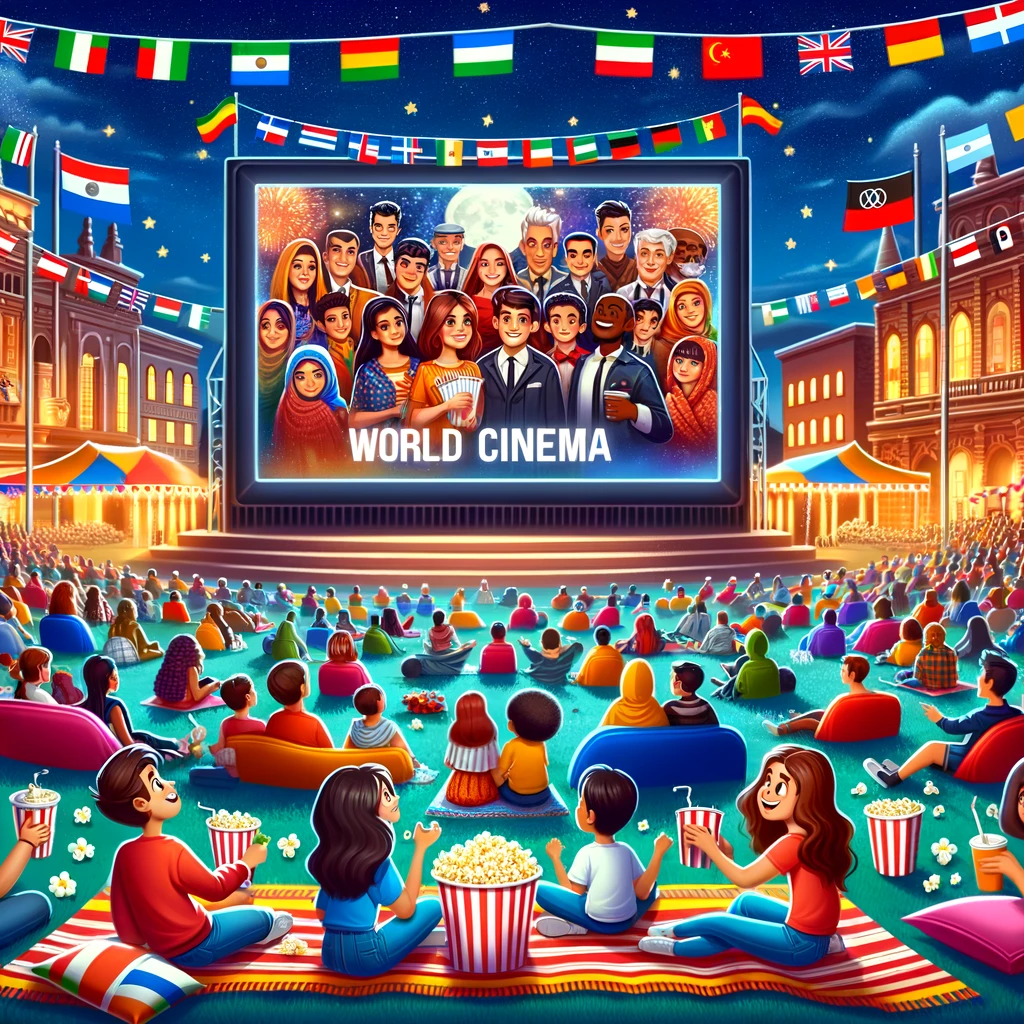
English, often referred to as the “global language,” exerts a profound influence on various aspects of modern life, including cinema. This article explores how the English language has shaped world cinema, not only through the films themselves but also in terms of industry standards, cultural exchanges, and audience reach.
The Dominance of Hollywood
Hollywood’s role in popularizing English in global cinema cannot be overstated. As the epicenter of the film industry, Hollywood movies are distributed worldwide, making English a common language in international movie theaters. This has a dual effect: it not only makes English-language films accessible to a broad audience but also encourages filmmakers outside the English-speaking world to incorporate English dialogue or settings in their movies to appeal to a global market.
English as a Lingua Franca in Film Production
In film production, English serves as a lingua franca, facilitating collaboration across diverse linguistic backgrounds. On international co-productions, which are increasingly common, English is often chosen as the working language. This use of English enables seamless communication among directors, actors, and crew members from different parts of the world, ensuring that diverse creative inputs are synthesized effectively.
Influence on Film Terminology
The influence of English extends into film terminology. Technical terms used in filmmaking, such as “close-up,” “pan,” and “cut,” are universally recognized in their English form. This uniformity in terminology helps in the educational aspect of filmmaking, making it easier for aspiring filmmakers worldwide to learn their craft through resources that are predominantly available in English.
Impact on Scriptwriting and Dialogues
Scriptwriting also sees a significant impact from the English language. English phrases and idiomatic expressions often find their way into the scripts of non-English films, either to emphasize a cultural point or simply because they resonate well with global audiences. Furthermore, films aiming for international success sometimes produce English versions of their dialogues, or at least key portions, to reach a wider audience.
English in Film Education and Criticism
The realm of film education and criticism is also dominated by English. Most academic literature on film theory and criticism is written in English, which influences how films are made, discussed, and understood around the world. This dominance means that non-English speaking filmmakers and scholars often need to adapt to English to share their insights and participate in global discussions.
The Gateway to Global Distribution
English often acts as a gateway for films seeking global distribution. International film festivals, such as Cannes, Sundance, and Berlin, typically require films to have English subtitles or dubbing, making English essential for filmmakers who aspire to gain international recognition and distribution.
Cultural Exchange through English
The widespread use of English in cinema also facilitates a cultural exchange. English-language films often incorporate elements from various cultures, which are then presented to global audiences. Conversely, when non-English speaking countries produce films partially or entirely in English, they expose their culture, values, and stories to a much broader audience than they could otherwise.
Challenges and Criticisms
Despite its benefits, the dominance of English in cinema is not without criticism. Some argue that it may lead to the dilution of local languages and cultures in film. There is a concern that filmmakers may sacrifice authentic cultural representation in favor of broader appeal, which can lead to stereotypical portrayals or cultural inaccuracies.
The influence of English on world cinema is vast and multifaceted. From production and scripting to global distribution and cultural exchange, English plays a pivotal role. While this has helped make cinema a truly global art form, it also poses challenges related to cultural preservation and representation. Nonetheless, the integration of English into world cinema continues to evolve, reflecting the dynamic nature of both language and film as mediums of global expression.

Expanding the Reach of Film Genres and Styles
The influence of English in cinema also extends to the popularization of specific film genres and styles. Hollywood’s success with genres such as action, science fiction, and romantic comedies has encouraged filmmakers around the world to experiment with these formats. This has led to a fascinating blend of genre conventions where filmmakers incorporate local flavors into universally recognized structures, creating unique hybrid genres that appeal both locally and internationally.
English in Marketing and Promotion
Marketing and promotional strategies for films heavily rely on English. The global marketing campaigns of major film releases usually employ English, even in non-English speaking regions. This strategy not only targets English-speaking audiences worldwide but also taps into the vast number of non-native speakers who understand or are influenced by English media. The use of English in film trailers, posters, and digital marketing plays a crucial role in building anticipation and understanding among diverse global audiences.
The Role of English in Animation and Children’s Films
Animation and children’s films offer a vivid example of English’s impact on global cinema. Major studios like Disney, Pixar, and DreamWorks produce their content primarily in English, with localized versions following. The original English versions often become the most cherished and widely viewed, shaping the linguistic and cultural preferences of the youngest audiences globally.
Influence on Cinematic Narratives
The narratives of many films worldwide are influenced by the storytelling techniques that originated in English-speaking countries, particularly the United States. The classic three-act structure, character archetypes, and thematic elements prevalent in Hollywood films have been adopted and adapted by filmmakers globally. This influence helps in crafting stories that resonate with a wide audience, ensuring a blend of local storytelling with a format that is accessible to international viewers.
The Future of English in Cinema
Looking towards the future, the role of English in world cinema is likely to evolve but not diminish. As the global film industry continues to expand, the interaction between English and local languages will become more dynamic. There is a growing trend towards multilingual films that use English to bridge cultural divides, allowing for a more inclusive approach to storytelling that respects and celebrates linguistic diversity.
While the dominance of English facilitates global communication and market reach, it also raises questions about the preservation of linguistic and cultural diversity in cinema. Filmmakers and audiences are becoming more conscious of these issues, leading to more thoughtful approaches to language use in films. This consciousness is likely to foster a more balanced representation, where English serves not as a replacement for local languages but as a complement that enhances the global appeal of films without overshadowing their cultural authenticity.
Conclusion
The pervasive influence of English on world cinema is undeniable. It has helped shape not only how films are made and marketed but also how they are perceived and understood across different cultures. As we move forward, the challenge will be to manage this influence in a way that promotes global understanding and connectivity while also honoring and preserving the rich linguistic and cultural diversities of the world. English in cinema, thus, acts as both a bridge and a beacon, guiding the global film industry towards a more interconnected yet diverse future.





