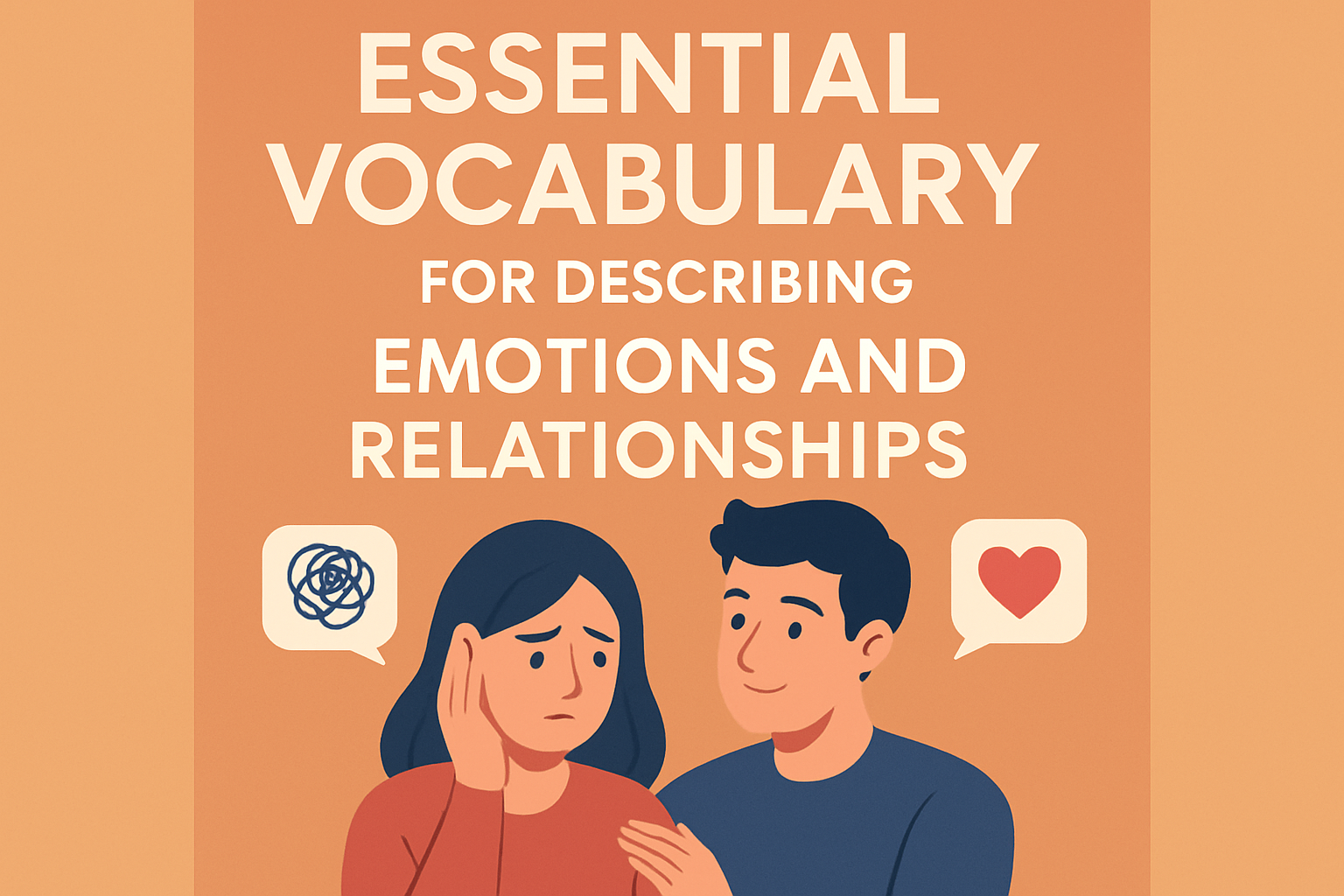
Understanding and navigating human emotions and relationships are integral skills for personal growth and social interaction. Emotions are the complex reactions we experience as individuals, involving psychological changes that influence our mood and behavior. Relationships, on the other hand, are the connections and interactions we establish with others, shaped by emotional exchanges and shared experiences. Together, emotions and relationships form the very fabric of our social lives.
Mastering the vocabulary needed to describe and communicate these intricate facets can significantly enhance our interpersonal effectiveness. This mastery allows us to articulate our feelings more precisely, leading to improved emotional intelligence and better relationship management. Whether you’re trying to express empathy, resolve conflict, or simply connect more deeply with others, having a rich emotional vocabulary is transformative. It enables more nuanced conversations, helps to avoid misunderstandings, and ensures that our interactions are grounded in clarity. In this article, you will discover essential terminology to use when discussing emotions and relationships, exploring how each piece of vocabulary enhances your ability to communicate meaningfully.
Vocabulary for Describing Emotions
It’s crucial to have a robust emotional lexicon for accurately conveying feelings. While many may default to basic emotions like happiness, sadness, or anger, these don’t always capture the full spectrum of human experience. Consider the following essential terms:
- Empathy: The ability to understand and share another person’s feelings and perspectives, which fosters deeper connections.
- Compassion: Goes beyond empathy to include a desire to help or support others who are suffering.
- Euphoria: An intense and overwhelming feeling of happiness or excitement.
- Resentment: Bitter indignation at having been treated unfairly, often simmering beneath the surface until it is expressed.
- Apathy: Lack of interest, enthusiasm, or concern, often leading to a disconnect in social settings.
These terms convey more specificity when we describe our internal states. For instance, instead of merely saying you’re happy, euphoria describes an overwhelming joy that you might feel at a concert or on a major life achievement. Similarly, recognizing and naming apathy can help address emotional disengagement in relationships, prompting a conversation on how to re-engage.
Defining Relationship Dynamics
Relationships are complex, driven by numerous emotional exchanges and mutual influences. Here are some key terms to describe dynamics within relationships:
- Reciprocity: The mutual exchange of actions, feelings, or things, vital for balanced relationships. For example, sharing household chores equally represents reciprocity.
- Codependency: An excessive emotional or psychological reliance on a partner, where one’s self-esteem relies heavily on the approval of others.
- Boundaries: Limits set by individuals as a form of self-care, protecting personal well-being within interactions.
- Intimacy: Deep personal relationships where individuals share close physical, emotional, or intellectual bonds.
- Conflict Resolution: The process of resolving a dispute or disagreement, which requires areas like negotiation, empathy, and compromise.
For example, understanding and establishing boundaries is crucial in ensuring healthy interactions. Boundaries maintain individual identities and protect against emotional burnout. Recognizing a codependent dynamic might prompt a shift towards independence and healthier connections. Such vocabulary helps families, romantic partners, and employers better articulate and navigate the ups and downs of relational interactions.
Emotional Intelligence and Its Importance
Understanding emotions is just one side of the coin. Emotional intelligence (EQ) extends responsibility towards recognizing, understanding, and managing both your own emotions and those of others. Some pivotal terms in this context include:
- Self-awareness: The conscious knowledge of one’s own character, feelings, and desires—a cornerstone of emotional intelligence.
- Self-regulation: The ability to control or redirect one’s disruptive emotions and adapt to changing circumstances.
- Social skills: Proficiency in managing relationships and building networks, an integral component of EQ.
- Empathy: As previously defined, it’s crucial here for understanding others’ emotions.
Let’s consider a workplace example: a self-aware manager who practices self-regulation in stressful situations, like tight deadlines, can lead their teams more effectively. They communicate calmly and confidently, reducing stress and increasing productivity. In personal settings, applying self-awareness enhances authentic interactions, fosters trust, and helps prevent misinterpretations or conflicts. Emotional intelligence empowers us to forge deeper bonds and manage relational challenges gracefully.
Articulating Change and Growth
In relationships, change and growth are constants. Articulating these concepts requires precise terminology:
- Transformation: A thorough or dramatic change in form or appearance, often seen as personal evolution in relationships.
- Adaptability: The quality of being able to adjust to new conditions, essential for enduring partnerships and professional environments.
- Resilience: The capacity to recover quickly from difficulties, an important trait in maintaining lasting relationships.
- Forgiveness: The action or process of forgiving or being forgiven, a critical component of reconciliation.
In a marriage, forgiveness and resilience might be necessary when overcoming major disagreements. Being adaptable ensures relationship longevity by addressing new challenges and changing circumstances. Coupled with transformation, one can witness the evolution of both individual members and the collective partnership. Such terms help individuals articulate growth trajectories within relationships and express how they navigate life’s inevitabilities.
Expressing Needs and Expectations
Clear communication is vital, especially when expressing needs and expectations in relationships. Consider these important terms:
- Clarification: The action of making a statement or situation less confused and more comprehensible.
- Assertion: The confident and forceful expression or demand of one’s rights or opinions without aggression.
- Negotiation: The process by which different parties reach an agreement or understanding while avoiding argument and dispute.
In practice, an employee might seek clarification from a supervisor to better understand job responsibilities and avoid frustrations borne from unclear expectations. In intimate relationships, negotiation ensures that both partners’ needs are met, balancing individual desires and shared goals. Such vocabulary offers tools for opening meaningful dialogues and serves as bridges across which understanding is established and fortified.
| Term | Definition | Example |
|---|---|---|
| Empathy | Understanding and sharing another’s feelings | Feeling another’s frustration and offering support |
| Boundaries | Limits set to protect personal space and feelings | Informing a friend when you need personal time |
| Resilience | Ability to recover from setbacks | Bouncing back after a career setback |
Complex Emotions and Their Impact on Relationships
Relationships can often unravel due to unrecognized or unchecked emotional complexities. Terms like these are essential for identifying such nuanced feelings:
- Ambivalence: Having mixed feelings or contradictory ideas about something or someone; it’s vital to acknowledge when working through complex decisions.
- Envy: The painful or resentful awareness of an advantage enjoyed by another with a desire to possess the same advantage.
- Guilt: A feeling of responsibility or remorse for some offense, crime, wrong, etc., whether real or imagined.
In friendships, acknowledging ambivalence about changes in dynamic—like one moving away—is crucial for transparency. Similarly, recognizing guilt allows for healing and making amends, while envy, if identified, can be transformed into acknowledging personal desires and motivations. Such words help contextualize feelings within relationships and empower individuals to address them constructively.
Conclusion
In conclusion, understanding and describing emotions and relationships with precision are fundamental to our social existence. Expanding your vocabulary illuminates the complexities within personal and professional interactions, facilitating clearer communication and fostering healthier relational dynamics. Moreover, it contributes significantly to emotional intelligence, enhancing the quality and depth of our connections. By tapping into this vocabulary, you can better articulate your emotions, establish clearer boundaries, and navigate changes more effectively. The result is a more fulfilling and harmonious pathway through the intricate web of human relationships.
We encourage you to incorporate these terms into your everyday conversations consciously. Notice the impact they have on your interactions and observe how they reshape your understanding and management of emotions and relationships. Begin with a few key terms, apply them in contexts that resonate most with you, and see how they transform the landscape of your connections. This is just the beginning of a deeper journey into emotional literacy—one conversation at a time.
Frequently Asked Questions
1. What is the importance of having a strong emotional vocabulary?
Having a robust emotional vocabulary is crucial because it allows individuals to effectively articulate their feelings and understand the feelings of others. This ability leads to better communication and aids in navigating complex social interactions. When you can accurately describe what you’re feeling, it not only assists in processing emotions internally but also helps in communicating with others externally. For example, instead of saying you’re simply “mad,” being able to specify whether you’re “frustrated,” “resentful,” or “irritated” provides a clearer foundation for understanding and resolving issues. This specificity in emotional language helps in validating your experiences and can increase your emotional intelligence, which is fundamental for developing meaningful and supportive relationships.
2. How can an improved emotional vocabulary impact relationships?
Improving your emotional vocabulary can significantly enhance the quality of your relationships. When you have the words to express how you feel accurately, it reduces misunderstandings and bridges the gap between you and others. It fosters empathy, as others can understand your experiences and perspectives more clearly. Additionally, as you become adept at identifying and expressing emotions, it encourages your friends, family, and partners to do the same. This mutual exchange of clear emotional communication can deepen intimacy and trust, allowing relationships to flourish as both parties feel seen, heard, and understood. Furthermore, it can lead to healthier conflict resolution, as specific understanding of emotions often de-escalates potential conflicts and encourages cooperative problem-solving.
3. What are some essential vocabulary words for expressing positive emotions in relationships?
Positive emotions are fundamental in establishing and nurturing healthy relationships. Some essential vocabulary that can help express these emotions include: – “Joyous,” describing a feeling of great happiness and delight. – “Grateful,” which indicates appreciation and thankfulness towards someone or something. – “Affectionate,” showcasing warmth and fondness in connection. – “Elated,” a more intense form of happiness or excitement. – “Optimistic,” embodying hopefulness and confidence about the future. – “Supportive,” indicating a willingness to offer assistance and encouragement. These words not only enrich your emotional vocabulary but also help convey your positive feelings more precisely, reinforcing positive interactions and strengthening the bonds you share with others.
4. How do negative emotions impact relationships, and what terminology should one be aware of to discuss them?
Negative emotions can have a profound impact on relationships, often leading to miscommunication, conflict, and even emotional withdrawal if not addressed properly. Key terms to be aware of include: – “Resentful,” describing bitterness or indignation from being treated unfairly. – “Isolated,” feeling alone or detached from others. – “Disenchanted,” when someone loses their fond feelings or belief in something or someone. – “Overwhelmed,” indicating being overpowered by emotions or circumstances. – “Insecure,” characterized by uncertainty or anxiety about oneself. Understanding and communicating these emotions with specific vocabulary can provide clarity and potentially prevent the escalation of negative emotions in relationships. This communication enables both parties to address the root causes of the issues and work towards healthier emotional exchanges and solutions.
5. What strategies can one use to build a broader emotional vocabulary?
Expanding your emotional vocabulary is a process that involves active learning and self-awareness. Here are some strategies to help build it: – Engage in reflective writing, such as journaling, to regularly practice naming and exploring your emotions. – Read a variety of literature that explores human emotions, including novels, psychology articles, and essays, which can expose you to a wider range of emotional vocabulary. – Practice mindfulness, observing your emotions without judgment; this can aid in becoming more familiar with your emotional experiences and help in labeling them more accurately. – Engage in conversations about feelings with friends or therapists, paying attention to new words and phrases they use to describe emotions. – Use emotional vocabulary lists or apps designed to teach emotional intelligence skills, which can be invaluable tools for learning new terms. By consistently applying these strategies, you can enhance both your emotional awareness and communication skills, leading to more balanced emotional experiences in your personal and relational life.