
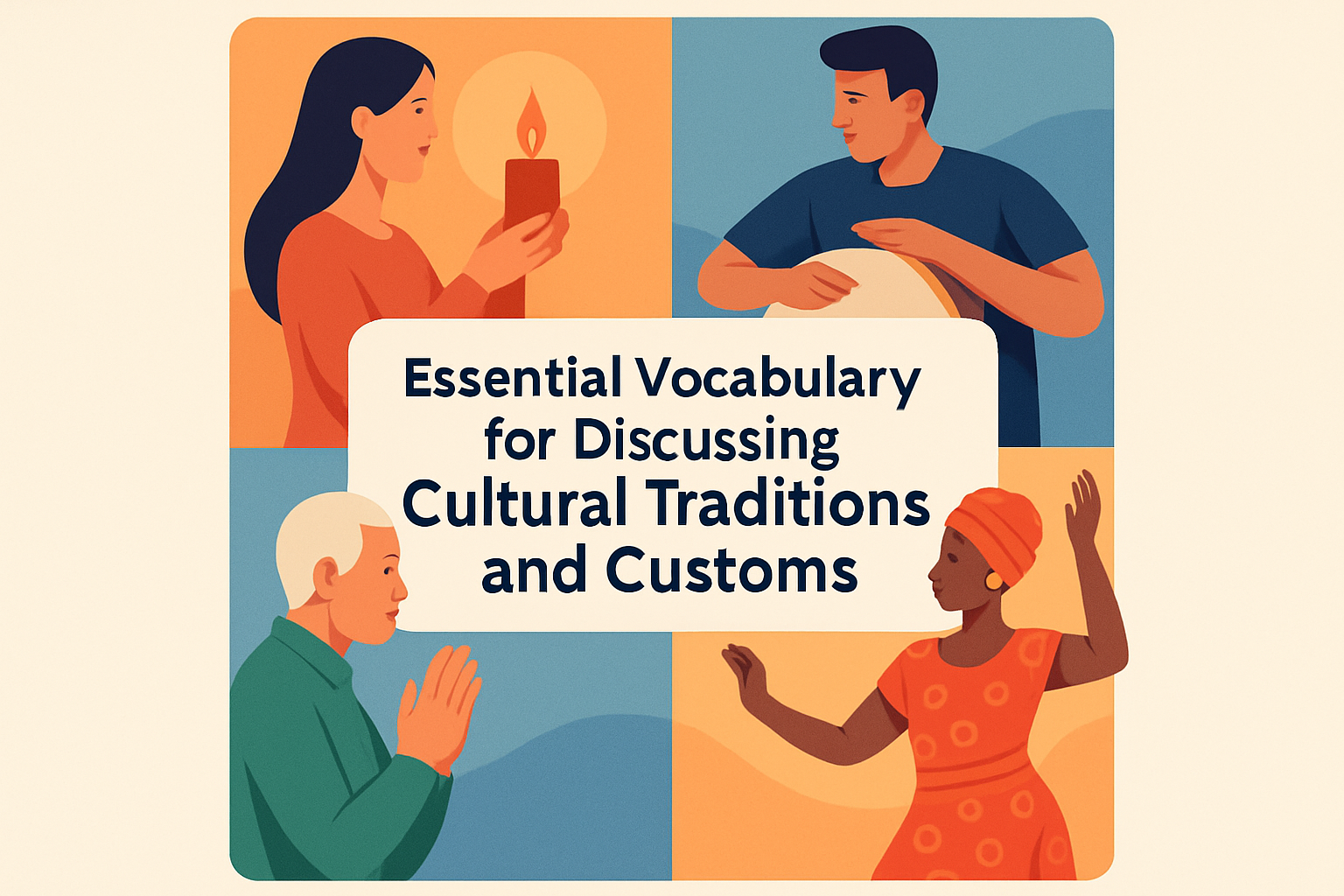
Cultural traditions and customs are the cornerstone of cultural identity and diversity. When discussing these themes, having a precise vocabulary is invaluable. Understanding and articulating cultural norms, rituals, and traditions facilitate deeper insight and respect among different cultures. This awareness can bridge divides, foster mutual respect, and contribute to peaceful coexistence. Exploring the lexicon of cultural traditions and customs allows us to delve into the heart of different societal norms and the shared human experience. This article expands upon essential vocabulary terms that are instrumental in discussing cultural traditions, highlighting their significance, context, and usage. Whether you are conversing casually, writing a research paper, or simply expanding your cultural repertoire, this guide will be a useful tool.
Rituals and Ceremonies
Rituals and ceremonies hold a crucial place in every culture, often marking significant life events or societal milestones. The word ritual refers to a series of actions or type of behavior regularly followed by individuals or groups. Whether they’re considered secular or sacred, rituals punctuate the life of those who follow them.
A prime example is the Japanese Tea Ceremony, which is deeply rooted in Zen Buddhism. Known as chanoyu, the Japanese tea ceremony is not merely about drinking tea. It is a ritual of preparing, serving, and consuming tea with a high level of etiquette and an art form involving grace and aesthetics that reflect the seasons.
Rituals allow people to demonstrate shared values and history, reinforcing communal bonds. They create sight, sound, and smell memories, providing an emotional anchor for cultural identity. Understanding the vocabulary associated with rituals enables one to appreciate these rich traditions and their meanings fully.
Festivals and Celebrations
Festivals and celebrations are expressions of joy, heritage, and communal identity. They often commemorate historical events, religious occasions, or seasonal changes. Take, for instance, Diwali, the Hindu festival of lights. It’s celebrated worldwide in India and Nepal, symbolizing the spiritual victory of light over darkness.
During Diwali, families clean their homes, light lamps called diyas, perform religious rituals, exchange gifts, and enjoy festive meals. The use of the word festival is critical in understanding how cultures globally mark significant societal milestones. Building on a robust festival vocabulary opens insights into the values celebrated within a society.
- Navratri – A nine-night Hindu festival celebrating the divine feminine.
- Carnival – A festive season occurring before Lent in Christian tradition, famous in Brazil.
- Oktoberfest – A German beer festival celebrating Bavarian culture.
Customs and Practices
Understanding customs involves examining the habitual actions that define the everyday lives of particular people. Customs can include social behaviors, dietary traditions, and greetings. The cheek kiss as a greeting is a widely practiced custom in many countries, such as Argentina and France.
These habitual actions reflect deeper societal values and norms and often indicate the historical and cultural evolutions of a region. Recognizing the various customs worldwide can help in increasing cultural competency – an invaluable skill in today’s globalized world.
Language, Symbols, and Art
Language, symbols, and art form the backbone of cultural expression. The word symbol is pivotal in describing the use of objects, figures, or colors to represent larger concepts or beliefs. Countries or cultures may have symbols that communicate important ideas or embody specific beliefs. For instance, in many parts of Africa, the color white represents mourning.
Furthermore, art forms such as dance or music are often deeply interwoven with a culture’s identity. Understanding how these various elements play a role in cultural traditions lets us appreciate more than just the aesthetic value of these practices, but the underlying historical significance and meaning.
| Culture | Symbol | Meaning |
|---|---|---|
| Chinese | Dragon | Strength and Power |
| Native American | Feather | Connection to Spirit |
| Indian | Peacock | Beauty and Grace |
Cross-Cultural Exchanges and Adaptations
Cross-cultural exchanges occur when traditions and customs are shared or adapted, leading to cultural diffusion. This exchange fosters global understanding and respect. For instance, the global popularity of Sushi implies an adaptation of traditional Japanese food culture into different dietary contexts worldwide.
The ability to discuss these exchanges in an informed manner requires knowing the vocabulary that encompasses cultural adaptation concepts. By understanding cross-cultural vocabulary, conversations can become more inclusive and appreciative of how cultures influence each other.
Taboos and Prohibitions
Every society has its taboos – actions or behaviors considered sacred and prohibited. Breaking taboos can lead to social ostracization or moral disapproval. In many Middle Eastern countries, for example, it is considered taboo to show the soles of your feet, as feet are seen as unclean.
Understanding taboo vocabulary helps in packaging cultural sensitivity, enabling non-offensive communication and behaviors. Awareness of taboos allows respect for boundaries within culturally diverse environments.
Integration of Modern Influences
With globalization, traditional customs face modern influences. The vocabulary surrounding this includes terms like acculturation and hybridization. Acculturation stands as the process by which individuals adopt cultural traits from another culture.
Hybridization reflects how two cultures blend to form something new, evident in K-Pop, which combines Korean culture with global musical influences. Language elucidating how cultural traditions adapt and integrate offers a lens through which societal evolution can be examined.
The integration of these influences can be explored through dialogues and vocabulary surrounding contemporary cultural evolution, aiding in understanding how traditional customs remain resilient over time.
Conclusion
The journey through vocabulary related to cultural traditions and customs highlights the importance of nuanced communication. By understanding the terms that frame cultural discussions, you equip yourself with the tools to navigate global diversity and foster respect and understanding. The words convey complex ideas about identity, heritage, and shared values across cultures.
Gaining proficiency in this vocabulary encourages deeper engagement with world cultures and sustains connections in a globally interconnected era. Take the information acquired here and start engaging in conversations that respect and celebrate cultural diversity in your communities. These are essential steps toward becoming culturally competent and fostering a world that values diversity and inclusivity.
The call to action is simple: Explore, learn, and integrate this vocabulary into everyday dialogues. Doing so will enrich personal cultural understanding and expand your worldview, contributing positively to the global conversation on cultural appreciation.
Frequently Asked Questions
1. What is the importance of understanding vocabulary related to cultural traditions and customs?
Understanding the vocabulary associated with cultural traditions and customs is essential because it allows us to engage in meaningful conversations about cultural identity and diversity. This vocabulary acts as a bridge, helping us to articulate the nuances of different cultural practices and beliefs clearly. By mastering the terms associated with cultural norms, rituals, and traditions, we gain a deeper insight into the values and practices of various cultures. This understanding promotes respect, empathy, and effective communication, which are crucial for peaceful coexistence and mutual respect among diverse communities.
2. How does vocabulary related to cultural customs enhance cultural awareness?
Vocabulary related to cultural customs enhances cultural awareness by providing us with the tools to interpret and discuss the intricate details of cultural practices. When we are equipped with the right terms and phrases, we can accurately describe and analyze the unique elements of a culture, from traditional attire and festivals to communal rituals and historical customs. This knowledge not only broadens our perspective but also encourages us to appreciate the richness of different cultures and the meanings behind their traditions. Enhanced cultural awareness leads to a stronger sense of global interconnectedness and community.
3. Can you give examples of essential vocabulary words in discussing cultural traditions?
Certainly! Essential vocabulary words in discussing cultural traditions often include terms like ‘ritual,’ which refers to a set of actions or ceremonies performed regularly as part of tradition; ‘norm,’ denoting typical behaviors or rules within a culture; and ‘heritage,’ which is about the legacy of cultural practices passed down through generations. Other words might include ‘ethnography,’ the study of cultures; ‘custom,’ a traditional practice observed by a community; and ‘diaspora,’ which refers to the spread of a culture beyond its traditional geographic boundaries. Understanding these terms allows us to communicate more effectively about diverse cultural landscapes.
4. Why is it crucial to respect cultural customs and traditions in conversations?
Respecting cultural customs and traditions in conversations is crucial because it acknowledges the individuality and significance of different societies. Every culture has its symbols, values, and practices that hold deep meaning for its members. By showing respect for these elements, we create an environment of inclusivity and empathy, allowing for positive interactions and understanding. This respect helps dispel stereotypes and prejudices, encourages learning and sharing of cultural knowledge, and underscores the importance of each culture’s contribution to the world’s diversity. Acknowledging and respecting these traditions are key steps toward fostering global harmony and peace.
5. How can one effectively engage in discussions about cultural traditions and customs?
Engaging effectively in discussions about cultural traditions and customs involves a combination of knowledge, empathy, and open-mindedness. First, being well-versed in the key vocabulary helps articulate insights and ask informed questions. Researching and understanding the historical background and significance of the traditions you wish to discuss shows respect and genuine interest. Listening actively to those from other cultural backgrounds, acknowledging their perspectives, and sharing experiences without making assumptions are also crucial. Finally, approaching these conversations with humility and a willingness to learn can lead to richer interactions and a deeper appreciation of cultural diversity.





