
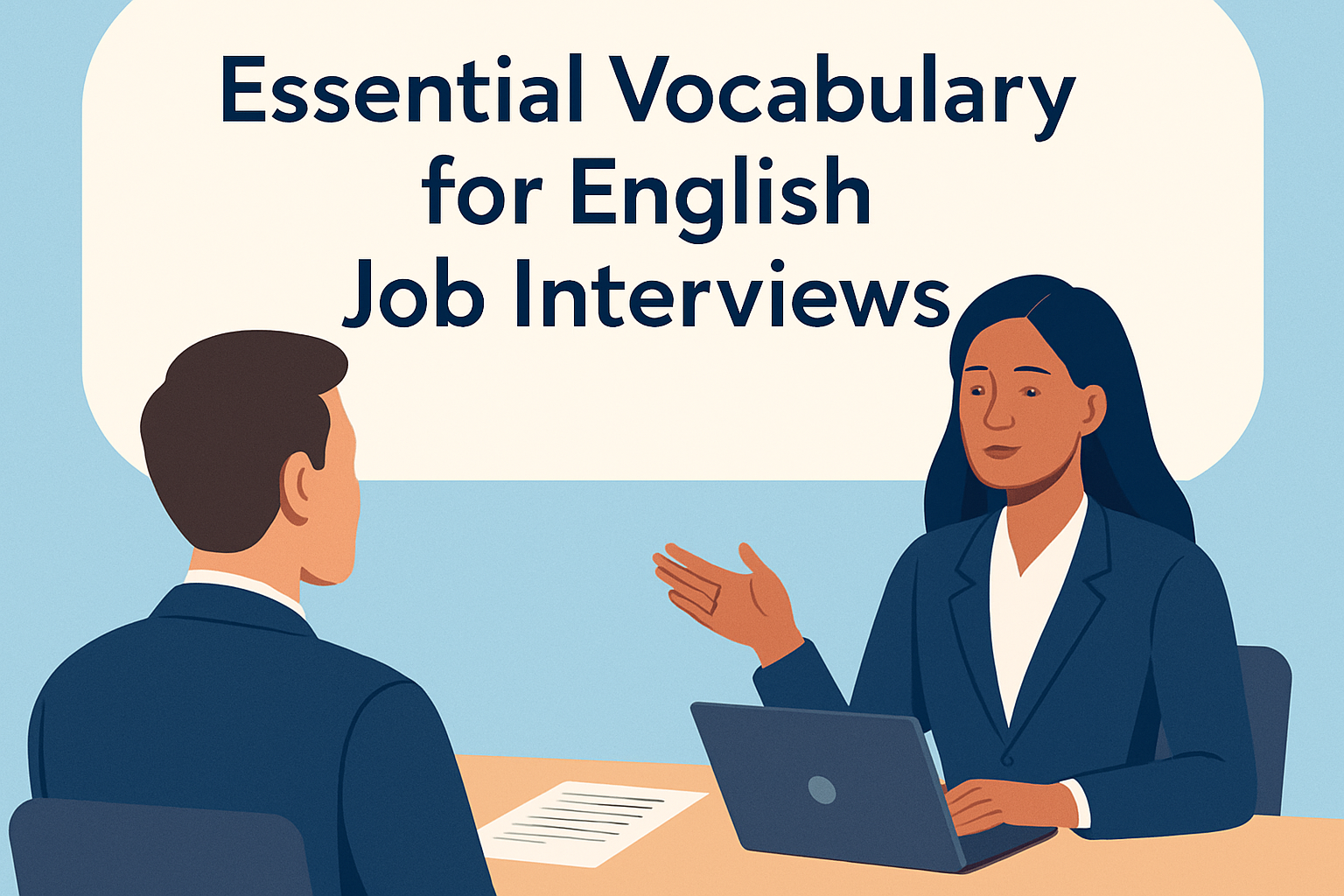
In today’s globalized workforce, English proficiency has become a pivotal asset. Navigating job interviews where English is the language of communication can be a daunting task, particularly if it is not your first language. The pressure heightens when you consider the fact that interviews are not just about technical skills but also about effective communication. Mastering essential vocabulary for English job interviews can significantly increase your confidence and improve your potential for success.
Understanding the right terms, phrases, and expressions is crucial. Knowing what to say, how to say it, and when to say it ensures that you present yourself as a competent and articulate candidate. This makes you more appealing to potential employers, who are looking for more than just skills on paper. They want to hire individuals capable of conveying thoughts clearly, fitting into their team, and, most importantly, demonstrating professional competence. This is why grasping the essential vocabulary for these interviews truly matters.
Core Interview Terms
In any job interview, certain core terms repeatedly find their way into the conversation. Understanding these helps in responding precisely to the interviewers’ queries. They also project an image of someone well-acquainted with the professional environment.
Example: Terms such as “strengths,” “weaknesses,” “achievements,” and “management” often surface during interviews. When an interviewer asks, “What are your strengths?” they are prompting you to highlight attributes that make you an ideal candidate. Similarly, “management style” might be posed to ascertain how you handle teams and projects.
- Strengths: Use terms like “dedicated,” “innovative,” and “proactive.”
- Weaknesses: Frame within contexts like “areas for improvement” without minimizing the term.
- Achievements: Think in terms such as “milestone,” “recognition,” and “excellence.”
Job-Specific Vocabulary
Each profession has its jargon—specialized language tailored to its functions and concepts. Displaying a command of job-specific vocabulary is a clear indication of your industry insights and practical knowledge.
Example: For a position in marketing, terms like “branding,” “target audience,” “campaign,” and “analytics” demonstrate fluency in industry-specific language. In engineering interviews, terms such as “systems design,” “prototype,” and “optimization” will be frequently encountered.
It’s important not only to understand these terms but also to be able to incorporate them naturally within your responses. This facilitates a smoother conversation and underscores your competence in the field.
Behavioral Interview Language
Behavioral interviews focus on assessing past behavior as an indicator of future performance. Interviewers explore your previous experiences, often using phrasing like “Tell me about a time when…” mastering the language to effectively communicate your experiences is critical.
Example: An interviewer may ask, “Describe a situation where you demonstrated leadership.” Here, you should be ready with verbs such as “initiated,” “directed,” and “motivated” when recounting your experiences. Behavioral questions could encompass themes like teamwork, problem-solving, and adaptability.
| Behavioral Theme | Key Verbs and Phrases |
|---|---|
| Leadership | Led, Coordinated, Empowered |
| Teamwork | Collaborated, Assisted, Unified |
| Problem-Solving | Analyzed, Resolved, Innovated |
Communicative Clarity
The ability to communicate clearly is imperative in an interview setting. Clarity reduces misunderstandings and demonstrates professionalism. Mastering terms associated with communicative clarity ensures your ideas are conveyed effectively.
Example: When discussing complex ideas, simplify with terms like “summary,” “overview,” and “in essence.” These guides help in restructuring thoughts into organized dialogue, crucial in conveying let alone understanding multifaceted discussions.
Effective communicators employ phrases that underscore this clarity consistently. For example, using connectors like “therefore,” “consequently,” or “meanwhile” to indicate logical connections between points.
Expressing Motivation and Interests
Interviewers often probe into what excites and motivates you concerning the role you are applying for. Expressing this authentically yet professionally brings a personal touch to formal dialogues.
Example: Phrases like “passionate about,” “committed to,” and “keenly interested in” are particularly useful when articulating your motivation. When asked why you are drawn to the position, consider expressing enthusiasm with terms like “thrilled,” “inspired,” or “enthusiastic.”
Furthermore, showcasing how your interests align with the organization’s goals or projects can be highly persuasive. Match your word choices with potential contributions to the team or company.
Negotiation Language
Discussing compensation, roles, or responsibilities can sometimes evoke anxiety. Appropriate vocabulary can help us navigate these conversations with poise and confidence.
Example: Phrases such as “open to discussion,” “flexible terms,” and “package expectations” set a cooperative tone during negotiations discussing salary or benefits. Expressing willingness to discuss in these terms communicates professionalism and openness.
When employers mention “compensation” or “benefits,” respond with confidence using similar terminology, ensuring mutual understanding on both parts.
Concluding and Moving Forward
Acquiring and applying essential vocabulary for English job interviews equips you with tools to present yourself proficiently. This vocabulary empowers you to navigate conversations fluidly, ultimately enhancing your chances for success across diverse professional environments.
Incorporating these terms effectively not only underscores your language proficiency but also highlights your readiness for professional challenges. Whether it’s about articulating your strengths, expressing interest, conveying technical knowledge, or negotiating terms, mastering these words and phrases is indispensable.
By focusing on these vital areas of interview vocabulary, you can present yourself as a compelling candidate ready for new career challenges. Take the first step by compiling a personal glossary of terms related to your specific field and practicing their application in mock interviews. This preparation is invaluable as you aim to stand out in the competitive job market.
Gear up for your next job interview with confidence, equipped with this comprehensive understanding of essential interview vocabulary.
Frequently Asked Questions
1. Why is mastering essential vocabulary so important for English job interviews?
Navigating an English job interview is more than just showcasing your technical know-how. It’s about how effectively you can communicate your thoughts, ideas, and personality under pressure. English, being a widely spoken business language, requires candidates to not only understand it but to use it confidently during interviews. A strong command of essential vocabulary helps you articulate your strengths, address weaknesses, and answer questions with clarity and precision. This ability can set you apart from other candidates who may have similar technical skills but lack effective communication. As you prepare, think of vocabulary as a tool that not only conveys your message but also demonstrates your cultural fluency and professionalism.
2. How can I identify which vocabulary words are essential for a job interview?
Identifying essential vocabulary for a job interview involves understanding the specific industry you’re applying to and the role itself. Start by researching common terminology used in the sector, often found in job descriptions, company websites, and industry publications. Pay attention to keywords repeated in job postings—these often highlight critical competencies the employer values. Focus on verbs that describe actions, such as “collaborate,” “innovate,” “lead,” and “analyze,” as they signal the skills companies seek. Additionally, be prepared to discuss your resume using action-oriented language that clearly illustrates your achievements and experiences. Practice using these terms in sentences to ensure they sound natural in conversation.
3. How can I effectively prepare for using essential vocabulary in an interview?
Preparation is the key to mastering vocabulary for any job interview. Start by compiling a list of essential terms and phrases pertinent to your industry. Break your preparation into manageable sections, such as technical terms, soft skills, and role-specific jargon. Practice using these words in context during mock interviews, either with a friend, career coach, or through a webcam practice session to get comfortable with speaking aloud. Additionally, record your responses and listen to how you use the language, noting areas for improvement. This self-analysis helps in fine-tuning your delivery and ensuring fluency when the real interview comes. Remember, the goal is to naturally incorporate vocabulary into your responses rather than awkwardly forcing it in.
4. What should I do if I’m asked a question using a vocabulary word I’m unfamiliar with?
Finding yourself stumped by unfamiliar vocabulary during an interview can be unsettling, but handling it with composure can actually work in your favor. Firstly, take a breath and don’t panic. Ask the interviewer to elaborate or provide an example. It shows that you’re engaged and eager to understand. You could say, “Could you please clarify what you mean by [word]?” This buys you time and demonstrates active listening. If it’s still unclear, pivot to a closely related topic you know well. Use phrases like, “While I’m not exactly sure what that entails, I do have experience with…” This response strategy allows you to showcase relevant knowledge and keeps the conversation moving forward.
5. Can you give examples of some essential vocabulary words often used in job interviews?
Certainly! Here are a few examples of essential vocabulary words frequently used in job interviews, along with illustrative contexts: – **”Adaptability”:** Employers value candidates who can adjust to changing environments. You might say, “My adaptability was crucial in managing multiple projects when our department underwent restructuring.” – **”Proactive”:** This term suggests initiative. For instance, “I’ve always taken a proactive approach to problem-solving, often identifying potential issues before they arise.” – **”Collaborate”:** Teamwork is often a core value. Example: “I successfully collaborated with cross-functional teams on a project that increased our product’s market share by 20%.” – **”Results-driven”:** Indicates focus on outcomes. For example, “As a results-driven professional, I focus on high-impact tasks that align with the company’s strategic goals.” Practice using these in sentences so they are naturally part of your interview language repertoire. Understanding and employing these keywords can make you a more compelling candidate.”





