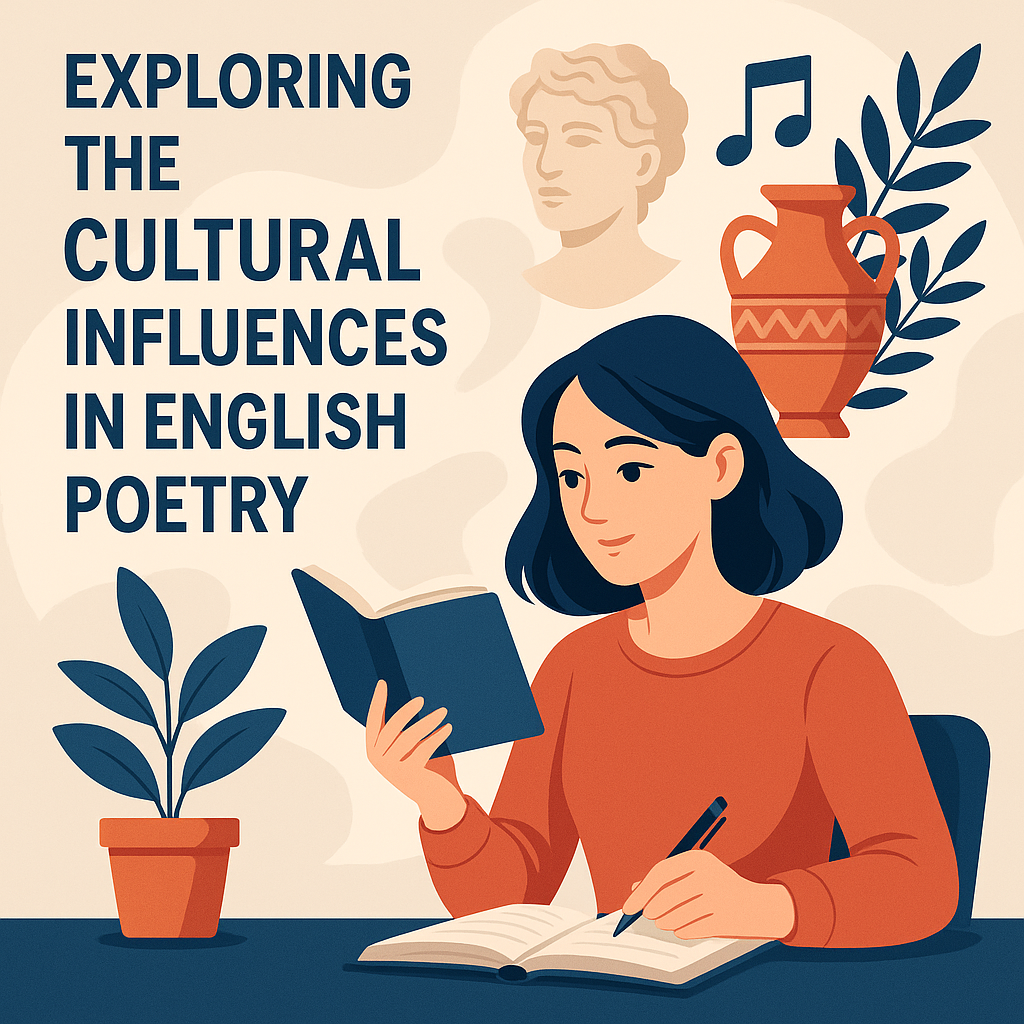
English poetry, a rich and varied art form, provides immense insight into the cultures and societies that have influenced it over centuries. The combination of culture and poetry is a fascinating exploration: a dance between linguistic artistry and the myriad experiences and contexts that shaped each word, line, and stanza. Cultural influences in poetry refer to the ways in which poets draw upon their societal, historical, and familial backgrounds, their belief systems, traditions, and prevailing worldviews to inform and transform their writing.
Understanding these cultural influences is not just an academic exercise. It is crucial because poetry serves as a window into the soul of humanity, chronicling our shared history, values, aspirations, and conflicts. Navigating the poetry landscape with a cultural lens allows readers to appreciate the nuanced layers of meaning and emotion embedded within. The cultural dimensions of poetry are like threads in a tapestry, each adding color, depth, and texture to the overall artwork. With that perspective in mind, let’s delve deeper into the various cultural influences in English poetry and how they have shaped its evolution.
The Role of Historical Events
Historically significant events have deeply impacted English poetry, often serving as catalysts for new poetic movements and expressions. For instance, the Romantic Era in literature, which spanned from the late 18th century to the mid-19th century, was heavily influenced by the Industrial Revolution. This period saw an explosion of poetry that reacted against the cold, mechanical ethos of industrialization, instead celebrating nature, emotion, and individuality.
William Wordsworth, a figurehead of the Romantic movement, exemplifies this cultural reflectivity. In his poem “Lines Composed a Few Miles above Tintern Abbey,” Wordsworth paints vivid imagery of natural landscapes as a counterpoint to the mechanistic world emerging around him. His work invites readers to consider nature’s spiritual significance in an era increasingly defined by industrialization.
Impact of Colonialism and Movement across Continents
Colonialism introduced a significant cultural dimension to English poetry. Through this historical lens, we witness a confluence of diverse traditions and narratives, an amalgamation that infused new life and perspectives into the English poetic canon. Because Britain was a powerful empire, the exchange of cultural ideas with colonized territories left a permanent mark on its literature.
The example of Rudyard Kipling perfectly illustrates this influence. Born in British India, Kipling’s poetry and literature reveal complex perspectives about colonial life. His poem “The White Man’s Burden,” although controversial, reflects the imperial attitudes of his time, presenting both a critique and a perpetuation of colonial ideologies. This duality incites readers to contemplate the tangled ramifications of colonial power dynamics preserved through art.
Influence of Religion and Mythology
Religion and mythology are potent cultural influencers in English poetry, providing a rich source of imagery, motifs, and themes. These elements offer poets a vast landscape for exploration and creative reinterpretation of human existence, moral dilemmas, and metaphysical inquiry.
Consider the poetic works of T. S. Eliot, whose poems are often imbued with religious undertones. In “The Waste Land,” Eliot leverages allusions to ancient myths alongside Christian symbolism to convey post-World War I disillusionment. The poem’s imagery and narrative draw extensively from a variety of religious texts, inviting readers to engage with the spiritual depths of despair and redemption present within the modern experience.
- T. S. Eliot’s use of religious symbolism
- Mythological references in popular works
- Exploration of existential themes
Regional and Linguistic Diversity
The geographic and linguistic plurality in the English-speaking world has afforded a variety of regional voices a platform within the poetry sphere. Dialects and indigenous languages contribute to a diverse poetic landscape where local color and cultural specificity enhance the universal themes addressed by poets.
Scottish poet Robert Burns’ work is an example of regional influence manifest in the English poetic tradition. Burns’ use of Scots dialect in his poems, such as “A Red, Red Rose,” is significant, as it brings the musicality and regional flavor of Scottish culture into the broader Anglophone world. Consequently, his poems preserve and celebrate linguistic heritage while transcending geographic barriers.
Contemporary Cultural Movements
In modern times, contemporary cultural movements continue to shape English poetry, reflecting society’s evolving priorities and conversations. As societal concerns shift, English poetry mirrors these changes, offering poignant critiques or affirmations of contemporary life.
| Cultural Movement | Impact on Poetry | Notable Poet |
|---|---|---|
| Feminism | Empowerment narratives, exploration of gender roles | Sylvia Plath |
| Social Justice | Critique of inequality, advocacy for marginalized voices | Langston Hughes |
| LGBTQ+ Rights | Exploration of identity, celebration of diversity | Adrienne Rich |
Contemporary poetry continues to push boundaries with the emergence of spoken word and digital poetry platforms, where cultural dialogue becomes increasingly dynamic and accessible. These platforms allow poets like Yesika Salgado to address current socio-political issues, like body positivity and immigrant experiences, engaging a wider audience in meaningful conversations.
The Influence of Popular Culture
As part of the cultural zeitgeist, popular culture significantly informs the themes and stylistic choices of contemporary English poetry. Popular culture encompasses the music, trends, and social phenomena pervasive during the era of a poet’s work. By drawing from contemporary entertainment, poets infuse their work with a sense of immediacy and relevance that resonates with their audience.
Consider the influence of musical genres like hip-hop, which has permeated the structure and rhythmic style of modern poetry. Rappers like Tupac Shakur and poets such as Claudia Rankine blend elements of verse with the storytelling and rhythm of hip-hop, addressing themes of racial identity, resilience, and social inequity. Through these cultural intersections, poets reshape the landscape of poetic expression.
Use of Technology in Modern Poetry
Advancements in technology also shape the form and dissemination of poetry. In the digital age, technology democratizes the arts, allowing diverse voices to emerge and flourish using new mediums. Social media platforms, in particular, offer poets unprecedented reach and instantaneous feedback, fostering a vibrant exchange of ideas and styles.
New forms of poetry have emerged, such as InstaPoetry, which condenses complex thoughts into succinct, shareable text. Rupi Kaur has popularized this form, artfully blending visual elements with minimalist language to create impactful messages. This evolution gives rise to questions around the qualitative change in poetry’s role while celebrating its accessibility for budding poets globally.
The integration of technology in distribution and creation of poetry exemplifies cultural adaptability, ensuring its continued relevance and resonance with contemporary audiences. By leveraging technology, poetry cultivates a broader appreciation and understanding among diversified demographics.
The Interplay of Thought, Tradition, and Innovation in Poetry
Cultural influences in English poetry are profoundly diverse, originating from historical contexts, religious and mythological inspirations, regional histories, and contemporary cultural phenomena. Each generation of poets partakes in an ongoing dialogue with their cultural environments while innovating upon traditional forms to encapsulate their unique perspectives.
Through our exploration, it becomes evident that cultural influences not only shape the thematic elements of poetry but also contribute to its structural evolution. From the Romanticists seeking solace in nature amidst the Industrial Revolution to modern poets juxtaposing technology and verse, each cultural shift brings invigorated depth and dimension to the poetic art form.
With the exploration of cultural influences in English poetry, readers stand to gain profound insights into society’s past, present, and potential futures. Beyond the page, poetry has the power to prompt reflection, ignite change, and foster a deeper connection to the broader human experience.
Encouragement is extended to each reader to delve into poetic works that challenge and enrich their understanding. Whether through seeking out diverse voices or revisiting classic works with fresh perspectives, embracing the cultural influences in poetry enriches one’s literary journey and fosters a greater appreciation for the nuanced artistry it embodies.
Together, let us celebrate the myriad of voices, stories, and visions that continue to shape and expand the bounds of English poetry.
Frequently Asked Questions
1. What role does culture play in shaping English poetry?
Culture plays a pivotal role in forming the backbone of English poetry. It’s through cultural influences that poets find their voices, drawing from a vast pool of societal norms, historical events, family dynamics, belief systems, and traditions. Each era in English poetry, from the Renaissance to contemporary times, reflects the cultural nuances of its period. For example, the Romantic poets, heavily influenced by the Industrial Revolution, responded through works that emphasized emotion and nature. In contrast, the Modernists, working through the backdrop of the World Wars, expressed disillusionment and fragmentation. Understanding cultural contexts allows readers to grasp the deeper meanings and motivations behind each poem, making the experience of poetry both an exploration and a reflection of human stories and societal changes.
2. How do societal changes influence English poetry?
Societal changes have always been a driving force in the evolution of English poetry. As society transforms, so too does the thematic and stylistic approach of poets. During times of political upheaval, such as the English Civil War, poetry often reflected themes of conflict, power, and resistance. Society’s evolution toward greater inclusivity and diversity has also seen a shift in poetic voices, leading to more diverse perspectives in contemporary poetry. Moreover, as society transitions through technological and digital revolutions, modern poetry sometimes incorporates multimedia elements and new forms. This continual interplay with society keeps poetry as a living, dynamic form that evolves alongside the people it represents.
3. Can you provide examples of family influence on English poets and their writings?
Family influence can be seen in many celebrated poets’ works—from the legacy of John Keats, whose early family life and tragic loss deeply colored his themes of mortality and beauty, to Sylvia Plath, who drew upon her complex familial relationships for emotional depth and authenticity in her confessional poems. Anne Sexton’s work is another example; her intimate portrayal of personal and family life brought issues of mental health and gender roles into the poetic mainstream. Through their familial lens, poets connect with universal themes of love, loss, and identity, making their works resonate on a deeply human level. By bringing these personal experiences to light, they provide an intimate glimpse into the universality of familial bonds and conflicts.
4. How are historical events reflected in English poetry?
Historical events have a profound impact on English poetry, often serving as both inspiration and backdrop for poetic works. For instance, the Renaissance period was marked by a rebirth of arts and sciences, which poets like Shakespeare and Spenser captured through themes of humanism and nature’s beauty. Fast forward to the World Wars, where poets such as Wilfred Owen and Siegfried Sassoon wrote intensely about the horrors and futility of war, offering raw, visceral accounts of human suffering. During the postcolonial era, poets have explored themes of identity, displacement, and the complexities of cultural assimilation, reflecting the legacies of colonialism. Each historical moment leaves its indelible mark on poetry, offering insight into how societies wrestle with the challenges and triumphs of their times.
5. What is the impact of belief systems and traditions on English poetry?
Belief systems and traditions are deeply embedded in the fabric of English poetry, shaping not just content, but also form and language. Religious beliefs have been particularly influential, with many poets drawing upon Christianity, paganism, and other spiritual narratives to explore existential themes. John Milton’s “Paradise Lost” is a seminal work that delves into biblical themes and theological discourse. Similarly, the metaphysical poets, like John Donne, used intricate metaphors to merge spiritual concern with erotic and intellectual explorations. Traditions like folklore and myth have also inspired poets to create allegorical and fantastical works that explore human nature and moral dilemmas. These belief systems make poetry a profound medium for examining the spiritual and moral questions that define human existence.