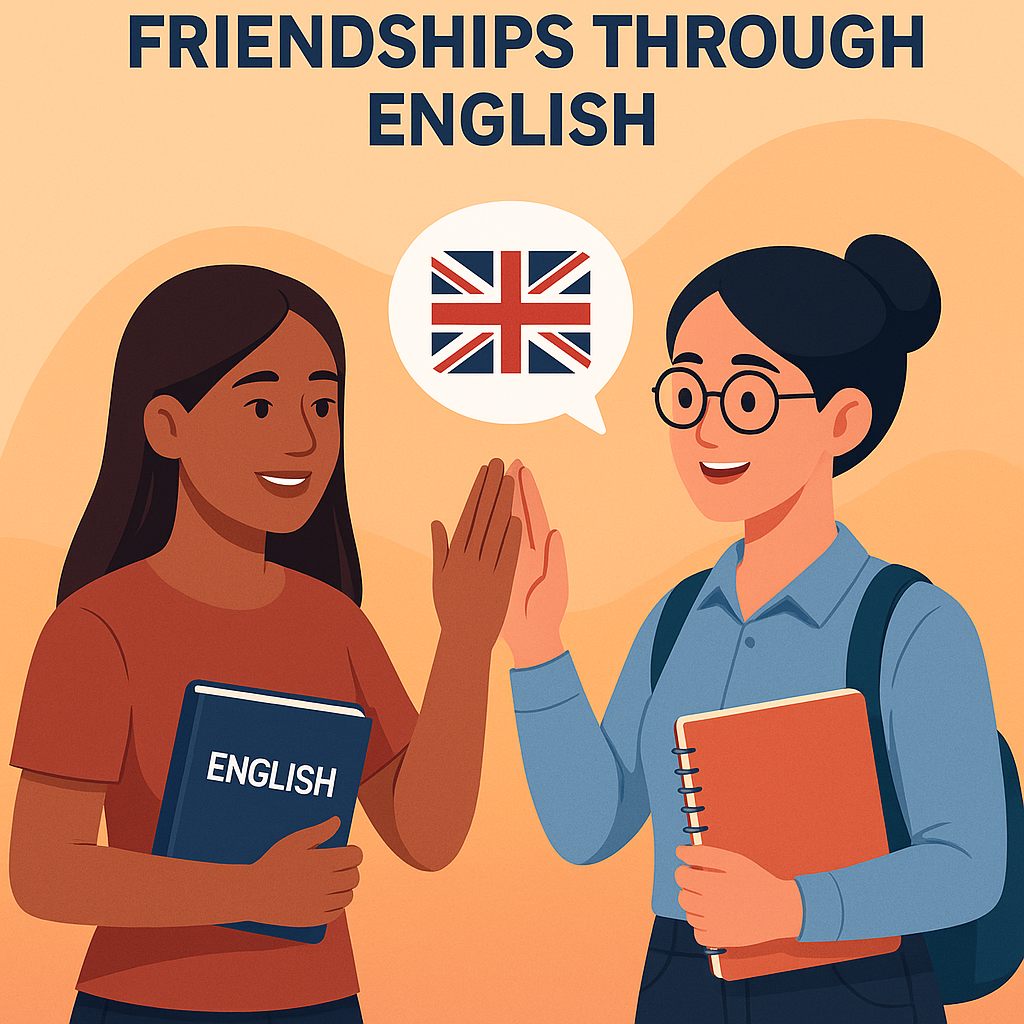
In an increasingly interconnected world, forming friendships across cultures has become both a possibility and a necessity. The key to unlocking this global camaraderie often lies in a common language: English. As the world’s lingua franca, English serves as the bridge for individuals from diverse backgrounds to connect, share experiences, and enrich their lives through friendship. In this article, we’ll explore how English facilitates cross-cultural friendships, the importance of these bonds in a globalized society, and how you can harness the power of English to forge meaningful connections. This exploration not only deepens our understanding of the English language as a tool of communication but also highlights its role in fostering unity in the face of cultural diversity.
Forming friendships across cultures is essential in today’s world. Cross-cultural friendships break down stereotypes, promote understanding, and contribute to a more harmonious global community. They also offer personal growth, as individuals can learn about different traditions, values, and ways of thinking. Understanding and appreciating these differences lead to mutual respect and peace. For English learners, leveraging the language to build such friendships is an opportunity to enhance language skills in authentic contexts while expanding their global perspectives. Let’s delve into how cross-cultural friendships are cultivated through English and the profound impact these relationships can have.
Understanding Cross-Cultural Communication
Effective cross-cultural communication is the bedrock of forming international friendships. English transcends national boundaries, allowing people from various countries to communicate with one another. It carries nuances that can either bridge or widen gaps if not properly understood. Realizing that language encompasses more than just words is essential—tones, gestures, and even silence play crucial roles in communication.
For instance, in many Asian cultures, silence is a sign of respect and contemplation, whereas in Western cultures, it might be interpreted as discomfort or agreement. Acknowledging such differences is crucial when communicating in English across cultures. An example of successful cross-cultural communication can be seen in international student programs where English is the medium of instruction. In such environments, students from diverse linguistic backgrounds come together, often leading to lifelong international friendships.
Building Friendships Through Shared Interests
Finding common ground beyond language is another powerful way to form friendships. Shared interests—be it in sports, arts, technology, or any domain—can transcend cultural barriers. English serves as the common language through which individuals can explore these shared passions together, nurturing stronger connections.
An example of this is seen in global online gaming communities. Gamers from different parts of the world, despite having varied linguistic and cultural backgrounds, come together to play. Often, these interactions begin as purely gaming-related but evolve into friendships. The common interest in gaming, discussed in English, moves beyond the game itself, forging personal bonds and mutual understanding.
Learning and Cultural Exchange
English as a medium of cultural exchange is invaluable. Engaging with English-speaking communities provides exposure to diverse cultures while offering the chance to teach others about one’s own background. This reciprocal exchange fosters deeper intercultural understanding and respect.
International cultural festivals exemplify this. Participants use English to share their cultures through food, music, and art. Volunteers and attendees, regardless of their cultural origin, engage in discussions that foster mutual learning and respect. English becomes the channel through which people share narratives and, in doing so, build friendships that traverse geographical borders.
| Key Friendship Factors | Examples | Benefits |
|---|---|---|
| Shared Interests | Online Gaming, Sports | Stronger Bonds, Fun and Engagement |
| Cultural Exchange | International Festivals, Student Exchanges | Expanded Horizons, Mutual Respect |
| Communication Skills | Language Workshops, Retreats | Improved Language Skills |
Overcoming Language Barriers
While English serves as the common language in building cross-cultural friendships, fluency levels vary among speakers. Patience and empathy are vital when language barriers arise. Effective communication requires active listening and the willingness to simplify language to mutual levels of comprehension.
Language exchange programs are perfect examples of overcoming language barriers. These programs pair individuals looking to learn each other’s language. In such environments, English often acts as the balancing factor, allowing participants to dive into more profound cultural exchanges. These interactions, while initially challenging, often result in lasting friendships and improved language proficiency.
The Role of Technology in Connecting Cultures
Technology has revolutionized the way people form cross-cultural friendships. Platforms like social media, language learning apps, and virtual communities have opened new avenues for interaction, with English typically serving as the main language of communication.
Consider platforms like Tandem or HelloTalk, which connect language learners across the globe. These platforms give users the tools to practice English with native speakers from various countries, fostering friendships that often extend beyond language learning. Participants exchange cultural insights daily, gaining a better understanding of different ways of life.
Real-World Cross-Cultural Friendships
The real-world application and impact of forming cross-cultural friendships through English are profound. These friendships often lead to collaborations, innovative ideas, and even joint ventures, impacting communities positively. Take the case of two young entrepreneurs from different continents who met at an international youth conference. Through their mutual enjoyment of digital art, discussed in English, they started a collaborative business that merges their cultural heritages into unique products.
Moreover, such friendships often inspire community involvement. Friends from different cultures may organize charity events, cultural awareness workshops, or educational programs locally and globally, fostering a spirit of unity and inclusion.
Personal Growth Through Cross-Cultural Friendships
Beyond the cultural and social implications, cross-cultural friendships significantly contribute to personal development. Engaging with friends from varied backgrounds challenges one’s own beliefs and broadens one’s worldview. Building friendships through English allows for rich exchanges that question assumptions, broaden perspectives, and lead to more flexible thinking.
For example, students participating in exchange programs often return with profound personal insights and lifelong friendships. These experiences teach adaptability, open-mindedness, and resilience—skills that are invaluable in both personal and professional realms.
Summarizing the Benefits and Next Steps
In conclusion, forming cross-cultural friendships through English is a powerful way to bridge cultural divides, enrich personal growth, and foster a more unified global community. Through shared interests, cultural exchanges, technology, and overcoming language barriers, English acts as a conduit for creating lasting international bonds. These relationships break stereotypes, foster mutual respect, and open doors to opportunities that transcend geographical limitations.
As you embark on your journey to form cross-cultural friendships, remember to approach each interaction with an open mind and a willingness to learn. Attend international events, join language learning communities, or participate in cultural exchange programs to immerse yourself in diverse environments. The key is genuine curiosity and respect for others’ backgrounds and life stories.
Take the first step today by reaching out to someone from a different cultural background, perhaps through online platforms or community events. Share your experiences in English and welcome the opportunity to understand another’s perspective. By doing so, you not only improve your language skills but also contribute to a more inclusive world forged through friendships and understanding.
Frequently Asked Questions
1. How does English facilitate forming cross-cultural friendships?
English plays a crucial role in forming cross-cultural friendships by serving as a common language that bridges diverse cultures. As the global lingua franca, English enables people from different countries and backgrounds to communicate and understand one another without the barrier of different native languages. This shared medium promotes the free exchange of ideas, cultural practices, and thoughts, thereby fostering mutual understanding and respect. Through English, people gain access to a broader spectrum of social interactions, whether online or offline, which invariably leads to meaningful connections and the development of lasting friendships. For many, learning English is not just about language acquisition but about opening doors to new worlds, diverse perspectives, and varied experiences.
2. What are the challenges people face when forming friendships across cultures using English?
One of the primary challenges faced in forming cross-cultural friendships using English is varying levels of proficiency in the language itself. While English may be the common language, differences in fluency can create misunderstandings or communication barriers. Additionally, cultural differences can lead to assumptions or misinterpretations in conversations. For instance, certain jokes or idiomatic expressions might not translate effectively across cultures, leading to confusion or unintended offense. People might also encounter challenges related to differing cultural norms, such as varying perceptions of time, personal space, or social etiquette. However, navigating these challenges with an open mind and a willingness to learn from mistakes is a significant part of the enriching experience that comes with cross-cultural friendships.
3. Why are cross-cultural friendships important in today’s world?
In our globalized society, cross-cultural friendships are more important than ever. They promote global understanding and peace by breaking down stereotypes and prejudices that often arise from ignorance. These friendships foster empathy and cultural sensitivity, encouraging individuals to appreciate and celebrate diversity. Moreover, they enable personal growth by exposing individuals to new ideas, traditions, and ways of thinking, thus broadening their worldview. Cross-cultural friendships also provide valuable opportunities for language practice and development, especially for those who are not native English speakers. On a larger scale, they contribute to global collaboration, cooperation, and unity, incentivizing both personal and societal progress.
4. How can one overcome language barriers in forming and maintaining cross-cultural friendships?
Overcoming language barriers in cross-cultural friendships involves a combination of practical strategies and mindset shifts. Firstly, making a conscious effort to improve one’s language skills, whether through formal education or casual practice, is essential. Engaging in language exchange programs or using language learning apps can be effective. Additionally, the use of technology such as translation apps can aid in real-time communication. It is crucial to maintain patience and empathy, recognizing that language learning is a gradual process that requires effort from both parties. Moreover, emphasizing non-verbal communication through gestures, facial expressions, and tone can help convey meanings that words might not fully express. Maintaining a positive attitude toward understanding and committing to correcting misunderstandings when they occur is vital in nurturing these friendships.
5. What role do social media and technology play in facilitating cross-cultural friendships through English?
Social media and technology are powerful tools that facilitate cross-cultural friendships through English by providing platforms for individuals from different parts of the world to meet, communicate, and form relationships. Social media networks such as Facebook, Instagram, and Twitter enable people to share their lives and cultures through photos, videos, and posts, thereby fostering a sense of connection and community. Platforms like Skype, Zoom, and WhatsApp allow for real-time conversations and even video calls, making geographical distances irrelevant. Online forums and communities where English is the primary language encourage interest-based interactions, bringing together people with common hobbies, goals, or professions. These digital spaces are invaluable for initiating and sustaining conversations that might translate into lasting friendships. Moreover, technology facilitates language learning and cultural exchange by providing instant access to resources and tools that enhance language proficiency and cultural knowledge, making English-based cross-cultural friendships more accessible and diverse.