
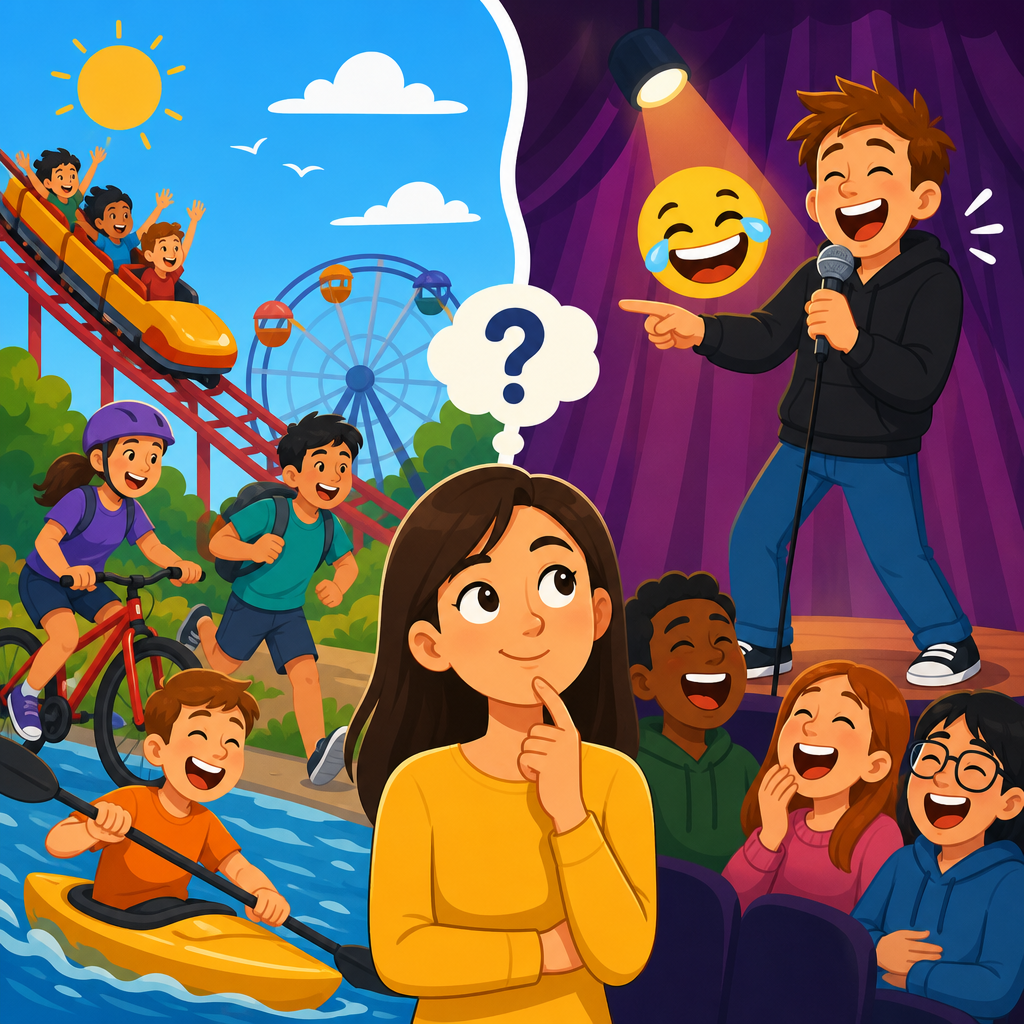
English learners often mix up fun and funny because both words relate to enjoyment, but they describe different ideas. Fun usually means pleasure, enjoyment, or an enjoyable activity. Funny usually means something causes laughter or seems strange in a way that makes people laugh. This difference matters in daily conversation, writing, exams, and workplace English because one small word choice can change your meaning completely. I have taught this contrast in ESL classrooms, corrected it in essays, and heard it confused in meetings, travel conversations, and casual chats. Once learners understand the pattern, mistakes drop quickly. This article explains the difference between fun and funny, shows common grammar patterns, gives practical ESL examples, and serves as a vocabulary hub for related miscellaneous word-choice questions that often confuse learners.
The core rule is simple. If you mean enjoyable, use fun. If you mean amusing, use funny. A party can be fun. A joke can be funny. A class can be fun if students enjoy it. A teacher can be funny if the teacher says amusing things. Sometimes both words can describe the same situation from different angles. A game night may be fun because everyone enjoys it, and some moments during it may be funny because people laugh. Learners struggle because in many languages one word covers both meanings. English separates them, and grammar separates them too. Fun can act as a noun, adjective, or part of fixed expressions. Funny is mainly an adjective. Understanding that structure makes your English more accurate and more natural.
What fun means in everyday English
Fun refers to enjoyment, pleasure, or an activity that people enjoy. In modern English, native speakers commonly use fun as an adjective, especially in conversation: We had a fun trip. That was a fun lesson. Traditional grammar books once resisted adjective use, but current standard English accepts it widely, especially in American English. Fun is also a noun: The trip was fun. We had a lot of fun. That distinction helps learners build sentences correctly. If you say I am funny when you mean I enjoy things, you create the wrong impression. If you say I am fun, that means people enjoy being with you. If you say I have fun, that means you enjoy yourself.
Common patterns include have fun, a lot of fun, such fun, fun activities, fun place, and fun for kids. In class, I often teach learners to ask one direct question: Do I mean enjoyable? If yes, choose fun. Example: The museum was fun for the children because they could touch the science exhibits. Another example: We had fun at the beach even though it rained. Here, fun describes the positive experience, not laughter. This is important because many enjoyable experiences are not humorous at all. Hiking can be fun. Cooking can be fun. A challenging language game can be fun. None of those ideas necessarily mean people laughed.
What funny means and when it can mean strange
Funny usually means amusing or causing laughter. A funny film makes you laugh. A funny story has a humorous effect. A funny friend often makes jokes or notices absurd details. This is the meaning most learners know first, and it is the one tested most often in beginner and intermediate materials. However, funny also has a second common meaning: strange, unusual, or suspicious. If someone says, There is a funny smell in the kitchen, they usually do not mean the smell is humorous. They mean it is odd. If a speaker says, My computer is acting funny, they mean something seems wrong or unusual.
That second meaning matters because context controls interpretation. In conversation, tone and topic usually make the meaning clear. A funny movie is amusing. A funny noise in your car is probably a problem. For ESL learners, the safest strategy is to notice the noun that follows. Words like joke, comedian, scene, story, and meme usually point to the amusing meaning. Words like smell, feeling, noise, color, and behavior often point to the strange meaning. This nuance appears often in natural English, television dialogue, and workplace conversation. It also explains why calling a serious person funny can be a compliment, while saying something feels funny can signal concern rather than amusement.
Fun vs funny: side-by-side comparison and ESL patterns
The fastest way to remember fun vs funny is this: fun describes enjoyment; funny describes laughter or oddness. Here are classroom-tested examples. The party was fun means the party was enjoyable. The comedian was funny means the comedian made people laugh. Our trip was fun means we enjoyed the trip. His comment was funny means his comment was amusing. The children are fun means they are enjoyable to be with. The children are funny means they often say or do amusing things. This distinction becomes especially important with people, events, and media because both words can fit grammatically, but they express different meanings.
| Sentence | Meaning | Correct word |
|---|---|---|
| The game was ___. | Enjoyable to play | fun |
| The joke was ___. | It made people laugh | funny |
| We had a ___ evening. | Pleasant and enjoyable | fun |
| He told a ___ story. | Amusing story | funny |
| Something smells ___. | Strange or unusual | funny |
| The kids are ___ to be around. | Enjoyable company | fun |
Notice another useful pattern: have fun is extremely common, but have funny is not. We say Have fun at the concert, not Have funny at the concert. We also say That sounds fun, not That sounds funny, unless we mean it sounds amusing or strange. In learner writing, I frequently correct sentences such as Yesterday was very funny when the student means enjoyable. The corrected sentence is Yesterday was very fun in conversation, or more naturally, Yesterday was a lot of fun. For clear, natural English, that phrase is one of the best to memorize.
Common learner mistakes and how to fix them
The most common mistake is using funny for any positive experience: The beach was funny, The lesson was funny, or We were very funny at the festival. These usually need fun instead. Another frequent problem is using fun where funny is required: My teacher is very fun because he tells jokes. If the focus is the jokes and laughter, funny is better. If the focus is that students enjoy his class, fun works. Sometimes both are possible, but the meaning changes. My teacher is funny means he is amusing. My teacher is fun means spending time with him is enjoyable. Good learners train themselves to ask what exact idea they want to express.
A second issue is grammar with people and self-description. Learners sometimes say I am so funning or This game is full of funny. Those forms are incorrect. Use I am having fun, This game is fun, or The game is funny only if the game itself makes people laugh. Another issue involves too. If a learner says You are too funny, that usually means very amusing. If they say It is too much fun, that means it is extremely enjoyable. Small collocations like these matter because fluent English depends on common combinations, not only dictionary definitions. Reviewing example sentences aloud helps learners hear the difference and remember it during real conversation.
Practice sentences, memory tricks, and related vocabulary
Practice works best when learners classify meaning before choosing the word. Try this method. First, ask: enjoyable, amusing, or strange? Second, choose the word. Example one: The board game was so fun that we played for three hours. Example two: Her imitation of the manager was funny, and everyone laughed. Example three: I heard a funny sound from the washing machine, so I turned it off. These examples show all major uses clearly. A simple memory trick also helps: fun equals good time; funny equals laugh time or odd sign. It is not perfect, but it works well for quick decisions in speaking.
Because this page is the miscellaneous hub within vocabulary, it should also guide learners toward related distinctions they often study next. Common paired topics include bored vs boring, interested vs interesting, say vs tell, speak vs talk, big vs large, hear vs listen, and look vs seem. These word pairs belong together because they create the same kind of problem: two familiar words, one important difference, and many small grammar patterns. When I build vocabulary sequences, I place fun vs funny near adjectives ending in -ed and -ing because learners benefit from comparing meaning and sentence structure across topics. If you are reviewing miscellaneous vocabulary, study these contrasts together and create short dialogues using each pair in realistic situations.
How to use fun and funny naturally in speaking and writing
Natural use depends on context, register, and audience. In casual speech, fun appears constantly: That looks fun, Have fun, It was fun meeting you. In formal writing, it is still acceptable, but writers sometimes prefer enjoyable, entertaining, amusing, or pleasant when they want a more specific tone. Funny also changes by context. In an office email, saying Your message was funny may sound warm if the sender intended humor, but risky if the message was serious. In professional settings, be especially careful with funny meaning strange. If you write Something is funny with the numbers, you suggest an error or possible irregularity. That phrase is common and useful, but it carries weight.
The best way to master this difference is to notice it in real input and then produce it yourself. Read graded readers, subtitles, and short articles. Listen for fixed phrases such as have fun, a fun place, funny joke, and funny smell. Then write your own examples about school, work, travel, and family life. Mastering fun vs funny improves more than one vocabulary point. It sharpens your ability to choose words by meaning, collocation, and context, which is exactly how strong English develops. If you want better accuracy in miscellaneous vocabulary, start with this contrast, practice it daily, and then continue to the next related word pair in your study plan.
Frequently Asked Questions
1. What is the main difference between fun and funny in English?
The main difference is that fun describes enjoyment, while funny describes something that makes you laugh or seems amusing. If something is fun, you enjoy doing it: “The party was fun,” “Soccer is fun,” or “We had fun at the beach.” In these examples, the idea is pleasure, enjoyment, or a good experience. If something is funny, it causes laughter: “That joke was funny,” “The movie was funny,” or “He told a funny story.” Here, the meaning is humorous, laughable, or entertaining in a way that produces laughter.
This distinction is very important for English learners because the two words are connected to positive feelings, but they are not interchangeable. For example, if you say “The class was funny,” you are saying the class made you laugh, perhaps because the teacher or students were joking. If you say “The class was fun,” you mean you enjoyed it. That is a big difference in meaning. In daily conversation, exams, workplace English, and writing, choosing the wrong word can make your sentence sound confusing or even unintentionally humorous. A simple way to remember it is this: fun = enjoyable experience; funny = laugh-inducing.
2. Can fun and funny ever describe the same situation?
Yes, they can describe the same situation, but they describe different qualities of it. For example, a party can be fun because you enjoy being there, dancing, eating, and talking to friends. That same party can also be funny if something happens that makes people laugh, such as a friend telling jokes or someone making a playful mistake. In that case, both words fit, but each one focuses on a different idea. Fun tells us the experience was enjoyable. Funny tells us there was humor or laughter.
This is a useful point for ESL learners because it shows why word choice matters. Imagine a team-building event at work. If you say, “The event was fun,” you mean it was enjoyable and people had a good time. If you say, “The event was funny,” you mean something about it was amusing, maybe even silly. Sometimes both are true: “The event was fun, and the games were funny.” That sentence is clear and natural because it separates enjoyment from humor. When learners understand that one situation can be both fun and funny, they become more precise and more confident in speaking and writing.
3. Why do English learners often confuse fun and funny?
English learners often confuse these words because both relate to positive emotional reactions, and in some languages there may not be a strong distinction between “enjoyable” and “amusing.” In conversation, both words can appear in similar contexts, such as parties, movies, games, and social activities. For example, a learner may want to say “The game was fun” but instead say “The game was funny” because the game created happiness and excitement. The learner understands the positive feeling, but not the exact type of feeling the English word expresses.
Another reason is grammar and memorization. Many students learn vocabulary as direct translations instead of learning how words behave in real sentences. They may know both words are adjectives connected to good experiences, but they have not yet noticed the consistent pattern: fun is about enjoyment, and funny is about laughter. Teachers often hear sentences like “My trip was very funny” when the student really means “My trip was very fun” or more naturally “My trip was a lot of fun.” This happens often in essays, speaking exams, and classroom discussions. The best solution is exposure to clear examples and repeated correction in context. When learners compare sentences such as “The comedian was funny” and “The concert was fun,” the difference becomes much easier to remember and use correctly.
4. How do I use fun and funny correctly in everyday sentences?
A practical way to use them correctly is to ask yourself a simple question before you speak or write. Are you talking about enjoyment, or are you talking about laughter? If you mean enjoyment, use fun. If you mean laughter, use funny. For example: “The museum was fun” means you enjoyed visiting it. “The tour guide was funny” means the tour guide said things that made people laugh. “We had fun at dinner” means the dinner was enjoyable. “My friend is funny” means your friend often says or does amusing things.
It also helps to learn common patterns. With fun, you will often see expressions like “have fun,” “be fun,” “sounds fun,” and “a lot of fun.” For example: “Have fun at the concert,” “It was fun to learn English this way,” and “That game looks fun.” With funny, you will often see it with nouns related to humor or people who make others laugh: “a funny joke,” “a funny movie,” “a funny teacher,” or “That was funny.” Be careful with sentences like “My boss is funny.” This usually means your boss is humorous, not that working with your boss is enjoyable. If you mean the job is enjoyable, say “My job is fun” or “Working with my team is fun.” These small choices make your English sound much more natural and accurate.
5. Are there any tricky mistakes or special cases with fun and funny that ESL students should know?
Yes. One common issue is that funny does not always mean “haha funny.” It can also mean “strange,” “odd,” or “suspicious,” depending on context. For example, if someone says, “That smell is funny,” they usually do not mean the smell makes them laugh. They mean it seems unusual or wrong. If someone says, “Something funny is going on,” they mean something strange is happening. This extra meaning can confuse learners, so context matters. In contrast, fun stays much closer to the idea of enjoyment.
Another common problem is grammar. Many learners say “very fun,” which is heard in informal English, especially in conversation, but some teachers and style guides prefer expressions like “really fun,” “so much fun,” or “a lot of fun.” For example, “The lesson was really fun” and “We had a lot of fun” sound very natural. Also remember that fun can act like a noun as well as an adjective. You can say, “The trip was fun,” but also, “The trip was a lot of fun.” By contrast, funny is clearly an adjective: “The joke was funny.” For exam writing and professional English, it is especially important to choose carefully. Saying “The meeting was funny” could suggest people were laughing or that something seemed strange. Saying “The meeting was fun” suggests the meeting was enjoyable, which is a very different message. Mastering this contrast helps you communicate clearly, avoid embarrassing misunderstandings, and sound more polished in both spoken and written English.





