Homophones can quietly undermine clear writing, and few sets cause more confusion than to, too, and two. These three words sound identical in most accents, yet they serve completely different jobs in a sentence. In spelling and literacy instruction, they are a core example of why English demands attention to meaning as well as sound. I have taught this distinction in classrooms, tutoring sessions, and adult writing workshops, and the same pattern appears every time: learners usually hear the right word but choose the wrong spelling because they have not linked pronunciation to grammar and context.
A homophone is a word that sounds the same as another word but has a different meaning and spelling. The to, too, two set is one of the first homophone groups students meet because it appears constantly in reading and everyday writing. Mastering it matters for more than test scores. These words show up in emails, assignments, text messages, workplace documents, and application forms. A single mix-up rarely destroys meaning, but repeated errors make writing look rushed and can weaken a reader’s trust in the writer. Strong literacy depends on automatic control of these common forms.
This hub article explains the rules for to, too, and two, shows how to remember each one, and gives quick practice you can use immediately. It also serves as a central guide within the broader Miscellaneous area of Spelling & Literacy, where learners often encounter other tricky patterns such as affect versus effect, your versus you’re, and there, their, and they’re. If you can identify the job each word performs in a sentence, you can usually choose the correct spelling in seconds. That is the practical skill this article develops.
What To, Too, and Two Mean
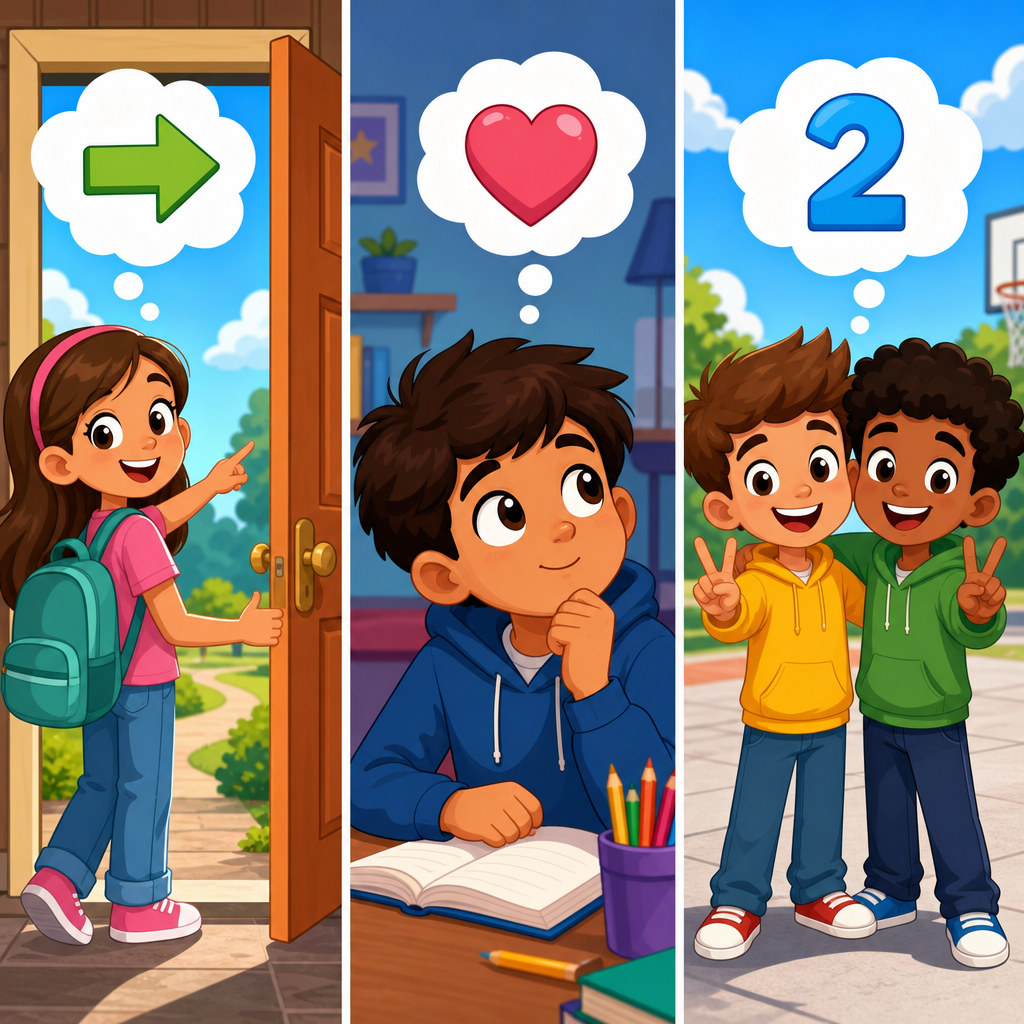
The fastest way to solve this homophone set is to learn each word by function, not by sound. To is most often a preposition or part of an infinitive verb. As a preposition, it shows direction, destination, relationship, or range: “We walked to school,” “Give the file to Maya,” and “The score rose from 8 to 12.” As part of an infinitive, it comes before the base form of a verb: “to read,” “to write,” “to improve.” Because to performs so many grammatical jobs, it is by far the most common spelling of the three.
Too is an adverb. In plain terms, it usually means “also” or “more than enough.” In “I want to come too,” it means “also.” In “The bag is too heavy,” it means “excessively” or “more than is acceptable.” That second meaning helps writers detect too in common combinations such as too fast, too loud, too expensive, and too late. When students pause and ask, “Do I mean also, or do I mean more than enough?” they often fix the error themselves.
Two is the easiest of the group because it is a number. It refers to the quantity 2: “two books,” “two minutes,” “two reasons.” Yet it still gets mixed up because writers often rely on sound instead of sense, especially when drafting quickly. In my experience, the most reliable method is to ask a simple question: Am I naming an amount? If yes, use two. If not, the answer is either to or too.
Simple Rules That Prevent Most Errors
You do not need to memorize dozens of exceptions to use these words correctly. You need a short decision process. First, check whether the sentence refers to the number 2. If it does, the choice is two. Second, if the meaning is “also” or “excessively,” the choice is too. Third, if neither of those meanings fits, the word is almost certainly to. This rule works because to is the default form used in directions, relationships, and infinitive verbs.
Consider these examples. “I have two appointments today” uses the number. “I am going to the clinic” shows direction. “I want to leave early” uses the infinitive form before a verb. “I am going too” means “also.” “It is too cold to swim” means “excessively cold.” Each sentence becomes clear when you identify the job the word is doing. Grammar, not pronunciation, provides the answer.
Writers often ask whether punctuation changes the choice. Usually it does not. “Me too,” “You too,” and “Too many people arrived early” all use too because the meaning remains “also” or “more than enough.” Likewise, “to the left,” “to my surprise,” and “to begin” all use to because the word connects ideas or introduces an infinitive. Standard references such as Merriam-Webster and Cambridge Dictionary define the terms this way, and classroom grammar instruction follows the same distinction.
| Word | Part of speech | Core meaning | Example |
|---|---|---|---|
| to | Preposition or infinitive marker | Direction, relationship, range, or before a base verb | We went to the library. |
| too | Adverb | Also; more than enough | The music was too loud. |
| two | Number | Quantity of 2 | She bought two tickets. |
Memory Tricks That Actually Help
Many memory tricks are catchy but weak. The best ones connect spelling to meaning. For too, notice the extra o. I tell learners to think of that extra letter as meaning “extra.” If something is too hot, too busy, or too long, there is more than enough of it. The same visual reminder also works for the meaning “also,” because an added person or added idea can feel like an extra one included. This is not a formal grammar rule, but it is a practical recall tool that students remember.
For two, connect the word to the numeral 2. Some teachers point out that two begins with tw-, the same opening found in twelve, twenty, and twin, all of which relate to paired or doubled ideas. That pattern is useful because it links two to quantity rather than sentence structure. For to, the simplest memory strategy is elimination. If the word does not mean “also,” does not mean “too much,” and does not name the number 2, then to is usually right. Because to is so common, efficient writers treat it as the default choice after checking the other two possibilities first.
Another effective strategy is substitution. Replace too with also or excessively. If the sentence still works, too is correct. Replace two with the numeral 2. If the sentence still makes sense, use two. If neither substitution works, use to. This approach is especially helpful for multilingual learners and struggling readers because it turns an abstract spelling problem into a concrete test. I have seen students improve quickly once they start substituting instead of guessing.
Common Mistakes in Real Writing
The most frequent error is using to when too is needed, especially at the end of a sentence: “Can I come to?” and “I like that movie to.” The reason is speed. Writers know to is common, so they type it automatically. Another common problem appears in phrases with excessive meaning, such as “to much,” “to many,” and “to late.” These are always wrong because the intended meaning is “more than enough,” which requires too. If a student writes “too much homework” correctly in one sentence but later writes “to much stress,” the issue is usually attention, not understanding.
Confusion between to and two is less common but still appears in early literacy work and in fast digital communication. Sentences such as “I have to cats” or “Bring two the table” show that the writer is mapping sound to spelling without checking meaning. Spellcheck may catch some of these mistakes, but not all. Grammar tools like Microsoft Editor and Grammarly can flag context errors, yet they are not perfect, particularly in fragments, dialogue, or creative writing. Human proofreading remains essential.
This topic also connects to broader Miscellaneous spelling patterns. Learners who confuse to, too, and two often struggle with other high-frequency homophones because they have not been taught to identify part of speech and sentence function. That is why this article works well as a hub page. The same method used here can support learning for by and buy, no and know, here and hear, and similar pairs. Once writers stop relying on sound alone, accuracy improves across the board.
Quick Practice for Immediate Mastery
Try this short check. Choose the correct word in each sentence: “I need ___ finish by noon,” “She wants ice cream ___,” “We saw ___ deer near the road,” “It is ___ dark to drive without lights,” and “Please send the report ___ Jordan.” The answers are to, too, two, too, and to. If you got one wrong, do not just memorize the correction. Explain the reason. That explanation builds lasting control.
Now use a self-editing routine. First, circle every form that sounds like to. Second, label each one with a job: number, also, extra, direction, or verb marker. Third, replace any uncertain word using the substitution test. Fourth, read the sentence aloud and confirm that meaning and grammar match. This process takes less than a minute in a paragraph, and repeated use turns it into habit. In intervention settings, I have seen accuracy rise sharply when students adopt this deliberate scan before submitting work.
The key lesson is simple: homophones are solved by meaning, not sound. To usually links words or introduces a verb, too means also or more than enough, and two names the number 2. When writers learn these roles, they reduce one of the most visible spelling errors in English. Keep this guide handy, practice with your own sentences, and use the same method across the rest of the Miscellaneous spelling topics to build faster, cleaner, more confident writing every day.
Frequently Asked Questions
What is the difference between to, too, and two?
To, too, and two are homophones, which means they sound alike but have different meanings and spellings. To is usually used as a preposition or as part of an infinitive verb. For example, you might write, “We walked to the park,” where it shows direction, or “I want to read,” where it appears before the base form of a verb. Too means “also” or “excessively.” In “I want to come too,” it means “also,” and in “The soup is too hot,” it means “more than is acceptable or needed.” Two is simply the number 2, as in “She has two pencils.” The key difference is that each word does a completely different job in the sentence. If you focus on meaning instead of sound, the correct choice becomes much easier. This is why learners who rely only on pronunciation often mix them up, while learners who pause to ask what the word is doing usually get it right.
How can I remember when to use too instead of to?
A reliable memory trick is to notice that too has an extra o, and that extra letter can remind you of “extra” or “also.” This works especially well because too is used when something is added or when there is more than enough. For example, “I am coming too” adds one more person, and “This bag is too heavy” shows more weight than is manageable. By contrast, to is the simpler, more common form used for movement, direction, relationships, and infinitive verbs, such as “go to school” or “need to study.” If you are unsure, test the sentence by replacing the word with also or excessively. If the sentence still makes sense, too is probably correct. For example, “I want to go too” becomes “I want to go also,” which works. But “I went to the store” cannot become “I went also the store,” so to is the right spelling there. This meaning-based check is one of the fastest and most effective editing strategies.
Why do students and writers confuse to, too, and two so often?
These words are commonly confused because English spelling does not always map neatly onto pronunciation. In most accents, to, too, and two sound exactly the same, so the ear alone cannot tell you which one belongs in a sentence. That creates a predictable problem for developing writers, multilingual learners, and even fluent adults who are writing quickly. In many cases, the writer knows the sentence sounds right but has not stopped to consider the function of the word. Another reason for confusion is frequency. To appears extremely often in English, so some writers overuse it by default. Others remember that too has something to do with emphasis but forget whether it means “also” or “very.” Two tends to be the easiest of the three because it refers specifically to the number, but it can still be mistyped in rushed writing. The confusion is not usually a sign that a learner does not understand the ideas. More often, it shows that they need practice connecting grammar, meaning, and spelling. That is why explicit teaching, sentence-level examples, and short proofreading routines are so effective with this set of homophones.
Are there simple examples I can use to practice to, too, and two?
Yes. The best practice examples are short sentences that make the meaning of each word obvious. Try these: “I need to finish my homework.” “My brother wants to help.” “She came too.” “It is too late to call.” “We saw two birds in the yard.” “He bought two tickets.” You can also compare them directly in one group: “I want to go too.” “The two friends walked to school.” “It is too cold to swim.” These examples are useful because they force you to notice function. In the first kind of sentence, to introduces an action. In the second, too means “also” or “more than enough.” In the third, two counts people or things. A quick practice routine is to cover the word, read the sentence, and ask yourself, “Is this showing direction or part of a verb? Is it adding the meaning of also or excess? Is it naming the number 2?” Repeating that process with a handful of sentences builds accuracy surprisingly fast.
What is the fastest way to check whether I used the right word in my writing?
The fastest method is a three-part meaning check. First, ask whether the word names the number 2. If it does, use two. Second, ask whether the word could be replaced by also or means “more than enough.” If yes, use too. Third, if neither of those fits, the word is probably to, especially if it shows direction, connection, or comes before a verb. For example, in “I have two dogs,” the number test works immediately. In “I am tired too,” you can replace it with “also.” In “I am going to leave,” the word comes before the verb leave, so to is correct. This kind of check is especially useful during revision, when writers tend to catch homophone errors more easily than during drafting. Reading the sentence slowly, or even aloud, can help, but meaning should be your main guide. If you build the habit of pausing for one second to identify the word’s job, you will eliminate most mistakes with this set.