Holidays change the way people speak in English because they temporarily reshape relationships, routines, and expectations. In ordinary weeks, much of English conversation is efficient: people ask for information, give instructions, solve problems, and move on. During holidays, language becomes more ritualized, more emotionally loaded, and more culturally specific. Greetings lengthen, jokes become more seasonal, references become more symbolic, and even simple words can carry meanings that outsiders miss. If you have ever heard “Are you all set for Christmas?” “Happy Thanksgiving,” “I’m home for the holidays,” or “New year, new me,” you have already heard how holidays create short-term dialects inside everyday English.
In my work analyzing real-world usage across workplaces, classrooms, and media, I have seen the same pattern repeatedly: holidays do not just add vocabulary; they change tone, timing, and what counts as polite. A holiday is a socially recognized period marked by celebration, remembrance, religion, national identity, or family tradition. Holiday language includes fixed greetings, seasonal idioms, indirect invitations, expressions of obligation, and references to food, travel, gifts, and memory. Understanding these patterns matters because holiday speech influences customer service, office communication, cross-cultural interaction, marketing, and friendship. People who miss the cues can sound cold, overly literal, or unintentionally rude, even when their grammar is perfect.
The key point is that holiday English is not random. It follows predictable social rules. Certain phrases rise sharply in use, some topics become safer than usual, and other topics become riskier. Speakers also switch registers depending on whether the holiday is religious, national, commercial, or family-centered. That is why a close look at holiday language reveals something important about English itself: meaning is shaped as much by shared cultural timing as by dictionary definitions.
Holiday greetings become mini social scripts
The most visible change is the rise of formulaic greetings. On non-holiday days, “How are you?” often functions as a light acknowledgment rather than a real health question. During holidays, greetings become more explicit and socially meaningful. “Merry Christmas,” “Happy Hanukkah,” “Happy Diwali,” “Happy Easter,” “Happy New Year,” and “Happy Halloween” are not just labels for dates. They perform affiliation, goodwill, and recognition. In practice, the choice of greeting signals what the speaker assumes about the listener, the setting, and the acceptable level of familiarity.
These greetings often trigger expected reply patterns. If someone says “Merry Christmas,” the standard response may be “Merry Christmas” or “You too.” “Happy New Year” invites the same mirror response. This call-and-response structure reduces conversational uncertainty and increases social warmth. In service settings, I have watched staff use broader greetings such as “Happy holidays” when they want to remain inclusive across religious backgrounds. That phrase became especially common in large retailers, airlines, and public institutions because it avoids presuming a specific tradition while still acknowledging the season.
Holiday greetings also change the rhythm of interaction. They often appear at the beginning and end of emails, meetings, phone calls, and public announcements. A December message that would normally end with “Best regards” might become “Wishing you a joyful holiday season.” The language is less transactional and more relational. Even people who are not especially expressive at other times of year often adopt these scripts because failing to do so can sound abrupt.
Seasonal vocabulary expands, and ordinary words gain new meanings
Holidays introduce temporary vocabularies that native speakers process instantly. At Christmas, words like “stocking,” “tree,” “ornament,” “wrapping,” and “Santa” activate holiday meanings before everyday meanings. “Turkey” near Thanksgiving refers not just to the bird but to the meal, the logistics, and often the family event itself. “The holidays” in American English usually points to the late-year cluster from Thanksgiving through New Year’s, while in British English “holiday” more often means vacation. That difference alone causes confusion in international workplaces.
Many common phrases also become compressed cultural references. “Black Friday” no longer needs explanation for most American consumers; it implies major retail discounts after Thanksgiving. “Secret Santa” means a gift exchange with anonymous giving. “White Christmas” can refer to snowfall, a famous song, or a nostalgic ideal of the season. “Home for the holidays” carries an emotional story about travel, family, and belonging in just four words.
English speakers also create playful compounds and blends during holiday periods. Examples include “Friendsgiving,” a Thanksgiving-style meal with friends, and “holiday burnout,” which describes exhaustion from travel, spending, and social obligations. These terms spread quickly through social media because they name shared modern experiences. When a word captures a repeated seasonal situation, it tends to stick.
Politeness shifts because holidays raise emotional stakes
Holiday periods change what sounds polite because they make emotions more visible. People are more likely to ask personal questions such as “Are you going home?” “What are your plans?” or “Are the kids excited?” In other seasons, these questions might feel intrusive. During holidays, they often function as standard small talk. The assumption is that major festivals are communal and therefore discussable. That assumption is not always safe, however, especially for people who are grieving, financially stressed, estranged from family, or excluded from the dominant celebration around them.
For that reason, experienced communicators often choose gentler phrasing. Instead of “What are you doing for Christmas?” they may say “Do you have any plans over the break?” This widens the space for different answers. In offices, I have repeatedly recommended this broader wording because it reduces pressure and avoids forcing religious disclosure. The same principle applies to invitations. “You should come by” can sound warm, but around holidays it may create obligations people cannot easily refuse. Clearer language such as “You’re welcome to join us if you’d like, but no pressure” works better.
Another shift involves gratitude and apology. During holidays, people use stronger appreciation formulas: “That was so thoughtful,” “Thank you for hosting,” or “I really appreciate you making the trip.” Apologies also become more strategic because schedules are crowded and expectations are high. A late reply in December is more likely to be explained with context, such as travel or family commitments, because speakers know timing matters.
Holiday speech reflects identity, belonging, and exclusion
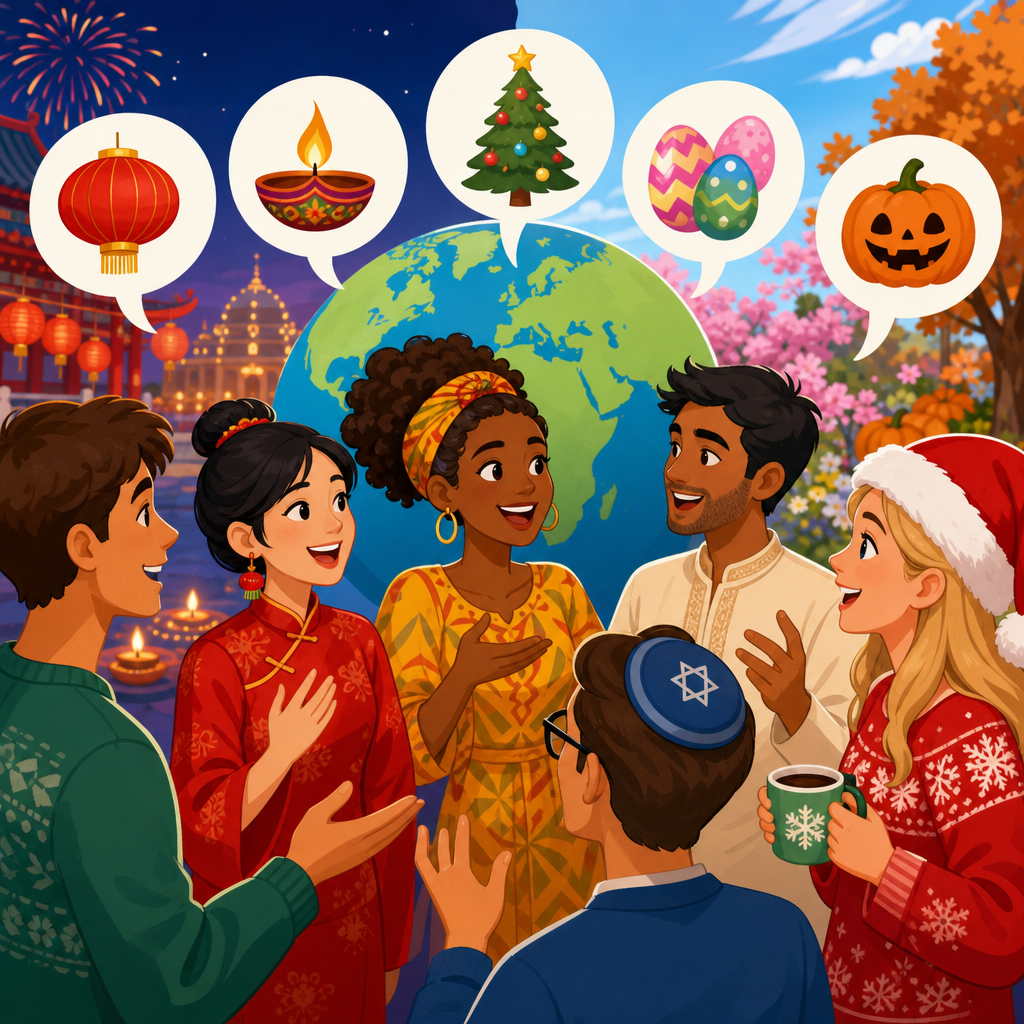
Holiday language can make people feel recognized, but it can also mark insiders and outsiders. When a team assumes everyone celebrates the same event, the language may unintentionally narrow the social space. A statement like “We all know Christmas is about family” sounds harmless to some listeners, yet it excludes people whose traditions, histories, or family situations differ. English speakers navigate this by choosing either specific language for a known audience or broader language for mixed groups.
The tension is easiest to see in public-facing communication.
| Context | Narrow phrasing | Broader phrasing | Why it matters |
|---|---|---|---|
| Retail sign | Merry Christmas Sale | Holiday Sale | Broader wording welcomes more customers |
| Office email | Christmas party | Year-end celebration | Reduces assumptions about belief |
| Small talk | What are you doing for Christmas? | Any plans this season? | Allows varied experiences |
| School notice | Christmas break | Winter break | Matches diverse student communities |
This does not mean specific greetings are wrong. They are appropriate when they match the relationship and context. If you know a friend celebrates Eid, saying “Eid Mubarak” shows attention and respect. Problems arise when speakers treat one tradition as universal. Holiday English therefore becomes a test of audience awareness. The most effective speakers read the room, choose language intentionally, and leave space for others to define their own celebrations.
Stories, humor, and memory become more seasonal
Holidays change not only what people say but what kinds of stories they tell. Conversation shifts toward repeated family narratives, childhood memories, travel mishaps, and annual jokes. Someone says, “Every Thanksgiving my uncle burns the rolls,” and the story works because listeners recognize the ritual structure. These stories do important social work. They bind groups by repeating shared history and by turning inconvenience into comedy.
Seasonal humor also depends heavily on cultural timing. Halloween encourages puns, mock fear, and playful exaggeration. Christmas humor often centers on shopping stress, awkward gifts, or family chaos. New Year language invites cliché on purpose, which is why phrases like “new year, new me” are widely used both sincerely and ironically. The irony matters. English speakers often handle holiday pressure by joking about it. Saying “I need a holiday after the holidays” communicates exhaustion while softening complaint.
Media reinforces these speech habits. Holiday films, songs, advertisements, and sitcom episodes recycle key expressions until they become highly recognizable. A phrase like “bah humbug,” once literary and old-fashioned, survives in modern speech because seasonal media keeps it alive. In that sense, holidays preserve older expressions that might otherwise fade from everyday English.
Workplace and digital communication follow seasonal rules
In professional settings, holiday language affects scheduling, leadership tone, and client relationships. Late November and December emails often include warmer openings, explicit thanks, and references to limited availability. “Before everyone signs off for the holiday break” or “We know this is a busy time of year” are common framing devices. They acknowledge the seasonal reality and help maintain goodwill. Managers who ignore this rhythm often sound detached.
Digital communication amplifies the effect. Social platforms produce rapid cycles of greetings, photos, memes, and annual catchphrases. Hashtags like #HappyHolidays or #NewYearsEve compress public sentiment into searchable language patterns. Messaging apps also increase the use of low-effort but socially necessary contact: a short holiday text, emoji, or photo can maintain a relationship without a full conversation. That matters because holiday communication is partly about presence. People want proof that they were remembered.
At the same time, digital English exposes differences in style. Some people send polished card-like messages; others prefer casual notes; younger users may rely on images, GIFs, or inside jokes. The underlying function remains constant: holiday language renews bonds. If you want to understand how holidays change the way people speak in English, listen for the shift from pure information exchange to relationship maintenance.
Holiday English is a seasonal system of meaning, not a loose collection of festive words. It changes greetings, politeness, vocabulary, humor, storytelling, and professional tone because holidays temporarily reorder social priorities. People speak less like operators of daily routines and more like members of families, communities, and traditions. The result is language that is more scripted, more symbolic, and more emotionally charged.
For learners, professionals, and anyone navigating multicultural settings, the practical lesson is simple. Pay attention to timing, audience, and implied meaning. Choose greetings carefully, ask open questions, and notice when ordinary words take on seasonal definitions. When you understand those shifts, English becomes easier to read at the exact moments when relationships matter most.
The next time a holiday approaches, listen closely to how people talk at work, online, and around the table. You will hear English changing in real time, and that awareness will help you respond with more confidence, accuracy, and empathy.
Frequently Asked Questions
Why do holidays make everyday English sound different?
Holidays change everyday English because they change what people are trying to do with language. In a normal week, many conversations are practical and efficient. People ask questions, make plans, give instructions, and exchange information quickly. During holidays, however, conversation often becomes less transactional and more social, emotional, and symbolic. People are not just speaking to get something done; they are also reinforcing relationships, showing goodwill, participating in traditions, and signaling that a moment is special.
This shift affects tone, vocabulary, and rhythm. Greetings tend to become longer and warmer, with phrases such as “Happy Holidays,” “Merry Christmas,” “Happy Thanksgiving,” or “Have a wonderful New Year.” Even people who are usually brief may add extra comments, jokes, or polite wishes. Language also becomes more ceremonial. People use repeated expressions, family sayings, religious references, seasonal humor, and culturally familiar lines that would sound out of place in ordinary conversation.
Another reason holiday English feels different is that words often carry more meaning than they do at other times of year. A phrase like “Are you going home for the holidays?” may sound simple, but it can imply family expectations, travel stress, nostalgia, belonging, or even loneliness. In that way, holiday speech becomes layered. The words themselves may be ordinary, but their emotional and cultural weight increases significantly.
How do holiday greetings in English become more ritualized?
Holiday greetings are more ritualized because they follow shared patterns that people recognize and repeat. In everyday life, a greeting might be as short as “Hi,” “How are you?” or “Good morning.” During holidays, English speakers often switch to formulaic expressions tied to a specific season or celebration. These include phrases such as “Merry Christmas,” “Happy Hanukkah,” “Happy New Year,” “Season’s Greetings,” or “Wishing you and your family all the best this holiday season.” These greetings are not random. They are part of a cultural script, and using them helps people show awareness, politeness, and connection.
Ritualized greetings also tend to invite ritualized responses. If one person says, “Happy Thanksgiving,” the expected reply is usually “You too” or “Same to you.” This creates a brief but meaningful exchange that confirms shared participation in the holiday moment. In workplaces, schools, shops, and public spaces, these formulas help people navigate social interaction smoothly, especially when they do not know each other well.
Importantly, the ritualization of holiday greetings does not make them empty. In fact, repeated phrases can become powerful because they are widely understood. They can communicate warmth, respect, inclusion, and seasonal goodwill in a very efficient way. At the same time, speakers may choose their words carefully depending on the audience. For example, “Happy Holidays” is often used as a broader, more inclusive greeting in multicultural settings, while more specific greetings may be used when a person’s tradition is known. This shows that ritualized language is not static; it is shaped by social awareness and cultural context.
Why do holidays make English more emotional and indirect?
Holidays often make English more emotional because they bring people into situations that are deeply tied to memory, identity, family roles, and social expectations. When people feel more, they usually speak differently. Their language may become warmer, more reflective, more nostalgic, or more cautious. A simple sentence like “It’s good to have everyone together” can express relief, affection, longing, or even tension, depending on the context. During holidays, English often carries these extra emotional signals.
At the same time, holiday conversation frequently becomes more indirect. This is especially true when people are trying to preserve harmony in group settings. Family gatherings, shared meals, religious observances, and year-end celebrations can bring together people with different opinions, lifestyles, or unresolved issues. Because of that, speakers may soften requests, avoid blunt criticism, or hint at feelings rather than stating them directly. Instead of saying, “You are late,” someone might say, “We were just about to start.” Instead of saying, “I don’t want to discuss that,” a person might redirect with humor or change the subject.
This indirectness is not necessarily evasive. In many holiday contexts, it is a social skill. It helps people protect each other’s feelings, maintain tradition, and avoid conflict during occasions that are supposed to feel meaningful or celebratory. As a result, holiday English often relies more heavily on tone, implication, shared history, and context. To understand what is really being said, listeners often need to pay attention not just to the words, but to the relationship between the speakers and the emotional atmosphere of the occasion.
What role do cultural references and seasonal expressions play in holiday English?
Cultural references and seasonal expressions are central to holiday English because they allow people to communicate large ideas quickly through shared knowledge. During holiday periods, speakers often refer to traditions, songs, foods, stories, weather, decorations, travel, gift-giving, and family rituals. Expressions such as “holiday spirit,” “white Christmas,” “ringing in the New Year,” “festive season,” or “home for the holidays” are loaded with cultural meaning. They do more than describe events; they activate a whole set of images, expectations, and emotions.
These expressions help create a sense of belonging. When people use familiar seasonal language, they signal that they understand the cultural moment and are participating in it. This is one reason holiday advertising, greeting cards, office messages, and casual conversation often sound so distinctive. The language is full of references that may be obvious to insiders but less clear to learners or people from different cultural backgrounds. For example, a phrase like “making a list and checking it twice” carries a direct association with Santa Claus and Christmas traditions in English-speaking cultures. Without that background knowledge, the phrase may seem literal rather than symbolic.
Seasonal language also changes depending on region, religion, and community. Not every English speaker celebrates the same holidays, and not every group uses the same expressions in the same way. That is why holiday English can be both unifying and highly specific. It brings people together through shared rituals, but it also reveals which traditions, assumptions, and histories are shaping a particular conversation. For readers and language learners, noticing these references is one of the best ways to understand how culture influences English in real life.
How can English learners better understand and use holiday-related language naturally?
English learners can use holiday-related language more naturally by focusing on context, intention, and common patterns rather than memorizing isolated words. The first step is to notice how native speakers adjust their tone during holidays. Listen to how greetings become more expansive, how people add kind wishes, and how conversations often include references to plans, family, traditions, food, travel, and celebration. Learning phrases in full, such as “Wishing you a peaceful holiday season” or “Do you have any plans for the long weekend?” is usually more useful than learning a single vocabulary word by itself.
It is also important to understand that holiday language is socially sensitive. Some expressions are highly specific, while others are more general and inclusive. Learners should pay attention to setting and audience. In a close personal context, a specific greeting may be appropriate if you know what someone celebrates. In a mixed or professional setting, a broader phrase such as “Happy Holidays” may be the safer and more natural choice. This is not just about correctness; it is about reading social cues and showing cultural awareness.
Another effective strategy is to learn the emotional meaning behind common expressions. For example, “home for the holidays” is not just about location. It often suggests family reunion, nostalgia, obligation, comfort, or mixed feelings. Understanding these layers helps learners follow real conversations more accurately. Watching holiday movies, listening to seasonal songs, reading greeting cards, and observing workplace or community messages can provide excellent examples of this kind of language in use.
Finally, learners should remember that natural holiday English does not require perfect cultural expertise. What matters most is warmth, politeness, and appropriateness. A simple, sincere seasonal greeting is often enough. If learners combine a few common expressions with careful listening and sensitivity to context, they can communicate effectively and participate confidently in holiday conversations.