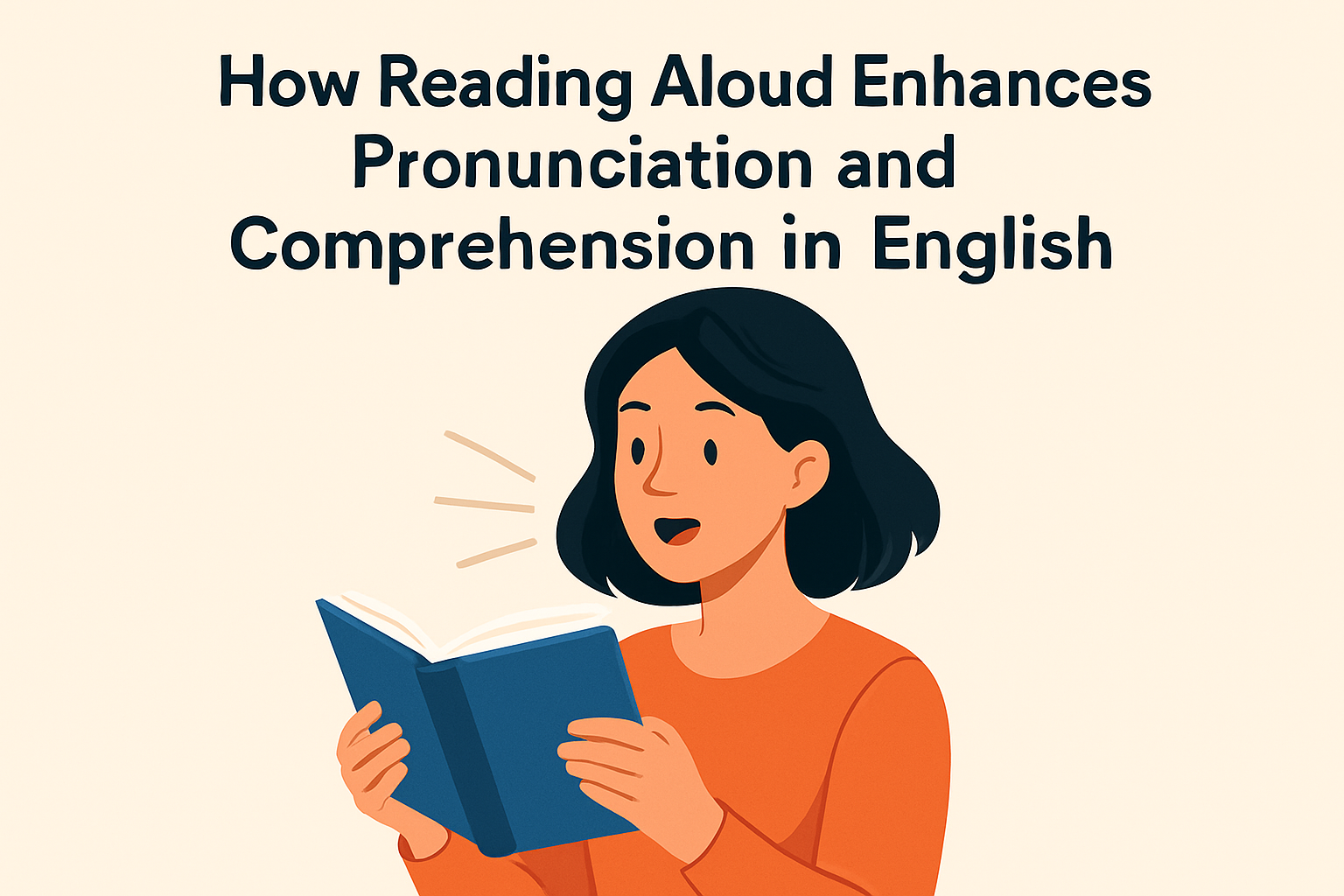
In today’s fast-paced world, mastering English has become more important than ever for effective communication, professional success, and personal growth. Whether you are a native speaker or learning English as a second language, one powerful method to improve both your pronunciation and comprehension is reading aloud. This technique, often undervalued, offers numerous benefits that can significantly enhance your linguistic abilities. By engaging both auditory and visual faculties, reading aloud not only broadens your understanding of the language but also sharpens your pronunciation skills. This article delves into the importance of reading aloud, explores how it impacts pronunciation and comprehension, and provides practical insights into integrating this practice into your daily routine.
The Science Behind Reading Aloud
Reading aloud taps into the complex interaction between auditory and cognitive processes in the brain. When you read out loud, your brain processes the text differently than when you read silently. The act involves engaging various parts of the brain associated with language processing, including the auditory cortex, which contributes to better pronunciation and comprehension.
Take the case of John, a non-native English speaker who struggled with understanding and pronouncing English text. By incorporating reading aloud into his study routine, John not only improved his pronunciation but also gained a deeper understanding of the contextual meaning of words. As he repeatedly heard himself vocalize the text, he became more attuned to the correct pronunciation, intonation, and rhythm of English.
- Activates auditory processing
- Enhances cognitive understanding
- Improves memory retention
Through reading aloud, John experienced how the brain referred back to previously heard words, thus reinforcing memory and comprehension.
Enhancing Pronunciation Through Auditory Feedback
One of the most direct benefits of reading aloud is the immediate auditory feedback you receive. When you hear your own voice, you can more easily detect pronunciation errors and adjust accordingly. This feedback loop is essential for refining speaking skills.
Mary, a business professional attending meetings with international clients, found herself hesitant to speak due to frequent mispronunciations. By dedicating just 15 minutes a day to reading business journals aloud, she developed a sharper ear for correct pronunciation and ultimately gained confidence in her speaking abilities.
Moreover, reading aloud helps in imitating the fluent speech patterns of native speakers, assisting learners in acquiring correct pronunciation and stress patterns. The regular practice smooths out the common issues non-native speakers face, such as misplaced emphasis or incorrect syllable stress.
Developing Comprehension Through Contextual Reading
Understanding the context in which words and phrases are used is crucial for comprehension. Reading aloud forces the reader to slow down and pay closer attention to the syntax and semantics of the language. This conscious effort results in a better grasp of the material.
For instance, Alice, a college student, found reading complex literary texts challenging. By switching to reading aloud, she noticed a significant development in her ability to grasp intricate sentence structures and nuanced meanings. The auditory reinforcement helped her visualize and internalize the content, making her reading sessions more productive and enjoyable.
Here is an overview of how reading aloud helps comprehension:
| Benefit | Description |
|---|---|
| Slow and Deliberate Reading | Encourages a detailed understanding of text |
| Improved Focus | Reduces likelihood of distractions |
| Enhanced Memory | Reinforces retention through auditory input |
Through contextual awareness developed by reading aloud, Alice could interpret literature in a more profound and meaningful way, ultimately improving her academic performance.
Practical Strategies for Effective Practice
To maximize the benefits of reading aloud, it’s essential to incorporate it into your daily routine in a structured and intentional way.
Consider Marcos, who improved his English language skills by integrating the following strategies:
- Consistency: Designate a specific time daily to read aloud. Consistent practice leads to incremental improvement.
- Variety: Read diverse materials such as novels, articles, or plays to expose yourself to different linguistic styles and vocabulary.
- Recording: Record your reading sessions to track your progress. Hearing past recordings can highlight how much your pronunciation and comprehension have improved.
By adopting these strategies, Marcos experienced noticeable progress in his ability to articulate thoughts and ideas confidently.
Integrating Reading Aloud into Everyday Learning
Reading aloud should not be confined to a specific environment. Efforts can be made to make it a natural part of everyday learning and communication practices, whether at home, work, or in educational settings.
Susan, an ESL teacher, encourages her students to pair up and read dialogue scenes from popular plays. This not only engages students but also fosters collaborative learning and feedback. By actively participating, students enhance their pronunciation, vocabulary, and oral comprehension in a supportive learning atmosphere.
Additionally, advancing technology offers versatile tools that can support this practice. Digital e-readers and language learning apps offer features to facilitate reading aloud, such as pronunciation guides and voice recorders. Embracing these technological aids can make reading aloud more interactive and effective.
Real-World Application and Professional Growth
Beyond language improvement, the benefits of reading aloud extend to real-world applications, impacting professional and personal development.
Emily, a marketing executive, uses reading aloud to rehearse her presentations. Doing so helps her to memorize key points, practice her speech delivery, and ensure her messages are clear and compelling to her audience.
By routinely practicing reading aloud, individuals can improve their public speaking skills, boost their confidence, and enhance their ability to convey thoughts succinctly in professional settings.
Conclusion
Reading aloud is a multifaceted activity that significantly enhances both pronunciation and comprehension skills in English. By engaging auditory and cognitive processes, it provides immediate feedback, aiding in the perfect pronunciation, and helps to build contextual understanding for improved comprehension. Moreover, integrating reading aloud into your routine, examining various strategies, and leveraging technology can make significant impacts in both personal and professional domains.
To harness these benefits, begin by setting aside a few minutes each day for reading aloud. Choose materials that interest you and challenge your language skills. Over time, this simple practice can lead to remarkable improvements in your English proficiency.
Commit to the journey of reading aloud, and witness how it transforms your language abilities, opens new opportunities, and enriches your understanding of English in diverse contexts.
Frequently Asked Questions
1. How does reading aloud improve English pronunciation?
Reading aloud has a remarkable impact on improving your English pronunciation. When you read out loud, you exercise your vocal cords and practice the articulation of words. This active vocal practice helps you become more attuned to the distinct sounds and rhythm of the language. As you vocalize words and sentences, you can hear yourself and make adjustments to your speech, refining your pronunciation over time. Furthermore, this practice provides immediate auditory feedback, enabling you to correct mispronunciations and learn the flow of intonation, stress patterns, and emphasis that are crucial for natural speech. By regularly engaging in this activity, you can develop a more accurate and confident pronunciation, which is fundamental for clear communication in English.
2. In what ways does reading aloud enhance comprehension of the English language?
Reading aloud significantly enhances comprehension by combining both visual and auditory learning processes. As you read, your brain is actively processing and making sense of the text, engaging with meanings, context, and structure. Speaking the words out loud introduces a multisensory experience where you not only see the words but also hear them, which reinforces memory retention and understanding. This dual engagement helps solidify new vocabulary and complex sentence structures. Additionally, reading aloud encourages you to pay greater attention to punctuation and grammatical cues, improving your ability to parse sentences and comprehend narratives more deeply. Hence, this method not only boosts comprehension on a fundamental level but also strengthens overall cognitive engagement with the material.
3. Can reading aloud help non-native English speakers with language acquisition? How so?
Absolutely! For non-native English speakers, reading aloud is an invaluable tool for language acquisition. This practice facilitates exposure to the proper pronunciation and use of English words in context, essential components in learning a new language. As non-native speakers vocalize text, they practice the sounds of English—often different from those in their native language—allowing them to internalize pronunciation patterns and reduce their native accents over time. Moreover, reading aloud provides a safe space to practice without the immediate pressure of real-time conversation, building confidence. It also enhances listening skills because as you read, you are also listening to the language as it should be naturally spoken. Overall, this integration of pronunciation, comprehension, and confidence makes reading aloud a superbly effective technique for advancing English language proficiency for non-native speakers.
4. What are some practical strategies for integrating reading aloud into daily English improvement practices?
Incorporating reading aloud into your daily English improvement practices can be highly beneficial, and several strategies can make this method effective and enjoyable. Start by selecting reading materials that interest you—novels, news articles, or even poetry can be great options. Ensure these materials are at an appropriate difficulty level to challenge but not overwhelm you. Set aside a dedicated practice time each day, even if just for 10-15 minutes, to maintain consistency. Consider using a recording device to tape your sessions, allowing for self-assessment and tracking of progress over time. You might also practice with a friend or in a language group to receive feedback and gain different perspectives. Additionally, incorporate listening to native English speakers through audiobooks or podcasts to mimic the natural flow and cadence of the language as you read along. By employing these strategies, reading aloud can become an integral and effective part of your language learning routine.
5. Are there specific types of texts or genres that are more effective for reading aloud to improve English skills?
Yes, certain types of texts and genres can be particularly effective for reading aloud when aiming to improve English skills. Dialogues and scripts, found in plays or screenplays, are excellent choices as they often reflect conversational language, helping learners understand colloquial expressions and interactions. Poetry is another beneficial genre, emphasizing rhythm, intonation, and the musicality of language, which can sharpen your pronunciation and understanding of English prosody. Reading children’s books can be useful too, as they usually employ simple yet effective language structures and introduce core vocabulary in a context that is easy to grasp. For more advanced learners, non-fiction articles or essays on topics of interest can help expand vocabulary and improve comprehension of complex ideas. Regardless of the genre, the key is to choose texts that are not only appropriate for your skill level but also engaging and challenging enough to propel your learning forward. Experimenting with different types of texts can add variety to your practice and cater to different aspects of language learning.