
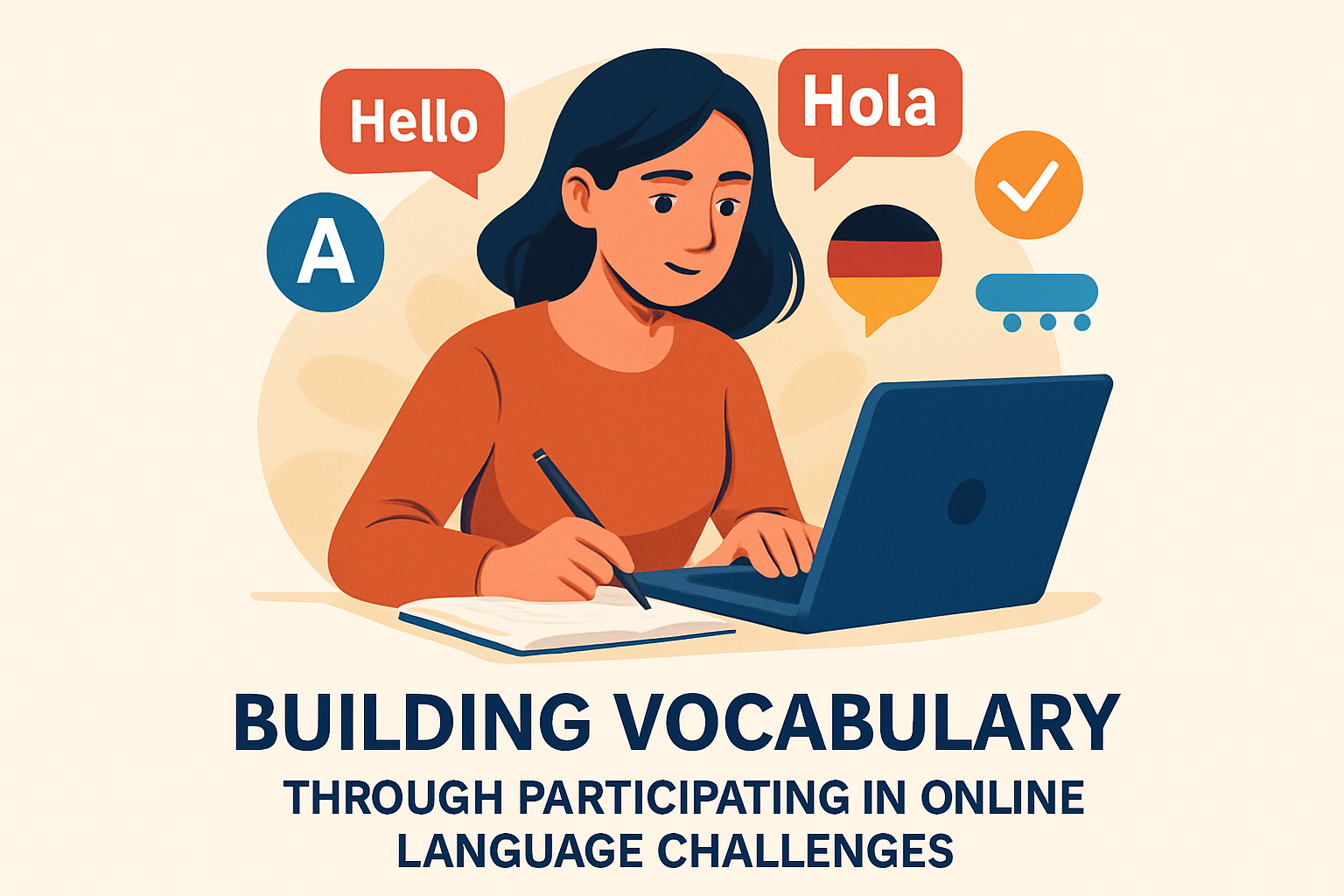
Building a robust vocabulary is an invaluable asset in navigating an increasingly globalized world. In the context of language learning, vocabulary encompasses the array of words an individual knows and uses in verbal and written communication. As communication is a cornerstone of human connection, having a rich vocabulary can dramatically enhance one’s ability to express ideas and engage in conversations across different languages. With the internet permeating nearly every aspect of life, participating in online language challenges has emerged as a novel and effective way to bolster one’s lexicon. This innovative approach to vocabulary building is transforming how individuals engage with new languages, making learning both accessible and engaging.
Online language challenges, often hosted on social media platforms or dedicated learning websites, are structured activities designed to motivate and guide language learners. They typically involve specific tasks or goals set to be achieved within a period, such as learning a set number of new words each day or mastering phrases pertaining to a certain theme. This form of learning is critical, as it incorporates elements that make vocabulary expansion more relatable and sustainable, such as convenience, community, and repetition.
Understanding how vocabulary enrichment contributes to a deeper grasp of language learning is pivotal. Language challenges offer a practical avenue for learners to engage with languages consistently, breaking down learning into manageable, task-oriented segments. This encouragement of daily practice helps cement language skills while adding context and usage to newly acquired vocabulary. In the long run, these efforts not only enhance communication skills but also increase cognitive functions associated with language acquisition. Ultimately, participating in online language challenges matters profoundly to anyone seeking to expand their communicative abilities in another language.
The Rise of Online Language Challenges
The advent of online language challenges is closely tied to the widespread and nearly ubiquitous access to the internet, along with the proliferation of social media and mobile apps. These platforms have revolutionized the methods by which individuals learn new languages, making language learning more dynamic and interactive. Online language challenges leverage these technologies to create a participatory and immersive experience.
A prime example of this is the “30-Day Word Challenge” often seen on platforms such as Instagram and Twitter. Participants are encouraged to learn a new word every day, use it in a sentence, and share it with community members who are also engaging with the challenge. Such exercises function as communal learning experiences, which heighten motivation through positive reinforcement and social interaction. Furthermore, by sharing progress publicly, participants are held accountable, ensuring consistent engagement with the challenge.
One critical aspect that makes online language challenges effective is their structured nature. By having specific guidelines and milestones, participants can measure their progress and see tangible improvements in their vocabulary over time. This structured approach reduces the feeling of being overwhelmed by language learning, as individuals can focus on manageable tasks without feeling daunted by the larger objective of language mastery. This methodology capitalizes on breaking down larger learning goals into smaller, more attainable objectives, which is a scientifically backed approach to increasing educational success.
Integration of Technology in Language Learning
Technology plays a pivotal role in the success of online vocabulary challenges. Various apps and websites have integrated interactive features and gamification to enhance user engagement and learning efficacy. Platforms like Duolingo, Memrise, and Babbel utilize Smartphone capabilities to facilitate vocabulary challenges, which transform language learning into an engaging digital experience.
One illustrative example is Memrise’s use of spaced repetition algorithms that help with memory retention and recall efficiency. Through tracking user performance, these platforms can adaptively present information in ways that optimize learning. This tailored learning approach replicates the benefits of personalized tutoring by catering to individual learning speeds and retention abilities.
To demonstrate how technology facilitates this innovative learning, here’s a simple table outlining commonly used technological tools and their contributions to online language challenges:
| Technology | Contribution |
|---|---|
| Mobile Apps | Accessibility for on-the-go learning |
| Social Media Platforms | Community engagement and accountability |
| Spaced Repetition Software | Enhancement of memory retention and recall |
| Interactive Gamification | Increased motivation and engagement through rewards |
By utilizing these technological tools, learners are able to maintain motivation and achieve a more meaningful engagement with new vocabulary, ultimately leading to enhanced proficiency in the language being studied.
Community and Collaboration in Learning
The power of community is another critical element influencing the effectiveness of online language challenges. These communities exist across multiple platforms and are integrated into the frameworks of language learning apps and websites. They serve as forums where individuals can share experiences, provide encouragement, and offer feedback to one another.
Asymmetrical communication, in which learners at varying skill levels interact, is a common occurrence in challenge communities. Beginners may leverage such interactions to gain insights from advanced learners, while seasoned linguists may find it beneficial to recall foundational principles and reinforce their own understanding through teaching. In essence, this community collaboration creates a fertile learning environment where linguistic skills and information are exchanged freely and fluidly.
A representative real-world example of community’s impact in language challenges can be seen in Duolingo forums. Here, dedicated spaces are provided where learners collectively discuss challenges, share helpful resources, celebrate achievements, and support each one’s language journey. This cultivation of a network of learners resonates strongly with the adage ‘it takes a village,’ underscoring how invaluable supportive networks can be in the quest of language acquisition.
Practical Application and Engagement Activities
Engagement and practical application are more than buzzwords in language learning—they are essential to reinforcing vocabulary and linguistic skills. Online language challenges emphasize not only the acquisition but also the application of vocabulary in practical scenarios. This is critical for learners to transition words from passive understanding to active usage in conversations.
Challenges that focus on theme-based vocabulary encourage practical application. For example, Sarah, an English learner participating in an online challenge centered around travel words, began applying new vocabulary by writing hypothetical trip itineraries and engaging in chat rooms that simulate travel scenarios. This practical application augments the learning process, as Sarah was able to identify vocabulary mistakes and rectify them through feedback from more experienced community members.
By utilizing such practical scenarios, language learners acquire context for their vocabulary, which helps in retention and builds confidence in using the language actively. This form of learning proves to be vital in preparing individuals for real-world usage of a language, shifting them from theoretical knowledge to practical application.
Key Takeaways and Next Steps
In conclusion, online language challenges present an exciting and contemporary method of vocabulary building, catering to the digital age’s demand for learning in innovative and flexible ways. The integration of technology, community collaboration, and practical application not only facilitate vocabulary acquisition but also ensure a comprehensive learning experience. Participants are encouraged to engage at their own pace while being a part of a larger global community dedicated to language mastery.
The primary takeaway from delving into online language challenges is the realization that learning need not be daunting or solitary. With community support, structured guidance, and interactive technology, language learners can embark on their linguistic journey with confidence and enthusiasm. This learning method suits diverse preferences and levels while maintaining focus on tangible progression.
For individuals considering bolstering their vocabulary and language skills, the next step is simple: research online language challenges or platforms that suit your learning objectives and preferences. By integrating these challenges into your language-learning routine, you will be taking a significant step toward achieving fluency in an interactive, engaging, and globally connected way.
Frequently Asked Questions
1. How can participating in online language challenges help in building vocabulary?
Participating in online language challenges is an exciting and interactive way to enhance your vocabulary, and here’s why it’s so effective: Firstly, these challenges usually involve engaging tasks or games that require you to actively use new words in different contexts. This active engagement helps solidify your grasp of the words. You aren’t just passively memorizing words; you’re applying them, which aids in retention and understanding. Secondly, online language challenges often include elements of repetition which is crucial for reinforcement. As you encounter and use new words repeatedly, they gradually transition from being foreign to becoming part of your working vocabulary. Many online challenges are designed to be multi-dimensional, targeting different skills such as reading, writing, listening, and speaking. This holistic approach ensures that you are not just learning what words mean, but also how they sound, how they look in text, and how they can be used in conversations. Moreover, the game-like nature of these challenges injects a sense of fun and urgency, motivating you to participate regularly, which is key to seeing improvement. Credible challenges are crafted by language experts who understand which vocabulary is most useful and likely to be encountered, ensuring that your learning is practical. Lastly, these challenges often provide community and peer feedback. Interacting with others striving for the same goal can lead to discussions and exchanges, enriching your understanding and usage of new vocabulary. This community exposure might also introduce you to slang and colloquialism, elements vital for authentic language use.
2. Which online platforms or tools are recommended for language challenges that build vocabulary?
There are numerous platforms and resources available online tailored for building vocabulary through challenges. Here’s a look at some popular ones: Duolingo is well-known for its gamified approach to language learning. It offers specific vocabulary challenges that incorporate reading, writing, listening, and speaking exercises. Another platform, Memrise, emphasizes vocabulary building through dynamic challenges using spaced repetition. It includes a variety of multimedia content that sets an immersive learning environment. Quizlet is exceptional for vocabulary learning. It lets you create vocabulary challenges or use those created by others, leveraging flashcards, games, and tests for interactive learning. It’s particularly good for learning thematic vocabulary groups or preparing for tests. For those seeking dedicated vocabulary challenges, Vocabulary.com offers engaging quizzes that adapt to your skill level and track progress. They constantly update content to keep learning fresh and relevant. HelloTalk focuses more on communication, letting you connect with native speakers around the world and solve challenges through conversation. It’s a great way to improve vocabulary through real dialogue and feedback from native speakers. Lastly, platforms like Babbel offer structured lessons that include vocabulary challenges but also put a significant emphasis on grammar and conversational skills, ensuring that vocabulary is learned in context.
3. How can I track my progress in vocabulary building through these challenges?
Tracking your progress in vocabulary building during online language challenges can be motivating and insightful for several reasons. Here’s how you can go about it: Most language learning platforms have integrated tracking features. Tools like Duolingo, Memrise, or Babbel offer statistics that show your learning streaks, the new vocabulary you’ve mastered, and your overall progress levels. Regularly checking these can help you understand what you’ve accomplished and what needs more focus. In addition, keeping a personal vocabulary journal can be an effective method. Write down new words, their meanings, example sentences, and context of use. Over time, review your entries, and test yourself on these words to see how well you remember them. Journaling turns passive learning into active review, which is key for long-term retention. Make use of digital tools like Anki, which employs spaced repetition to help reinforce memory. It allows you to create personalized flashcards and tracks which words you find difficult, prioritizing them for review. Set personal milestones or goals for yourself within these challenges. For example, aim to learn a set number of new words per week. Review your progress at the end of each week to assess whether the methods you are using are effective. This will help you stay accountable and can provide a satisfying sense of accomplishment when you meet your goals. Lastly, community forums within these platforms can provide feedback and alternative techniques from fellow learners, enriching your approaches and giving new dimensions to how you measure progress.
4. What are the common challenges in building vocabulary through online language challenges, and how can they be overcome?
Even though online language challenges can be incredibly beneficial for vocabulary building, they do come with some challenges. Here’s a closer look at these obstacles and how to overcome them: One of the main challenges is the potential for superficial learning, where you memorize words for the challenge but fail to grasp their full usage context. To counter this, ensure you are not just memorizing definitions, but also practicing with the words in sentences and conversations to understand their context and nuance. Staying motivated can be another issue, especially if progress feels slow. Set small, attainable goals and celebrate hitting these milestones. Engaging with a community or a language partner can also provide accountability and motivation, as you cheer each other on and share experiences. Balancing vocabulary learning with other linguistic elements like grammar and pronunciation is necessary. Focusing too heavily on vocabulary without considering these elements can result in stilted or inefficient communication. Utilize platforms that offer integrated learning which complements vocabulary acquisition with grammar and conversation practice. Another hurdle might be dealing with the overwhelming amount of content available online. It’s essential to focus on quality over quantity. Prioritize resources that align with your learning style and goals. Lastly, sometimes technology can be a hindrance. Poor internet connectivity or unfamiliar platform interfaces can deter progress. Make sure to familiarize yourself with the tools and have a backup plan, like apps that work offline, to keep your learning on track.
5. Can online language challenges replace traditional vocabulary learning methods entirely?
While online language challenges are a valuable addition to your vocabulary learning toolkit, they shouldn’t entirely replace traditional methods. Each approach has unique benefits that, when combined, can provide a more comprehensive learning experience. Online challenges offer immediacy and accessibility, catering to different learning styles through multimedia and interactive formats. They are excellent for fostering a daily habit of language learning, providing instant feedback and gamified elements that motivate sustained engagement. However, traditional methods like reading books, writing essays, or even learning through songs and movies offer depth that digital flashcards or apps might not. These activities challenge you to infer meaning from context, deepen comprehension, and develop critical thinking around language use. They allow for reflection and deeper assimilation of vocabulary. Traditional methods often involve more active production of language (like speaking and writing), which is a crucial aspect of mastering vocabulary. Blending these techniques with the dynamic nature of digital challenges enhances overall language proficiency, teaching you not just about individual words, but about syntax, nuance, and cultural contexts as well. In essence, rather than viewing these approaches as mutually exclusive, think of online challenges as a booster to your vocabulary learning, adding energy and variety, while traditional methods provide a solid anchorage for your growing language abilities.





