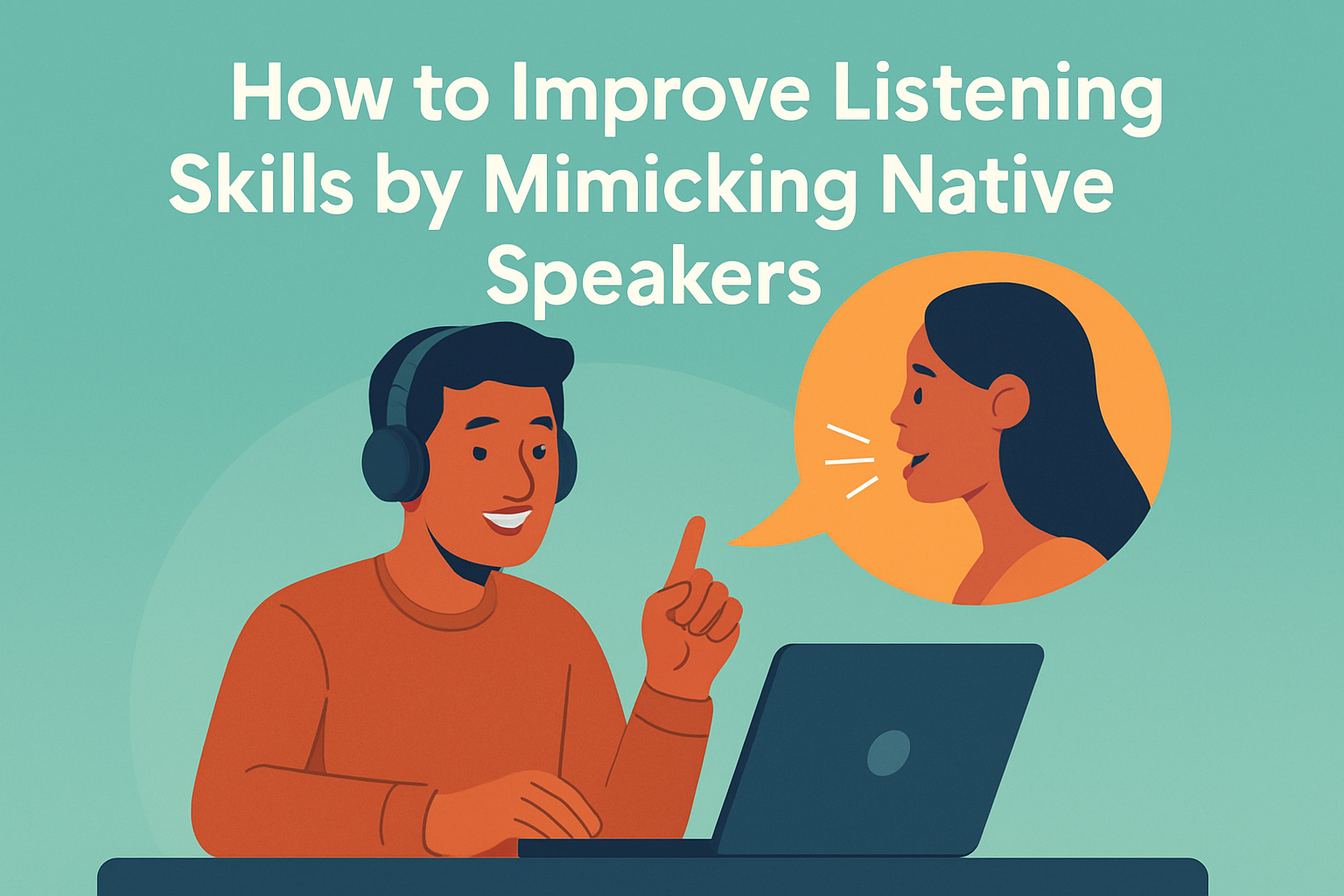
Listening is a core component of communication and a fundamental skill that plays a pivotal role in effective language learning. When you engage in a conversation, especially in a non-native language, understanding the spoken words is crucial. This is where listening skills come into play. To enhance these skills, one effective method is mimicking native speakers. Mimicry, or the act of imitating others, involves carefully observing and reproducing the speech patterns and accents of native speakers. This practice helps learners internalize the rhythm, intonation, and pronunciation characteristic of the language, ultimately leading to improved listening comprehension and speaking abilities. By refining listening skills in this manner, language learners can bridge the gap between theoretical knowledge and practical usage, gaining confidence in real-world conversations.
The significance of listening skills in language acquisition cannot be overstated. It allows learners to absorb new vocabulary, understand contextual usage, and develop an intuitive grasp of grammar and syntax, just as native speakers do. Furthermore, mimicking opens the door to cultural understanding, as it enables learners to grasp the nuances of a language, including idiomatic expressions and cultural references. In this article, we will explore the importance of listening skills, the benefits of mimicking native speakers, and practical strategies to effectively emulate native pronunciation and inflection. This approach not merely aids in comprehension but also substantially enhances the learner’s ability to communicate more naturally and fluently in a foreign language.
The Importance of Listening Skills in Language Learning
Listening is often considered the first step in language acquisition, laying the foundation for subsequent skills such as speaking, reading, and writing. By focusing on listening, learners tune their ears to the sounds, rhythms, and intonations of a language, which aids in the accurate reproduction of these sounds when speaking. For instance, a student learning English as a second language might struggle to differentiate between the ‘r’ and ‘l’ sounds, often finding it challenging to mimic native pronunciation. By investing time in listening exercises, learners can gradually adjust their auditory perception, making these sounds more distinct and easier to replicate.
Consider the scenario of an English learner who dedicates time each day to listen to native English speakers through podcasts, videos, or audio books. Over time, they become familiar with the nuances of the language, picking up on subtle accent variations, inflection patterns, and common idiomatic expressions. By immersing themselves in authentic auditory content, they can better grasp the emotional and contextual elements of communication, leading to more meaningful and effective interactions.
Mimicking Native Speakers: Why It Works
The practice of mimicking native speakers is grounded in the concept of authentic learning, where learners develop skills by practicing real-world activities. When learners mimic native speakers, they engage in active listening, which is a dynamic process involving attention, analysis, and synthesis of auditory information. This engagement allows learners to internalize language patterns and produce speech that mirrors native-like accuracy and fluency.
A practical example of this is the “shadowing” technique, where a language learner listens to a recording of a native speaker and attempts to repeat the dialogue in real-time, closely following the speaker’s pace and intonation. This method forces learners to pay meticulous attention to pronunciation details while keeping pace with native speech patterns. Over time, this practice enhances their auditory discrimination abilities, allowing them to discern subtle variations in sounds and meanings.
Strategies for Effective Mimicry
To maximize the benefits of mimicking native speakers, learners can adopt several strategies that effectively incorporate this practice into their language learning routine.
- Select Native Content: Choose audio and video materials that present clear examples of native pronunciation and intonation. Opt for content that captures real-life situations and spontaneous interactions to understand how language is used naturally and contextually.
- Focus on Intonation and Rhythm: Pay attention to the rise and fall of speech, stress patterns, and the rhythm of sentences. This helps in mimicking not only the correct pronunciation but also the natural flow of the language.
- Use Repetition Effectively: Repeat phrases or sentences multiple times until the pronunciation is close to that of native speakers. This reinforces auditory memory and increases fluency.
- Record and Review Progress: Record your attempts at mimicking native speakers and compare them with the original. This self-assessment allows learners to identify errors and track improvements over time.
- Engage in Interactive Practices: Participate in language exchange programs or conversation classes to get feedback from native speakers, thereby refining pronunciation and listening skills in a social context.
Real-World Example: The Journey of a Learner
Meet Luis, a Spanish speaker learning French. Initially, Luis found it difficult to follow French conversations despite knowing vocabulary and grammar rules. Realizing the gap zwischen theoretical knowledge and real-life application, he turned to mimicking native speakers to improve his listening skills. Luis started by listening to French podcasts daily during his commute, choosing content like news briefs, cultural discussions, and even French music that reflected everyday language use.
Applying the shadowing technique, Luis played short audio clips and repeated them, focusing on pronunciation and intonation. To measure progress, Luis recorded himself speaking and compared it with native speakers. After several months, Luis noticed a significant improvement in his listening skills. He could understand French conversations more easily, recognizing familiar phrases and adjusting to rapid speech. Encouraged by his progress, Luis joined a local French-speaking meet-up, where his improved listening skills boosted his confidence and ability to engage in meaningful conversations with native speakers.
The Role of Feedback and Adjustment
Feedback is crucial in the process of mimicking native speakers as it helps learners identify mispronunciations and adjust their mimicry techniques. Constructive feedback, whether from native speakers or language instructors, provides insights into areas that require improvement and reinforcement. This aligns with the concept of corrective feedback, where learners receive immediate corrections that guide them toward accurate pronunciation and better auditory understanding.
Consider the case of a language exchange group where participants practice speaking a new language. Within this group, learners mimic native speakers while receiving feedback on their pronunciation, intonation, and rhythm. Through regular interaction and feedback, learners refine their abilities, moving closer to native speaker proficiency.
Tracking Progress and Celebrating Milestones
Tracking progress is a motivational tool that encourages learners to persist in their language journey. By setting clear goals and monitoring achievements, learners can remain focused and disciplined in their practice. Consider using a journal or digital app to record daily practice sessions, the phrases or sentences practiced, and notes on areas for improvement.
Acknowledge milestones, no matter how small. Celebrating improvements can boost morale and reinforce the learner’s commitment to refining listening skills. Whether it’s understanding a complex phrase independently for the first time or receiving positive feedback from native speakers, these milestones indicate growth and progress in language proficiency.
Summary: Empowering Language Learners through Practice
In summary, improving listening skills by mimicking native speakers offers a practical and effective path to language proficiency. By engaging in active listening and imitation, learners can fine-tune their auditory perception and develop a natural speaking rhythm. Mimicry allows learners to absorb the nuances of a language, including its phonetics, intonation, and cultural references, which are essential for confident communication and understanding.
Embracing the strategies of selecting native content, focusing on intonation, using repetition, recording progress, and seeking interactive practice, learners can significantly enhance their listening and speaking capabilities over time. The journey of Luis, our example learner, illustrates the tangible benefits of this approach in bridging the gap between language theory and real-world application.
The key takeaway for language learners is the empowerment that comes with mastering listening skills. By making mimicry a consistent part of your language learning routine, you can build a foundation that supports effective communication and boosts your confidence in conversations. So, start today: choose a podcast, engage with a community, or shadow a favorite native speaker. With dedication and practice, you’ll discover the transformative power of listening and mimicry, unlocking new opportunities for personal and professional growth in a globalized world.
Frequently Asked Questions
1. What are the benefits of mimicking native speakers to improve listening skills?
When you mimic native speakers, you are actively engaging in a robust, immersive learning process that recreates the natural nuances of language use. By imitating their pronunciation, intonation, and rhythm, you fine-tune your ear to detect subtle sounds and vocal patterns. This process helps you become more attentive and sensitive to variations in speech in real-life conversations. Moreover, mimicking aids in understanding context, which directly impacts your ability to grasp meaning from spoken words. You not only hear the words themselves but begin to feel the language, which leads to greater comprehension and fluency. Engaging in this practice regularly breaks down language barriers, making communication more fluid and effective.
2. How can I effectively mimic native speakers without feeling awkward or uncomfortable?
It’s natural to feel awkward when mimicking someone, especially in the beginning. However, the key to overcoming this discomfort is to practice in a familiar and safe environment. Start by choosing short segments of audio or video material that features native speakers and listen to them repeatedly. Focus on short phrases or sentences to avoid feeling overwhelmed. Gradually work your way up to longer dialogues. Practicing alone in a private space helps diminish self-consciousness. Recording your mimicry attempts and playing them back is another excellent strategy, as it allows you to compare and adjust your pronunciation and intonation with the original model. Remember, perfection isn’t the goal at first—consistent practice and incremental improvements are what count.
3. What resources can I use to find suitable native speakers to mimic?
There is a plethora of resources available that can assist you in finding native speakers for mimicry practice. Language learning platforms such as Duolingo, Rosetta Stone, and Babbel offer interactive exercises that often feature native speaker pronunciations. Moreover, podcasts, YouTube channels, and language learning apps like Tandem and HelloTalk provide direct access to native speech. Social media platforms such as Instagram and TikTok also abound with language enthusiasts sharing authentic conversational content. Additionally, streaming services like Netflix and Hulu enable you to watch shows or movies in your target language, providing endless opportunities to mimic dialogues from real-life scenarios. Focused browsing through these resources helps you find material that suits your learning preferences and interests.
4. Can imitating individual words improve my listening skills, or should I focus on full sentences?
While imitating individual words can be beneficial, focusing on full sentences offers a more comprehensive approach to improving listening skills. Mimicking entire sentences exposes you to a wide array of linguistic features, including syntactic structures, rhythm, and intonation, which are integral for the natural flow of language in conversation. This allows you to capture the essence of speech beyond isolated words. It involves contextual understanding, which equips you with the skills to predict and grasp conversations in real-time. However, when beginning, focusing on critical, frequently used words and phrases is helpful, gradually building up to longer, more complex sentences as your confidence and skill level grow.
5. How often should I practice mimicking to see a noticeable improvement in my listening skills?
The frequency and consistency of practice are pivotal when it comes to seeing noticeable improvements in listening skills via mimicry. Ideally, aim for daily practice, even if it is just for a few minutes each day. Short, consistent sessions are often more effective than sporadic, lengthy ones, as they foster habit formation and regular exposure to the language. Make learning part of your daily routine by fitting practice into common activities—mimic while cooking, commuting, or exercising. Over time, as you embed mimicry into your routine, you’ll build linguistic instincts that significantly enhance your listening ability. Depending on individual learning styles and pace, noticeable improvements typically manifest within a few weeks to a couple of months of consistent practice.