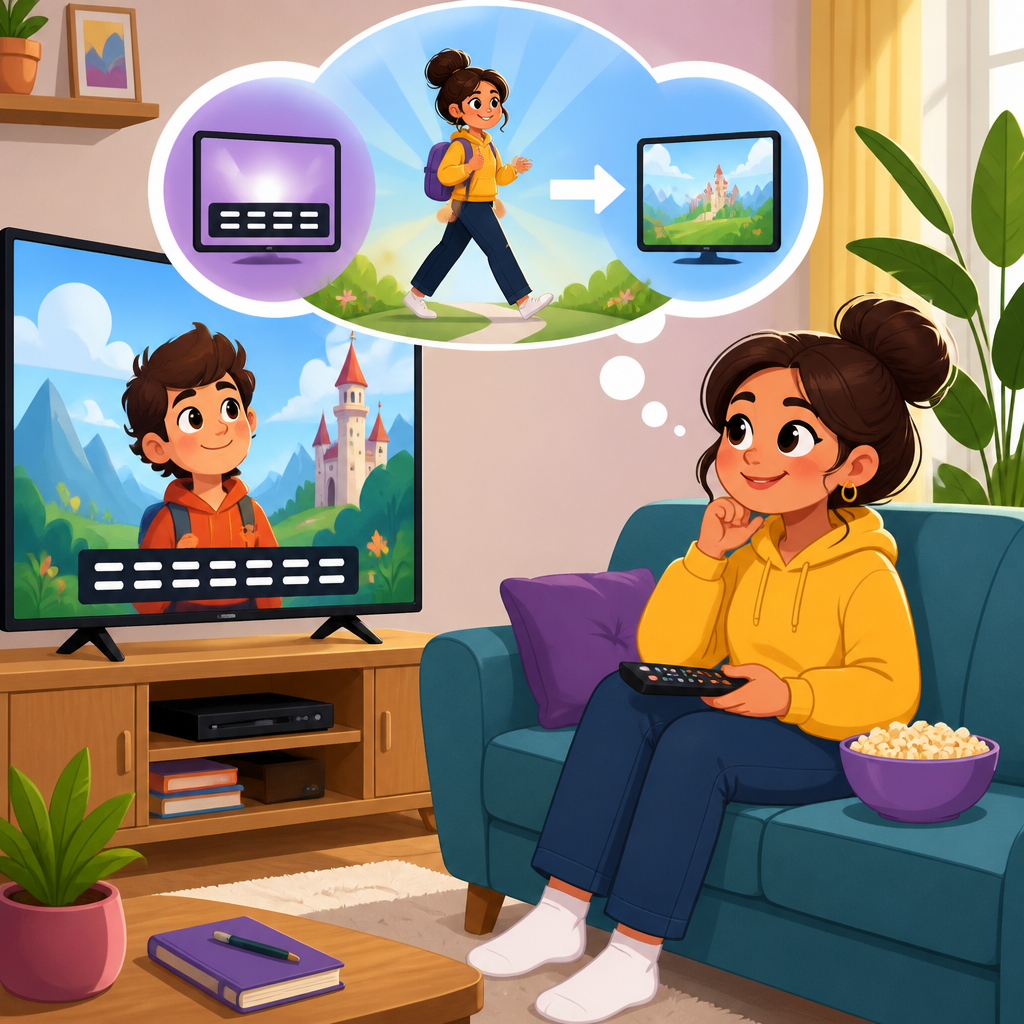
Closed captions can speed up English learning when you use them deliberately, but they can also quietly become a habit that keeps listening skills from fully developing. In language learning, closed captions are the on-screen text that matches spoken dialogue in a video, while a crutch is any support you rely on so heavily that progress stalls without it. I have seen this pattern repeatedly with adult learners: captions reduce stress, improve comprehension, and make study sessions feel productive, yet months later those same learners still struggle with podcasts, meetings, or casual conversation when text disappears. That gap matters because real-life listening rarely arrives with subtitles. If your goal is practical fluency, captions should function like training wheels: useful at the beginning, adjustable over time, and eventually unnecessary for familiar material. Used well, they help you notice connected speech, new vocabulary, and pronunciation patterns. Used poorly, they teach your eyes to do the work your ears need to learn. The key is not avoiding captions altogether. The key is using closed captions as a temporary tool, not a crutch, with a clear plan for when to turn them on, when to switch them off, and how to measure whether your listening is actually improving.
Why closed captions help at the start
Closed captions are effective early in the learning process because they reduce cognitive load. When speech is fast, accented, or filled with unknown words, beginners and lower-intermediate learners often miss so much that listening practice becomes guessing practice. Captions give instant confirmation of what was said, which lowers frustration and keeps attention focused on meaning. In my own work with learners, captions are especially helpful for distinguishing sounds that blur together in natural speech, such as “gonna,” “wanna,” reductions like “didja,” or linking in phrases such as “next week” and “pick it up.” Without text support, many learners think they lack vocabulary when the real issue is recognizing familiar words at normal speed.
Captions also improve word segmentation, the skill of hearing where one word ends and the next begins. Native speech is continuous, not neatly separated. A learner may know every word in “What are you looking for?” and still hear only a stream of sound. Seeing the sentence while hearing it trains the brain to map sound to written form. Research in multimedia learning has consistently shown that combining audio and text can improve comprehension and retention when the material is not too dense. That benefit is real. The mistake is assuming that because captions help comprehension now, more caption use will automatically create stronger listening later.
When captions start hurting listening growth
Captions become a problem when reading overtakes listening. The human brain naturally chooses the easier path, and for most learners, reading is easier than decoding fast speech in real time. As a result, the eyes dominate, the ears relax, and the learner gets the illusion of listening practice without building much auditory stamina. I often notice this in students who understand a YouTube lesson perfectly with captions on but cannot summarize the same speaker after a captions-off replay. Their comprehension depended on text, not sound.
Another risk is timing. Captions appear instantly, often before the spoken line finishes. That means the learner can process meaning from text before the audio has been fully heard. Over time, this reduces tolerance for ambiguity, which is essential in real conversation. In daily communication, you cannot pause life, rewind a colleague, or read words floating underneath a cashier, manager, or friend. If your study routine always removes uncertainty immediately, your listening system never learns to hold partial meaning, predict logically, and recover from missed sounds. Those are core listening skills. Captions should support those skills, not replace them.
A practical system for fading caption dependence
The most effective approach is phased use. Start with captions as controlled support, then remove them in stages. I recommend one short video, ideally two to five minutes, because manageable length encourages repetition without fatigue. On the first viewing, watch without captions and write a brief gist: who is speaking, what the topic is, and what you think the main point was. On the second viewing, turn captions on and check what you missed. Notice whether the problem was unknown vocabulary, reduced pronunciation, weak concentration, or speed. On the third viewing, turn captions off again and listen for the corrected details. This sequence forces the ears to work first and last.
To keep the process disciplined, use a simple progression rule: if you understand at least 80 percent without captions after review, move to new material; if not, repeat with a shorter clip or easier speaker. Difficulty should stretch you without overwhelming you. News explainers, interviews with clear hosts, and structured educational videos work better than chaotic comedy or heavily slang-filled reality content in the early stages. If you want a sustainable routine around this method, pair it with a broader habit system such as the 3-2-1 daily English routine for busy adults, then keep captions practice as one targeted component rather than your whole plan.
| Stage | Captions Setting | Main Goal | What to Record |
|---|---|---|---|
| First pass | Off | Catch the gist and key details | Topic, speakers, 2 facts you heard |
| Second pass | On | Confirm wording and diagnose misses | Unknown words, reduced forms, misheard phrases |
| Third pass | Off | Rebuild listening from sound alone | Improved summary and confidence rating |
| Later review | Optional | Shadow pronunciation or note phrases | Useful chunks to reuse in speech |
How to choose the right kind of captioned content
Not all captions are equally useful. Human-made captions are usually more reliable than auto-generated captions, which can contain timing errors, missing punctuation, and incorrect words, especially with accents or background noise. On platforms like YouTube, TED, Netflix, and many major news sites, quality varies widely by channel and production standard. If the captions are poor, you may learn wrong forms or waste time correcting them. Reliable captions should closely match the spoken words, appear in sync, and use punctuation that reflects pauses and sentence boundaries.
Content choice matters just as much as caption quality. Select material slightly below your maximum interest level and slightly above your independent listening level. That balance keeps motivation high while preserving enough challenge for growth. For example, a business professional learning workplace English may benefit more from short LinkedIn Learning clips, conference interviews, or product demos than from sitcom dialogue. A parent learning practical English may gain more from recipe videos, school communication videos, or daily vlogs. Relevance improves repetition, and repetition is what turns temporary support into permanent skill. Familiar topics reduce vocabulary shock, allowing you to focus on rhythm, stress, and sound patterns instead of trying to decode everything at once.
Techniques that keep captions from becoming a crutch
Several techniques make caption use active rather than passive. The first is delayed checking: never begin with captions on unless the audio is clearly above your current level. Let your ears attempt meaning first. The second is pause prediction. Stop the video before a key phrase ends and predict the next words from context, then verify with audio and captions. This builds anticipatory listening, which strong listeners use constantly. The third is transcript mining. After watching, copy only a few high-value phrases such as “I’m trying to figure out,” “It turns out that,” or “That depends on.” Learning chunks from captioned input improves both listening and speaking because real speech is phrase-based, not word-by-word.
Another powerful method is shadowing with selective text support. Listen to one sentence, check the caption briefly, then repeat the line aloud with matching rhythm and stress. This links perception and production. I have found that learners who shadow short segments become less dependent on captions because they stop treating speech as abstract noise and start feeling its timing physically. You can also use playback speed carefully. Reducing a clip to 0.9x can help during diagnosis, but staying at slower speeds too long creates a second crutch. Return to normal speed quickly so your ears adapt to authentic pacing.
Signs you are ready to reduce or remove captions
You are ready to scale back captions when several concrete signs appear. First, you can summarize the main idea of a short clip after one captions-off listen. Second, most of your misses involve a few words, not the whole message. Third, when you turn captions on, you find confirmation rather than surprise. Fourth, your comprehension stays stable across familiar speakers and topics. At that point, switch to a ratio system: for every three videos, allow captions on only one full viewing. For easier material, move to captions only after completion. For familiar channels, try captions only for review notes, not comprehension.
It is also important to define success correctly. Success does not mean understanding every word. Even advanced listeners miss details, especially with noise, humor, unfamiliar names, or overlapping speech. Real listening competence means extracting meaning accurately enough to respond, ask follow-up questions, and keep going. If you wait for perfect comprehension before reducing captions, you will keep them too long. Aim for functional understanding, then sharpen details over time. That shift in mindset prevents dependency and makes your practice more realistic.
Closed captions are one of the most useful supports in English learning, but only when they serve a clear, temporary purpose. Use them to confirm sounds, reveal missed words, and lower overload at the right moment. Do not use them so automatically that reading replaces listening. The best results come from a phased process: listen first without text, verify with captions, then return to audio alone until comprehension improves from the sound itself. Choose accurate captions, relevant short content, and a repeatable method that tracks what you missed and why. Most importantly, judge progress by what you can understand without text, because that is the skill real life demands. If captions have become your default, change one study session this week: start with audio only, check with captions second, and finish without them. That small adjustment turns a helpful tool back into what it should be: temporary support on the way to independent listening.
Frequently Asked Questions
What does it mean to use closed captions as a temporary tool instead of a crutch?
Using closed captions as a temporary tool means treating them as a form of support you can add, reduce, and eventually remove based on your current listening level. In practical terms, captions help you catch words you miss, confirm pronunciation, notice connected speech, and reduce the stress that often comes with listening in a second language. That is the useful side of captions. The problem begins when learners leave them on for every video, every time, and stop challenging their ears to process spoken English independently. At that point, captions are no longer supporting listening development; they are replacing it.
A helpful way to think about this is that captions should serve a clear purpose. You might use them on the first viewing to understand the topic, on a second viewing to notice vocabulary, or only during difficult sections with fast speech or unfamiliar accents. The goal is always the same: increase your ability to understand spoken English without needing to read along. If you find that your comprehension drops sharply the moment captions disappear, that is a sign your eyes may be doing more of the work than your ears. Used deliberately, captions can accelerate progress. Used automatically, they can quietly freeze your listening skills at a comfortable but limited level.
How can I tell if closed captions are helping my English listening or holding me back?
The clearest sign is what happens when captions are turned off. If you can still follow the main ideas, recognize common phrases, and recover from missed words without panic, then captions are probably helping you build skill. If, however, your understanding collapses almost completely without the text on screen, there is a good chance you have become overly dependent on reading support. Many adult learners mistake caption-assisted comprehension for listening ability, when in reality they are combining reading and listening and relying heavily on the reading side.
There are several patterns to watch for. One is that your eyes go to the text first and the audio second. Another is that you feel uncomfortable or impatient the moment captions are unavailable. You may also notice that you understand a video very well with captions but struggle to follow ordinary conversation, podcasts, phone calls, or real-time speech where no written support exists. That gap is important. It suggests that captions are creating a smoother study experience, but not enough real listening challenge.
A practical test is to compare your performance across three conditions: no captions, captions only after a first listen, and captions from the start. If you understand significantly more when captions are delayed until after your first attempt, that is usually a healthy pattern. It means you are giving your listening system a chance to work before using text as confirmation. In contrast, if you always need captions immediately and feel lost without them, it is time to reduce reliance and rebuild confidence through shorter, manageable listening tasks.
What is the best way to reduce dependence on captions without making listening practice frustrating?
The best approach is gradual reduction, not sudden removal. Many learners fail because they switch from always using captions to never using them, and the difficulty spike is so large that motivation disappears. A smarter method is to create stages. Start by watching short segments without captions first, even 30 to 60 seconds at a time. Focus on catching the main idea, familiar words, tone, and context. Then replay the same segment with captions to confirm what you heard and fill in the gaps. This preserves the benefits of captions while forcing your ears to lead the process.
Another effective strategy is selective caption use. Instead of turning them on for an entire video, use them only for difficult moments: fast dialogue, dense information, unfamiliar accents, or key explanations. You can also try partial support routines, such as first viewing without captions, second viewing with captions, and a final viewing without them again. That last step is important because it checks whether your understanding transferred back to listening alone. Over time, you can increase the amount of content you handle without text.
Difficulty control matters as well. If the content is too advanced, you will naturally cling to captions. Choose material that is slightly challenging but still understandable from context. Clear speakers, familiar topics, and shorter videos are ideal for reducing dependency. This is not about proving toughness; it is about building listening skill in a way that is sustainable. Small wins matter. When learners repeatedly experience “I understood enough without reading,” their confidence grows, and the need for captions begins to shrink naturally.
Are there times when using closed captions is especially useful for language learners?
Yes, absolutely. Closed captions are particularly useful when your goal is not just pure listening practice, but also vocabulary building, pronunciation awareness, and comprehension of complex content. For example, captions can be very helpful when you are learning topic-specific language, such as business English, academic lectures, news analysis, or technical content where precise terms matter. They are also useful when speakers talk quickly, reduce sounds, link words together, or use accents that are new to you. In these cases, captions can reveal what your ears are not yet ready to decode consistently.
Captions are also valuable during intensive study. If you want to analyze how native speakers actually speak, captions help you notice contractions, weak forms, informal grammar, and phrases that often disappear in fast conversation. Learners frequently know a word on paper but fail to recognize it in connected speech. Seeing and hearing it together can close that gap. This is one reason captions can speed up learning when used purposefully. They make hidden features of spoken English more visible.
They can also reduce emotional resistance. Adult learners often avoid listening practice because not understanding everything feels tiring or discouraging. Captions lower that stress enough to keep learners engaged. That benefit is real and should not be dismissed. The key is to use captions with intention: for support, analysis, and confidence-building, not as a permanent substitute for direct listening. In other words, captions are excellent for targeted learning and strategic review. They become less helpful when they are left on by default, regardless of the learning objective.
What are some practical caption routines I can use to improve listening faster?
One of the most effective routines is the three-pass method. First, watch a short clip without captions and try to understand the general meaning. Do not aim for perfection; focus on the topic, the speaker’s intention, and any words or phrases you can catch. Second, watch the same clip with captions and compare what you thought you heard with what was actually said. Notice where the breakdown happened: unknown vocabulary, fast speech, pronunciation changes, or lack of attention. Third, watch once more without captions and see how much more you understand after that support. This method trains listening first, uses captions as feedback, and then checks for real improvement.
Another strong routine is pause-and-predict. Play a short section without captions, pause, and say or write what you think the speaker said. Then turn on captions to verify. This is excellent for training active listening rather than passive exposure. You can also use a difficult-section routine: watch normally without captions, turn captions on only for the parts you miss, then replay those parts several times without captions until they become understandable by ear alone. This keeps the support narrow and intentional.
For learners who enjoy structure, try setting rules by percentage. For example, decide that 70 percent of your weekly video time will be without captions and 30 percent with captions for review. You can also organize content by purpose: entertainment videos may be mostly caption-free, while educational or high-density videos may allow more caption use. The exact formula matters less than the principle. Captions should be scheduled, not automatic. When you decide in advance why, when, and how long to use them, they remain a tool that strengthens listening instead of a habit that weakens it.