
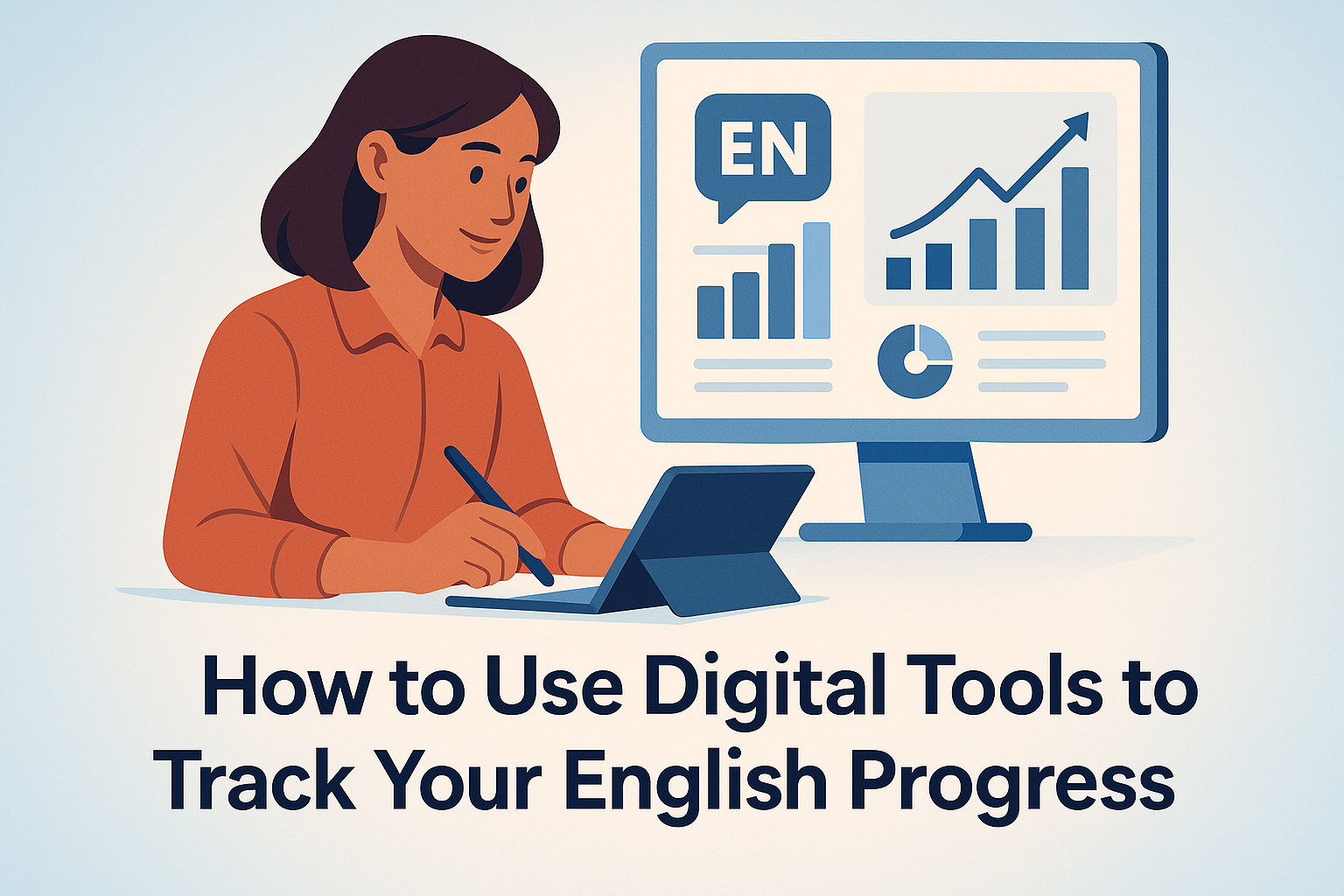
In today’s digital age, the landscape of education has evolved remarkably. With the advent of various digital tools, learning English has never been more accessible or efficient. Digital tools refer to the myriad of software, applications, websites, and services designed to enhance and facilitate the learning process. They offer innovative methods for non-native speakers to track their progress in mastering the English language.
The importance of digital tools in education cannot be overstated. They provide personalized learning experiences, address individual learner needs, and offer real-time feedback. Tracking progress is crucial because it helps learners identify strengths and weaknesses, set achievable goals, and measure improvement over time. Without precise tracking, learners may wander aimlessly, unsure of their improvements or setbacks, which can lead to frustration and decreased motivation.
Understanding how to use these digital tools effectively is vital for anyone looking to improve their English skills, whether they’re students, professionals, or simply enthusiasts aiming for personal growth. In this article, we will delve into how digital tools can assist in tracking English progress, ensuring that learners leverage the best technologies available to reach their language goals more efficiently.
Leveraging Language Learning Apps: A Personalized Approach
Language learning apps have become a staple in the modern learner’s toolkit. These apps, such as Duolingo, Babbel, or Rosetta Stone, use sophisticated algorithms to offer tailored learning paths. They are designed to fit the user’s language proficiency and learning habits.
Take Duolingo, for example. This app uses gamification — a strategy that employs game-like elements in non-game contexts — to engage users. With daily goals and a reward system, Duolingo keeps learners motivated. Moreover, it tracks your progress meticulously. Daily reminders encourage consistency, while progress charts demonstrate improvement over time. By doing so, learners gain a visual understanding of their advancement, celebrating milestones that keep them engaged.
These apps often include placement tests to determine your current level, thus setting a personalized starting point. As you navigate through the lessons, your progress is tracked, and the app adjusts future content to target areas that need improvement, ensuring a focused and efficient learning path.
The Role of Online Grammar Checkers: Instant Feedback and Correction
Grammar checkers serve as indispensable tools for those aspiring to refine their writing skills in English. Tools like Grammarly, ProWritingAid, or the Hemingway Editor provide instant feedback on written text.
Consider Grammarly: it identifies grammatical errors and offers suggestions for better sentence structure and vocabulary enhancements. This tool highlights areas that need attention, guiding learners toward correct usage and style improvements. It also provides explanations for its suggestions, enabling users to understand the rationale behind corrections and thus fostering learning.
The feedback from grammar checkers is crucial for self-improvement. It allows learners to recognize recurring mistakes, understand the nuances of English grammar, and strive for more polished writing. By continually using these tools, learners can track their progress through improved writing clarity and correctness, witnessing tangible results in their effectiveness.
Utilizing Speech Recognition Software: Enhancing Pronunciation Skills
Correct pronunciation is a vital component of mastering English, and speech recognition software offers an innovative solution to improve this skill. Tools like Google Speech Recognition, Speechmatics, or specialty platforms like Elsa Speak provide immediate feedback on spoken language.
Speech recognition software works by comparing your spoken words to native speech patterns, identifying discrepancies, and offering corrections. For instance, Elsa Speak focuses on accent reduction and pronunciation improvement. The app provides exercises tailored to your specific pronunciation challenges and tracks improvements over time, helping learners sound more like native speakers.
This type of feedback is invaluable. It allows learners to adjust their speaking habits in real time, ensuring that improvements are both rapid and long-lasting. Over time, consistent use of speech recognition software helps users develop clearer, more confident speaking abilities that reflect ongoing progress.
Interactive Online Platforms: Engaging with the Global Learning Community
Interactive platforms like Coursera, edX, or iTalki connect learners with an international community of teachers and peers. These platforms offer courses, forums, and live sessions where users can practice their skills in a supportive environment.
iTalki, for example, provides a platform for language exchange where users can engage in conversation with native speakers. This interaction not only builds conversational skills but also provides insights into cultural nuances that textbooks might not convey.
A significant aspect of these platforms is the feedback from instructors and peers. Learners receive constructive critiques, track their progress through completed modules, and continuously refine their skills. This makes measuring English proficiency an attainable goal through collaboration and community support.
Storing and Analyzing Progress Data: Using Spreadsheets for Comprehensive Tracking
While apps and tools provide automated progress tracking, some learners prefer a more hands-on approach to data storage and analysis. Using spreadsheets allows learners to meticulously document their journey and measure specific milestones.
Consider using Google Sheets to create a personalized tracking system. You can log daily study hours, practice exercises, test scores, and even notes on challenges you encountered. A sample layout might include columns for Date, Activity, Hours Spent, Score, and Notes.
- Date: When you engaged in a learning activity.
- Activity: The specific task or lesson.
- Hours Spent: Time dedicated to the task.
- Score: Any quantifiable result or feedback.
- Notes: Observations or challenges faced.
This structured approach not only aids in visualizing progress but also helps in identifying patterns, such as the correlation between study time and test scores. By analyzing this collected data, learners can make informed decisions to tweak their study habits for optimal improvement.
Summary: Unlocking the Potential of Digital Tools for English Mastery
Digital tools have revolutionized how we learn English, offering personalized, immediate, and effective tracking methods to monitor progress. Through language learning apps, grammar checkers, speech recognition software, interactive platforms, and self-created tracking systems, learners can gain a holistic understanding of their proficiency journey.
By leveraging these tools, you can set and achieve clear goals, receive instant feedback, engage with diverse communities, and transform your learning into a structured and rewarding experience. The main benefit lies in the empowerment gained from being an active participant in your learning journey, ensuring not only language mastery but also personal growth.
To fully realize the benefits of these digital tools, start by exploring one or two relevant options that align with your learning style and objectives. Commit to incorporating them into your routine, and gradually expand your toolkit as needed. Remember, the key is consistency and the willingness to adapt and learn.
In conclusion, the path to mastering English is now equipped with powerful digital innovations. Make the most of them today to pave your way towards fluency and confidence in the global language of communication.
Frequently Asked Questions
1. What are digital tools, and how can they help me track my English progress?
Digital tools encompass a wide range of software applications, websites, and online services designed to support language learning. Specifically for English proficiency, these tools may include language apps, grammar checkers, pronunciation guides, and vocabulary-building platforms. By using these tools, learners can effectively track their progress through various metrics such as quiz scores, time spent learning, words learned, or even fluency estimates. Some apps provide personalized learning paths that adapt as you progress, giving you real-time feedback on your strengths and areas needing improvement. Additionally, many digital tools offer gamification elements, such as earning points or unlocking levels, which can make the learning process engaging and enjoyable while still providing insight into progress.
2. Can you recommend some specific digital tools for tracking English language progress?
There is a plethora of digital tools available for language learning, and choosing the right one depends on your personal learning style and goals. For comprehensive tracking and assessment, apps like Duolingo and Babbel offer structured courses with tracking features. For grammar and writing, Grammarly provides corrections and suggestions, highlighting areas where you frequently make mistakes to track improvement. If speaking fluency is your focus, platforms like Rosetta Stone and Speechling allow you to practice pronunciation and receive feedback. For vocabulary building, Anki and Memrise use spaced repetition techniques, helping you remember new words over time. Utilizing a combination of these tools can give a holistic view of your language progress. Most of these platforms also offer progress dashboards, where you can visualize your achievements and set future goals.
3. How do I measure real progress in learning English through digital tools?
Measuring real progress involves looking at various indicators that digital tools provide. These include quantitative metrics like the number of lessons completed, test scores, and time spent learning, which give you a tangible sense of advancement. Qualitative measures are equally important: notice improvement in your confidence when using English in real-life situations—are you able to understand and participate in conversations more fluidly? Additionally, you can track your progress by setting specific goals and periodically assessing if you’re meeting them. For instance, if your goal was to improve your vocabulary, recollect how effortlessly you now recall and use new words learned through your chosen app or tool. Many platforms also offer periodic assessments to measure your skill level and compare it with previous results, providing a clear picture of your growth over time.
4. Are there any tips to maximize the effectiveness of digital tools for English learning?
To maximize the effectiveness of digital tools, it’s crucial to establish a consistent routine and make language learning a part of your daily life. Set realistic and specific goals, such as learning five new vocabulary words daily or completing a set number of exercises per week. Take advantage of the variety of digital tools available to cover different aspects of the language; for example, use one app for grammar, another for speaking practice, and yet another for vocabulary. Additionally, engage with authentic language content such as podcasts, news sites, and social media channels in English to apply what you’ve learned in real contexts. Gamifying your learning process can also maintain motivation—compete in challenges, earn badges, or set personal bests. Finally, regularly review your progress within these tools and adjust your learning strategies as needed to keep things fresh and challenging.
5. How reliable are digital tools compared to traditional learning methods for tracking English progress?
Digital tools offer a level of flexibility and accessibility that traditional methods may lack. They provide immediate feedback and analytics which can be incredibly effective for progress tracking. Unlike traditional classroom scenarios, where feedback may be delayed, digital tools offer a more instantaneous reflection of your performance, allowing you to adapt quickly. Furthermore, they often employ state-of-the-art algorithms to personalize your learning experience, catering to your individual pace and style. That said, it’s important to remember that digital tools should complement, not replace, traditional learning where human interaction and real-life practice play a critical role. Combining the structured, feedback-rich experience of digital tools with the depth and practice provided by traditional methods can create a well-rounded English learning journey. Balancing both approaches enables you to benefit from the strengths of each, ensuring a comprehensive tracking of your language progress.





