
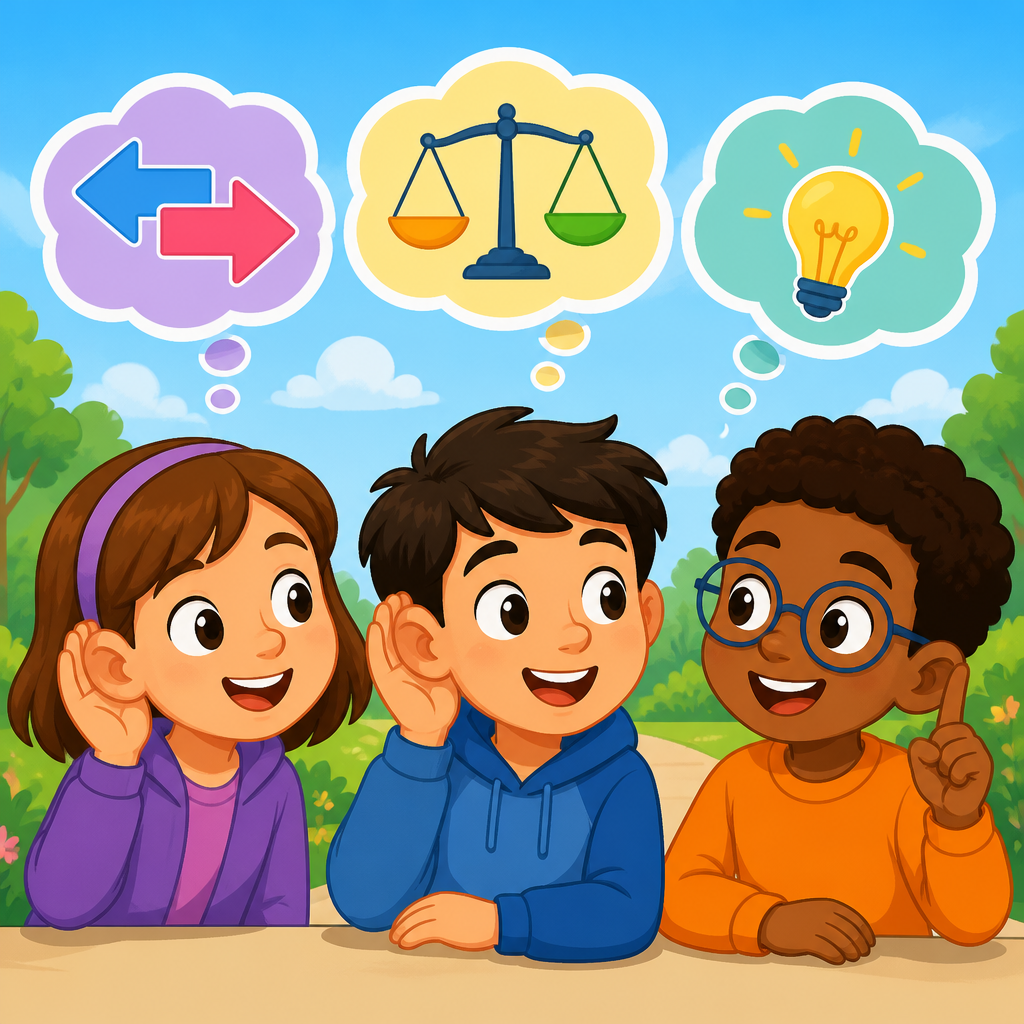
Listening for contrast words like but, however, and actually is one of the fastest ways to improve real-world listening because these small signals often announce the most important part of a sentence. In spoken English, a contrast word tells you that the speaker is changing direction, correcting an idea, limiting a claim, or replacing one expectation with another. If you miss that signal, you may understand every individual word and still misunderstand the message. I see this constantly when teaching beginner and lower-intermediate learners: they catch the topic, but they miss the turn. A speaker says, “The train is usually on time, but today it’s delayed,” and the learner remembers “on time” instead of “delayed.”
Contrast words matter because everyday conversations are full of them. People use them in directions, service encounters, workplace updates, announcements, and casual stories. They help listeners sort old information from new information and separate background details from the final point. In practical terms, hearing but, however, actually, though, and similar markers helps you answer questions more accurately, take better notes, and respond more naturally. This skill is especially useful in short listening tasks, where one contrast word can flip the correct answer. Learning to hear the flip is not a minor trick; it is a core listening habit that supports comprehension under normal speaking speed, reduced pronunciation, and imperfect audio conditions.
What Contrast Words Signal in Real Speech
Contrast words signal a relationship between two ideas: expectation and reality, first idea and revised idea, general statement and exception, or assumption and correction. The most common and useful word is but. In speech, but often introduces the detail that matters most. When someone says, “I wanted the blue one, but they only had black,” the outcome is black. The first clause provides context; the second clause delivers the decision. However works similarly, though it appears more often in formal speech, presentations, news reports, and careful explanations. Actually often signals correction or surprising truth: “I thought the meeting was at ten. Actually, it starts at nine thirty.”
These words are not identical, and that nuance matters. But is direct and common in daily conversation. However is more formal and may arrive at the beginning of a sentence, creating a clear reset in meaning. Actually can sound corrective, softening or sharpening depending on intonation. Yet, still, though, and except also mark contrast, but each carries a slightly different function. In listening practice, I train learners to ask one immediate question when they hear any of these words: “What changed?” That question forces attention onto the clause after the marker, where the speaker usually places the key information, correction, or limitation.
Why Learners Miss the Meaning After the Contrast
Most learners do not fail because the grammar is difficult. They fail because listening happens in time, and attention often stays attached to the first idea. The brain likes early information, especially when it is easy to recognize. If a learner hears familiar words first, such as cheap, open, available, or easy, those words can stick even when the speaker later cancels or limits them. For example, “The museum is free on Sundays, but not this weekend” is easy to mishear if the listener stops processing after free. In test settings and real life, that creates wrong conclusions.
Pronunciation also plays a role. Native and fluent speakers reduce contrast words in connected speech. But may sound closer to bət than a fully stressed word. Actually is frequently compressed to something like ak-chuh-lee in fast conversation. However may be easy to recognize in formal speech but less clear in spontaneous talk if the speaker runs phrases together. Noise, unfamiliar accents, and divided attention make the problem worse. That is why listening for contrast words is partly a vocabulary skill and partly an acoustic skill. You are not only learning meaning; you are training your ear to detect a cue quickly enough to follow the message that comes next.
How to Listen for the Turn, Not Just the Topic
The most effective strategy is simple: treat the contrast word as a road sign. When you hear it, expect the message to turn. Do not relax because you understood the first half of the sentence. Instead, increase attention. I often tell students to mentally underline but and then hold their judgment until the sentence ends. This prevents early commitment to the wrong answer. In practical listening, that habit is powerful. If a coworker says, “The client liked the design, but wants a different headline,” the action point is not liked the design. The action point is different headline.
Another reliable method is note-shifting. Write the first idea lightly, then revise it when the contrast arrives. Interpreters and strong note-takers do this naturally. A customer service agent might hear, “I ordered the large, but I received the medium.” The final problem is medium received, not large ordered. This is one reason contrast listening pairs well with focused number and detail training. If you are working on basic listening accuracy, the main pillar guide at https://5minuteenglish.com/a1-listening-practice-catching-names-numbers-and-dates/ builds the same habit of waiting for the precise detail instead of guessing early.
| Contrast word | Typical function | Example heard | Meaning to keep |
|---|---|---|---|
| but | Main point changes after first idea | “It looks close, but it’s a 20-minute walk.” | It is not quick to reach. |
| however | Formal change or limitation | “The plan is affordable. However, setup takes six weeks.” | There is a delay before use. |
| actually | Correction of assumption | “I said Tuesday, actually Wednesday.” | The correct day is Wednesday. |
| though | Soft contrast, often at end | “It was crowded. Nice, though.” | Overall opinion is positive. |
Common Situations Where Contrast Words Change the Answer
Contrast words regularly determine the correct interpretation in travel, shopping, work, and social plans. In travel, announcements often begin with routine information and end with the exception: “This service normally stops at Central, but today it terminates at Park Street.” The useful fact is the service change. In shopping, a clerk may say, “The jacket is on sale, but only in small sizes.” If you need medium, the important meaning is that the sale does not help you. In offices, managers often frame feedback this way: “Your report is clear, but the conclusion needs evidence.” The praise is real, yet the task is evidence.
Social conversations use contrast more subtly, which can make listening harder. Someone says, “I like Italian food, but not heavy pasta dishes,” and a listener who hears only like Italian food may make a poor restaurant choice. Or a friend says, “I was going to come early; actually, I’ll be there around eight.” Here actually replaces the plan. News reporting uses however to separate headline expectation from factual limitation: “Sales increased in June. However, annual revenue remains below target.” The first statement sounds positive, but the second provides the fuller evaluation. Skilled listeners learn that contrast words often protect against overconfidence by forcing a more accurate reading of the whole message.
Practice Methods That Build Fast Recognition
To build this skill, use short audio clips and replay them with one narrow goal: identify the contrast word and the idea after it. Do not begin with long podcasts. Start with one-sentence recordings, voicemail messages, subtitles you can hide, or textbook dialogs. On the first listen, mark only the signal word. On the second, write the corrected or final information. On the third, shadow the sentence aloud, copying the speaker’s rhythm. This sequence works because it trains detection, comprehension, and pronunciation together. When learners produce reduced forms themselves, they recognize them more easily in incoming speech.
Dictation is also effective if used selectively. Choose ten sentences containing but, however, and actually. Transcribe only the words after the contrast marker, then compare your script with the original. You will quickly see whether your errors come from vocabulary gaps, sound confusion, or premature guessing. I also recommend minimal-pair style listening between expectation and outcome. Hear “It’s cheap, but unreliable” and “It’s expensive, but reliable,” then state the final buying decision in plain language. This turns passive hearing into active interpretation. Over time, your ear stops treating contrast words as small grammar items and starts hearing them as meaning alarms that demand attention.
Advanced Nuance: Intonation, Position, and False Confidence
At a deeper level, strong listening depends on three features beyond the words themselves: intonation, position, and confidence management. Intonation often highlights the contrast. Speakers may stress the new information after but or pause before however, creating a boundary. Position matters because some markers appear late. Though at the end of a sentence can reverse your impression only after you think the message is complete: “I didn’t enjoy the trip. The hotel was excellent, though.” Confidence management is the discipline of delaying interpretation. Many listening mistakes happen not because the listener heard badly, but because the listener decided too early.
There is also a limitation worth noting. Contrast words usually signal importance, but not always. Sometimes the first clause carries the practical weight, especially when the second clause adds politeness rather than content. For example, “I’d help, but I’m in a meeting” still leaves the listener with the same operational result: no help now. The marker matters, yet the real task is understanding the speaker’s intent. That is why practice should include context, not isolated vocabulary lists alone. If you consistently listen for the turn, verify what changed, and connect that change to the situation, your comprehension becomes more accurate, faster, and far more useful in everyday English.
Listening for contrast words is a focused skill with immediate payoff because it helps you catch the sentence that matters most, not just the words that arrive first. But, however, and actually often introduce the correction, limit, exception, or final decision. When you train yourself to hear that turn, you make fewer mistakes with directions, announcements, plans, and everyday conversations. The practical method is clear: notice the signal, wait for the second idea, and keep the revised meaning. Add short clip practice, selective dictation, and shadowing, and the pattern becomes automatic.
If you want better listening accuracy, do not start by trying to understand everything equally. Start by listening for the moments when meaning changes. That single habit improves note-taking, test performance, and real conversation more than many learners expect. Build it with short daily practice and honest review of your errors. The reward is simple: you stop hearing only words and start hearing decisions, corrections, and reality. Use your next listening session to track every but, however, and actually, and you will notice your comprehension sharpen almost immediately.
Frequently Asked Questions
What are contrast words, and why do they matter so much in listening?
Contrast words are signals that tell you the speaker is about to shift direction. Common examples include but, however, actually, though, yet, still, and on the other hand. In real spoken English, these words often introduce the most important meaning in the sentence because they show that the speaker is correcting, limiting, or replacing an earlier idea. For example, if someone says, “I thought the meeting would be short, but it lasted three hours,” the key message is not the expectation that it would be short. The key message is that it lasted three hours. That shift is exactly what the contrast word marks.
This matters because many learners focus on understanding vocabulary one word at a time, but listening comprehension depends just as much on following the speaker’s logic. A contrast word acts like a road sign. It tells you, “Pay attention. The message is changing here.” If you miss that signal, you may catch every noun and verb and still misunderstand the speaker’s real opinion or the actual result. That is why training your ear for contrast words can improve listening quickly. You are not just hearing English more clearly; you are learning to identify where meaning becomes more precise, more honest, or more important.
How do words like “but,” “however,” and “actually” change the meaning of a sentence?
These words change meaning by creating a relationship between two ideas. The first idea sets up an expectation, and the contrast word tells you that the next part will modify that expectation in some way. But usually introduces the stronger or more relevant point: “The restaurant looked nice, but the food was disappointing.” However does something similar, often in more formal speech or writing: “The plan sounded efficient; however, it was too expensive.” In both cases, the speaker wants you to pay special attention to what comes after the contrast.
Actually often works a little differently. It can correct an assumption, soften disagreement, or introduce surprising truth. If someone says, “I assumed he was angry, but actually he was just tired,” the word actually signals that the earlier interpretation was wrong. In conversation, this is extremely common because speakers regularly revise what they mean as they talk. They may begin with one impression and then sharpen it: “It wasn’t difficult exactly—actually, it was just confusing at first.” That kind of self-correction is one reason natural speech can be hard to follow. The contrast word tells you not to hold onto the first idea too tightly. Instead, listen for the updated version, because that is usually the speaker’s final meaning.
Why do learners often understand all the words but still miss the message?
This happens because listening is not only about decoding sounds; it is about interpreting structure and intention in real time. Many learners are trained to listen for content words such as nouns, verbs, and adjectives, but they do not give enough attention to small function words and discourse markers. As a result, they hear the sentence pieces correctly without understanding how those pieces relate to each other. A sentence like “The movie was interesting, but I wouldn’t watch it again” is a good example. If a learner locks onto movie, interesting, and watch, they may conclude that the speaker liked it. But the contrast word changes everything. The final judgment is mixed or even negative.
Another reason is that spoken English moves quickly and often includes reduced pronunciation, hesitation, and reformulation. Speakers do not always present ideas in a neat, textbook pattern. They may start one thought, interrupt themselves, and then correct it: “It’s a good option—well, actually, only if you have enough time.” If a learner relaxes after hearing “good option,” they may miss the important limitation that follows. This is why contrast listening is such a practical skill. It teaches you to stay alert for moments when the speaker narrows, reverses, or clarifies meaning. Once you begin expecting those signals, you stop listening only for words and start listening for what the speaker really wants you to understand.
What is the best way to practice hearing contrast words in real spoken English?
The most effective method is focused listening with short, natural audio. Choose clips from interviews, podcasts, conversations, or lessons that include unscripted or lightly scripted speech. Listen once for general meaning. Then listen again and actively hunt for contrast markers such as but, however, actually, though, still, and except. Each time you hear one, pause and ask two questions: “What idea came before it?” and “How did the speaker change that idea after it?” This turns passive listening into analytical listening, which is exactly how you train your ear to notice meaning shifts.
It also helps to transcribe short sections and mark the contrast words visually. Underline the word, circle the expectation before it, and highlight the real point after it. For example, if the speaker says, “I wanted to go earlier, but the traffic was terrible,” mark wanted to go earlier as the initial plan and traffic was terrible as the reason the plan changed. Repeating this process across many examples builds a very useful habit: you begin to anticipate correction and contrast before it happens. Shadowing can help too. When you repeat sentences aloud, emphasize the contrast word and the new information after it. Over time, this improves both listening and speaking because you become more sensitive to how English speakers organize emphasis and meaning.
Are contrast words always negative, or do they simply show a change in direction?
They are not always negative. Their main function is to show a change, qualification, correction, or limitation, not necessarily criticism or bad news. Sometimes the contrast leads to a negative point: “The laptop is lightweight, but the battery life is poor.” Other times it leads to a positive surprise: “The hike was long, but the view at the top was incredible.” In both cases, the contrast word signals that the second idea should be interpreted in relation to the first. The emotional tone depends on the content, not on the contrast word itself.
This distinction is important because learners sometimes assume that a word like but automatically means something bad is coming. That is too simplistic. More accurately, it means the speaker is about to add information that changes how you should interpret what came before. Sometimes that means disagreement. Sometimes it means balance. Sometimes it means correction. And sometimes it means the speaker is being more precise: “It’s not cheap, but it is good value,” or “I don’t dislike it; actually, I use it every day.” If you treat contrast words as directional signals rather than negative signals, your listening becomes more flexible and accurate. You stop predicting emotion and start tracking logic, which is exactly what strong listeners do.





