
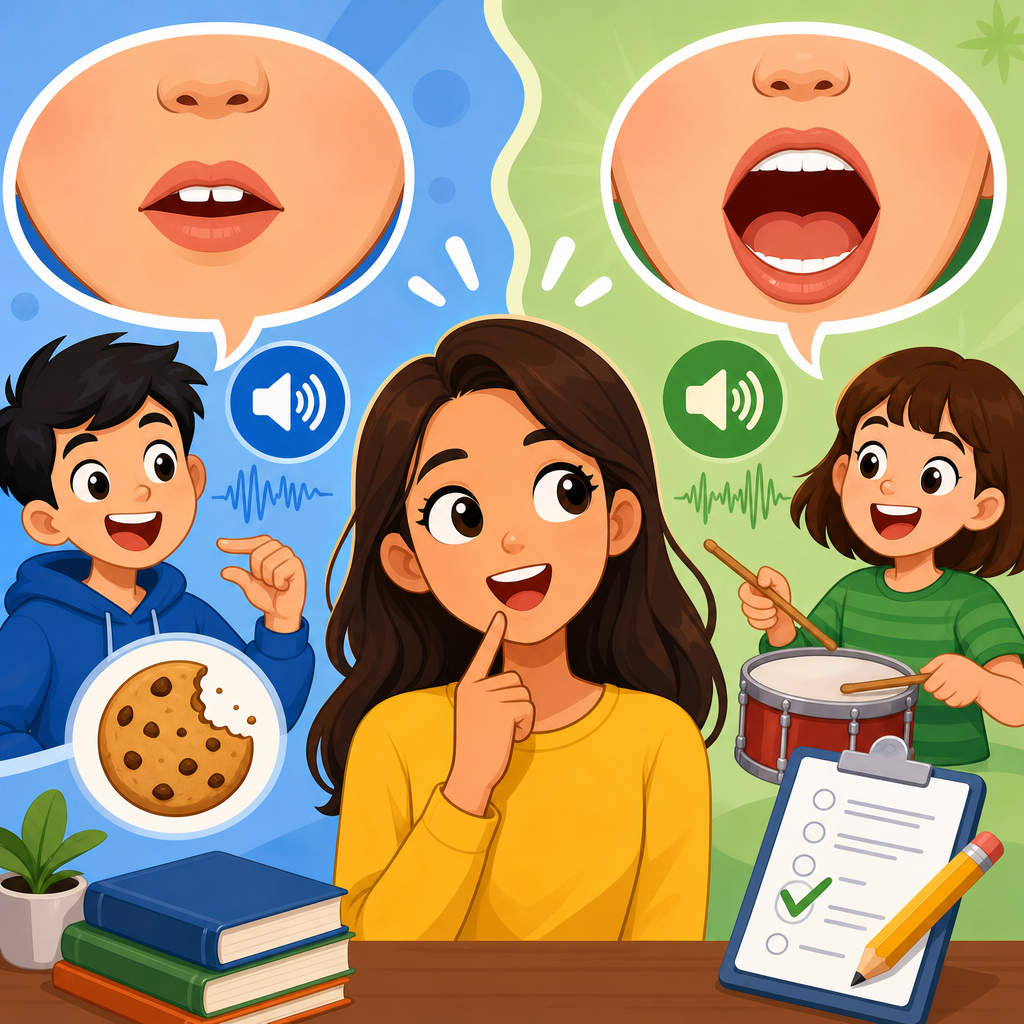
Minimal pairs help English learners hear and produce small sound differences that change meaning, and “bit” versus “beat” is one of the most useful pairs to master early. In pronunciation teaching, a minimal pair is two words that differ by only one sound, such as /bɪt/ and /biːt/. That single vowel contrast can affect clarity in everyday speech, listening tests, class participation, and job interviews. I have taught this pair to beginner and advanced ESL learners, and it consistently reveals the same challenge: many students can read the words correctly but still merge the sounds when speaking fast. This article serves as a hub for the miscellaneous side of speaking practice by explaining mouth position, common errors, audio training methods, and a short mini-quiz you can use immediately.
The key difference is vowel quality and length. “Bit” uses the short lax vowel /ɪ/, while “beat” uses the long tense vowel /iː/. In plain terms, /ɪ/ is shorter, slightly lower, and more relaxed. /iː/ is longer, higher, and produced with more muscular tension in the tongue. Learners whose first language has only one similar front vowel often substitute a single sound for both words. Spanish speakers, for example, may use something close to /i/ for each word. Some Arabic, Japanese, Korean, and Portuguese speakers also need targeted listening and production practice. Mastering this contrast matters because it improves intelligibility across many common words: live/leave, sit/seat, lick/leak, and fill/feel. Once learners can control this pair, broader speaking accuracy usually improves.
Mouth Position for “Bit” and “Beat”
To pronounce “bit,” start with the lips relaxed and only slightly spread. The jaw is a little more open than in “beat.” The front of the tongue lifts toward the front-middle area of the mouth, but it does not rise as high or tense as much. Keep the sound short: /bɪt/. To pronounce “beat,” spread the lips a bit more, raise the tongue higher and farther forward, and add clear tension. The vowel should be held longer: /biːt/. A practical coaching cue I use is this: “bit” sounds quicker and softer in the mouth, while “beat” feels stretched and focused. Students often improve when they watch themselves in a mirror and compare lip spread, jaw opening, and vowel length side by side.
Length alone is not the whole story. Many learners hear “beat” as simply a longer “bit,” but native speakers rely on both duration and tongue position. If you say /bɪ/ and just hold it longer, the result may still sound closer to “bit.” The tongue must move higher and tenser for /iː/. Another useful cue is facial energy. In “beat,” the cheeks often feel slightly tighter because the lips spread more. In “bit,” the face stays more neutral. These details matter because pronunciation is physical. When students cannot hear the contrast well, I shift to articulation first. Once they can feel two distinct mouth shapes, their listening usually becomes sharper too.
Why ESL Learners Confuse This Minimal Pair
The main reason learners confuse “bit” and “beat” is first-language sound mapping. Your brain categorizes new sounds using the nearest familiar category. If your language does not separate /ɪ/ and /iː/, both English vowels may be stored as one mental sound. That is why learners can know the spelling, understand the rule, and still say “beach” when they mean “bitch,” or “sheet” when they intend a different word. Another issue is English spelling. The letter “i” can represent several sounds, and vowel teams like “ea” often suggest /iː/, but not always. Learners who rely on spelling instead of phonemic patterns usually progress more slowly in speaking.
Speed and stress create additional problems. In connected speech, vowels shorten, consonants link, and attention shifts to meaning. A student may say “I need a seat” clearly in isolation, then reduce it carelessly in a sentence. Classroom success therefore depends on moving from single words to phrases and spontaneous speech. Common practice frames include “a bit of,” “beat the record,” “sit here,” and “seat here.” Recording these phrases reveals errors more honestly than mirror work alone. When I review student recordings, I often notice that final consonants are fine; the real issue is the vowel target before them. That is encouraging, because a precise vowel fix can improve many words at once.
Audio Tips That Actually Improve Listening and Pronunciation
The fastest gains usually come from short, focused audio drills rather than long passive listening. Start with discrimination practice: listen to two words and identify which one you hear, “bit” or “beat.” Many learners benefit from minimal-pair tools in Cambridge Dictionary, Forvo, YouGlish, Rachel’s English, BBC Learning English, and the International Phonetic Alphabet charts from the British Council. Use one reliable model at first, preferably General American or standard Southern British, and stay consistent. If you switch accents too early, subtle vowel differences become harder to isolate. Once the contrast is stable, expand to multiple speakers so your ear learns the sound category rather than one person’s voice.
Shadowing is the next step. Play a short clip, pause, and repeat immediately with the same rhythm and vowel length. Record yourself on a phone, then compare waveforms or durations in apps such as Praat or even a basic voice memo display. You do not need advanced phonetics software, but visual feedback helps. In my classes, learners improve faster when they mark “short” for /ɪ/ and “long” for /iː/ on transcripts and then read aloud. Keep practice in sets of five to ten pairs: bit/beat, sit/seat, live/leave, fill/feel, and chip/cheap. Accuracy matters more than volume. Three careful minutes daily usually beat thirty unfocused minutes once a week.
Practice Words, Sentences, and a Mini-Quiz
To build automatic control, move from words to phrases to meaning-based sentences. Begin with clear contrasts: bit/beat, rid/read, slip/sleep, grin/green, and mitt/meat. Then place them in short sentences: “The beat is loud,” “I ate a bit,” “Please sit,” “Please take a seat.” Context forces your brain to connect sound with meaning, which is what real conversation requires. If you are teaching this sound, ask learners to underline the target vowel, say the word alone, then say the full sentence twice: once slowly and once at natural speed. That sequence reduces the common problem of sounding correct in drills but inaccurate in spontaneous speech.
| Pair | /ɪ/ word | /iː/ word | Quick cue |
|---|---|---|---|
| 1 | bit | beat | short and relaxed vs long and tense |
| 2 | sit | seat | slightly open jaw vs higher tongue |
| 3 | live | leave | quick vowel vs stretched vowel |
| 4 | fill | feel | centralized lax vowel vs forward tense vowel |
| 5 | ship | sheep | less lip spread vs more lip spread |
Now try this mini-quiz. Part one, listening or self-testing: which word has /iː/? 1) bit or beat, 2) fill or feel, 3) sit or seat. Correct answers: beat, feel, seat. Part two, production: read these aloud and record yourself: “I need a seat,” “I need to sit,” “She feels cold,” “Please fill it.” Part three, meaning check: choose the correct word. “The music has a strong ___.” Answer: beat. “Just a ___ more time.” Answer: bit. If you want a stronger challenge, shuffle the words, wait ten minutes, and test yourself again without looking at the spellings. Delayed recall shows whether the contrast is becoming automatic.
Building a Speaking Routine and Expanding Beyond This Pair
“Bit” versus “beat” is a gateway contrast for the broader miscellaneous speaking hub because it trains the exact skills learners need across pronunciation work: noticing, controlling mouth position, using audio feedback, and carrying accuracy into real speech. A solid weekly routine is simple. Day one, listen and identify. Day two, repeat and record. Day three, practice in short sentences. Day four, use the target words in free speaking for one minute. Day five, review mistakes and compare a new recording with your first one. This cycle works because pronunciation improvement depends on repetition with feedback, not on memorizing abstract rules. Teachers can extend the same method to /ɛ/ versus /æ/, /ʊ/ versus /uː/, and voiced versus voiceless final consonants.
The most important takeaway is that clear pronunciation comes from small, measurable adjustments. For “bit,” keep the vowel short, relaxed, and slightly lower. For “beat,” make it longer, tenser, and higher in the mouth. Use reliable audio models, record yourself often, and practice in phrases instead of isolated words only. If you are building stronger speaking skills, treat minimal pairs as daily training, not occasional correction. They sharpen listening, improve intelligibility, and increase confidence in conversations, presentations, and exams. Start with the mini-quiz in this article, then expand to related pairs like sit/seat and fill/feel. A few focused minutes today can make your English sound clearer the next time you speak.
Frequently Asked Questions
1. What is the difference between “bit” and “beat” in English pronunciation?
The difference between “bit” and “beat” is the vowel sound in the middle of the word. “Bit” is pronounced /bɪt/, using the short, relaxed vowel /ɪ/, while “beat” is pronounced /biːt/, using the longer, tenser vowel /iː/. Even though the spelling difference looks small, the sound difference matters because these are different words with different meanings. In everyday conversation, saying one instead of the other can confuse listeners, especially in short sentences where context is limited.
A helpful way to think about it is this: “bit” has a shorter, more central vowel, and “beat” has a longer, more forward vowel. In “bit,” the tongue is high but slightly lower and more relaxed than in “beat.” In “beat,” the tongue is higher and closer to the front of the mouth, and the lips are usually spread a little more. Many ESL learners can hear that one word is “shorter” and one is “longer,” but the real key is not length alone. It is also about tongue position, mouth tension, and vowel quality.
This is exactly why “bit” and “beat” are taught as a minimal pair. A minimal pair contains two words that differ by just one sound, and that one sound changes meaning. Practicing pairs like /bɪt/ and /biːt/ trains your ear and your mouth together. It improves listening accuracy, pronunciation clarity, and confidence in speaking. This contrast is especially important for learners whose first language does not distinguish these two vowels clearly, because they may hear both words as “the same” until they train on the contrast repeatedly.
2. How should my mouth and tongue move when I say “bit” versus “beat”?
For “bit,” your mouth should stay fairly relaxed. The vowel /ɪ/ is produced with the tongue high in the mouth, but not as high or as tense as the vowel in “beat.” The front of the tongue lifts, but the shape is softer and less extreme. Your lips are usually neutral or only slightly spread. The sound is quick and relaxed, so “bit” should not feel stretched or strongly held. If you make it too long or too tense, it may start sounding closer to “beet” or “beat.”
For “beat,” the tongue moves slightly higher and farther forward. The vowel /iː/ is tense, and the sides of the tongue may feel more engaged. The lips are often more spread, almost like a light smile. The sound is also longer than /ɪ/, so you should allow a little more time on the vowel before you finish the final /t/. A useful classroom tip is to compare how your face feels: “bit” feels relaxed and short, while “beat” feels tighter, brighter, and longer.
If you want a practical self-check, stand in front of a mirror and say both words slowly: “bit, beat, bit, beat.” Watch whether your lips spread a little more on “beat.” Also pay attention to jaw movement. The jaw is not dramatically different, but “beat” often feels slightly more controlled and lifted in the mouth. Another effective technique is to place your fingers lightly on the sides of your face to notice tension. Many learners discover that “beat” requires more muscular control than “bit.” This kind of awareness is useful because good pronunciation often begins with noticing small physical differences, not just hearing them.
3. Why do so many ESL learners confuse “bit” and “beat”?
Many ESL learners confuse “bit” and “beat” because their first language may not have the same vowel contrast, or it may organize vowel sounds differently. In some languages, vowel length is not meaningful. In others, there may be one vowel sound that falls somewhere between English /ɪ/ and /iː/. As a result, learners may map both English sounds onto one familiar category from their native language. When that happens, both words can sound nearly identical, even though native English listeners hear them as clearly different.
Another reason is that learners are often taught pronunciation through spelling first, and English spelling is not always reliable. A student may see “i” in “bit” and “ea” in “beat,” but that does not automatically teach the sound contrast. Without focused listening and speaking practice, students may continue pronouncing both words with the same vowel. Fast speech can make the challenge even greater. In real conversation, vowels are influenced by rhythm, stress, and surrounding sounds, so a learner who can pronounce the words well in isolation may still confuse them in connected speech.
There is also a psychological side to the problem. Once learners become comfortable being understood “well enough,” they may not notice this contrast as urgent. But in settings like listening exams, workplace communication, presentations, and interviews, small vowel differences can affect clarity and professionalism. The good news is that this pair responds very well to training. With repeated perception practice, shadowing, recording, and minimal-pair drills, learners usually improve significantly. In my experience, “bit” versus “beat” is one of the most teachable contrasts because the physical and acoustic differences are clear once students know what to listen for.
4. What are the best audio and listening practice tips for mastering “bit” and “beat”?
The best audio tip is to train your ear before expecting perfect production. Start by listening to the two words in isolation from a reliable source such as a dictionary with audio, a pronunciation app, or a teacher recording. Play “bit” and “beat” multiple times and do not repeat immediately. First, simply identify which one you hear. This is called discrimination practice, and it is essential because your mouth usually cannot produce a contrast consistently until your ear recognizes it consistently.
Next, move to listen-and-repeat practice. Play one word, pause, and copy it exactly. Focus on three things: vowel quality, length, and tension. Record yourself and compare your version with the model. Many learners improve quickly once they hear their own recording objectively. A strong method is “same or different” practice. Listen to two words such as “bit–bit,” “beat–beat,” or “bit–beat,” and decide whether they are the same or different. This builds faster sound recognition and prepares you for real conversations, where you do not have much time to analyze.
You should also practice these words in short phrases, not only alone. For example: “a bit,” “little bit,” “beat the drum,” “beat the record.” This helps you hear how the vowel behaves in natural rhythm. Another excellent technique is shadowing. Listen to a short phrase from a native or highly proficient speaker and repeat immediately with the same timing and melody. Finally, use a mini-quiz format with yourself: listen to 10 or 20 items and mark whether you heard “bit” or “beat.” Track your score over time. Consistent, short daily practice is more effective than one long session a week. Even five focused minutes a day can retrain your listening and pronunciation.
5. How can I test myself with a mini-quiz and know if I am improving?
A simple self-test starts with minimal-pair identification. Create two columns labeled “bit” and “beat.” Then use audio from a dictionary, pronunciation site, teacher recording, or text-to-speech tool that clearly distinguishes the vowels. Play one word at a time in random order and write down which word you think you heard. After 10 to 20 items, check your answers. If your score is below about 80%, spend more time on listening before worrying too much about speaking accuracy. If your score is consistently high, begin testing your own production more seriously.
For a speaking mini-quiz, record yourself saying a sequence such as “bit, beat, bit, beat,” then mix them into short sentences like “It’s a bit small” and “They beat us easily.” Leave a few seconds between each item. Later, listen back and ask yourself whether each vowel is clearly distinct. Better yet, ask a teacher, tutor, or speaking partner to identify what they hear without seeing your script. If they can correctly tell which word you intended, that is strong evidence of improvement. If they often hesitate or guess wrong, you likely need more focused work on tongue position and vowel length.
You can also track progress with three practical questions: Can I hear the difference quickly? Can I produce the difference clearly? Can I keep the difference in full sentences and natural conversation? Real improvement means all three areas are getting stronger. Do not judge success only by whether you can say the words slowly in isolation. The real goal is automatic control in normal speech. That is why short quizzes, repeated over time, are so useful. They show whether your ear is sharper, your mouth is more accurate, and your confidence is growing. With regular practice, “bit” and “beat” usually become a reliable contrast rather than a recurring pronunciation problem.





