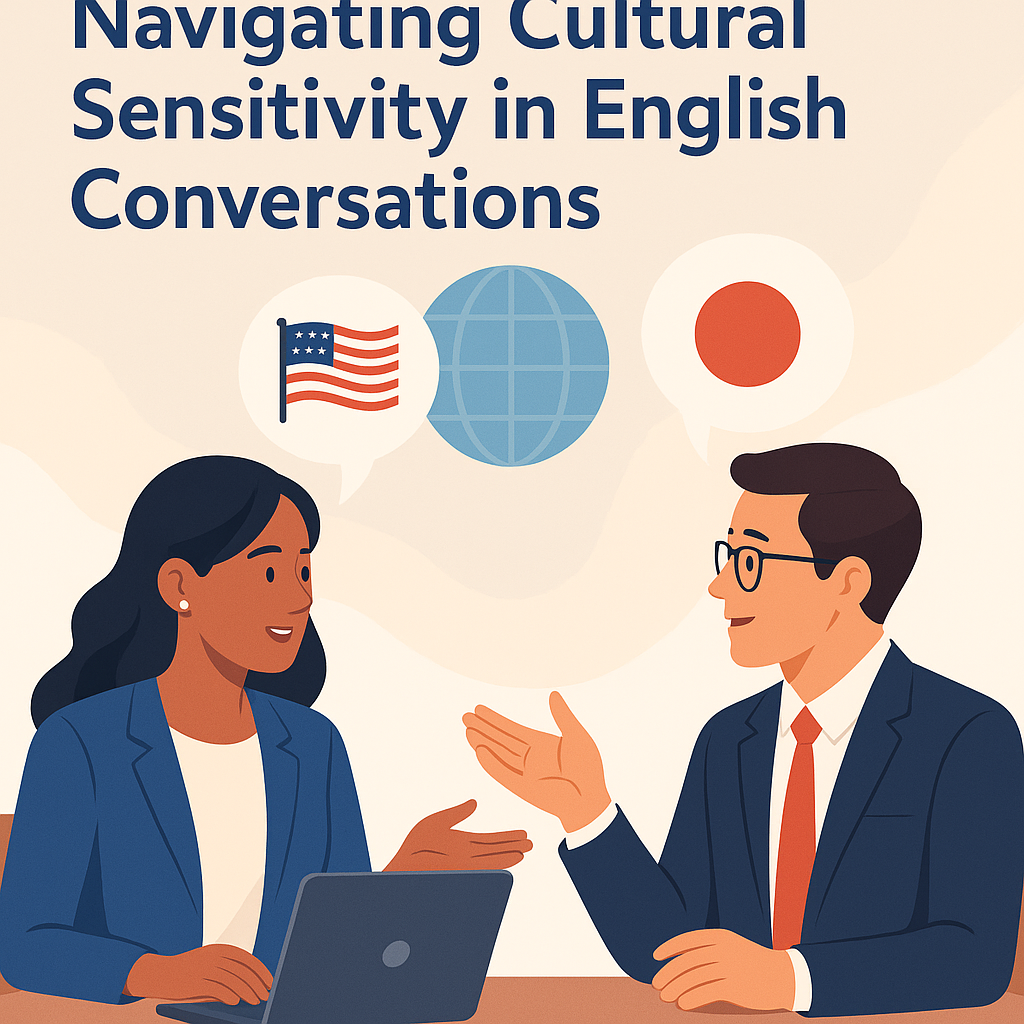
In our increasingly globalized world, cultural sensitivity in English conversations becomes more crucial than ever. Cultural sensitivity is the awareness and respect of different cultural customs, beliefs, and practices. This aspect of communication can affect personal interactions, business dealings, and diplomatic negotiations. Navigating it successfully can make or break engagement quality across cultural lines. Understanding cultural nuances isn’t just a matter of politeness but a vital aspect that can influence global relationships, work dynamics, and social cohesion.
Why does cultural sensitivity matter? Miscommunication arising from cultural insensitivity can lead to misunderstandings, offense, and even conflict. Such incidents can escalate, leading to strained relationships and failed business deals. Conversely, cultural competence enriches conversations, fosters mutual respect, and strengthens relationships. Whether you’re working internationally, studying abroad, or engaging in multicultural environments, fostering a culturally sensitive mindset is pivotal. This article aims to guide you through understanding, adopting, and navigating cultural sensitivity in English conversations.
Understanding Cultural Sensitivity: An Essential Skill
To grasp cultural sensitivity, one must first understand what culture entails. Culture encompasses the collective norms, values, traditions, and customs shared by a specific group of people. Cultural sensitivity means recognizing these elements’ importance and knowing how to communicate respectfully and effectively with individuals from different backgrounds.
For example, in Japan, silence in conversations isn’t awkward but often signifies respect and thoughtfulness. Conversely, in Western cultures, pauses may be interpreted as discomfort or a lack of engagement. Misinterpreting such differences can lead to misunderstandings. To be culturally sensitive, you must adapt your communication style to meet the cultural norms of your conversation partner, which involves listening actively, observing cues, and sometimes altering speaking pace or body language.
The Role of Language in Cultural Sensitivity
Language carries cultural assumptions and biases that may lead to misunderstandings if not correctly interpreted. Learning the English language involves more than vocabulary and grammar; it also requires understanding cultural contexts in which words and phrases are used. Common expressions or idioms may not translate directly or might hold different meanings across cultures, causing confusion or misinterpretation.
Consider the term “break a leg,” commonly used in English-speaking countries to wish someone good luck. Without cultural context, this phrase could easily perplex or even alarm someone from a different background. Understanding the cultural context behind such expressions is key. Engaging in dialogue with cultural sensitivity means ensuring clarity and checking in with your conversation partner to confirm mutual understanding.
Overcoming Stereotypes for Effective Communication
Cultural stereotypes can hinder effective communication in English conversations. Stereotypes are generalized perceptions about a group that may not reflect individual reality. Assuming that every individual of a particular culture behaves similarly undermines unique personal characteristics and can offend or alienate people.
For instance, assuming that all Italians are expressive speakers may lead to misjudging an introverted Italian person’s conversational style. It’s essential to approach each interaction with an open mind, free of preconceived notions, by being curious about the individual’s unique cultural experiences.
- Avoid generalizations: Every culture harbors diversity; not everyone conforms to perceived cultural norms.
- Ask questions: Engaging with curiosity rather than assumptions can yield effective and insightful conversations.
- Practice active listening: This involves understanding a person’s perspective without judging or interrupting them.
Non-Verbal Cues: Beyond Words in Cultural Sensitivity
Cultural sensitivity also entails acknowledging non-verbal cues, which play a significant role in communication. Gestures, expressions, and attitudes can vary immensely between cultures. Non-verbal communication, like eye contact, touch, and personal space, carries different meanings across cultures and significantly affects conversation outcomes.
For example, maintaining direct eye contact is considered a show of confidence and sincerity in many Western cultures. However, in some Asian cultures, prolonged eye contact may be seen as disrespectful or intimidating. Misreading these non-verbal cues can cause discomfort, or even offense, feeling disconnected in conversation.
Being mindful of non-verbal nuances involves observing reactions, reading body language, and adapting accordingly. This flexibility is a cornerstone of cultural sensitivity and can be improved over time through conscious practice and awareness.
Cultural Sensitivity in Business and Professional Settings
Cultural sensitivity assumes a critical role in business environments, where collaboration often involves individuals from diverse cultural backgrounds. Ignoring cultural nuances can cause miscommunications that may severely affect business relationships and negotiations.
An illustrative case involves a meeting between American and Japanese business executives. While Americans may value directness and decisiveness, Japanese counterparts may prioritize consensus and avoid overt disagreement to maintain harmony. Recognizing these cultural attitudes affects the tone, pace, and structure of messaging during negotiations.
| American Business Culture | Japanese Business Culture |
|---|---|
| Value directness and quick decision-making. | Favours consensus and subtlety in agreement-building. |
| Individual achievement is emphasized. | Group harmony and collective decision-making are prioritized. |
| Casual communication can be seen as approachable. | Formal communication may reflect respect and seriousness. |
Understanding these differences helps in adapting communication strategies to avoid misinterpretations and solidify cooperative partnerships. Training sessions focusing on cultural hub’s understanding and research into cultural practices can significantly improve professional intercultural exchanges.
Case Study: Cultural Sensitivity in Education
In educational settings, cultural sensitivity shapes how teachers interact with students from diverse backgrounds. Recognizing and valuing cultural diversity plays a role in fostering an inclusive learning environment. Instructional strategies accommodating cultural differences encourage participation, engagement, and access to equitable educational experiences.
For example, culturally responsive teaching methods integrate students’ cultural contexts into the learning process, making education more relevant and relatable. A teacher from a Western English-speaking country working with a classroom of students from various cultural backgrounds should consider cultural holidays, storytelling traditions, and learning styles when planning lessons.
Methods such as differentiated instruction—tailoring teaching strategies to cater to different cultural learning styles—empower students to learn effectively without feeling excluded. This approach to educator-student dialogue fosters a broader understanding and appreciation of multiculturalism.
The Role of Technology in Facilitating Culturally Sensitive Conversations
Technology is transforming how we navigate cultural sensitivity in English conversations. Digital tools like translation applications, multicultural communication platforms, and language learning apps have made intercultural interactions more seamless than ever before.
Technological innovations aid in bridging communication gaps with real-time translating capabilities that support conversation in different dialects. For example, employing a multilingual chat application enables timely, culturally nuanced conversations among team members dispersed across global regions. Virtual reality role-plays and language immersion programs provide immersive environments to practice culturally sensitive English conversations in realistic settings.
These technological solutions are invaluable in enhancing our understanding of cultural contexts, facilitating language adaptation, and improving conversational confidence, ultimately fostering inclusivity and tolerance.
Practical Steps to Develop Cultural Sensitivity
Becoming culturally sensitive in English conversations entails practice, awareness, and intent. Here are practical steps to developing this skill:
- Educate Yourself: Study different cultures, learn about their histories, value systems, and communication styles.
- Engage in Cultural Exchange: Seek relationships with individuals from diverse cultures and participate in cultural events to gain firsthand experiences.
- Reflect on Your Communication: Consider how your messages are perceived by individuals from diverse backgrounds and seek feedback.
- Embrace Flexibility: Be willing to adjust your communication style based on the cultural context of your conversation partner.
- Practice Empathy: Develop the ability to place yourself in others’ positions, understanding their cultural perspectives and challenges.
Conclusion: Embracing Cultural Sensitivity for Enriched Interactions
In summary, cultural sensitivity in English conversations is pivotal for effective, respectful, and positive global interactions. Awareness and integration of cultural differences can mitigate conflicts, foster understanding, and unite diverse groups towards common goals. The benefits are far-reaching, spanning personal growth, improved relationships, and increased opportunities for collaboration.
By understanding cultural nuances, meticulous attention to language use, practicing adaptability, and utilizing technology, you can ensure effective and meaningful conversations. Consider embracing cultural differences as opportunities for learning, growing, and innovating.
Take the first step today by committing to continuous learning, exploring global cultures, and exchanging cultural insights with others. Your effort to communicate culturally sensitively can create impactful and memorable interactions that transcend borders.
Frequently Asked Questions
1. What does cultural sensitivity mean in the context of English conversations?
Cultural sensitivity in English conversations refers to the ability to recognize, understand, and respect different cultural customs, beliefs, and practices during interactions. It requires being aware that people from diverse backgrounds may have differing views, communication styles, and approaches to social interactions. In English conversations, this means using language that is inclusive and respectful, avoiding stereotypes or assumptions, and being mindful of cultural differences in communication styles.
This awareness allows individuals to engage with others in a way that’s respectful and considerate, facilitating smoother interactions whether in casual, professional, or diplomatic contexts. Displaying cultural sensitivity means acknowledging that while English is a common language, it is spoken and understood within various cultural frameworks that influence conversation dynamics.
2. Why is cultural sensitivity important in global communication?
Cultural sensitivity is crucial in global communication as it directly impacts how effectively individuals can connect with others from different backgrounds. In our interconnected world, many interactions happen across cultural borders due to business, travel, digital communication, and international collaboration. Without cultural sensitivity, these interactions can lead to misunderstandings, offense, and even conflict.
Appreciating and respecting cultural differences encourages more productive and positive exchanges, fostering trust and openness. It also enhances mutual understanding, reduces biases and prejudices, and promotes inclusivity. In business, being culturally sensitive can lead to successful negotiations and partnerships, while in personal interactions, it strengthens relationships and breaks down barriers to communication.
3. How can I develop cultural sensitivity when engaging in English conversations?
Developing cultural sensitivity involves a conscious effort to educate oneself about other cultures and adapt one’s communication style accordingly. A good starting point is to actively listen and pay attention to how individuals from different cultures express themselves. Observing non-verbal cues and acknowledging different perspectives without judgment can enhance understanding.
Reading about and experiencing diverse cultures, either through travel or media consumption, can broaden your horizons. Engaging in cultural training or attending workshops can also equip you with practical skills in navigating multicultural settings. Being open-minded and showing empathy in your conversations are fundamental. Asking questions in a respectful manner to understand cultural practices further demonstrates your willingness to learn and respect others.
4. What are some common pitfalls to avoid for cultural sensitivity in English conversations?
Common pitfalls include making assumptions about others based on stereotypes or single stories, which can lead to misunderstandings or offensive remarks. It’s important to steer clear of generalizations and instead approach every interaction with an open mind. Avoiding culturally insensitive jokes, language, or gestures that may seem innocuous in one culture but offensive in another is essential.
Another pitfall is neglecting the importance of non-verbal communication. Variances in body language, eye contact, and personal space can convey different meanings across cultures and should be navigated carefully. Lastly, failing to recognize one’s own cultural biases can hamper efforts to communicate sensitively. Reflecting on your own cultural norms and how they influence your behavior and assumptions is a necessary step.
5. Can cultural sensitivity impact business conversations? If so, how?
Yes, cultural sensitivity significantly impacts business conversations as it can determine the success or failure of business dealings. Culturally sensitive communication in business improves negotiation processes, helps to build and maintain partnerships, and enhances workplace harmony. Businesses operating in multicultural environments must regularly interact with international colleagues, clients, and stakeholders.
Cultural sensitivity enables professionals to appreciate business etiquette that varies across borders—such as the degree of formality, negotiation styles, hierarchical structures, or decision-making processes. Being attuned to these differences reduces friction and fosters successful collaboration. It also entails respecting local customs, traditions, and legal stipulations which are vital for international operations. Ultimately, businesses that prioritize cultural sensitivity often enjoy a more positive brand reputation and greater market success.