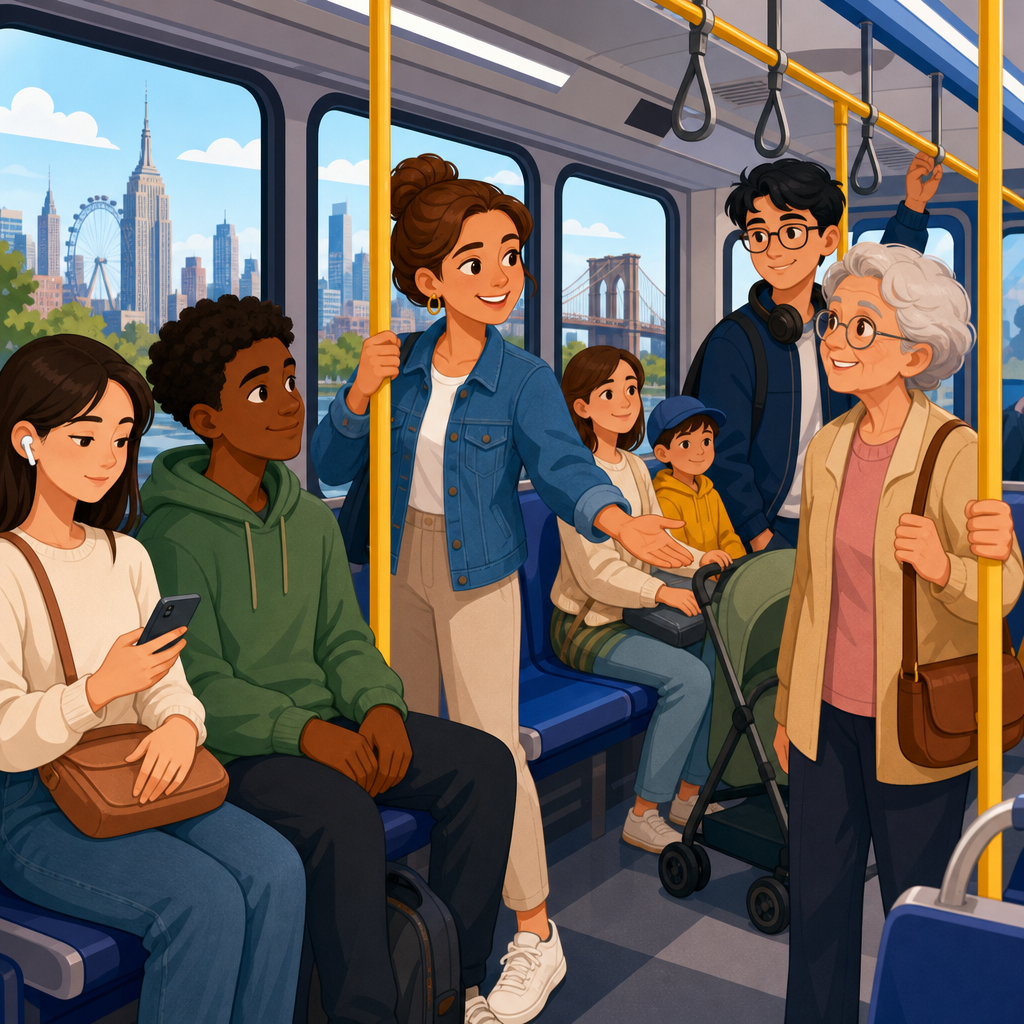
Public transportation etiquette in English-speaking cities is the set of social rules that helps buses, subways, trams, and commuter trains work smoothly for everyone. For learners of English, these rules matter almost as much as vocabulary, because a polite rider is judged not only by grammar but by timing, space, tone, and awareness. In cities such as New York, Toronto, London, Sydney, and Dublin, people may forgive an accent, but they notice quickly if someone blocks a door, plays audio aloud, or ignores a line. Good transit manners reduce conflict, speed boarding, and make crowded systems more bearable.
When I have coached international students before their first weeks in major English-speaking cities, transportation questions come up immediately: Where do I stand? Do I talk to strangers? Should I offer my seat? The answers are practical, and they differ slightly by city, but the core expectations are consistent. Public transportation etiquette includes queuing, giving priority seating to people who need it, keeping noise low, managing bags, respecting personal space, and following unspoken boarding and exiting patterns. These habits communicate respect without requiring much conversation, which is why they are especially useful for ESL learners who want to avoid awkward moments while navigating daily life.
Etiquette on transit also reflects deeper cultural values. In many English-speaking cities, riders expect efficiency, fairness, and minimal intrusion. That means first come, first served in a line, standing to one side on escalators where required, and keeping phone calls brief. It also means understanding that “public” does not equal “social.” Some systems feel chatty, especially buses in smaller cities, while downtown commuter rail can be almost silent during rush hour. Knowing the difference helps you read the room and act appropriately.
Queueing, boarding, and the flow of movement
The first rule of public transportation etiquette in English-speaking cities is simple: do not interrupt the flow. Let passengers exit before you board. Stand clear of doors, even if the vehicle is crowded and you are worried about missing a spot. On buses, many riders line up at the stop rather than crowding the curb. In London and Toronto, queueing is a strong norm; cutting the line is seen as rude even when nobody says anything. In New York, lines may look looser, but order still matters, especially at airport buses and express routes.
Watch the local boarding pattern. Some tram and train systems use all doors, while many buses require entry at the front and exit at the rear. If payment happens on board, have your card, pass, or exact fare ready before you reach the driver. Searching through a wallet at the front step delays everyone behind you. In cities using contactless payment, such as London with Oyster and bank cards or Sydney with Opal and contactless tap-on, riders are expected to move efficiently once they reach the validator.
Escalator etiquette is another common source of mistakes. In London, the standard phrase is effectively “stand on the right, walk on the left.” On Washington, D.C., Metro escalators, the same rule usually applies. If you stop in the walking lane with luggage, you may hear an irritated “excuse me.” These are not trivial details. During peak hours, movement rules are part of how cities protect capacity and reduce stress.
Seats, space, and priority rules
Seat etiquette is where courtesy becomes highly visible. Priority seats are meant for older adults, pregnant passengers, disabled riders, and anyone with limited mobility. The expectation in English-speaking cities is not merely to move when asked, but to notice need proactively. Many systems label these seats clearly, yet the social rule extends beyond marked areas. If the carriage is full and someone boards with a cane, crutches, or a stroller, looking down at your phone will not hide that you saw them.
Bags should never occupy a seat when people are standing. Backpacks are a frequent problem on crowded transit, especially during rush hour. In practice, experienced riders remove backpacks and hold them low by their legs to avoid hitting others when turning. The same principle applies to suitcases: keep them close, out of aisles, and away from doors. On commuter rail, putting your feet on seats is widely viewed as disrespectful because it dirties shared space.
Personal space matters even in a crowd. If seats are narrow, avoid “manspreading,” heavy leaning, or stretching into the next passenger’s area. If you must stand, move into the vehicle instead of clustering near the entrance. Door spaces are for circulation, not for camping. Riders who stay planted there force others to squeeze around them and slow every stop.
| Situation | Expected behavior | Why it matters |
|---|---|---|
| Passenger exits train | Wait to the side before boarding | Keeps doors clear and speeds service |
| Priority rider boards | Offer your seat promptly | Shows awareness and prevents discomfort |
| Crowded carriage with backpack | Remove it and hold it low | Prevents bumping and frees space |
| Escalator in busy station | Stand on one side, leave one side open | Maintains pedestrian flow |
| Phone call on bus or train | Keep it short and quiet, or avoid it | Reduces noise in shared space |
Noise, conversation, and digital manners
Many newcomers assume the main challenge on transit is physical crowding, but sound is often the bigger issue. Across English-speaking cities, one rule is nearly universal: use headphones, and keep them low enough that others cannot hear your music or videos. Playing audio aloud on a bus or subway is one of the fastest ways to appear inconsiderate. The same applies to speakerphone calls, which are strongly disliked because they force everyone nearby into your conversation.
Phone etiquette is not identical everywhere. In smaller cities or on neighborhood buses, brief conversation with the driver or another passenger may feel normal. In big-city commuter systems, especially during morning rush hour, people often prefer silence. A good guideline is to match the environment. If the carriage is quiet, lower your voice or wait. If you need to take a call, keep it short, practical, and free of personal details. Saying, “I’m on the train, I’ll call you back,” is standard and polite.
Conversation with strangers should also be situational. Friendly remarks about delays, weather, or a missed stop can be fine, but long personal questions may feel intrusive. This is where broader cultural communication habits matter. If you want a useful baseline for reading casual interaction in the United States, this guide on American small talk rules that surprise ESL learners helps explain why brief, light exchanges work better than intense conversation with strangers.
Another overlooked detail is alert fatigue. Constant notifications, loud ringtones, and repeated device sounds can irritate riders in tight spaces. Setting your phone to vibrate before boarding is a small act of courtesy that experienced commuters appreciate.
Cleanliness, safety, and city-specific nuance
Cleanliness is shared responsibility. Eating full meals on transit is discouraged in many systems because of smells, spills, and trash, though a closed drink or small snack may be tolerated depending on the city. London Underground rules are stricter in some contexts than what riders might accept on a long commuter train in Australia or Canada. The safest assumption is simple: if the food is hot, messy, or aromatic, wait until you get off. Always take litter with you, even if bins are not nearby.
Safety etiquette includes awareness as much as politeness. Move away from platform edges, allow space for wheelchairs and strollers, and do not hold doors unless there is an obvious need. On many systems, forcing doors can delay service or trigger faults. If someone appears lost, a short offer such as “Do you need help finding the platform?” is welcome, but keep valuables secure and avoid creating congestion while helping.
There are city-level differences worth noting. London riders often value orderly queueing and escalator discipline. New Yorkers may seem less formal, yet they strongly expect fast boarding, direct movement, and low tolerance for blocking doors. In Toronto, apologizing and making room are common social lubricants. In Sydney, ferry and train riders typically respect quiet zones and priority seating norms. The lesson is not to memorize stereotypes, but to observe local patterns quickly and follow the most considerate version of them.
For ESL learners, the best strategy is to treat transit as a language-free test of cultural fluency. Notice signs, floor markings, recorded announcements, and what regular commuters do. If you are unsure, choose the action that creates more space, less noise, and less delay for others. That decision is almost always correct.
Public transportation etiquette in English-speaking cities comes down to awareness, efficiency, and respect. Queue without pushing, let people off before you get on, keep bags and bodies out of the way, offer seats to those who need them, and keep noise under control. These behaviors are not fancy cultural extras. They are daily operating rules that help millions of strangers share limited space with minimal friction.
For English learners, mastering these habits brings immediate benefits. You avoid embarrassing mistakes, read urban social cues faster, and project confidence even when your language skills are still developing. Transit etiquette is one of the clearest ways to show that you understand how public life works in your new environment. Pay attention on your next ride, copy the best local habits, and practice them until they feel automatic.
Frequently Asked Questions
What are the most important public transportation etiquette rules in English-speaking cities?
The most important rules are simple, but they matter a great deal in busy systems. Let people get off before you get on, move away from the doors once you enter, keep your voice low, and avoid playing music or videos without headphones. In cities such as New York, London, Toronto, Sydney, and Dublin, these habits are seen as basic signs of awareness and respect. Even if local transit systems differ in layout or ticketing, these social expectations are remarkably consistent.
Space is another major part of etiquette. Keep your bags close to your body, avoid placing them on empty seats when the vehicle is crowded, and do not spread out into other people’s personal space. If you are standing, hold a pole or strap securely so you do not lose balance and bump into others. If you are sitting, be aware of how much room your knees, elbows, or shopping bags take up. Riders notice these things quickly, and considerate body language often communicates politeness more clearly than words.
Timing also matters. Be ready before your stop so you do not push through people at the last second, and if you need to board, do not block the entrance while checking your phone or searching for your fare card. In many English-speaking cities, public transportation runs efficiently only when people move with awareness. A polite rider is not just quiet; they are predictable, prepared, and easy for others to move around.
Is it rude to talk loudly or use my phone on buses, trains, or subways?
In most English-speaking cities, loud talking is one of the fastest ways to seem inconsiderate on public transportation. Speaking quietly to a friend is usually fine, and a short phone call may be acceptable if necessary, but long, animated, or speakerphone conversations are widely viewed as rude. The issue is not only noise level; it is the assumption that everyone else should listen to your conversation. In crowded or enclosed spaces, people expect a shared environment with minimal disturbance.
Using your phone is normal, but how you use it matters. Watching videos, scrolling social media, or sending messages is generally acceptable if the sound is off or headphones are used. Playing audio aloud, even briefly, is strongly frowned upon. Many riders interpret this as a lack of awareness, especially during commuting hours when people may be tired, reading, working, or simply hoping for a quiet trip. If you must take a call, keep it short, lower your voice, and avoid discussing highly personal matters.
There is also a cultural tone to consider. In some places, such as London, the preferred style can feel more reserved, while in cities like New York, the environment may seem louder overall. Even so, the baseline rule remains the same: do not add unnecessary noise to a shared space. If you are unsure, choose the quieter option. On public transportation, restraint is usually interpreted as good manners.
How should I handle seats, especially priority seating, without seeming impolite?
Seats carry strong social expectations on public transportation. In nearly all English-speaking cities, priority seats are intended for older adults, pregnant passengers, people with disabilities, and sometimes riders with injuries or small children. If you are sitting in one of these seats, stay alert and be ready to offer it immediately when someone appears to need it more. Do not wait to be asked if the situation is obvious. Offering your seat promptly is considered respectful and socially aware.
At the same time, it is important not to make assumptions in a way that feels awkward or patronizing. Some disabilities are invisible, and not everyone who needs a seat will look elderly or physically unwell. A polite approach is simple and neutral: “Would you like to sit down?” This avoids embarrassment and gives the other person the choice to accept or decline. If they say no, that is fine. The goal is to be considerate, not dramatic.
General seat etiquette matters too. Do not occupy more than one seat with your bag when the vehicle is busy, and avoid pretending not to notice standing passengers if seats are limited. If the bus or train is nearly empty, personal space is less of an issue, but once it fills up, expectations change quickly. Good etiquette means adjusting to the conditions around you. What seems acceptable in a half-empty carriage may look selfish in a crowded one.
What should I do when boarding, exiting, or standing near the doors?
Door etiquette is one of the clearest signs that someone understands how public transportation works. The standard rule is to let passengers exit first before trying to board. Standing directly in front of the door and forcing your way in is considered rude in every major English-speaking city. The most efficient and polite approach is to stand to the side, allow people to step off, and then enter in an orderly way. This keeps the flow moving and reduces unnecessary tension.
Once you are on board, do not remain in the doorway unless you are getting off immediately. Move inward so others can enter behind you, especially during rush hour. Blocking the doors is a common mistake among inexperienced riders, and it is noticed quickly because it delays everyone. If you are standing near the exit because your stop is next, that is usually acceptable, but stay aware of the people around you and step aside when possible to let others pass.
If the vehicle is crowded and someone says “Excuse me” as they try to get off, respond quickly and calmly by shifting your position. In English-speaking cities, “Excuse me” is often used as a practical signal rather than a complaint. The polite response is action, not irritation. Likewise, if you need to get through a crowd, say “Excuse me” clearly and early rather than pushing silently at the last second. Courtesy and movement work together: the words help, but your awareness matters more.
How can English learners sound polite and confident while using public transportation?
English learners do not need perfect grammar to make a good impression on public transportation. In fact, tone, timing, and a few dependable phrases are often more important than complex language. Useful expressions include “Excuse me,” “Is this seat taken?”, “Could I get by, please?”, “Does this go to downtown?”, and “Thank you.” These are short, natural, and widely understood in English-speaking cities. Used with a calm voice and polite facial expression, they help you sound both respectful and confident.
It also helps to understand that politeness is often shown through behavior before speech. If you have your fare ready, move efficiently, keep your belongings under control, and avoid obstructing others, people are likely to view you positively even if your English is limited. Many native speakers will be patient with an accent or a language mistake, but they may react negatively to behavior that disrupts the shared space. In other words, social fluency matters alongside language fluency.
If you are uncertain, observe the people around you. Notice how loudly they speak, where they stand, when they line up, and how they handle seats and doors. Public transportation etiquette is learned partly through watching others. In English-speaking cities, blending in politely often means being modest, alert, and considerate rather than overly talkative. A rider who is quiet, prepared, and respectful will almost always be seen as polite, regardless of accent or vocabulary level.