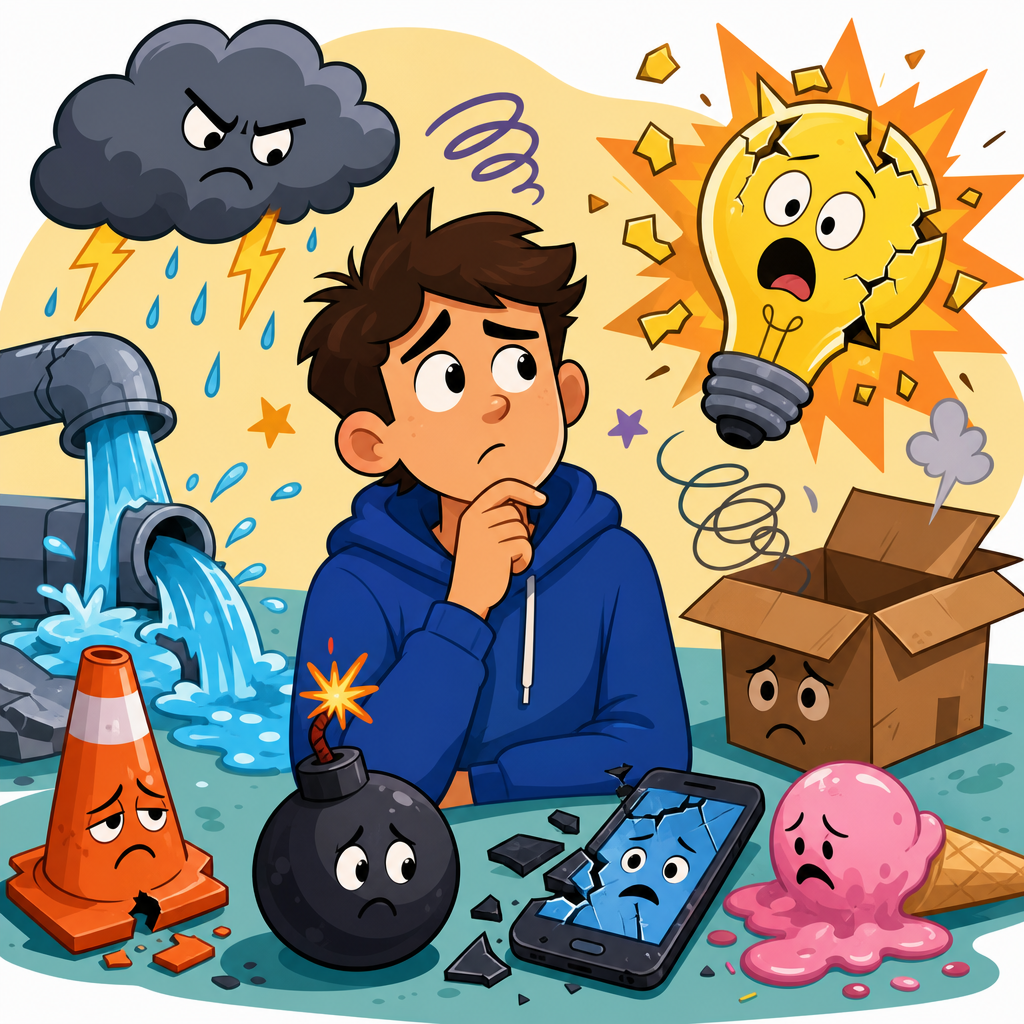
English speakers have a huge inventory of slang for problems, mistakes, and bad ideas, and that vocabulary matters because casual language often carries meanings that dictionaries alone do not capture. If you want to understand movies, office chatter, group texts, or online comments, you need more than formal words like “error,” “difficulty,” or “poor decision.” You need the everyday terms people actually use: words such as mess, screw-up, train wreck, dumpster fire, and recipe for disaster. These expressions do not simply label something negative. They signal tone, emotion, severity, and sometimes social judgment. In practice, choosing the right slang term can tell a listener whether a problem is minor and fixable, embarrassing but harmless, or so obviously misguided that people are laughing before the consequences even arrive.
When I teach conversational English, this is one of the areas learners ask about most, because the difference between similar slang terms is rarely explained clearly. A mess might describe a cluttered room, a tangled plan, or an emotional situation. A blunder usually sounds more formal than screw-up, while fiasco suggests public failure on a bigger scale. Bad idea slang is equally nuanced. Calling something sketchy questions its trustworthiness; calling it a terrible idea criticizes its wisdom; calling it a train wreck waiting to happen predicts visible, almost inevitable collapse. Understanding these shades of meaning helps you speak more naturally and avoid awkward overuse of one catchall word like “problem.”
This topic also matters because slang changes with context. Some expressions fit friendly conversation but sound too blunt in a meeting. Others are common in American English but less frequent in British English, where words like cock-up or shambles may appear more often. Digital culture adds newer terms, while older idiomatic phrases remain surprisingly durable. The key is not memorizing random lists. It is learning how native speakers group these expressions by type: ongoing problems, personal mistakes, and ideas that deserve immediate skepticism. Once you hear those categories, the language becomes easier to decode and much easier to use correctly.
Slang for everyday problems and difficult situations
The most common slang for a general problem is mess. It is flexible, neutral-to-negative, and extremely common. People say, “This project is a mess,” “My schedule is a mess,” or “Their breakup was a mess.” The word implies disorder more than danger. If the situation feels more chaotic and publicly embarrassing, speakers often upgrade to disaster or fiasco. A disaster can be personal or logistical, while fiasco usually suggests an event or plan that failed badly and visibly. “The product launch was a fiasco” means more than inconvenience; it means the failure was obvious to everyone involved.
Other terms emphasize instability. Train wreck describes a situation so uncontrolled that people almost cannot look away. Dumpster fire is harsher and more modern, especially in American speech. It describes something chaotic, incompetent, and unpleasant all at once, such as “The comment section turned into a dumpster fire.” Cluster is a shortened, softened version of a stronger military-origin expression. In everyday use, it means a badly managed situation with multiple things going wrong at once. For milder trouble, headache is common. “This client is a headache” means the issue is annoying and persistent, not catastrophic.
Native speakers also use pain, hassle, and nightmare for problems that create effort. A hassle is inconvenient bureaucracy or extra work. A pain, often expanded to pain in the neck, is a person or task that repeatedly irritates you. Nightmare is stronger. If someone says, “Getting that visa was a nightmare,” they mean the process was exhausting, confusing, or stressful. In British English, shambles is especially useful. It means total disorder, often caused by poor organization. These expressions are best learned in context, because the same event could be a hassle to one person, a nightmare to another, and a fiasco if the whole team saw it fail.
Slang for mistakes, errors, and personal missteps
When the focus moves from the situation to the person who caused it, the vocabulary changes. Screw-up is one of the most common terms for a mistake, especially in American English. As a noun, “That was a screw-up” means an error. As a person, “He is a screw-up” is much harsher and criticizes someone as habitually unreliable. Mess up is the slightly softer verb form: “I messed up the booking.” Because it is common and conversational, it is useful in everyday speech, though still more informal than “made an error.”
Blunder, slip-up, and goof are more specific. A blunder is a significant mistake, often one that should have been avoided. A slip-up sounds smaller and easier to forgive, suggesting a brief lapse rather than deep incompetence. Goof or goof-up usually feels lighter and can even sound playful, depending on tone. In workplaces, I often hear people choose slip-up when they want accountability without humiliation. That nuance matters. Saying “There was a slip-up in the report” invites correction. Saying “This was a total screw-up” raises the emotional temperature immediately.
Some slang highlights poor judgment rather than mechanical error. Dropping the ball, borrowed from sports, means failing to do something you were responsible for. “We dropped the ball on customer follow-up” implies preventable neglect. Boneheaded and dumb move criticize the thinking behind an action. Own goal, common in British-influenced English, refers to harming your own side through your own action. These phrases are especially useful because they describe not just that something went wrong, but how it went wrong: by carelessness, weak attention, bad planning, or self-sabotage.
| Slang term | Typical meaning | Example in plain English |
|---|---|---|
| mess | disorderly problem | “Our filing system is a mess.” |
| fiasco | public, obvious failure | “The event check-in was a fiasco.” |
| screw-up | clear mistake or incompetent error | “Sending the wrong invoice was a screw-up.” |
| slip-up | small, forgivable mistake | “Missing one email was a slip-up.” |
| train wreck | disaster unfolding in plain sight | “The interview became a train wreck.” |
| recipe for disaster | bad plan likely to fail | “No budget and no timeline is a recipe for disaster.” |
Slang for bad ideas and obviously risky plans
English has many direct ways to label a bad idea before it causes damage. The simplest is terrible idea, but slang adds texture. Recipe for disaster is one of the clearest expressions because it predicts failure in advance. If a manager cuts testing time in half and still expects a flawless launch, that is a recipe for disaster. Accident waiting to happen works similarly, but it usually emphasizes safety, negligence, or visible risk. “That loose wiring is an accident waiting to happen” means harm is likely unless someone acts.
Other phrases attack credibility or judgment. Half-baked describes an idea that is underdeveloped, poorly thought through, or rushed. Hair-brained, often spelled harebrained in dictionaries, means wildly foolish. Sketchy does not always mean “bad idea,” but it often signals that a plan, deal, or person feels suspicious or unsafe. Janky usually describes something unreliable, cheaply made, or awkwardly improvised; by extension, a janky plan sounds flimsy from the start. In team discussions, these labels can be useful shorthand, but they can also sound dismissive if used before people have had a chance to explain the reasoning.
Speakers also use colorful warning phrases such as “What could possibly go wrong?” usually said sarcastically when plenty could go wrong. That sarcasm is common in spoken English and online writing. Another useful expression is non-starter, which means an idea is unworkable from the beginning. It is less slangy than dumpster fire but still conversational and common in business settings. If you enjoy idiomatic language more broadly, a solid related resource is this guide to hand idioms in English, which shows how literal words often develop social meanings that learners cannot guess from grammar alone.
How to choose the right term without sounding unnatural
The main rule is to match the slang to the stakes, the setting, and your relationship with the listener. In casual conversation, “I messed up” sounds natural and accountable. In a professional meeting, “There was a process failure” may be wiser than “We had a dumpster fire,” unless the culture is informal and everyone understands the joke. Severity matters too. Calling a minor typo a fiasco sounds exaggerated. Calling a legal compliance failure a hiccup sounds evasive. Good speakers choose slang that fits the scale of the issue and the emotional effect they want.
Register matters just as much. Some terms are safe almost everywhere: mess, headache, hassle, slip-up, and non-starter. Others are blunt or potentially offensive, especially variants built around swear words. Regional habits matter as well. Americans say dumpster fire more often than Britons, while British speakers are more likely to say shambles. Age also plays a role. Younger speakers may use chaotic online-born language more freely, while older professionals may prefer words like fiasco or blunder. Listening to how people around you describe setbacks is the fastest way to calibrate your own choices accurately.
Finally, remember that slang is powerful because it compresses judgment into a few words. Used well, it makes your English sharper, more expressive, and more precise. Used carelessly, it can make you sound rude, theatrical, or vague. The best approach is to learn clusters of meaning: mess for disorder, screw-up for a clear mistake, fiasco for visible failure, and recipe for disaster for a plan that should be stopped early. Build those distinctions into your listening and speaking practice, and you will understand everyday English far more easily. Start noticing these terms in real conversations, then use the mildest fitting option first.
Frequently Asked Questions
What does “slang for problems, mistakes, and bad ideas” actually include?
It includes the informal words and phrases English speakers use when they want to describe something going wrong in a more natural, expressive, or vivid way than formal vocabulary allows. Instead of saying “This situation is difficult,” people often say it is a mess, a nightmare, a cluster, or a train wreck. Instead of calling something an “error,” they might say it was a screw-up, a blunder, a goof, or a mess-up. And instead of saying an idea is “unwise,” they may describe it as a bad call, a terrible idea, a recipe for disaster, or a dumpster fire waiting to happen.
What makes this category important is that these expressions do more than label a problem. They also communicate tone, emotion, and social attitude. For example, mess is broad and common, screw-up usually points to a mistake someone made, train wreck suggests visible chaos, and dumpster fire often implies an embarrassing, almost absurd level of failure. In everyday English, these differences matter. A coworker, friend, or movie character may choose one term over another to sound funny, annoyed, sympathetic, or brutally honest.
So when people talk about slang in this area, they are really talking about a large and flexible set of expressions for failure, confusion, poor planning, awkward outcomes, and harmful decisions. Learning those terms helps you understand not just the event being described, but the speaker’s reaction to it.
Why is it useful to learn slang terms like “mess,” “screw-up,” “train wreck,” and “dumpster fire” instead of just formal words?
Because real-life English runs on tone as much as meaning. Formal words such as “problem,” “mistake,” “failure,” or “bad decision” are clear, but they often sound flat compared with what people actually say in conversations, text messages, office chatter, TV dialogue, and online comments. If someone says, “That meeting was a dumpster fire,” they are not merely saying the meeting had issues. They are saying it was chaotic, embarrassing, and memorable in a very negative way. If they say, “I really screwed that up,” they are taking personal responsibility in a way that sounds more candid and natural than “I made an error.”
These slang terms also help you interpret context faster. In workplace settings, social settings, and media, people often soften criticism, intensify it, or make it humorous through slang. Calling a project a mess may sound mildly frustrated. Calling it a train wreck suggests things are visibly collapsing. Saying a plan is a recipe for disaster means the speaker thinks failure is predictable, not accidental. Without understanding the slang, you can catch the basic idea but miss the force of the message.
There is also a cultural advantage. Movies, stand-up comedy, social media posts, podcasts, and group chats are full of informal language. Dictionaries may define the words literally, but only usage shows how they function socially. Learning slang for problems and mistakes helps you sound more natural, but just as importantly, it helps you avoid misunderstanding humor, sarcasm, criticism, and exaggeration in modern English.
Are these slang expressions interchangeable, or do they have different shades of meaning?
They definitely have different shades of meaning, and that is one of the most important things to understand. Many of these words overlap, but they are not perfect substitutes. A mess is one of the most flexible terms. It can describe a physical disorder, a complicated situation, or emotional confusion. A screw-up usually refers either to a specific mistake or to a person who regularly makes mistakes, depending on context. A train wreck is more dramatic and often suggests that the failure is unfolding in public or is hard to look away from. A dumpster fire is even more colorful, often used for something spectacularly bad, dysfunctional, or embarrassing.
Then there are expressions that focus on bad judgment rather than bad outcomes. A phrase like bad call points to a poor decision. Recipe for disaster suggests that the ingredients for failure are already in place. Terrible idea is straightforward, while more sarcastic English might use phrases like “Yeah, that’ll end well” to imply the exact opposite. In other words, some slang terms describe the problem itself, some describe the mistake that caused it, and some describe the foolish thinking behind it.
Intensity also varies. Goof can sound light and almost harmless. Blunder sounds more serious. Mess-up is common and neutral-informal. Disaster, train wreck, and dumpster fire are much stronger. If you want to speak naturally, it helps to notice not only what each expression means, but how severe, funny, rude, or dramatic it sounds in actual use.
Can I use these slang terms in professional or polite conversation?
Sometimes yes, but you need to pay close attention to setting, relationship, and tone. Some of these terms are casual but widely accepted in everyday professional speech, especially in informal meetings or conversations with familiar coworkers. For example, saying “The rollout was a mess” or “There was a screw-up in scheduling” may sound natural in many workplaces, especially if the environment is relaxed. However, terms like dumpster fire or train wreck are more vivid and can sound harsh, mocking, or unprofessional depending on the audience.
There is also the issue of directness. Saying “I made a mistake” is safer and more neutral than “I screwed up,” even though both may be understood. The slang version sounds more candid and conversational, but it may be too informal for a client, a job interview, a formal email, or a sensitive discussion. Likewise, describing someone else’s plan as a recipe for disaster may be memorable, but it can also sound blunt or dismissive if used carelessly.
A good rule is to match the register of the conversation. In casual speech with friends, teammates, or coworkers you know well, these expressions can make your English sound natural and relatable. In formal writing, customer-facing communication, academic settings, or high-stakes professional situations, it is often better to choose milder language unless you are sure the tone is appropriate. Slang is powerful precisely because it carries attitude, and that means it should be used with intention.
How can I learn to use slang for mistakes and bad ideas naturally without sounding forced?
The best approach is to learn these expressions in context rather than as isolated vocabulary items. Notice who uses them, what kind of situation they describe, and what emotional effect they create. In a sitcom, a character might call a date a train wreck for comic effect. In an office chat, someone might say a spreadsheet error was a screw-up. In an online comment, people may label a failing project a dumpster fire to be funny, dramatic, or critical. The more examples you see, the easier it becomes to understand what sounds natural.
It also helps to group terms by function. Learn one set for general problems, such as mess, nightmare, or shitshow in very informal contexts. Learn another set for mistakes, such as screw-up, goof, blunder, or mess-up. Then learn terms for bad decisions, such as bad call, terrible idea, and recipe for disaster. This makes it easier to choose the right phrase depending on whether you are talking about the situation, the action, or the judgment behind it.
Finally, start by using the more common and flexible expressions first. Words like mess, screw-up, and bad idea are easier to place naturally than highly dramatic or trendy phrases. Listen for tone, copy realistic sentence patterns, and avoid overusing the most colorful slang. If every small inconvenience becomes a dumpster fire, your English may sound exaggerated. Natural use comes from balance: understanding the literal meaning, the emotional tone, and the social setting in which each expression works best.