
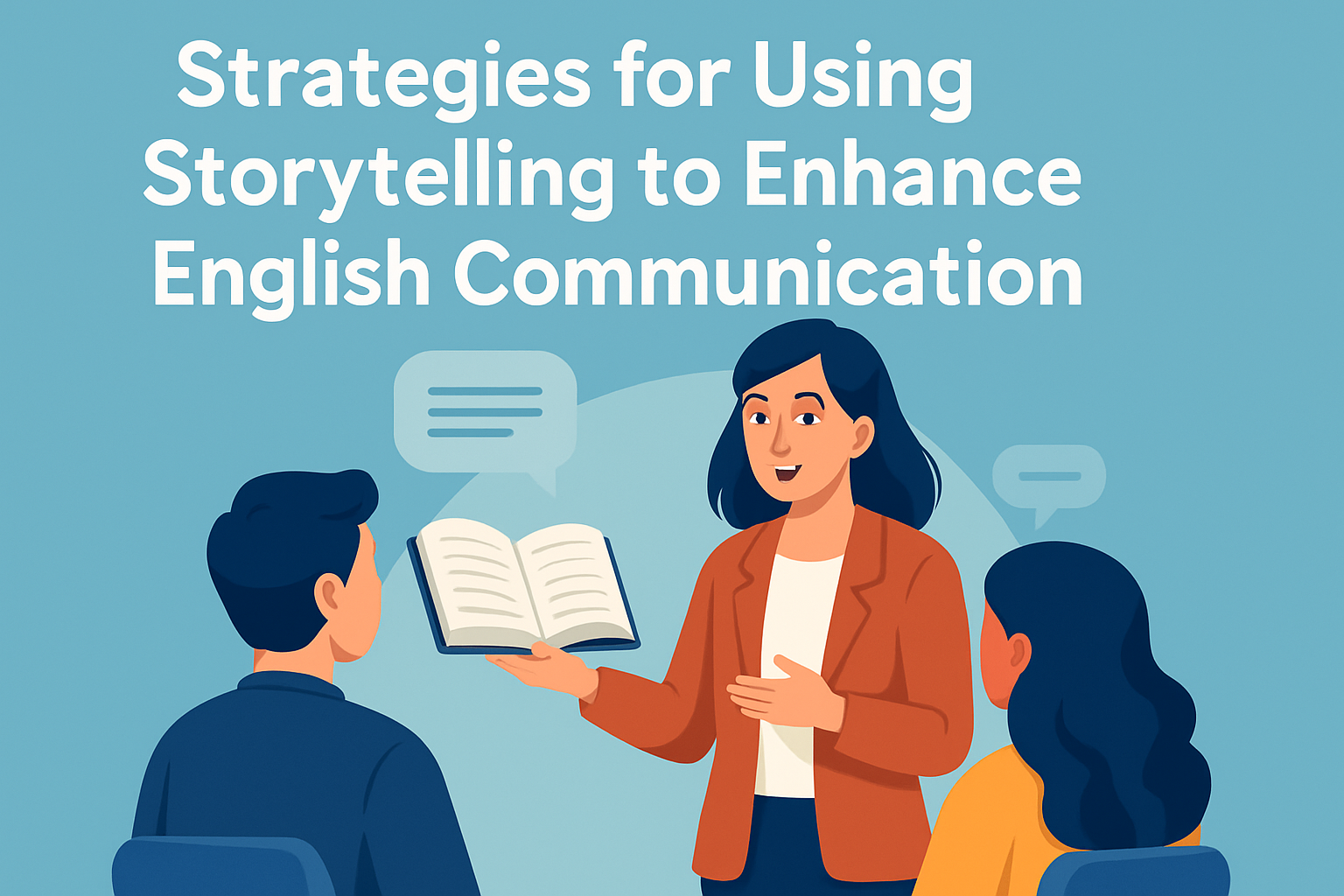
Effective communication in English is a skill highly valued across various fields and industries. One of the most engaging and impactful methods to enhance English communication is through storytelling. But what exactly is storytelling in this context? At its core, storytelling is the art of conveying messages, ideas, or values through narratives—structured accounts of real or fictional events. Key elements include characters, plot, setting, conflict, and resolution. It matters because storytelling can transform mundane information into something captivating and memorable, making it easier for the audience to understand and retain the message.
Storytelling has the power to build connections, convey complex ideas effortlessly, and engage audiences emotionally. In a world where attention spans are shrinking, storytelling provides a means to capture and hold attention. It is not just about entertaining; it is about communicating effectively in a language that resonates. By incorporating storytelling into English communication, we can enhance clarity, engagement, and retention, leading to more successful interactions in personal, educational, and professional settings.
Structuring a Narrative: The Backbone of Effective Storytelling
The backbone of any good story lies in its structure. A well-structured narrative helps in organizing thoughts logically and making the story engaging. Typically, a narrative structure comprises an introduction, body, and conclusion, similar to essay writing. The introduction captures attention, the body elaborates on the plot, and the conclusion provides a resolution.
Consider a situation in which a teacher uses storytelling to impart a lesson on history. Instead of listing dates and events, the teacher could narrate the life of a historical figure, bringing in elements of their childhood, challenges they faced, and achievements. This approach provides students with a relatable character and a plot to follow, making it easier for them to remember historical facts by associating them with the story.
The process of structuring a narrative requires one to think critically about the sequence of events and how best to connect the strings of information. This structured approach can be applied to various contexts, from business presentations to teaching, making the information not only informative but also engaging.
Using Personal Stories to Build Engagement
Personal stories are powerful tools in storytelling because they come from personal experiences, making them relatable and authentic. Sharing personal anecdotes can bridge the gap between the speaker and the audience by humanizing the speaker and creating an emotional connection.
For instance, in the professional realm, a manager might share a personal story about overcoming a challenge to motivate their team. By recounting personal experiences of struggles and perseverance, the manager can inspire employees to tackle their challenges with a positive mindset.
Personal stories resonate more with audiences because they reflect genuine emotion and sincerity. When individuals share their experiences, it often encourages others to open up, leading to richer, more meaningful conversations. This approach can effectively enhance English communication by making interactions more personal and engaging.
Incorporating Visuals to Enhance Storytelling
Visuals play a crucial role in storytelling, complementing the verbal narrative and providing tangible engagement elements. Using images, videos, and infographics can help reinforce the message and make complex information easier to digest.
In an educational setting, a teacher might use a story about the water cycle and supplement it with diagrams and animations to provide a clearer understanding. A simple visual can make the difference in understanding a topic, especially for visual learners.
| Element | Description | Example |
|---|---|---|
| Image | Photographs or drawings related to the story | Diagram of the water cycle |
| Video | Short videos that illustrate a part of the narrative | Animation of evaporation and precipitation |
| Infographic | Graphical representation of data or information | Infographic on water conservation |
The inclusion of visuals aligns with the human brain’s ability to process visuals 60,000 times faster than text, thus making storytelling more dynamic and effective in improving English communication. It ensures that the audience is not only hearing the story but also visualizing it, leading to a more profound understanding.
Engaging the Audience with Interactive Storytelling
Interactive storytelling allows the audience to actively participate in the story, enhancing engagement and personal investment. This method can include asking questions, encouraging predictions, or involving the audience in deciding the story’s direction.
A college professor teaching literature, for example, might use interactive storytelling to explore different plot outcomes in a novel. By asking students to choose what actions a character should take, the professor engages them in critical thinking and creativity, fostering a deeper understanding of the literature.
Interactive storytelling brings a sense of ownership to the audience. When the audience feels involved, they become more invested in the narrative, making them more likely to remember and understand the message. This participatory approach can significantly enhance communication by fostering active rather than passive learning.
Utilizing Metaphors and Analogies to Simplify Complex Ideas
Metaphors and analogies are powerful storytelling tools that simplify complex ideas by relating them to familiar concepts. They are particularly useful when explaining abstract or technical topics, as they provide clarity and improve comprehension.
In a corporate training session on cybersecurity, a trainer might compare the new firewall system to a medieval castle’s defenses. By drawing parallels to something as well-understood as a castle, employees can better grasp the abstract concept of cybersecurity and its essential components.
The use of metaphors and analogies helps break down barriers in communication, making it more accessible. In storytelling, these tools help bridge the gap between understanding and complexity, allowing listeners to engage with the material in a way that is familiar and easily relatable.
The Role of Emotion in Storytelling for Communication
Emotions are central to storytelling because they foster a deeper connection between the storyteller and the audience. Stories that evoke strong emotions are often the most memorable and impactful, providing a platform for the audience to empathize and engage more fully.
Consider a public health campaign that uses stories about individuals affected by a specific health issue. By highlighting personal journeys and emotions, the campaign can elicit empathy and motivate change, leading to increased awareness and proactive behavior.
In storytelling, emotions serve as a powerful driver of engagement. By tapping into feelings such as joy, sadness, or humor, storytellers can create experiences that resonate on a human level, making communication more effective and lasting.
Conclusion: Stepping into a Storytelling Mindset
The strategic use of storytelling in English communication can transform the way we convey and absorb information. Through structure, personal stories, visuals, interactivity, metaphors, analogies, and emotion, storytelling bridges gaps, fosters connections, and enhances understanding.
Readers who adopt storytelling strategies in their communication efforts can expect to see significant improvements in how they engage and connect with their audiences. By integrating these techniques, one can enhance not only linguistic abilities but also the ability to convey messages succinctly and memorably.
To leverage storytelling effectively in English communication, consider reflecting on personal experiences, creating relatable analogies, and engaging audiences through interaction and emotion. Take a step forward and explore these techniques in your next presentation, lesson, or conversation. Your storytelling journey awaits.
Frequently Asked Questions
1. What is storytelling in the context of enhancing English communication?
Storytelling in the realm of enhancing English communication is the practice of using narratives to convey messages or ideas in a way that captures the listener’s attention and makes the information memorable. It involves crafting a structured account of either real or imagined events. The key components of storytelling include characters who undertake actions, a plot that provides the storyline, a setting that provides the time and place, conflict which creates tension and interest, and a resolution that brings closure to the story.
The power of storytelling lies in its ability to make abstract or complex concepts more relatable and accessible by providing context and humanizing the narrative. When used effectively, storytelling can engage audiences, elicit emotional responses, and aid in better retention of information. This makes it a particularly powerful tool for learning and enhancing English communication since it encourages active listening, improves comprehension, and facilitates a deeper connection between the speaker and the audience.
2. What are some techniques to incorporate storytelling into English communication practice?
There are several techniques for integrating storytelling into English communication to make it more effective:
- Use Personal Stories: Share personal experiences to connect with your audience. Personal stories are authentic and can establish credibility and relatability.
- Start with a Hook: Use an engaging opening line or question to capture attention. A memorable hook will set the stage for an intriguing narrative that compels the audience to listen further.
- Develop Characters: Create well-defined characters in your story. Characters with whom the audience can identify or empathize increase engagement and emotional investment in the narrative.
- Build a Narrative Arc: Ensure your story has a clear beginning, middle, and end. Introduce the setting and characters, build tension with conflict, and lead to a satisfying resolution.
- Incorporate Dialogue: Use dialogue to bring authenticity to your characters and make the story dynamic. Dialogue can break down complex ideas into simpler language and keep the audience engaged.
- Sensory Details: Use vivid imagery and sensory details to paint a picture for your audience. This helps in making the narrative more immersive and memorable.
3. How does storytelling improve language skills and vocabulary in English learners?
Storytelling is a multifaceted tool that aids in the improvement of language skills and vocabulary acquisition for learners of English. First and foremost, storytelling provides a context for new words, making it easier for learners to grasp meanings and appropriate usage. Narratives introduce vocabulary in a natural and engaging manner, embedding vocabulary within stories where learners can see how words function within context.
Additionally, storytelling encourages active participation—whether through listening to stories, retelling them, or creating new ones. This active engagement reinforces learning and helps learners internalize language structures intuitively rather than through rote memorization.
Storytelling also enhances listening comprehension, as students are exposed to diverse language patterns, accents, and intonations. As learners listen, they develop an ear for rhythm and melody of the language, picking up on nuances that are often lost through conventional learning methods. Furthermore, by enabling learners to practice storytelling themselves, it fosters pronunciation skills and boosts confidence in speaking, as learners become more confident using English to express themselves.
4. How can storytelling be used in a professional setting to enhance communication?
In professional settings, storytelling is a strategic tool to strengthen communication by making it more influential and impactful. One effective approach is to integrate storytelling into presentations. Instead of just presenting data or facts, professionals can weave these elements into a narrative that highlights the implications, outcomes, or human aspects of the data. This not only makes the presentation more engaging but also aids in persuasion.
Moreover, storytelling can be pivotal in leadership and team dynamics by fostering a sense of unity and shared vision. Leaders who use stories to illustrate company values or future goals can strengthen team alignment and motivation. Narratives about past successes can inspire teams, while stories of challenges can foster resilience and learning.
In addition, storytelling is increasingly used in marketing and branding. Companies leverage brand stories to connect with consumers, differentiate themselves, and build emotional connections that foster loyalty.
Lastly, during negotiations, storytelling can be used to clarify needs, demonstrate points of view, or establish rapport with counterparts, enhancing understanding and empathy in the process.
5. What challenges might one face when using storytelling to enhance English communication, and how can they be addressed?
Utilizing storytelling to enhance English communication comes with its set of challenges, but these can be effectively managed with awareness and practice. One common challenge is creating a story that is both authentic and relatable to the audience. Overcoming this involves knowing your audience well and tailoring the narrative to reflect common experiences or values.
Another potential hurdle is the fear of inadequacy, especially if English is not one’s first language. Speakers may worry about their vocabulary or pronunciation. To address this, practice is key—speaking regularly in comfortable settings and gradually expanding to larger or more formal contexts can help build confidence. Seeking feedback from peers or mentors can provide constructive insights and encourage improvement.
Balancing storytelling with information can also be tricky. Striking the right balance between storytelling and factual content ensures that the narrative remains informative while captivating. Practicing with input from others can help find this balance.
Finally, ensuring engagement and participation from the audience is essential. Interactive elements such as asking questions, encouraging discussion, or including audience stories can enhance engagement and make the storytelling session a collaborative experience.





