

Understanding the role of English in global health can provide us with a clearer picture of how deeply interconnected our world has become. As globalization continues to expand, English has solidified its place as the lingua franca of various fields, including science, technology, and particularly, health care. When a health crisis arises, be it an outbreak or a natural disaster with consequences on human health, the need for clear, precise, and universally comprehended communication becomes crucial. This is where English steps in to bridge the gap between different nations, enabling seamless collaboration and knowledge sharing. In this article, we will delve into how English facilitates better healthcare outcomes on a global scale, and why it’s essential for health professionals worldwide to become proficient in this universal language.
English as an Essential Tool in Medical Research
Medical research is arguably one of the most pivotal areas where English predominates. The majority of scientific journals and publications are written in English, making it the primary medium for the dissemination of new medical findings. For instance, if a groundbreaking study on a new cancer treatment is published, its reach and impact are significantly amplified when it is presented in English. This not only allows for quicker adoption and application of the findings globally but also ensures that researchers from different countries can build upon each other’s work. Furthermore, major international conferences and summits, where key medical breakthroughs are often shared for the first time, are generally conducted in English. This function not only cements English as a critical tool in the advancement of global health but also underscores the necessity for medical professionals to be proficient in reading and understanding English medical literature.
Communication During Global Health Emergencies
Global health emergencies, such as pandemics, require rapid, clear, and coordinated responses. English often serves as the common language for international emergency response teams and public health officials. During the COVID-19 pandemic, for example, the majority of global communication from major health organizations, such as the World Health Organization (WHO) and the Centers for Disease Control and Prevention (CDC), was disseminated in English. This ensured that critical information regarding safety protocols, virus transmission, and treatment methods was accessible to the broadest audience possible. Accurate and timely dissemination of information can save lives during such crises, and the use of a common language like English makes it significantly easier for different countries to collaborate and coordinate their responses.
Training and Professional Development for Healthcare Providers
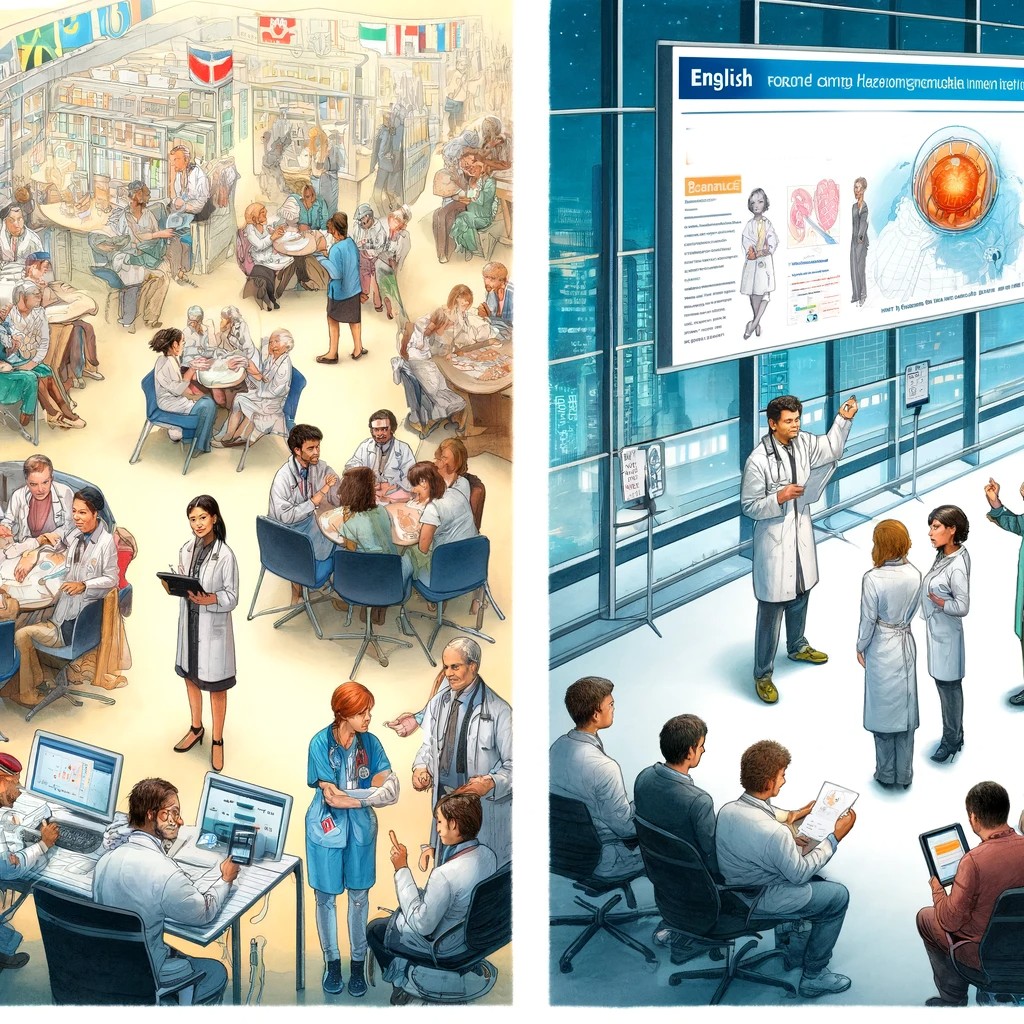
Another area where English plays a pivotal role is in the ongoing education and professional development of healthcare providers. Many prestigious medical schools and training programs around the world teach their courses in English. Additionally, an abundance of online resources, including webinars, courses, and medical literature, are available predominantly in English. For healthcare providers in non-English speaking countries, proficiency in English opens up access to a wealth of knowledge and opportunities for continuing education, enhancing their skills and expertise. This ultimately translates to better patient care and more advanced healthcare systems globally. As such, investing time in learning English can be one of the most beneficial decisions healthcare professionals can make for their careers.
Collaboration and Partnerships in Global Health Initiatives
Worldwide, various health initiatives depend heavily on international cooperation. These initiatives, ranging from eradicating diseases like polio and malaria to addressing public health issues such as malnutrition and maternal health, often require the concerted efforts of multiple countries and organizations. English stands as the common language that facilitates the drafting, negotiation, and implementation of such international health agreements. For instance, the development of the Global Vaccine Action Plan (GVAP) involved extensive collaboration among a plethora of stakeholders from different countries, evidence submission, and strategic planning, all conducted primarily in English. The ability to effectively communicate in English ensured that all parties could work harmoniously towards a common goal, resulting in more efficient and effective health outcomes.
Access to Health Information and Patient Empowerment
The digital age has revolutionized the way patients access information about their health. The internet is a vast reservoir of medical knowledge, most of which is available in English. From understanding symptoms and potential treatments to learning about the latest medical breakthroughs, patients who are proficient in English have far greater access to health information. This empowerment through knowledge allows individuals to make more informed decisions about their care, engage more effectively with their healthcare providers, and advocate for their own health needs. Additionally, many telemedicine services, which have become increasingly vital especially during times of social distancing, operate in English, further underscoring the importance of English proficiency for both patients and healthcare providers in maintaining continuous and effective care.
Cultural Sensitivity and Ethical Considerations
The global health landscape is diverse, and understanding cultural differences is key to providing effective health care. English, being widely spoken and understood, plays a significant role in promoting cultural sensitivity and ethical considerations in global health practices. When health professionals from different cultural backgrounds communicate in English, it helps to minimize misunderstandings that could arise from cultural differences. Moreover, many international guidelines and standards concerning medical ethics, patient rights, and culturally sensitive care are documented in English. For instance, ensuring that patient consent is informed and that confidentiality is maintained requires a common understanding, often facilitated by English language use. By using English as a bridge, health professionals can respect cultural differences while providing high standards of care.
Conclusion
As we have explored, English holds a critical role in various facets of global health. From facilitating the dissemination of medical research and ensuring effective communication during health emergencies, to supporting continued education and fostering international collaboration, the impact of English in global health is profound and undeniable. For health professionals, proficiency in English is not just an academic pursuit but a practical necessity that enhances their ability to contribute to global health outcomes. Patients, too, benefit from access to a broad array of information and services that can often empower them towards better health. As the world continues to grapple with both persistent and emerging health challenges, the role of English in promoting a universal dialogue and shared understanding remains integral.





