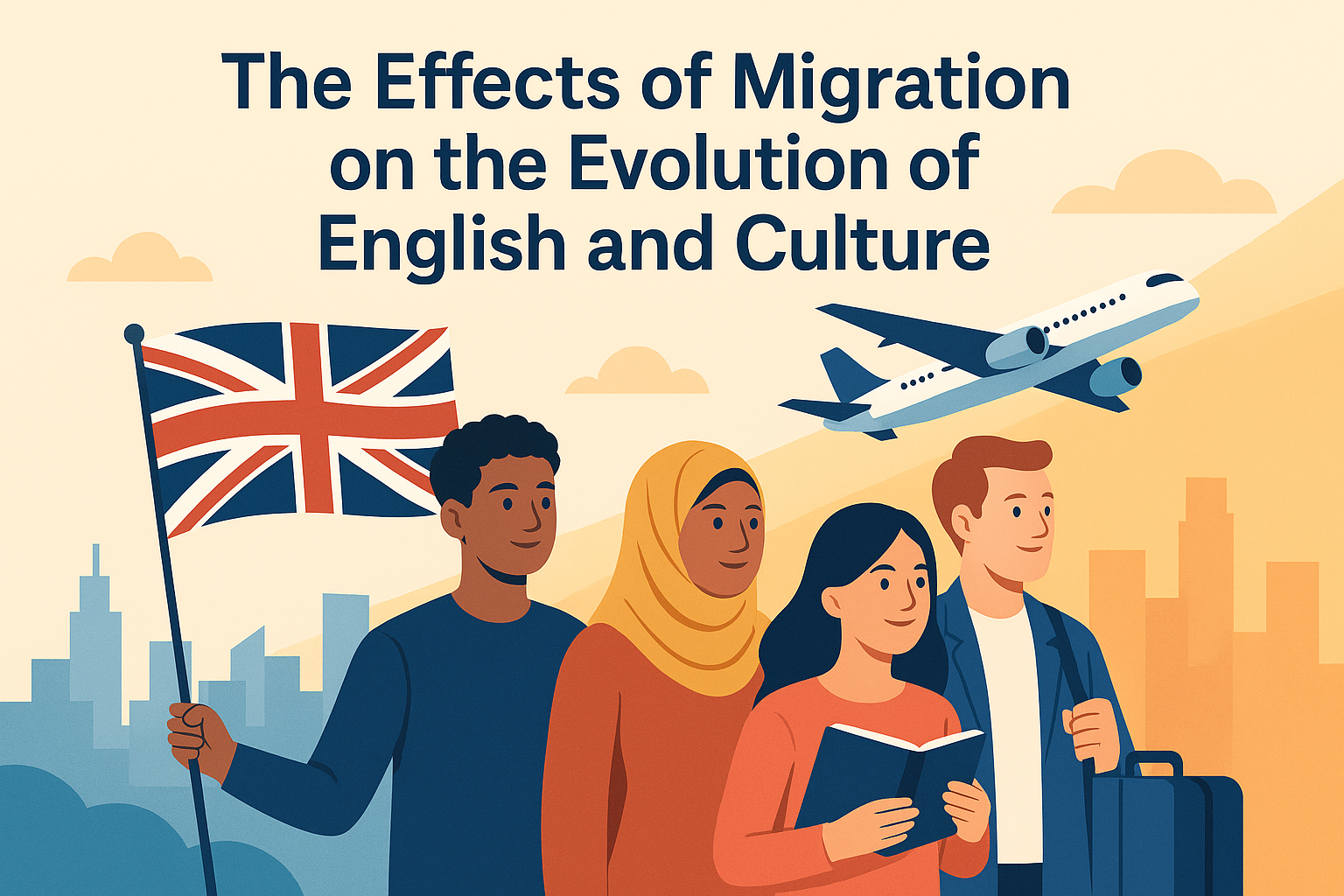
Migration is a powerful force that has shaped the evolution of languages and cultures over centuries. English, in particular, has been profoundly influenced by the movements of people across the globe. Understanding the effects of migration on the evolution of English and culture is crucial for appreciating the dynamic nature of language and cultural identities. As individuals and groups migrate, they bring with them linguistic patterns, vocabulary, and cultural customs that blend with and transform the existing norms in their new environments. This continuous exchange not only enhances the richness of English but also fosters a vibrant cultural diversity that is vital to societal growth and understanding. In this article, we will explore how migration has historically impacted the English language and culture, shedding light on real-world examples and breaking down the broader implications of these changes on societal norms and individual identities.
Historical Influences of Migration on the English Language
The history of English reflects a series of migrations that brought about different phases of linguistic evolution. One of the earliest and most significant periods was the Anglo-Saxon migration which introduced Old English to Britain in the 5th and 6th centuries. This migration brought Germanic tribes, including the Angles, Saxons, and Jutes, to the British Isles, replacing the Celtic languages of the indigenous population. Old English, heavily influenced by these Germanic dialects, began its evolution into Middle English following the Norman Conquest in 1066.
The Norman Conquest itself was a massive migration event, where the Norman French language had a significant influence on English. The ruling class spoke Norman French, leading to the incorporation of a vast number of French words into English, especially in law, art, literature, and cuisine. For example, the words “court,” “judge,” and “jury” are all borrowed from French. This set the stage for the development of Middle English, which persisted until the late 15th century.
The expansion of the British Empire marked another substantial wave of migration influencing the language. English speakers traveled worldwide, and in their interactions, they borrowed and integrated words from languages around the globe. For instance, from Hindi, English adopted words like “bungalow” and “pajamas,” while from Arabic, it embraced terms like “algebra” and “sugar.” These influences demonstrate the adaptability and absorptive capacity of the English language as it grew to become a global lingua franca.
Modern Migrations and the Transformation of English Dialects
In modern times, migration continues to profoundly affect English dialects across different regions. For example, in the United States, large-scale migrations have led to the formation of distinctive regional dialects and accents. The Great Migration of African Americans from the southern United States to northern cities during the early 20th century brought about linguistic innovations that enriched American English. This migration led to the popularization of African American Vernacular English (AAVE), which significantly influenced mainstream culture, music, and language.
Immigration to the United Kingdom from former British colonies and the European Union has introduced a wealth of linguistic diversity. The multicultural city of London, for example, has become a melting pot where diverse influences converge, resulting in what is termed “Multicultural London English” (MLE). This dialect is characterized by features from Caribbean, West African, and South Asian languages, among others, leading to linguistic innovations and a vibrant, dynamic speech pattern.
| Migration Event | Influence on English | Example Words |
|---|---|---|
| Anglo-Saxon Migration | Introduction of Germanic roots | “king,” “baker” |
| Norman Conquest | French vocabulary influx | “attorney,” “jury” |
| Colonial Expansion | Incorporation of global words | “safari,” “curry” |
The Role of Technology in Facilitating Linguistic Exchange
Technology has played a crucial role in modern migration patterns and linguistic exchanges, accelerating the rate at which English evolves. With the advent of the internet and social media, people from diverse linguistic backgrounds can communicate rapidly and widely. This has resulted in the rapid adoption of slang and jargon across English-speaking communities worldwide.
For instance, the word “selfie,” originating from Australian slang, quickly spread across the globe with the surge of smartphones and social media platforms like Instagram. Similarly, terms like “tweet” and “hashtag” have become integral to English due to their frequent use in social media contexts. These examples underscore how digital connectivity facilitates linguistic borrowing and adaptation at unprecedented speeds.
Moreover, online platforms such as Duolingo and Rosetta Stone highlight the global desire for linguistic fluency, breaking down barriers between languages and fostering a more unified understanding. These platforms allow for immersive experiences that, while teaching English, also exchange cultural nuances, contributing to the ongoing evolution of the language.
Cultural Interactions Through Migration
Migrations have always been a pathway for cultural exchange and transformation. As people move, they carry with them their cultural practices, traditions, and identities, which intermingle with those of host communities. This interaction often results in hybrid cultures where new customs, practices, and values emerge.
Take the example of the Indian diaspora in the United Kingdom, which has significantly influenced British cuisine, music, and festivals. Dishes like “chicken tikka masala,” which has become a staple of British culture, exemplify how migration has enriched and diversified national cuisines. Another area of influence is evident in music, where the vibrant sounds of Bhangra have found popularity across diverse musical genres in Britain and beyond.
Similarly, the celebration of festivals such as Diwali in the United States and the UK highlights cultural integration where migrating communities maintain their traditions while sharing them with their host societies. This cultural intermingling not only fosters mutual respect and appreciation but also contributes to the richness of the cultural tapestry in multicultural societies.
The Impact on Identity and Social Cohesion
Migrations contribute to the complexity of individual and collective identities. Within a multicultural society, individuals often navigate multiple cultural identities, leading to a richer, more diverse sense of self. This dynamic is particularly evident in second-generation migrants who blend their heritage culture with the mainstream culture of their new home.
However, the blending of cultures can also give rise to tensions and misunderstandings, highlighting the importance of fostering social cohesion and dialogue among diverse communities. Encouraging inclusive policies and intercultural exchanges can help minimize conflicts and build societies that appreciate diversity as a strength rather than a source of division.
For example, Canada’s multicultural policy actively promotes the integration of immigrants through programs that encourage cultural preservation while facilitating participation in the broader Canadian society. Such approaches ensure that cultural exchanges are celebrated, leading to harmonious coexistence and enriched cultural landscapes.
The Continuing Evolution: Future Trends
As global migration patterns continue to evolve, so too will the English language and cultural landscapes. With increasing communications and advancements in travel technology, new forms of migration are likely to emerge, further diversifying English and global cultures. Climate change, geopolitical tensions, and economic opportunities are expected to be major drivers of future migrations.
This will likely result in new linguistic and cultural blends, with English continually adapting to include new vocabularies and dialects. Educational systems may increasingly incorporate multicultural curricula that reflect the realities of a diverse society, preparing students to thrive in a globalized world.
Moreover, as global citizens, individuals can embrace opportunities for intercultural learning and adaptation, enhancing their understanding of different cultural perspectives while contributing to their communities’ growth and diversity.
Conclusion: Embracing Change and Promoting Understanding
In conclusion, migration has been, and continues to be, a significant driver of evolution in both the English language and cultural landscapes. By understanding this dynamic process, we can appreciate the rich tapestry of influences that have shaped modern English and the diverse cultures it represents. Migration enriches societies, fostering linguistic and cultural diversity, which in turn enhances societal resilience and adaptability.
The key takeaway is the importance of embracing change and promoting intercultural understanding. As individuals and communities, fostering an inclusive environment that values cultural exchange will enable us to navigate the challenges and opportunities of an interconnected world. Encouraging dialogues about linguistic and cultural heritage is vital to building a future where diversity is celebrated, and collective identity is continually redefined.
As a next step, consider engaging with diverse communities in your area or exploring language learning as a means of expanding your cultural horizons. By doing so, you contribute positively to the ongoing narrative of migration and its impact on language and society.
Frequently Asked Questions
What are the main ways in which migration has influenced the English language?
Migration has dramatically impacted the English language in a variety of ways. One of the most significant effects is the introduction of new vocabulary. As people migrate, they bring their linguistic repertoire, which includes terms for things, concepts, and practices previously unknown to the English language. For instance, words like “taco” and “safari” have seamlessly integrated into English as a result of cultural exchange through migration. Furthermore, syntactic structures and grammatical nuances can also shift as a result of prolonged contact with other languages. This is particularly evident in the evolution of different English dialects and accents around the world, such as Australian English, which has evolved through the influence of British settlers and indigenous languages. Beyond just vocabulary and grammar, migration has led to the development of creoles and pidgins, demonstrating the adaptive nature of English in diverse environments.
How does migration impact cultural identities and what role does language play in this process?
Migration is a transformative experience for cultures, largely because language is at its core. When people migrate, they do not just carry their language; they also carry their cultural narrative, customs, habits, beliefs, and values. Language acts as the medium through which these cultural elements are expressed and shared. As migrant communities establish themselves, they create a hybrid cultural identity that often blends elements of both their original culture and the new one they interact with. Language serves as a bridge and sometimes a barrier in this cultural synthesis. The development of multicultural societies, where multiple languages and cultures coexist, enhances the cultural mosaic but can also spur identity challenges for individuals, particularly in second and third-generation migrants who might feel torn between cultural identities. However, it is through language that these individuals negotiate their sense of belonging and identity in a multicultural context.
Can you provide examples of how migration has led to the development of new English dialects or pidgins?
Certainly! Migration has led to the birth of new English dialects and pidgins in many regions. For instance, African American Vernacular English (AAVE) is a dialect that originated from the complex history of African slaves who were brought to America. It developed as a result of Africans attempting to learn English while integrating elements from their native languages and creating a unique linguistic identity. In regions like the Caribbean, pidgins and creoles have formed from the mixture of English with African and indigenous languages due to historical labor migrations and colonial influences. Languages like Jamaican Patois emerged as African slaves and indentured laborers adapted English to their needs, creating a rich, distinct dialect with its rhythms and vocabulary. Similarly, Singapore Colloquial English, often called Singlish, emerged as a result of multilingual migration and cultural assimilation, becoming a unique blend of English, Malay, Tamil, and Chinese influences.
What future changes might we expect in the English language as migration patterns continue to evolve?
The ongoing patterns of migration suggest that English will continue to evolve in dynamic ways. As new groups migrate and settle into anglophone countries, their linguistic and cultural traits will influence the native English speakers, potentially leading to the introduction of new vocabulary and expressions. Globally, as English continues to operate as a lingua franca, especially in business, science, and technology, it’s likely to incorporate international dialects, leading to further standardization or diversification of the language. Furthermore, digital communication technology and global networking facilitate constant global dialogue, which also plays a role in accelerating linguistic change. Future English might incorporate more internet-based slang, leverage emojis as a pseudo-universal language, and adopt new grammatical norms as influenced by the global tapestry of its speakers. Therefore, English may become even more varied, inclusive, and hybridized than it presently is.
How do educational systems and policies adapt to the linguistic and cultural diversification resulting from migration?
Educational systems and policies are gradually adapting to linguistic and cultural diversity by incorporating multicultural curriculums that celebrate and integrate diverse cultural perspectives. In areas with significant immigrant populations, schools have developed English as a Second Language (ESL) programs to aid non-native speakers in language acquisition while also encouraging students to maintain their native languages, leading to a bilingual or multilingual student body. Policies that promote inclusivity and cultural understanding are also essential. For instance, training programs in cultural sensitivity are increasingly offered to educators to better meet the needs of a diverse student population. Moreover, educational systems have begun to place greater emphasis on global citizenship, acknowledging the value of multilingualism in our increasingly interconnected world. These efforts aim to foster an environment where diversity is seen as an asset, and students prepare to thrive in a richly multicultural landscape both inside and outside classrooms.