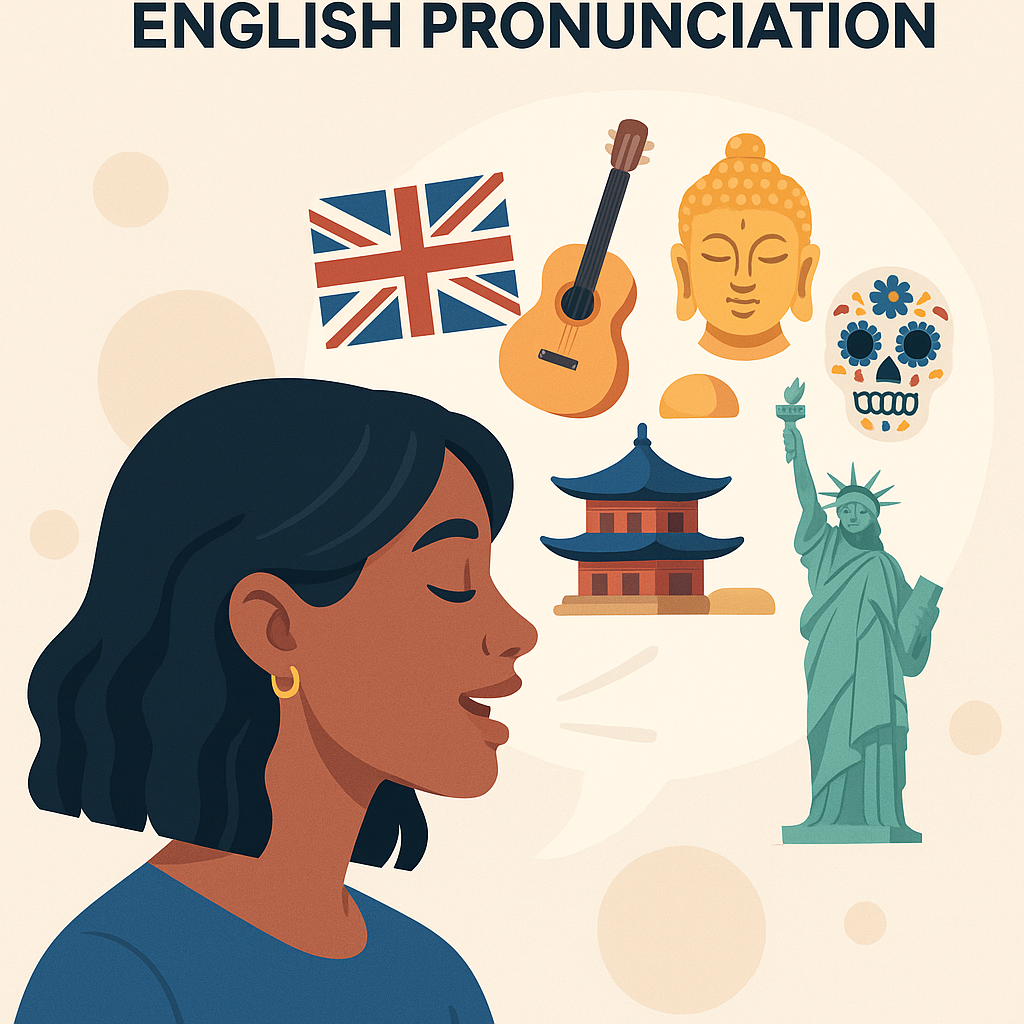
In today’s globalized world, the English language reigns as a universal bridge for communication. As people from non-English-speaking backgrounds endeavor to learn and master English, pronunciation often emerges as one of the most challenging aspects. In this context, cultural experiences significantly influence how individuals pronounce English words, affecting the ease and accuracy of their communication. Cultural experiences encompass the traditions, social behaviors, and educational backgrounds that shape an individual’s linguistic framework. This article explores why understanding the impact of these cultural experiences on English pronunciation is crucial in fostering effective communication and pragmatic language learning strategies.
The importance of cultural experiences in shaping English pronunciation is undeniable. As learners bring their native phonetic habits and cultural nuances into the learning process, these experiences can lead to diverse accents, some of which may pose comprehensibility challenges. This diversity is not just a linguistic curiosity; it affects real-world interactions, professional opportunities, and the integration of immigrants and expatriates into English-speaking societies.
Cultural Phonetic Patterns and Their Influence
Every language comes with its unique set of phonetic patterns that influence how vowel and consonant sounds are produced. These sounds, ingrained from childhood, form a framework through which new languages, including English, are perceived and spoken. For example, Japanese speakers often face challenges with the English ‘r’ and ‘l’ sounds because these are not distinct in Japanese.
Let’s consider the experience of a Japanese business executive relocating to an English-speaking country for work. Despite being fluent in English, his pronunciation of words like “light” (often sounding like “right”) could lead to misunderstandings in important meetings. His cultural background created an ingrained speech pattern that directly impacted his ability to pronounce English correctly. Acknowledging this influence can lead to focused pronunciation training that specifically targets these culturally rooted challenges.
Vocal Tract Configuration and Habitual Influences
Many people may not realize that cultural habits, such as dietary practices, can influence the physical formation of the vocal tract, impacting pronunciation. Accents form partly due to habitual use of the vocal tract, tuned by the sounds frequently used in one’s native language, which are part of cultural upbringing.
In countries where certain dietary practices are prevalent, the vocal mechanics required to chew and speak can subtly shape the vocal tract’s development. Consider individuals from rural Spanish regions where rolled ‘r’s are common; this habit enhances the muscular configuration needed for the trill, affecting English pronunciation as they attempt to make subtle r sounds.
Socio-Cultural Attitudes and Pronunciation
Cultural attitudes towards language learning and use can impact the effort and methods applied to mastering English pronunciation. In cultures where mastery of English is associated with educational and economic success, individuals might invest heavily in accent reduction to sound more like native English speakers. Conversely, where multilingualism is the norm, speakers might be less pressured to alter their accents, seeing them as a cultural badge rather than a barrier.
A prime example is observed among Dutch learners of English. The Netherlands has high English proficiency levels, and the population often speaks with lesser perceived accents. The strong cultural emphasis on language learning and media exposure to native English content contributes significantly to refining their pronunciation skills. Such socio-cultural attitudes can either be leveraged or adapted to ensure effective pronunciation learning.
Language Education and Phonetic Instruction
The role of education systems in providing phonetic instruction can also have a substantial impact on English pronunciation. Systems that emphasize phonetics and pronunciation as part of language education often produce students who are better equipped to adapt their pronunciation of non-native languages. The methodologies and priorities set by a culture’s educational systems inevitably reflect how pronunciation difficulties are approached by learners.
For instance, Scandinavian schools place significant emphasis on language acquisition and pronunciation practice from an early age. As a result, Scandinavians might acquire less pronounced accents because of the cultural integration of language-learning strategies in early education. The emphasis on listening, speaking, and rigorous phonetic instruction establishes a stronger foundation for learning accurate pronunciation.
Technology and Cross-Cultural Interactions
Cultural exposure facilitated by technology plays a major role in shaping pronunciation. As people from various cultural backgrounds engage in cross-cultural interactions via social media, television, or online platforms, they gain awareness of different English accents and pronunciations. This exposure enriches their understanding and adaptability.
- Access to diverse English language media allows learners to distinguish not only pronunciation but intonation variations between accents.
- Interactions on platforms such as gaming or online communities enable real-time practice with native speakers.
- Language learning apps personalize pronunciation feedback, accommodating cultural phonetic differences.
These technological avenues promote a more nuanced understanding of English and offer opportunities for learners to refine their pronunciation through innovative, culturally sensitive tools.
The Role of Cultural Identity and Sociolinguistic Factors
Sociolinguistic elements like cultural identity and language pride also play pivotal roles in pronunciation. Many individuals may choose to retain their accent as an expression of identity, pride, or community belonging. In multicultural settings, accents often serve as a linguistic badge reflecting one’s origins and heritage. Understanding how cultural identity influences pronunciation can help dismantle stereotypes and prejudices associated with different accents.
For example, many Indian English speakers may purposefully retain their distinct pronunciation as it signals group identity. Rather than striving to modify these traits, they might embrace them, reflecting a powerful cultural identity element.
Navigating Cultural Impacts on Pronunciation
To effectively address cultural impacts on English pronunciation, a nuanced approach that considers individual challenges and cultural contexts is necessary. Language educators and learners alike must employ culturally sensitive methods that recognize and adapt to the wealth of experiences that influence pronunciation. This includes using cultural context as a learning anchor while using evidence-based practices to refine pronunciation.
Implementing culturally adaptable pronunciation training allows individuals from diverse backgrounds to navigate their learning pathways more effectively, facilitating easier communication and integration within English-speaking environments.
Conclusion: Embracing Cultural Diversity in Pronunciation
In conclusion, the interplay between cultural experiences and English pronunciation profoundly affects language learning outcomes and communicative success. Recognizing and adapting to cultural influences means breaking down barriers of misunderstanding, fostering inclusivity, and promoting effective communication. When learners and educators harness cultural backgrounds as assets rather than obstacles, they contribute to a more understanding and tolerant linguistic landscape.
To bolster your pronunciation, engage with diverse English media, participate in cross-cultural exchanges, and embrace your cultural identity while seeking improvement. By acknowledging your cultural experiences, you gain a powerful tool for enhancing your English pronunciation journey. As the world continues to blend more seamlessly through language, leveraging cultural insights enables more meaningful conversations and richer, globally-minded communication.
Start today by analyzing your own cultural phonetic backgrounds and consider them in your practice routines. Remember, each cultural experience you embrace adds depth and authenticity to your English pronunciation.
Frequently Asked Questions
1. How do cultural experiences affect English pronunciation?
Cultural experiences play a pivotal role in shaping how individuals pronounce English words. These experiences include the traditions, social behaviors, and educational backgrounds that individuals are exposed to within their own cultures. For instance, individuals from cultures with fewer vowel sounds might struggle with English pronunciation because they are not accustomed to distinguishing between similar-sounding vowels such as /i:/ and /ɪ/. In addition, social behaviors such as communication styles can influence pronunciation as well. For example, if a culture places less emphasis on enunciation, English learners might speak in a manner that’s less articulate, which could affect comprehension. Furthermore, the educational background, specifically how English is taught in one’s home country, has significant implications for pronunciation skills. A strong focus on written rather than spoken English might lead to difficulties in pronunciation. Thus, culture doesn’t just influence the way people think and behave, but also the way they sound when they speak English.
2. Why is pronunciation particularly challenging for English learners?
Pronunciation stands out as a significant challenge for English learners mainly because of the language’s complexity and the influence of one’s native language. English contains a wide variety of vowel and consonant sounds, some of which may not exist in other languages. This can make it difficult for learners to accurately reproduce these sounds, especially if they come from a language with a different phonetic inventory. Stress and intonation patterns, often overlooked, also add another layer of complexity; English is a stress-timed language, which might be unusual for learners from syllable-timed language backgrounds. Furthermore, pronunciation is not just about making correct sounds; it’s also about rhythm, intonation, and stress patterns, which can be surprisingly different from those in a learner’s native language. These elements are all tied to cultural experiences, as they are often learned implicitly through social interaction rather than explicit instruction, making them difficult for learners to grasp and replicate correctly. The challenges are compounded if improper habits are formed early on, which can be difficult to correct later.
3. Can exposure to different cultures improve English pronunciation?
Absolutely! Exposure to different cultures can be highly beneficial for improving English pronunciation. The more an individual is exposed to various accents, dialects, and modes of verbal communication, the better their opportunity to assimilate diverse pronunciation norms. This cultural exposure can occur through direct interaction, such as travel or conversational exchanges with native speakers, or indirectly through media such as movies, music, and podcasts. Listening to a range of English speakers can help learners understand and mimic the subtle nuances of correct pronunciation, including stress patterns and intonation, which are often culturally embedded. As learners are exposed to different speaking styles, their understanding of context-specific pronunciations, idiomatic expressions, and slang improves, helping them adjust their pronunciation flexibly. Being surrounded by different cultural experiences aids in contextualizing language learning, making pronunciation more relevant and intuitive.
4. What are some common pronunciation errors influenced by cultural experiences?
Cultural experiences can lead to distinct pronunciation errors that are often characteristic of a learner’s native language. One common issue is the substitution of sounds that don’t exist in the learner’s first language. For instance, Japanese speakers may replace the English /l/ sound with /r/, due to the lack of a clear distinction between these sounds in Japanese. Spanish speakers might have trouble with the English /v/ sound, pronouncing it more like a /b/ sound, as the two sounds are not separate phonemes in Spanish. Additionally, speakers from tonal languages, such as Mandarin, might not naturally acquiesce to the stress and intonation patterns of English, leading to a flat intonation that can alter the intended message. On a larger cultural scale, if a language doesn’t place emphasis on certain pronunciation aspects, learners from that culture might not see the importance of these aspects in English, leading to omissions or distortions. Understanding these common errors and their cultural roots is crucial in helping learners achieve clearer, more accurate English pronunciation.
5. How can teachers help students overcome cultural barriers to English pronunciation?
Teachers play a crucial role in helping students overcome cultural barriers to pronunciation. One effective strategy involves creating a classroom environment that acknowledges and respects cultural diversity, while simultaneously encouraging active engagement with various English accents and dialects through audio-visual aids and interactive practices. Teachers can introduce pronunciation drills tailored to target specific cultural influences, helping students retrain their ear and mouth for English phonetic structures. They can also incorporate pronunciation software and apps, which provide immediate feedback and allow students to practice at their own pace. Additionally, emphasizing the teaching of phonemic awareness and the International Phonetic Alphabet (IPA) can empower students to recognize and produce sounds that are not present in their native language. Beyond technical skills, building students’ confidence through positive reinforcement and providing opportunities for real-life conversational practice can significantly reduce the anxiety associated with pronunciation. By promoting a fun and constructive learning atmosphere, teachers encourage students to experiment with and refine their pronunciation skills, gradually overcoming cultural barriers over time.