As we embark on another school year, it’s important to consider how English proficiency plays a vital role in international health initiatives. In many ways, mastering the English language opens doors for students and professionals alike, allowing them to contribute significantly to global health efforts. Whether you are an ESL student aspiring to work in the medical field or an educator teaching English, understanding the impact of English on international health can be incredibly motivating.
English has become the lingua franca in many scientific communities, including healthcare. This means that a significant portion of research papers, medical guidelines, and health policy documents are published in English. For medical professionals and health workers who operate on an international scale, being proficient in English is often a necessity. This widespread usage of English facilitates better communication, more effective collaboration, and quicker dissemination of critical health information across borders.
In this article, we will explore several facets of the role of English in international health initiatives. We’ll start by examining how English proficiency can impact medical research and public health policy. We’ll then look at the importance of English in emergency response and health education, followed by an analysis of how various organizations utilize English to advance global health. Finally, we’ll discuss how mastering English can empower individuals in the field of international healthcare.
Medical Research and Public Health Policy
One of the most significant ways English affects international health is through medical research. English is the dominant language of science and medicine; prestigious medical journals such as The Lancet, The New England Journal of Medicine, and The British Medical Journal primarily publish in English. This prevalence means that researchers, healthcare professionals, and policymakers around the world must often consult English-language sources to stay current with the latest scientific developments.
For researchers whose first language is not English, mastering the language is crucial. It allows them to publish their findings in internationally recognized journals, thereby contributing to the global pool of knowledge. Moreover, understanding English enables them to engage with research conducted by their peers worldwide, fostering collaborative efforts that can lead to groundbreaking discoveries.
Public health policy is another area where English plays a critical role. International bodies such as the World Health Organization (WHO) and the Centers for Disease Control and Prevention (CDC) often publish guidelines and policy documents in English. These documents are essential for shaping national health policies and strategies, especially in countries that rely on international expertise and support. By understanding these English documents, policymakers can better implement evidence-based practices tailored to their country’s specific needs.
Emergency Response and Crisis Management
Effective communication is key during health emergencies, and English often serves as a common language in such situations. Whether it’s a natural disaster, a pandemic, or a humanitarian crisis, timely and accurate information dissemination can save lives. Many international relief agencies, including Médecins Sans Frontières (Doctors Without Borders) and the International Red Cross, use English to communicate with local and international teams.
For instance, during the Ebola outbreak in West Africa, English was used extensively for coordinating efforts among international aid workers, local health officials, and the global community. Reports, treatment protocols, and training materials were often available in English, ensuring that all parties involved had access to the same information and could effectively collaborate. This coordination was critical in managing the outbreak and minimizing its impact.
Similarly, in the current COVID-19 pandemic, English has played a pivotal role in global communication. From scientific research on the virus to public health advisories and news updates, English has been a primary medium for information sharing. This widespread usage has helped standardize responses, share best practices, and coordinate international efforts in vaccine distribution and public health strategies.
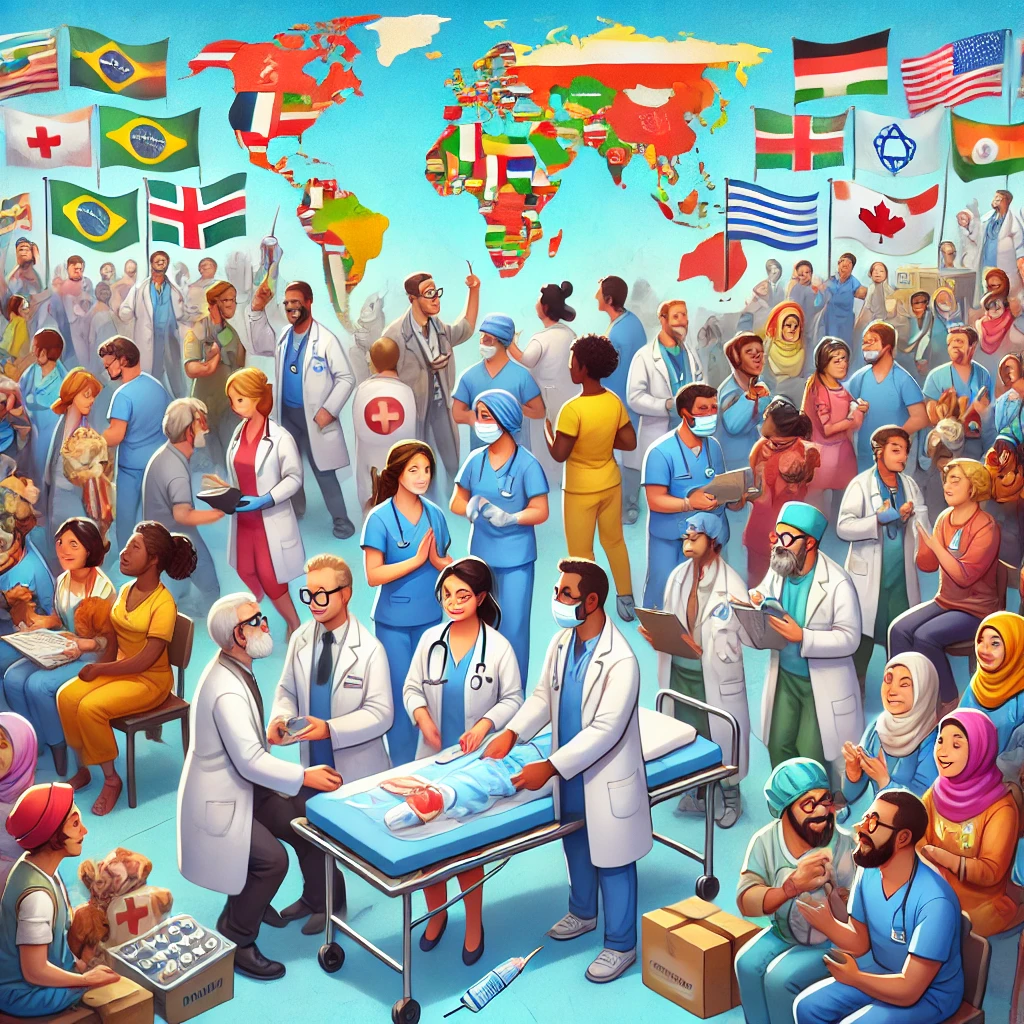
Health Education and Training
Education and training are fundamental components of any health initiative, and English often serves as the primary language of instruction. Many medical schools and training programs around the world offer courses in English, making it accessible to a diverse, multinational student body. This inclusivity fosters a richer learning environment as students from different backgrounds can share experiences and perspectives.
For ESL students pursuing careers in healthcare, proficiency in English opens up numerous educational opportunities. Many top-ranked universities and medical schools, such as Harvard Medical School, Oxford University Medical School, and Johns Hopkins University, deliver their curriculum in English. Furthermore, attending international conferences, workshops, and seminars conducted in English allows students and professionals to stay abreast of the latest trends and advancements in their field.
Online education platforms, like Coursera, edX, and Khan Academy, also offer a plethora of health-related courses in English. These platforms provide resources that are often freely accessible, enabling lifelong learning regardless of one’s geographic location. Additionally, healthcare training organizations frequently produce instructional videos, manuals, and other materials in English, ensuring a standardized level of education worldwide.
International Organizations and Health Initiatives
Numerous international organizations leverage English to drive health initiatives and foster global collaboration. The World Health Organization (WHO), for instance, uses English extensively in its operations, from publishing research reports to conducting meetings and workshops. This usage ensures that stakeholders from different countries can participate effectively and contribute to global health goals.
Non-governmental organizations (NGOs) like Save the Children, CARE, and Oxfam also rely on English to implement health programs across various regions. These organizations often work in countries where English is not the first language, making English proficiency among staff members essential for seamless operations. By using English as a common language, these organizations can train local health workers, develop educational materials, and communicate with international donors and partners.
Moreover, international health initiatives such as the Global Fund to Fight AIDS, Tuberculosis and Malaria, and Gavi, the Vaccine Alliance, utilize English to coordinate multi-country efforts and mobilize resources. The use of English enables these initiatives to align their strategies with international standards and effectively address global health challenges. By fostering an understanding of English, these organizations empower local communities to engage with and benefit from international health programs.
Empowering Individuals in International Healthcare
For individuals pursuing careers in international healthcare, proficiency in English can be highly empowering. It not only enhances their ability to access and understand critical information but also opens up opportunities for career advancement and professional development. Health professionals who are fluent in English are often better positioned to obtain scholarships, attend international conferences, and collaborate with leading experts in their field.
Moreover, English proficiency can lead to roles in international organizations, where the ability to communicate effectively in English is often a key requirement. From working with NGOs to joining government agencies and multinational corporations, the possibilities are vast. These roles often offer the chance to make a significant impact on global health, from developing new treatments and interventions to shaping policy and advocating for underserved communities.
For ESL students, investing in English language education can be a game-changer. It prepares them for the global nature of the health sector and equips them with the skills needed to excel in their careers. By mastering English, these students can access a broader range of resources, networks, and opportunities, ultimately enabling them to contribute more effectively to international health initiatives.
Conclusion
As we have explored, the role of English in international health initiatives is multifaceted and profoundly impactful. From facilitating medical research and shaping public health policy to enabling effective emergency response and advancing health education, English is a cornerstone of global health communication. It allows for the seamless exchange of knowledge, fosters collaboration, and ensures that critical information reaches those who need it most.
For ESL students and professionals, mastering English can unlock a world of opportunities within the international health sector. It equips them with the necessary tools to engage with cutting-edge research, participate in global conversations, and contribute to meaningful health initiatives. As we move forward into the new school year, let’s embrace the significance of English proficiency and its potential to drive positive change in global health.
Whether you are an aspiring medical student, a health professional, or an educator, understanding the role of English in international health initiatives can inspire and guide your journey. By harnessing the power of this global language, you can play a part in shaping a healthier, more connected world.