
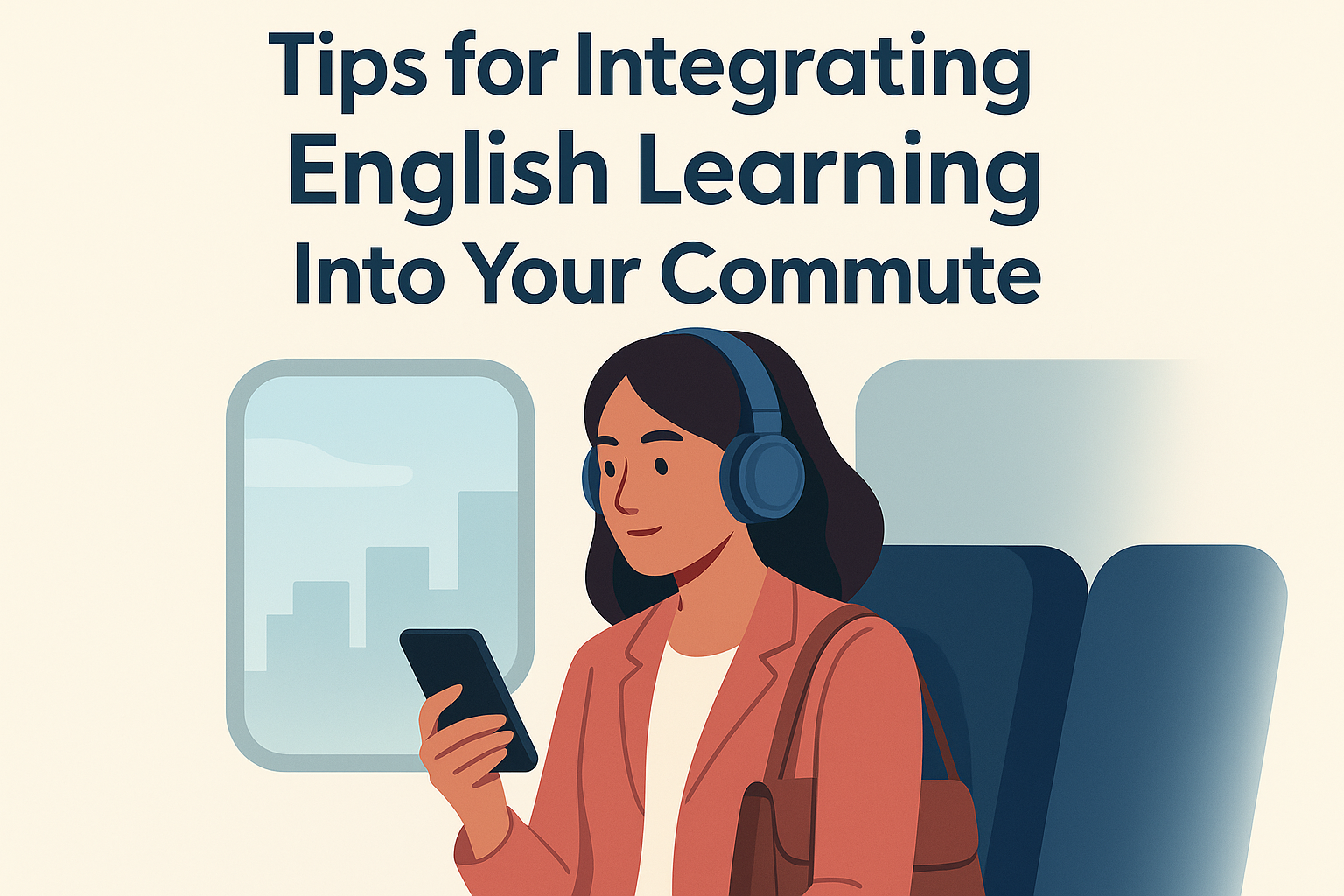
Understanding the Importance of Integrating English Learning Into Your Commute
In today’s globalized world, English proficiency is not only a valuable asset but often a necessity. Whether you’re an international business professional, a traveler, or someone who wants to expand their cultural horizons, learning English can open numerous doors. However, as adults with busy lives, it’s often challenging to find time to sit down and dedicate yourself to learning a new language. This is where integrating English learning into your commute can be a game-changer. Utilizing the time spent commuting allows you to transform idle periods into productive learning opportunities without disrupting your daily routine.
Key terms such as “commute” typically refer to the time spent traveling from home to work or school. This time varies for everyone, ranging from a few minutes to several hours daily. Integrating English learning into your commute ensures that you’re making use of this otherwise uneventful time. Not only does this practice reinforce the language skills you’re working on, but it also enables continual learning without having to carve out additional time from your already packed schedule.
Integrating English learning into your commute is not just about maximizing productivity. It matters because it allows for seamless and consistent learning, which is essential for attaining fluency. This approach can significantly enhance your language acquisition process, making it feel less like a chore and more like a natural part of your daily routine.
Listening to English Audiobooks and Podcasts During Commutes
One of the easiest ways to start integrating English learning into your commute is by listening to English audiobooks and podcasts. This method serves several purposes: it improves your listening skills, expands your vocabulary, and familiarizes you with different accents and pronunciations. The audio format is particularly beneficial for auditory learners who retain information better through listening. You can choose from a wide variety of topics that interest you, whether it be mystery novels or educational podcasts that discuss current events or specialized subjects.
For instance, remember the case of Maria, who spent an hour each day commuting to work. Instead of spending that time flipping through social media, she opted to listen to podcasts such as ‘Learn English with Emma’ or ‘The English We Speak.’ These not only helped her improve her listening skills but also introduced her to colloquial phrases and expressions she hadn’t encountered in formal English lessons.
If you’re new to this method, begin with shorter episodes or chapters. Gradually move on to longer content as your listening endurance improves. Regularly listening to English content during your commute will, over time, drastically improve your comprehension abilities in real-life conversations.
Utilizing Language Applications
In this digital age, language learning applications have become increasingly popular due to their convenience and efficiency. Apps such as Duolingo, Babbel, and Rosetta Stone offer English learning modules specifically designed to be completed in short periods, making them perfectly suitable for commutes. These applications often combine visual and auditory learning elements, facilitating the retention of new vocabulary and grammar structures.
Consider Kevan, a middle manager at a multinational corporation. His commute involves taking two trains and a bus. By using an app like Duolingo for 15 minutes during each leg of his commute, he effectively converted travel time into productive learning sessions. Over a few months, he noted a significant improvement in his English proficiency, which has helped him communicate more effectively at work.
An excellent feature of these apps is the gamification of learning, which keeps users engaged and motivated to continue progressing. Many apps offer downloadable lessons that can be used offline, a particularly vital feature for those with unreliable internet connectivity during their commutes.
Reading English E-books and Using E-readers
Another efficient way to integrate English learning during your commute is by reading English e-books on your tablet or e-reader. This approach suits visual learners and individuals who prefer reading over auditory activities. The advantage of e-books lies in their accessibility—you can store hundreds of books on a single device, allowing for a broad selection at your fingertips.
Take the example of Janet, a graduate student who commutes daily to her university. She downloaded several English novels and non-fiction books that she could read during her train rides. With built-in dictionaries and translation features on most e-readers, Janet found it easy to look up unfamiliar words and phrases in real-time, enriching her vocabulary with minimal disruption.
Some might question if e-books provide the same depth of comprehension as physical books. However, studies have shown that reading on digital platforms can be equally effective, especially with the enhanced features they offer. Regularly reading in English will develop not only your reading skills but also indirectly improve your writing and comprehension abilities.
Engaging with Interactive English Learning Websites
Interactive websites offer a multimedia approach to language learning, combining reading, listening, and writing exercises. Websites like BBC Learning English, FluentU, and Breakthrough English provide a range of interactive materials that can make commutes more educational. Many of these platforms also offer downloadable content for offline access, ideal for long commutes or those without consistent internet.
Imagine Alex, who spent around 45 minutes commuting every day in a busy metropolitan city. By accessing interactive websites on his smartphone, he engaged with various exercises and quizzes, each tailored to his proficiency level. These daily interactions proved instrumental in building his confidence in using English both professionally and socially.
Engaging with these websites not only reinforces existing knowledge but also exposes learners to different contexts and cultural nuances, greatly broadening their understanding of the English language. The multimedia approach keeps learners engaged, ensuring that each commute is maximally productive.
| Method | Suitable for | Examples |
|---|---|---|
| Audiobooks/Podcasts | Auditory learners | ‘Learn English with Emma’, ‘The English We Speak’ |
| Language Apps | Digital learners | Duolingo, Babbel |
| E-books/E-readers | Visual learners | Kindle, Nook |
| Interactive Websites | Hands-on learners | BBC Learning English, FluentU |
Practicing Conversations with Language Exchange Partners
Language exchange programs can be another way to effectively utilize commutes for English learning. Apps like Tandem or HelloTalk connect you with native English speakers interested in learning your language. This setup creates opportunities for mutual learning through text, voice, or video, depending on your commuting circumstances.
Yuki, a software engineer, utilized this approach by connecting with an English-speaking partner in Australia. During his bus commutes, he engaged in text conversations focusing on daily topics and cultural exchanges. These regular interactions not only improved his conversational skills but also gave him insights into different English dialects and slangs.
The advantage of language exchange is the human element it brings, providing real-time feedback and encouraging natural communication. As you progress, you become more comfortable using English in various contexts and can gain invaluable cultural insights from your language partner.
Summarizing the Benefits and Taking Action
Integrating English learning into your commute is a strategic move for anyone keen on improving their language skills without excessive time commitments. From listening to engaging podcasts and diving into fascinating e-books to utilizing dynamic language apps and interactive websites, there is a plethora of resources available to cater to different learning styles. Regularly adopting these practices will sharpen your English abilities, enhancing both your professional and personal life.
The key takeaway here is that consistent, incremental learning can lead to significant language improvement over time. The everyday act of commuting can thus be transformed from a mundane necessity into a valuable opportunity for growth and development. By embracing these strategies, you capitalize on otherwise unused time, enriching your commutes with purpose and productivity.
If you’re looking to bridge any language gaps in your life, start by identifying what methods might work best for you. Experiment with a few options, see what suits your lifestyle, and make it a daily habit. Adopting these practices will not only facilitate your English learning journey but will also empower you to reach greater heights in your personal and professional endeavors.
Take your next step today by choosing one method from this list and incorporate it into your next commute. Consistency is key, so make it a part of your routine and observe the transformative results.
Frequently Asked Questions
1. How can I make the most of my commute for learning English?
Making the most out of your commute for learning English involves a few strategic steps. Start by selecting convenient resources like English podcasts, audiobooks, or language learning apps specifically designed for auditory learning. Choose content that matches your current level and gradually increases in difficulty. It’s important to maintain consistency, so try to listen daily. To reinforce learning, actively engage with the content by repeating phrases, keeping a journal of new vocabulary, or summarizing what you’ve learned. If you’re using public transport, consider reading English newspapers or books. Make it a habit, and soon enough, you’ll notice significant improvements in your English skills.
2. What types of resources are best for learning English during a commute?
Choosing the right resources is essential for effective language learning during your commute. Audiobooks and podcasts are excellent choices because they allow you to focus on pronunciation and listening skills. Apps like Duolingo and Babbel offer engaging, gamified lessons that are perfect for short bursts of learning. You can also download language learning series that simulate real-life conversations. If you’re driving, voice-assisted apps like Google Assistant can answer language queries, offering a hands-free learning experience. For those using public transport, consider e-books or language learning magazines that help with reading and comprehension skills. Always ensure that the resources are easily accessible offline to avoid issues with internet connectivity.
3. How can I stay motivated to learn English during my commute?
Staying motivated while learning English on your commute requires setting clear, achievable goals. Begin by identifying why you want to learn English—perhaps to advance in your career or to comfortably travel to English-speaking countries. Tracking progress through language apps or journaling can provide visible growth which is motivating. Integrate variety into your learning process to keep things interesting, like alternating between listening, speaking, and reading exercises. Join online communities or forums where you can interact with fellow learners, which can add a social element to your journey. Lastly, reward yourself for milestones achieved, which reinforces positive behavior and maintains motivation.
4. Is it possible to practice speaking English while commuting?
Yes, practicing speaking English during your commute is possible and beneficial. You can start by repeating phrases or dialogues heard in audiobooks or podcasts. This practice helps improve pronunciation and boosts confidence. Another method is to describe your surroundings or daily routine in English while commuting, which strengthens vocabulary. If you’re comfortable, use voice recording apps to role-play conversations and then listen to evaluate your fluency and accent. Some language apps have speech recognition features that offer feedback to refine your speaking skills. Consider finding a language partner, perhaps someone who commutes with you, to engage in conversation and gain real-life practice.
5. Can integrating English learning into my commute really make a difference?
Absolutely, integrating English learning into your commute can significantly impact your language skills. Consistency is key, and daily exposure to the language accelerates familiarity and understanding. Over time, you’ll notice enhanced listening skills, an expanded vocabulary, and improved pronunciation. These improvements often translate into more confidence in your ability to communicate. It’s an efficient use of previously unproductive time, turning your commute into a dedicated learning session without needing to allocate additional hours from your day. The incremental gains each day compound, contributing to measurable progress in your English proficiency. With commitment and the right approach, meaningful language advancement is entirely achievable.





