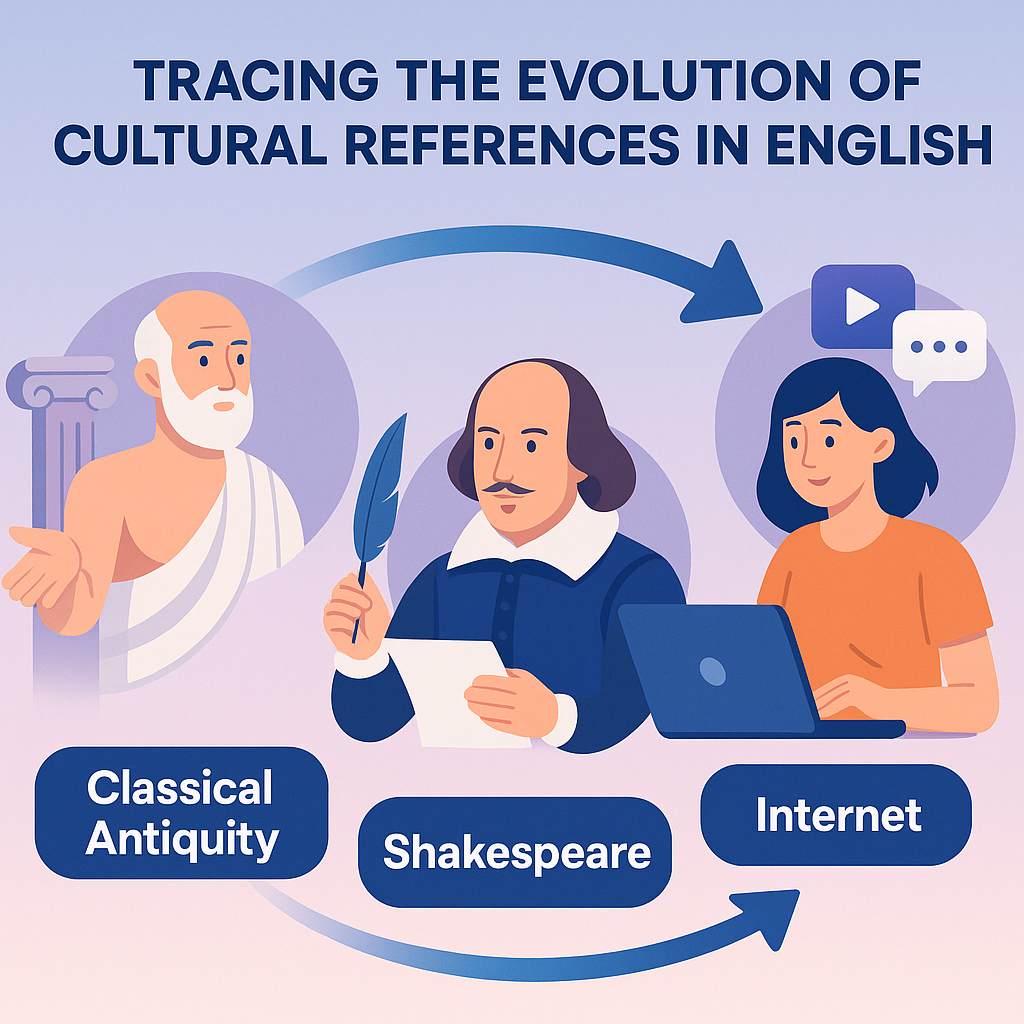
Language is much more than just a means of communication. It is a living entity that mirrors the culture, history, and ideology of its society. One of the most fascinating aspects of language is how it evolves over time, reflecting shifts in cultural norms, technological advancements, and societal changes. Cultural references—be they from literature, music, cinema, or historical events—are prime examples of how language constantly transforms. These references offer glimpses into the collective consciousness of a society, serving as markers that chronicle cultural evolution. Understanding the journey of these references provides insights into cultural shifts, societal priorities, and even the shared sense of humor of different eras. This exploration is not just academic; it is vital. Recognizing cultural references enriches comprehension in various social contexts and deepens natural language understanding.
Historical References: Foundations of Cultural Memory
Historical events have long served as the bedrock for a multitude of cultural references in English. They are not just moments captured in history books but events relayed through phrases, idioms, and analogies. For instance, the saying, “crossing the Rubicon,” directly refers to Julius Caesar’s decisive movement, symbolizing an irreversible commitment. In the context of English idioms, such historical references often serve to encapsulate complex ideas or pivotal moments succinctly.
Looking at American cultural lexicon, the reference to “Watergate” exemplifies how a specific historical event can transform into a metonym for political scandal and cover-up. This term has subsequently spawned similar expressions globally, such as “Irangate” or “Emailgate,” indicating how historical incidents continue to influence language.
Literary Influences: The Echo of Classics
Literary works are another significant contributor to cultural references. Some of these references stem from literature that has stood the test of time. Shakespeare, for example, has enriched the English language with numerous phrases such as “to be or not to be” and “all that glitters is not gold.” These phrases go beyond their original context to symbolize broader human dilemmas and truths. This transformation emphasizes literature’s role in shaping everyday communication. The popularization of dystopian phrases like “Big Brother” from George Orwell’s “1984” illustrates literature’s ongoing impact. The term captures the essence of surveillance and loss of privacy, resonating with modern-day societal concerns about digital monitoring.
Pop Culture: Waves of Change
Modern cultural references often emanate from the dynamic realm of pop culture. Movies, TV shows, and music have a tremendous influence on everyday language, offering a plethora of colloquial expressions. The phrase, “May the Force be with you,” from the Star Wars series has become more than just a line from a film; it embodies a message of hope and encouragement.
Television and music also play crucial roles. The expression “jumping the shark,” originating from the TV show “Happy Days,” is now widely recognized as the moment a series starts declining in quality. Similarly, the lyrics from famous songs often become shorthand for emotions and experiences. One cannot overlook phrases like “I will survive” from Gloria Gaynor, which has transformed into an anthem of resilience.
Technological Advances: From Jargon to Common Parleys
Technology, with its rapid developments, continually contributes new jargon and terminology, influencing cultural references. Consider how the internet’s rise has introduced new phrases and concepts into everyday conversation. “Google it” exemplifies this trend, with the brand name becoming synonymous with searching for information online.
The world of social media is another breeding ground for cultural references. Phrases like “going viral” illustrate how technology reshapes language, often creating new idioms that reflect digital culture. Such expressions not only highlight the influence of technological change on language but also emphasize the speed at which cultural references can evolve.
For example, terms like “selfie” and “hashtag” have transitioned from being niche tech jargon to universally recognized words. The digital age has not only accelerated the pace of cultural evolution but also expanded the scope and reach of cultural references.
Sports and Cultural Lexicon: Game On!
Sports have long permeated the cultural fabric, providing metaphors and phrases that are integral to everyday conversation. The phrase “down to the wire” is one such example, originating from horse racing to describe a closely contested race. Similarly, “hitting a home run” hails from baseball, representing successful or impressive achievements in varied contexts.
In recent times, phrases like “keep your eye on the ball” and “game changer” have transcended sports to represent focus and significant transformations in different areas of life. These references underline sports’ role in influencing lingua franca, offering rich imagery and simplified expressions for complex scenarios.
- “Down to the wire” – Origin: Horse Racing
- “Hitting a home run” – Origin: Baseball
- “Keep your eye on the ball” – Origin: Various Sports
- “Game Changer” – Origin: Various Sports
Globalization: The Crossing of Cultural Frontiers
Globalization has facilitated the cross-pollination of cultural references across linguistic landscapes. As the world becomes more interconnected, English has assimilated various cultural references from different parts of the globe. For instance, the phrase “feng shui” from Chinese cultural heritage has been seamlessly integrated into Western vernacular, representing principles of harmony and balance in living spaces.
Similarly, terms like “kawaii” from Japanese culture depict cuteness and charm, displaying globalization’s role in enriching English with diverse cultural concepts. This cross-cultural blend not only broadens the vocabulary but also enhances cultural understanding and appreciation on an international scale.
Such globalization-induced exchanges highlight the evolving nature of language, demonstrating how cultural references can transcend geographical boundaries to find new homes in different languages and societies.
Media and Journalism: Crafting the Narrative
The media and journalistic narratives shape cultural references by framing discussions and highlighting societal issues. Phrases such as “Fake News,” which gained prominence during recent political debates, underscore how rapidly media can introduce and propagate new cultural references. This term has now become synonymous with misleading or false information circulated by media outlets.
Moreover, journalism often revives and reshapes historical or political phrases to fit contemporary narratives. Concepts such as “The Iron Curtain” once Deployed during the Cold War era see rejuvenation in modern discussions about geopolitical strategies.
Summing Up the Cultural Voyage
As we trace the evolution of cultural references in English, it becomes clear that language is a vibrant and adaptable mirror of society. From historical events and literary works to technological advances and global influences, the journey of these references reflects the dynamism and diversity of human experience. Understanding these references is not just an exercise in etymology but is crucial for enhancing communication, promoting empathy, and bridging cultural divides.
Recognizing cultural references allows us to better comprehend context and intention in daily interactions and broader social dialogues. It deepens our connection with history, literature, and shared societal milestones, enriching our cultural fluency and awareness. As we continue to leverage the power of language, let us remain curious and engaged with the ever-evolving tapestry of cultural references that shape our world. Stay open to learning and exploring these references, as they offer windows into the human condition and the collective stories that bind us together.
In this ever-changing world, where language continues to evolve at an unprecedented pace, let us embrace the richness of cultural references as both a reflection of our past and a guide towards a more interconnected future.
Are you ready to delve deeper? Keep exploring, stay curious, and join the relentless quest to uncover the evolution of language and the culture it embodies.
Frequently Asked Questions
1. What are cultural references in the context of the English language?
Cultural references in the English language are elements of our shared knowledge or experience that come from a wide variety of sources like literature, music, cinema, historical events, technological phenomena, and even popular memes. They are those little nods or subtle mentions woven into conversations, writings, or media that invoke a larger collective understanding or evoke specific emotions because they point back to something familiar within a culture. Imagine someone referencing “the boy who lived” – instantly, for many, it conjures the world of Harry Potter. That’s the magic of cultural references; they enable a kind of shorthand communication that packs more meaning into fewer words.
2. How have cultural references in English evolved over time?
The evolution of cultural references in English is a fascinating journey through history and social change. Initially, many cultural references were tied to common religious and mythological stories, as these were widely known and carried deep societal significance. As the world changed, literature added to this pool with classics. Cinematic and musical innovations, especially during the 20th century, made film and song lyrics a new playground for cultural references. In today’s digitally driven world, references from viral internet content and global phenomena join this ever-expanding pantheon. Essentially, as what captures public imagination shifts, so too do the cultural references that pervade the language.
3. Why do cultural references matter in language?
Cultural references are more than casual mentions or catchphrases—they are linguistic bridges that bring people together, offering a way to connect through shared understanding and experiences. They can serve as powerful storytelling tools by reinforcing themes or emotions without having to overtly spell them out. Additionally, they can catalyze conversations, bring humor into exchanges, or subvert traditional narratives by offering new interpretations. So, whether they are used to highlight societal issues, entertain, or educate, cultural references enrich the language by providing depth and context. Imagine widely shared phrases like “that’s my jam” or “drinking the Kool-Aid” – each carries with it cultural stories and nuances far beyond the words themselves.
4. Can cultural references in English be misunderstood across different cultures?
Absolutely. Cultural references are deeply tied to their originating cultures, and what might be common knowledge in one country can be completely foreign in another. When English speakers from different backgrounds communicate, these references might lead to confusion rather than clarity. For instance, if someone unfamiliar with American culture hears a reference to “the land of the free,” they might not immediately get its connection to the U.S. national identity. This is why sensitivity to cultural contexts is crucial in global communications. The risk and challenge is balancing the use of local vernacular and cultural cues, while also maintaining understanding across diverse audiences.
5. How can one stay updated on current cultural references in English?
Staying updated on cultural references is both an art and a science. It involves being an active and engaged consumer of current media. Watching popular TV shows and films, reading well-discussed books, and staying tuned into the latest music hits are good practices. Beyond traditional media, being active on social media platforms can provide insights into trending topics, memes, and viral content that frequently define contemporary cultural references. Regularly browsing forums and discussions can also introduce you to niche references within specific communities. Lastly, keeping up with news cycles can provide context for references stemming from political and social events. It’s about immersing oneself in the ongoing conversations happening within media and society to catch onto the zeitgeist of the moment.