
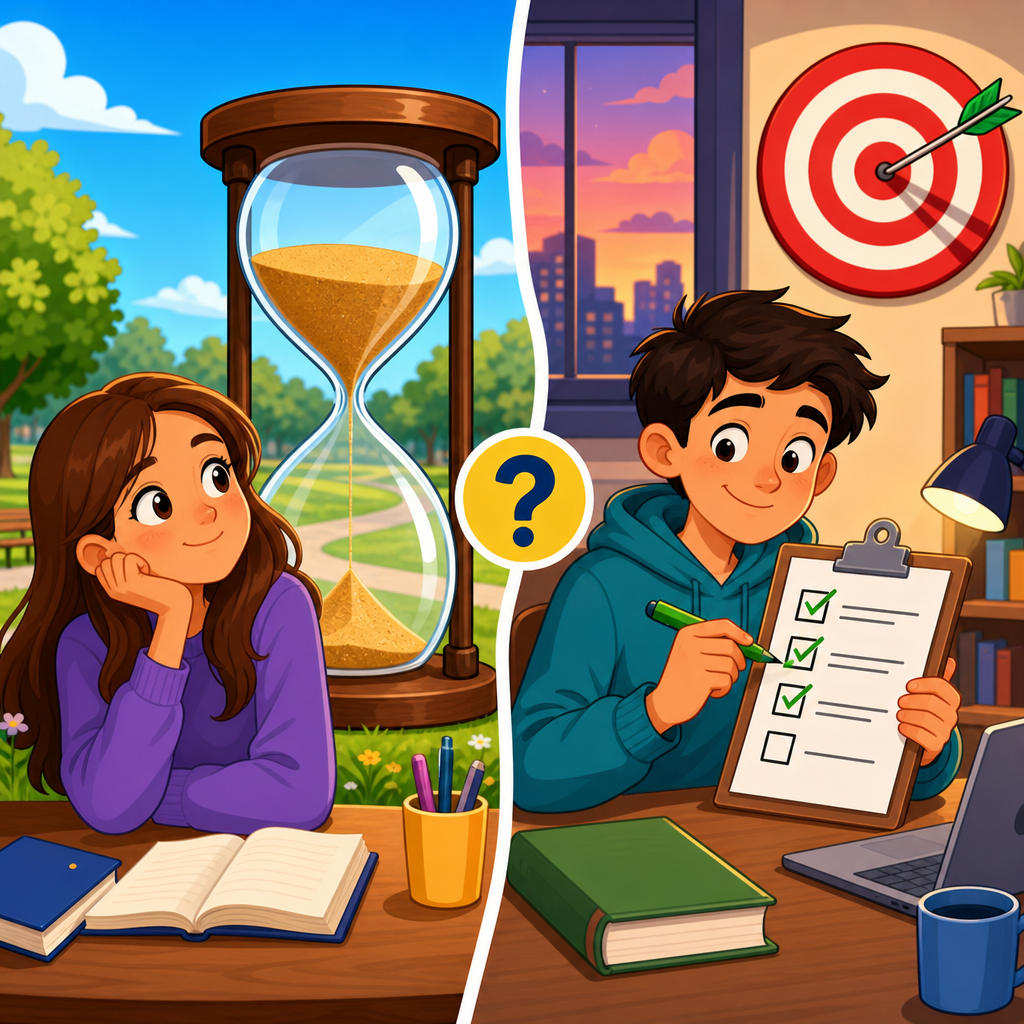
English learners often confuse until and by because both can refer to time, yet they answer different questions and create different meanings. In practical teaching, I see this error constantly: a student says, “I will finish until Friday,” when they actually mean the work will be completed no later than Friday. That small change affects accuracy, test scores, and everyday communication at work, school, and travel. Understanding until vs by matters because these words shape deadlines, duration, and expectations. If you misuse them, you may sound unclear or even promise the wrong timing. This guide explains the difference in plain English, gives ESL examples, and provides practice you can use immediately. As a hub page for miscellaneous vocabulary, it also helps learners connect this topic with broader time expressions, prepositions, and common fixed phrases used in real conversation and formal writing.
What Until Means in English
Until means “up to a specific time” or “continuing before that time and stopping at that point.” It focuses on duration. If I say, “The store is open until 9 p.m.,” the store continues being open during the period before 9 p.m., then closes at 9 p.m. In class, I often explain it as a line of time that stretches to an endpoint. That visual helps learners understand why until is used with actions or states that continue. Common examples include: “Wait until Monday,” “I lived there until 2022,” and “She studied until midnight.” In each case, something continues through time. Until can also appear in negative structures: “Don’t leave until I arrive.” Here, the action of leaving should not happen before the arrival. A close synonym is till, which is common in speech and informal writing, though until is usually safer for academic or business English.
What By Means in English
By means “not later than” a certain time. It focuses on a deadline, not a continuing action. If I say, “Please send the report by Friday,” I mean Friday is the latest acceptable time; the report may arrive earlier. This is the key distinction in until vs by: by marks a limit for completion, while until marks the point where an action continues and then stops or changes. In workplaces, this difference is critical. “Submit by 5 p.m.” means anytime before or at 5 p.m. is acceptable. “Work until 5 p.m.” means continue working and stop at 5 p.m. Learners often mix these because both refer to a final point on the calendar or clock. However, the grammar signal is different. With by, we usually talk about finished actions, deadlines, promises, or achievements: “I’ll call you by noon,” “She had saved $2,000 by June,” and “By the age of 30, he had started his company.”
Until vs By: The Core Difference
The easiest way to remember until vs by is this: use until for something that continues; use by for something that must happen before a limit. Ask two simple questions. First: Is the action continuing over time? If yes, until is probably right. Second: Is the sentence giving the latest time for completion? If yes, use by. Compare these pairs. “I will stay here until Friday” means I remain here and leave on Friday. “I will finish the project by Friday” means the project will be completed no later than Friday. Another pair: “She slept until 10” describes a continuing state ending at 10. “She will arrive by 10” gives the latest arrival time. In lessons, I tell students to watch the verb type. Ongoing verbs like wait, stay, live, and sleep often fit until. Completion verbs like finish, submit, arrive, and pay often fit by.
| Word | Main meaning | Typical use | Example |
|---|---|---|---|
| until | continuing up to a point | duration ending at a time | We talked until midnight. |
| by | not later than a point | deadline or completed action | Please reply by midnight. |
Grammar Patterns and Sentence Structures
Grammar patterns make the difference clearer. Until is commonly followed by a time expression, noun phrase, or clause: “until Friday,” “until 6 p.m.,” “until the meeting ends.” It also works in commands and negative sentences: “Don’t open it until I say so.” The clause after until often uses the present simple for future meaning, just as in other time clauses: “I’ll wait until she comes,” not usually “until she will come.” By is usually followed by a time phrase or deadline point: “by tomorrow,” “by next week,” “by 8 o’clock.” It does not normally introduce a continuing period. We say, “Finish by Monday,” but not “Work by Monday” when we mean continue working to that time. In perfect tenses, by is especially common because it marks a limit before which something is completed: “By 2020, the company had expanded to five countries.” Cambridge and Oxford learner materials both teach this deadline function early because it appears frequently in instructions, exams, and workplace emails.
Common ESL Mistakes and How to Correct Them
The most common learner mistake is using until with completion verbs. For example, “I will finish my homework until 8 p.m.” is incorrect if the meaning is a deadline. The correct sentence is “I will finish my homework by 8 p.m.” Another frequent error is using by when duration is intended: “I studied by midnight” sounds wrong if you mean the studying continued to midnight. Say, “I studied until midnight.” I also hear confusion in negative sentences. “I won’t go by you arrive” is incorrect; the correct form is “I won’t go until you arrive.” Another subtle issue is context. “The shop is open by 9” usually means it opens no later than 9, which is unusual unless discussing readiness. “The shop is open until 9” is the normal sentence about business hours. To fix errors, identify whether the sentence describes a process continuing through time or a result achieved before a limit. That single check solves most problems faster than memorizing many rules.
Real-World ESL Examples for School, Work, and Daily Life
Students need examples that match real situations. In school English, a teacher says, “Submit your essay by Monday,” because Monday is the deadline. A student says, “I studied until 2 a.m.,” because studying continued and ended at that time. In work English, a manager writes, “Send me the revised budget by noon.” A receptionist says, “The office is open until 6 p.m.” In travel English, “You must check out by 11 a.m.” gives the latest checkout time, while “The café serves breakfast until 10:30 a.m.” describes service continuing to that point. Family conversations use the same logic: “Stay here until I come back,” “Pay the electricity bill by Friday,” and “The kids watched television until dinner.” These examples matter because vocabulary becomes durable when tied to routines. In my experience, learners remember the distinction much faster when they imagine a real calendar, a real boss, or a real classroom rather than isolated grammar drills.
Practice: Choose the Right Word and Build Fluency
Use quick contrast practice to make the rule automatic. Try these: “Please arrive ___ 8:00.” Answer: by. “We waited ___ the rain stopped.” Answer: until. “Can you finish this ___ tomorrow morning?” Answer: by. “He lived in Seoul ___ 2019.” Answer: until. “Do not start ___ everyone is here.” Answer: until. “I need the payment ___ Friday.” Answer: by. Next, rewrite incorrect sentences: “I will complete the form until noon” becomes “I will complete the form by noon.” “She worked by 11 p.m.” becomes “She worked until 11 p.m.” To build fluency, make personal examples: one sentence about your schedule with until, one about a deadline with by. Then say them aloud. This active recall method is more effective than passive reading because it forces you to connect grammar, meaning, and context at the same time.
Until and by both point to time, but they do different jobs. Use until when an action or state continues up to a point: “wait until 5,” “sleep until noon,” “stay until the end.” Use by when something must happen no later than a point: “finish by 5,” “arrive by noon,” “pay by Friday.” If you remember duration versus deadline, most confusion disappears. This distinction improves speaking accuracy, email writing, exam performance, and listening comprehension because these prepositions appear in everyday instructions and schedules. As part of your broader vocabulary study, connect this lesson with other miscellaneous time expressions, common prepositions, and phrase-level patterns so you can use English more naturally. Review the examples, create your own sentences, and practice with real deadlines from your life. Do that consistently, and you will stop guessing and start choosing the correct word automatically every time.
Frequently Asked Questions
What is the main difference between until and by in English?
The main difference is that until talks about a situation continuing up to a point in time, while by talks about a deadline, meaning something happens no later than that time. This is the distinction ESL learners need to remember most clearly. If you say, “I will stay here until Friday,” it means your staying continues and then stops on Friday. If you say, “I will finish the report by Friday,” it means the report will be completed at some time before Friday or on Friday at the latest.
In other words, until answers the question “How long does this continue?” and by answers “What is the deadline?” That is why these two words are not interchangeable, even though both relate to time. Compare these examples: “The shop is open until 8 p.m.” means the opening continues up to 8 p.m. “Please arrive by 8 p.m.” means 8 p.m. is the latest acceptable arrival time. One shows duration up to an endpoint; the other shows a final limit for completion or action.
This difference is especially important in school, work, and testing situations. Saying “Submit your essay by Monday” means Monday is the deadline. Saying “Work on your essay until Monday” means you continue working and stop at Monday. A small grammar choice changes the meaning significantly, so learning this contrast improves both accuracy and confidence.
Why is “I will finish until Friday” incorrect in most situations?
This sentence is usually incorrect because finish describes a completed action, and completed actions normally pair with by, not until, when you are talking about a deadline. If a learner says, “I will finish until Friday,” they usually mean, “I will finish by Friday.” The intended meaning is that Friday is the latest time the work will be completed. Since by expresses “no later than,” it is the correct choice.
Until does not usually fit naturally with verbs like finish, arrive, submit, or complete when the speaker means a deadline. That is because until emphasizes continuation before an endpoint. For example, “I worked on the project until Friday” is correct because worked describes an activity continuing over time. But “I finished the project by Friday” is correct because finished marks the completion point.
A helpful rule is this: if the action continues over a period of time, until may be correct. If the action must happen before a deadline, use by. For example, “She waited until noon” is natural because waiting continues. “She sent the email by noon” is natural because sending is a completed action with a deadline. This is one of the most common ESL corrections because learners often associate both words with future time, but the grammar and meaning are not the same.
Can you give simple ESL examples that show how until and by change meaning?
Yes, and this is one of the best ways to understand the difference. Look at these paired examples. “I will be at the office until 5:00” means I remain there and leave at 5:00. “I will get to the office by 5:00” means I will arrive before 5:00 or at 5:00. The first sentence is about continuing presence; the second is about the latest arrival time.
Here are more examples. “Please stay until the meeting ends” means continue staying up to that moment. “Please send me the notes by the end of the meeting” means the latest time to send them is when the meeting ends. “The children watched TV until dinner” means the activity continued and then stopped at dinner time. “The children must be home by dinner” means dinner is the deadline for returning home.
Travel examples also make the contrast clear. “We waited until the train arrived” means the waiting continued and then stopped. “We must be at the station by 7:30” means 7:30 is the latest acceptable arrival time. In everyday communication, these differences matter because they affect instructions and expectations. If a boss says, “Stay here until 6,” that is very different from “Be here by 6.” One describes how long to remain; the other describes when to arrive no later than.
How can I remember when to use until and when to use by?
A practical memory trick is this: think of until as a line that continues and stops at a point, and think of by as a deadline on a calendar. If something continues over time, until is often the right choice. If something must happen before a certain time or no later than that time, use by. This visual difference helps many learners remember the grammar more easily than abstract rules alone.
You can also connect each word to a question. Use until when the question is “How long does it continue?” Use by when the question is “What is the latest time?” For example, “How long will you study?” “I’ll study until 10 p.m.” But if the question is “When must you submit it?” the answer is “By 10 p.m.” This quick question method is very useful in conversation and writing.
Another effective strategy is to notice common verb patterns. Verbs such as stay, wait, live, work, and sleep often work naturally with until because they can continue over time. Verbs such as finish, arrive, submit, pay, and return often work naturally with by because they describe completion or a required result. This is not a perfect shortcut for every sentence, but it is extremely helpful for ESL practice and error correction.
What are the most common mistakes ESL learners make with until and by, and how can they fix them?
The most common mistake is using until when the meaning is actually a deadline. Sentences like “I will send it until tomorrow,” “He will arrive until 9,” and “We must finish until Monday” are common learner errors. In these examples, the speaker means “no later than,” so by is needed: “I will send it by tomorrow,” “He will arrive by 9,” and “We must finish by Monday.” This correction immediately makes the meaning more natural and accurate.
Another mistake is using by when the meaning is continuation up to a time. For example, “I slept by noon” is usually incorrect if the speaker means sleep continued until noon. The correct sentence is “I slept until noon.” Similarly, “She worked by midnight” is wrong if it means the work continued and stopped at midnight. The correct version is “She worked until midnight.” This type of error happens when learners focus only on the time expression and not on the relationship between the action and that time.
To fix these mistakes, learners should check whether the sentence expresses duration or a deadline. Ask: “Is the action continuing up to this point?” If yes, use until. Ask: “Is this the latest acceptable time for the action to happen?” If yes, use by. It also helps to practice rewriting wrong sentences. For example, change “I’ll complete it until Friday” to “I’ll complete it by</em





