
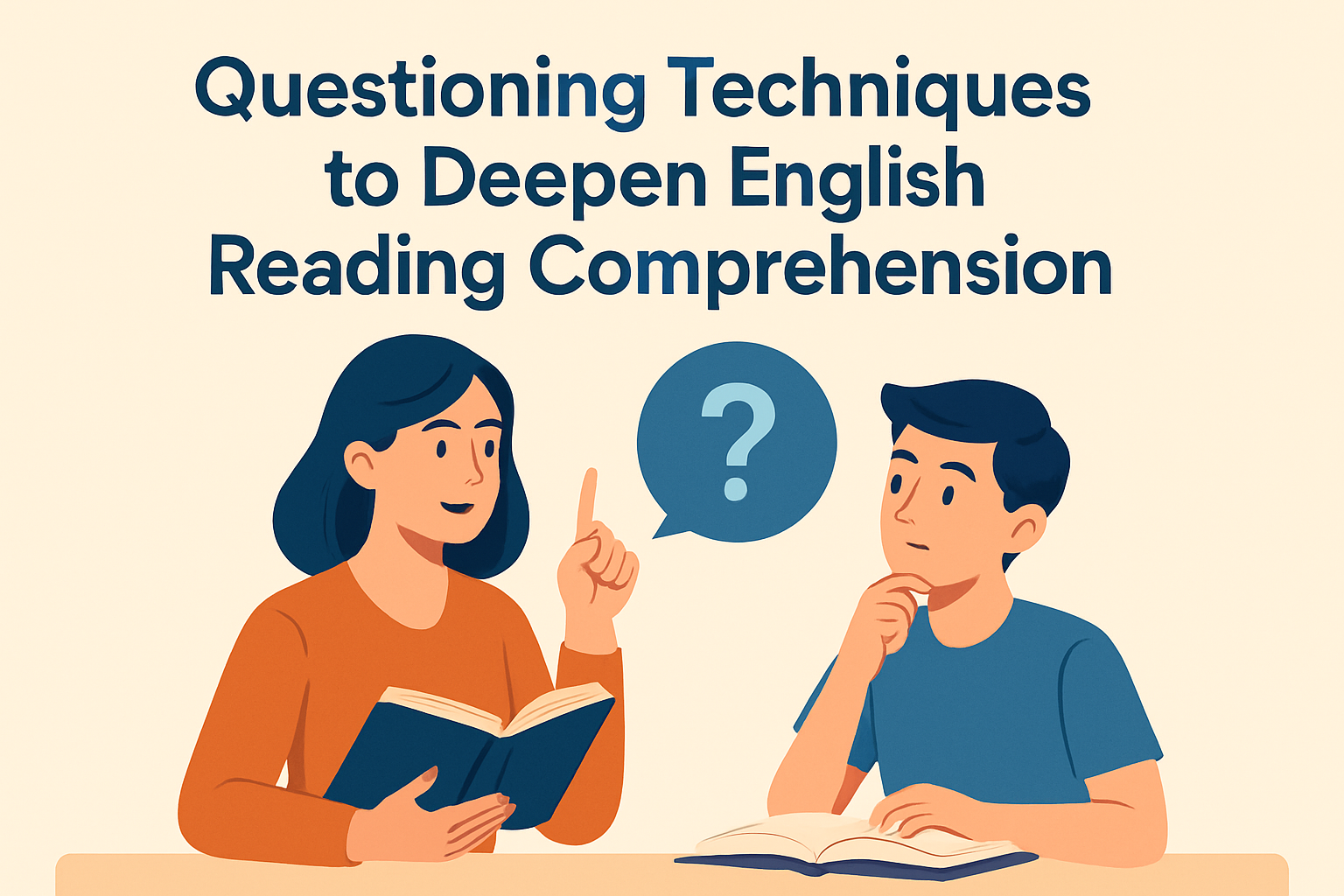
In today’s fast-paced world, the ability to read and comprehend English effectively is more important than ever. Whether it’s for academic purposes, professional growth, or personal development, the capacity to understand and interpret written content can significantly impact one’s success. One powerful tool for enhancing reading comprehension is the strategic use of questioning techniques. This article delves into the importance of these methods, introduces key concepts, and provides insights into their practical applications.
Questioning techniques involve the deliberate and systematic use of questions to explore, analyze, and understand text at a deeper level. When readers engage with a text through questioning, they are more likely to maintain focus, enhance memory retention, and foster critical thinking skills. This is because questioning stimulates curiosity and encourages active participation with the material, rather than passive absorption. This approach is not only applicable to students but also to professionals and anyone seeking to improve their reading comprehension and analytical skills. Given the rapid influx of information in everyday life, mastering these techniques can serve as an invaluable asset.
The Foundation of Questioning Techniques
Adopting questioning techniques begins with understanding the different types of questions and their purposes. Bloom’s Taxonomy is a useful framework for this, categorizing questions into various levels of complexity—ranging from simple recall of facts to complex analysis and evaluation. These question levels are:
- Remembering: Questions that require recalling facts or basic concepts.
- Understanding: Questions that require explanation of ideas or concepts.
- Applying: Questions that involve using the information in new situations.
- Analyzing: Questions that require drawing connections among ideas.
- Evaluating: Questions that involve justifying a stand or decision.
- Creating: Questions that require producing new or original work.
For instance, when reading an article about climate change, a “remembering” question might ask you to list the main causes of global warming. Conversely, a “creating” question might prompt you to propose a new initiative to reduce carbon emissions. By systematically applying these question types, readers not only improve comprehension but also empower themselves to think critically about the material.
Enhancing Engagement and Retention
Questioning techniques are particularly effective at boosting engagement and retention. When readers question what they’re reading, they interact with the text more deeply. This engagement can make the material more memorable and insightful. A teacher might, for instance, encourage students to ask themselves ‘why,’ ‘how,’ and ‘what if’ questions as they read a historical text. These questions not only foster a deeper understanding of the events but also help in retaining key information by linking it to previous knowledge or personal experiences.
Consider the example of a student reading about the American Civil War. Instead of merely absorbing dates and events, the student might ask: Why did the North and South differ in their views on slavery? How did economic factors influence the outcomes of the war? What if the South had won? This process transforms reading from a passive intake of information to an active exploration of the subject.
Developing Critical Thinking Skills
By questioning the material, readers enhance their ability to think critically. This is especially significant in more complex texts where authors may present arguments, opinions, or biases. By asking evaluative questions such as “What is the author’s purpose?”, “What assumptions underlie the argument?”, and “How credible is the evidence?”, readers can dissect and analyze the content more effectively.
For example, when a professional reads a market analysis report, critical questioning can help identify underlying biases or unsupported claims. Questions like “What data supports this forecast?”, “Are there alternative interpretations of this data?”, and “What could be potential limitations of these conclusions?” guide the reader to a deeper, more critical understanding of the report.
Applying Questioning Techniques Across Different Texts
Questioning techniques are versatile and can be applied to a wide range of texts, from academic literature to news articles and even fiction. Each type of text requires a tailored approach in questioning to maximize comprehension and insight.
| Type of Text | Questioning Techniques |
|---|---|
| Academic Texts | Focus on understanding methodologies, evaluating arguments, and exploring opposing viewpoints. |
| News Articles | Question the source, check for bias, and assess the reliability of information. |
| Fiction | Analyze characters’ motivations, themes, and author’s intent to enrich interpretation. |
Take fiction, for example. By exploring characters’ motivations and the thematic underpinnings of a novel, readers gain insights that transcend the text itself. In a novel exploring societal inequality, critical questions could include: What drives the protagonist’s actions? How does the setting influence the characters’ decisions? What is the author’s underlying message to the readers?
Practical Steps to Implement Questioning Techniques
To effectively implement questioning techniques, readers should follow a few practical steps. Begin by previewing the text. Skim through headings, subheadings, and summaries to form an understanding of the material’s structure. Then, develop a set of specific questions based on this preview.
As you read, engage actively with the text by jotting down answers or reflections in the margins. Post-reading, review your questions and see if additional queries have emerged. This process ensures a thorough engagement with the material, making the reading process both more productive and enjoyable.
For instance, when reading a journal article on renewable energy technologies, a reader might start by formulating questions related to the article’s claims about new advancements in the field, environmental implications, or comparisons with traditional energy sources. This focused approach allows for a deeper evaluation of the text and promotes a greater understanding of the subject matter.
Incorporating Technology and Resources
In today’s digital age, various online tools and resources can complement questioning techniques to further enhance comprehension. Applications and websites offer platforms for collaborative questioning and discussion, enabling readers to share insights and perspectives with others. Additionally, digital libraries and databases provide readily accessible information to cross-reference and validate facts and opinions.
In an educational setting, teachers might integrate digital forums where students post questions and respond to peers, fostering a community of collaborative learning. For professionals, platforms like research databases, webinars, and online courses can provide answers to more complex questions, supporting a continuous learning process that enhances expertise and decision-making skills.
Conclusion: Mastering Comprehension Through Questioning
To summarize, questioning techniques are a dynamic and transformative approach to improving English reading comprehension. By actively engaging with texts through various levels of questioning, readers can significantly enhance their understanding, retention, and critical analysis skills. Such techniques not only empower students and professionals but also enrich everyday reading experiences, allowing individuals to navigate the vast amount of information more effectively.
Implementing these strategies is straightforward. Start with identifying the text’s structure and generating purposeful questions. Engage with the text actively, using technology and collaborative tools to broaden your insights. By doing so, you create a habit of critical inquiry that enriches both comprehension and intellectual capacity.
The ultimate call to action for anyone seeking to improve their reading skills is to actively apply questioning techniques in their daily activities. Begin today by selecting a text of interest and challenging yourself to apply what you’ve learned. Over time, these skills will become a natural and integral part of your reading process, continuously enhancing your ability to comprehend and engage with any material.
Frequently Asked Questions
1. What are questioning techniques, and how do they enhance reading comprehension?
Questioning techniques in the context of reading comprehension involve strategically asking questions before, during, and after reading a text. These questions serve to engage the reader with the material, encouraging deeper analysis and fostering a better understanding of the content. By using questioning techniques, readers can challenge their assumptions, draw connections between different parts of the text, and clarify any confusion they might encounter.
For example, before reading, a reader might ask, “What do I know about this topic?” or “What do I expect to learn?” During reading, they might question, “Why did the author use this word?” or “What does this paragraph mean for the overall argument?” After reading, questions such as “What did I learn from this?” or “How does this information fit into what I already know?” can help consolidate the knowledge gained.
Overall, questioning techniques make the reading process active rather than passive, transforming readers from mere receivers of information into critical thinkers who can analyze and interpret content more effectively. This not only enhances comprehension but also improves retention and helps in applying learned concepts to different contexts.
2. What types of questions should I ask to improve my English reading comprehension?
To delve deeper into English texts and improve comprehension, it is essential to ask a variety of questions that target different aspects of the material. These questions can be broadly categorized into literal, inferential, and evaluative questions.
Literal questions focus on facts and explicit information within the text. For instance, “What is the main idea of the passage?” or “Who is the main character in this story?” These questions ensure that you have a basic understanding of the text’s content.
Inferential questions require the reader to read between the lines and understand implicit meanings. Examples include, “What can be inferred about the author’s perspective?” or “How does the setting influence the plot?” These questions enhance critical thinking and demonstrate a deeper comprehension of the text.
Evaluative questions encourage you to think about the text’s value and significance. Questions like, “Do I agree with the author’s conclusion?” or “How does this text compare with others on the same topic?” prompt readers to form judgments and assess the text’s impact on their understanding.
By combining these types of questions, readers can explore texts from multiple angles, leading to a richer and more nuanced understanding of the material.
3. How can questioning techniques be applied in academic settings to improve students’ reading skills?
In academic settings, questioning techniques can be a game-changer for both students and educators aiming to improve reading comprehension skills. Teachers can incorporate these techniques into classroom activities, assignments, and discussions to foster a more engaging learning environment.
One effective way is to facilitate a guided reading session, where the teacher poses specific questions before, during, and after reading. This structured approach encourages students to think critically and engage with the text actively. For example, before reading a novel in an English Literature class, a teacher might ask, “What themes do you expect to encounter?” During the reading, students might discuss questions like, “What motivates this character’s actions?” After completing the text, a class discussion could involve questions such as, “How does this story relate to contemporary issues?”
Moreover, educators can assign group work that leverages questioning techniques, where students are encouraged to come up with their questions and answer them collaboratively. This peer-to-peer interaction often leads to a broader understanding as students hear different perspectives and interpretations.
Importantly, questioning techniques help develop lifelong skills in students, setting them up for success beyond the classroom by honing their critical thinking abilities and improving their capacity to engage with complex texts across various subjects.
4. What challenges might one face when using questioning techniques, and how can they be overcome?
While questioning techniques are highly beneficial for enhancing reading comprehension, some challenges may arise, especially for beginners or those unused to critically engaging with texts.
One potential challenge is overwhelmingly focusing on formulating questions rather than understanding the text. Readers might become bogged down, trying to think of the “right” questions, and as a result, miss out on the simple enjoyment and flow of reading.
To overcome this, it’s vital to maintain a balance by allowing questions to arise organically as one reads rather than forcing them. It’s also helpful to start with a few basic questions and gradually increase complexity as one grows more comfortable with the technique.
Another common issue is interpretation. Different readers might get different understandings from the same text, leading to contradictory answers. To counteract this, sharing and discussing these questions and answers with a study group can provide valuable insights and help clarify misunderstandings.
Finally, questioning techniques can be time-consuming. To address this, it’s essential to practice these methods regularly. Over time, the process becomes more intuitive, and one can engage with the text more swiftly yet still deeply.
By understanding and anticipating these challenges, one can more effectively implement questioning techniques and reap the considerable benefits they offer.
5. Can you provide some practical tips to incorporate questioning techniques into daily reading habits?
Incorporating questioning techniques into your daily reading habits doesn’t have to be a daunting task—it can become an enjoyable part of your routine with a few practical strategies.
Start by selecting a variety of reading materials. Different genres and styles will expose you to a wide range of content, helping to naturally generate diverse types of questions. From newspapers and novels to academic articles and blogs, the broader your reading spectrum, the more questions you’ll find yourself asking.
Before you read, take a moment to preview the material by scanning headings, subheadings, and any images. This initial glance can prompt questions about what the text might cover, setting the stage for an engaged reading session.
During reading, don’t hesitate to take notes or jot down questions in the margins or a dedicated notebook. This active engagement ensures that you capture immediate thoughts and areas of curiosity or confusion.
After reading, it can be beneficial to reflect on the material by answering the questions you’ve noted. Try writing a brief summary or discussing your thoughts with a friend or colleague; verbalizing your understanding can often lead to even deeper insights and new questions.
Finally, make it a habit. As with any skill, the more consistently you apply questioning techniques, the more naturally they’ll come to you, making your reading sessions more productive and enjoyable.
These practical steps can help make the process seamless, turning questioning techniques into a powerful tool for enriching your daily reading experience.





