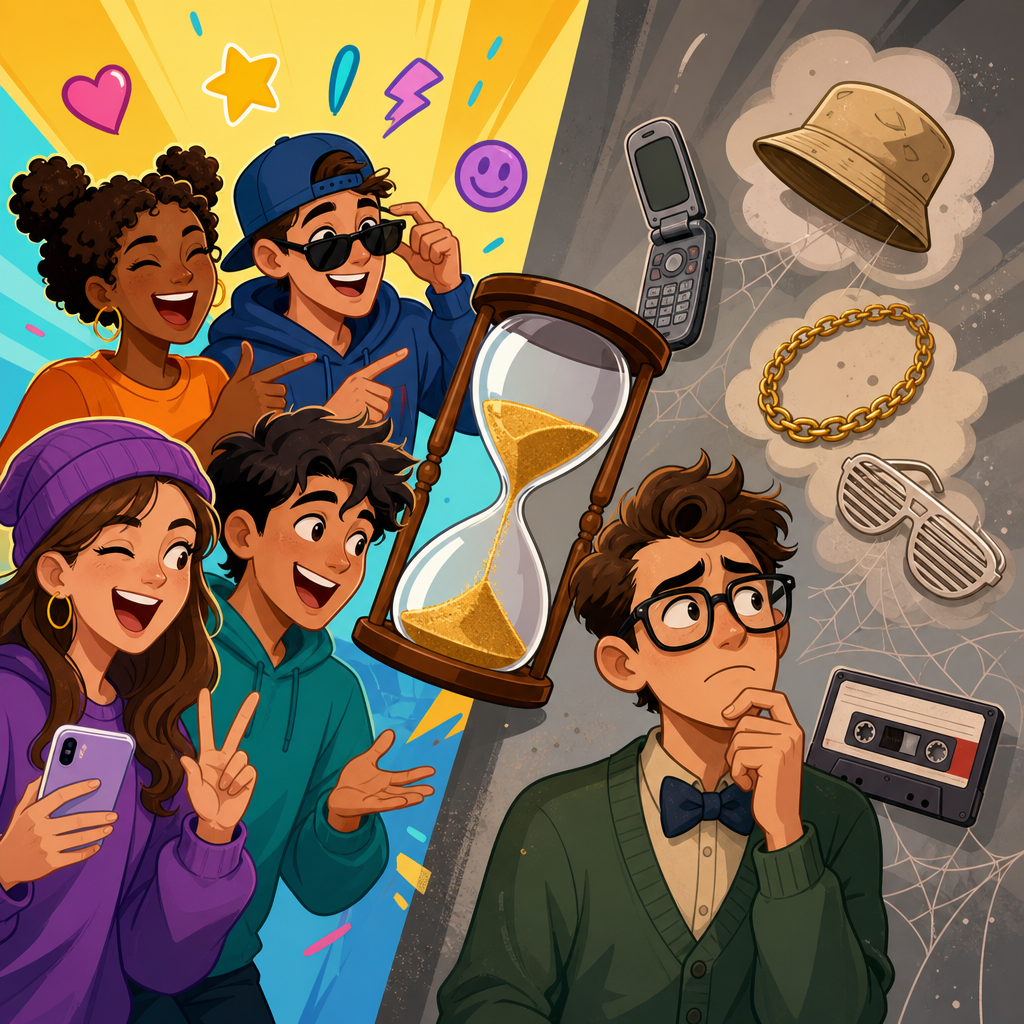
English slang burns bright and often burns out quickly, which is why some once-fashionable expressions can make a speaker sound oddly frozen in time. In everyday use, slang means informal vocabulary tied to a group, moment, or attitude rather than to formal grammar. Aged or dated slang is language that still has meaning but no longer signals current belonging. I have seen this happen repeatedly in classrooms, offices, and online communities: a word that felt sharp one year can sound forced, ironic, or embarrassingly old just a few years later. Understanding why some English slang ages fast matters for learners, teachers, writers, and professionals because slang does more than label things. It signals identity, generation, region, social distance, and media influence. When that signal changes, the word changes with it. The result is not random. Slang usually dates quickly when it is tightly attached to a trend, a platform, a celebrity, or a narrow in-group performance that the wider public later copies. Once spread strips away exclusivity, the term loses energy. That pattern explains why some expressions disappear, some survive as jokes, and a small number become ordinary vocabulary.
Slang ages when its social job disappears
The fastest-aging slang is usually language that was created to do a very specific social job. In practice, slang often marks insider status. It helps speakers show that they belong to a scene, understand a reference, or share a stance toward mainstream culture. When the original scene fades or when outsiders adopt the term, the word stops performing that job well. I have watched this happen with words like “groovy,” “rad,” and “on fleek.” Each once carried a live social meaning beyond its dictionary sense. “Groovy” was tied to a countercultural style and a period sound. “Rad” belonged to skate and surf youth culture before becoming a mainstream parody of the 1980s. “On fleek” exploded from a viral video, spread across brand marketing, and then lost freshness almost immediately. None of these terms became incomprehensible. They became overexposed.
This is the key principle: slang depends on scarcity. If only a group uses a term, the word can signal membership. When everyone from news anchors to fast-food brands starts repeating it, the signal weakens. Linguists often describe this as enregisterment, the process by which forms become associated with a recognizable social style. Once a style becomes fixed in public memory, the term can start sounding performative rather than natural. That is why dated slang often feels like costume language. The speaker may understand the meaning perfectly, yet the expression now points more strongly to a past persona than to a present message.
Media cycles and platforms compress the lifespan of new expressions
Digital media has dramatically shortened the timeline of slang adoption and decline. Before social platforms, many slang terms spread through local communities, music scenes, radio, television, and film, often over years. Now a single clip on TikTok, X, YouTube, or Instagram can introduce a phrase to millions in a day. That speed creates reach, but it also creates exhaustion. A term that goes viral is copied, memed, commercialized, and mocked at extreme speed. By the time many people first hear it, early adopters may already be dropping it.
I have seen students bring in expressions from short-form video that were already past their peak before the semester ended. The issue is not only speed but context collapse. Online, language moves from one audience to many audiences at once. A phrase born in African American English, queer communities, gaming, stan culture, or regional speech can be detached from its original context and repeated by users who do not share the norms that shaped it. That broader circulation often changes tone and meaning. Some words survive this shift, but many do not. They become flattened, overused, or interpreted as imitation.
Celebrity and brand adoption accelerates the aging process even further. Marketers often chase fresh slang to appear relevant, but institutional use usually signals that a term has peaked. When a corporation writes like a teenager, the effect is rarely current. It sounds delayed because corporate review cycles are slow and slang cycles are fast. The same pattern appears in film dialogue and advertising copy. A term inserted to seem contemporary may already feel stale by release day.
Who says the slang matters as much as the slang itself
Slang does not age at the same rate for every speaker. Age, region, ethnicity, profession, and community all shape whether a term sounds current, natural, ironic, or awkward. A word can remain alive within one network while sounding dated elsewhere. This is why broad statements about what is “cringe” or “dead” are often unreliable. In my own editing work, I have had to remove expressions that were perfectly normal in one online niche but distracting in general-audience material. Audience fit decides freshness.
That is also why borrowed slang is risky. When speakers use terms from communities they do not belong to, they may miss the rhythm, pragmatics, or social limits of the expression. The result can sound delayed or inauthentic. This is especially true when people learn slang from compilation videos instead of from real interaction. They get the definition but not the usage conditions. For learners exploring related figurative language, this guide on hand idioms in English is useful because it shows how meaning depends on context, not just vocabulary.
| Reason slang sounds dated | What happens | Example |
|---|---|---|
| Trend attachment | The term is linked to a short-lived meme, song, or platform moment | “On fleek” after viral overexposure |
| Mainstream adoption | Brands and mass media repeat the term until it loses insider value | “YOLO” in advertising campaigns |
| Generational shift | Newer speakers avoid older markers to create distance from previous cohorts | “Rad” sounding tied to the 1980s |
| Context loss | A phrase spreads outside its original speech community and meaning flattens | Internet catchphrases reused without tone |
| Performance without fluency | Speakers know the word but not when or how to use it naturally | Adults copying teen slang from social media |
Some slang survives by changing function, while most does not
If slang ages fast, why do a few terms last? The answer is that durable slang usually becomes less socially narrow and more semantically useful. Words survive when they fill a genuine gap, remain easy to understand, and detach from a single fad. “Cool” is the classic example. It began as slang, but it endured because it is flexible, brief, and broadly applicable across generations. “OK,” though older and more complex in origin, shows a similar pattern of normalization. By contrast, terms built mainly on novelty, irony, or short-lived cultural positioning often have little reason to remain once the moment passes.
Sound and structure matter too. Catchy forms spread faster, but speed can be a disadvantage. Highly stylized phrases often peak quickly because their very shape advertises a period vibe. Semantic narrowness also limits survival. If a term applies only to one highly specific social performance, it has little room to evolve. Durable expressions tend to broaden. Dated ones tend to stay fixed. Another factor is whether a word can move into speech without drawing attention to itself. If every use still announces “I am using slang,” the term is less likely to become ordinary. Successful survivors stop feeling like special effects.
There is also a difference between dead slang and archived slang. Some expressions are gone from active use. Others remain available for humor, retro style, or deliberate characterization. Saying “far out” today usually does not mean a speaker thinks it is current. It performs a reference to an earlier style. Writers, comedians, and filmmakers use this effect intentionally. Dated slang can therefore remain culturally useful even after everyday freshness is gone.
How to tell whether an English slang term is current or dated
The safest way to judge slang is to look for repeated, natural use across live contexts, not just dictionary entries or trend lists. Start by checking whether the term appears in recent unscripted speech from speakers who actually shape the variety you are hearing. Interviews, podcasts, livestreams, and casual video posts are better indicators than scripted marketing copy. Next, notice age spread. If only older adults are using a term to imitate youth speech, it is probably fading. If younger speakers use it casually without highlighting it, the term may still be current.
Corpus tools and usage databases help, though they lag behind the newest shifts. Google Trends can show search spikes, which often reveal hype rather than durability. Urban Dictionary captures emerging meanings but is inconsistent and not a reliability standard. Better signals come from comparing multiple sources: recent subtitles, social posts from relevant communities, and your own listening. I advise learners to avoid using a term until they have heard it in several real conversations with similar tone and meaning. Repetition across contexts matters more than one viral clip.
Above all, remember that sounding natural in English rarely depends on using the newest slang. Clear, idiomatic standard English ages far more slowly. Slang is optional, high-risk vocabulary. Use it when you understand its community, tone, and shelf life. If you are unsure, choose plain language and listen longer. That habit protects credibility while still letting you notice how living English changes. The benefit is practical: you communicate accurately without sounding trapped in last year’s internet. Pay attention to real speakers, question trend lists, and let context decide whether a phrase is alive, ironic, or already dated.
Frequently Asked Questions
Why does some English slang age so quickly while other expressions stick around for decades?
Most slang is built for a moment, not for permanence. It usually emerges inside a specific social group, age cohort, subculture, platform, or region, and part of its appeal is that it feels fresh, insider-ish, and distinct from formal language. That freshness is exactly what makes it fragile. Once a slang term becomes widely recognized, repeated by advertisers, picked up by older generations, or detached from the community that gave it meaning, it often loses the edge that made it appealing in the first place. In that sense, slang can expire not because people stop understanding it, but because it stops signaling current relevance.
Some expressions last longer because they fill a useful gap in everyday speech, adapt well across contexts, or become so broadly accepted that they shift from slang into ordinary informal English. Others are tied too tightly to a trend, meme cycle, TV show, music scene, or online platform. When that cultural context fades, the term starts to sound timestamped. That is why one word can survive for generations while another sounds dated after only a year or two. Slang lifespan depends on function, flexibility, community identity, and how fast the surrounding culture moves.
What exactly makes slang sound dated instead of simply informal?
Dated slang is usually still understandable, but it no longer communicates present-day belonging. That is the key distinction. Informal language can sound natural and current, while dated slang often sounds as if the speaker is using a version of coolness that belonged to another era. The word itself may not be wrong, and listeners may know exactly what it means, but it carries social timing. It suggests a past moment in culture, whether that moment was shaped by schoolyard speech, office banter, internet forums, early social media, or a particular entertainment trend.
What makes this especially noticeable is that slang does social work beyond dictionary meaning. It signals stance, familiarity, age identity, irony, and awareness of current usage. When the timing slips, the word can sound forced, nostalgic, or unintentionally comic. This happens a lot in classrooms, workplaces, and online spaces where people from different generations and communities interact. A once-sharp phrase may suddenly make someone sound frozen in time, not because they are unclear, but because their linguistic signals no longer line up with the present moment.
Does using old slang make someone sound out of touch?
It can, but not always. The effect depends on tone, audience, and intention. If someone uses older slang naturally among people who share that vocabulary, it may sound warm, familiar, or even stylishly retro. In other settings, especially if the speaker is trying hard to sound current, dated slang can create the opposite effect and make the effort more visible than the message. Listeners often react not to the word alone, but to whether the speaker seems aware of its social age and how it lands in context.
There is also a big difference between deliberate reuse and accidental lag. Some people use older slang playfully, ironically, or as part of a recognizable personal voice. That can work well. Problems tend to arise when a speaker adopts expressions after their peak and uses them as if they still carry the same cultural energy. In fast-moving language environments, especially online, timing matters. So yes, old slang can make a person sound out of touch, but just as often it signals nostalgia, humor, or identity. The issue is less whether the term is old and more whether the speaker understands what it now communicates.
How do social media and internet culture make slang expire faster today?
Digital culture dramatically speeds up the lifecycle of slang. In earlier periods, new expressions often spread through local communities, music scenes, schools, workplaces, or regional networks. Today a term can emerge on one platform, go viral across several others, get copied into brand marketing, and become overused within weeks. That speed creates a paradox: widespread visibility helps slang travel, but it also strips away the exclusivity and immediacy that gave the term its original force. Once everyone is using it, especially outside the originating group, it can start to sound stale almost immediately.
Internet culture also layers slang with irony, remixing, and constant self-awareness. People adopt terms sincerely, then mock them, then revive them as jokes, then abandon them again. A word may remain visible long after it stops sounding current in real conversation. That can confuse learners and casual observers, because online presence does not always equal active relevance. Memes, short-form video, fandom communities, and algorithm-driven repetition all intensify this pattern. As a result, slang now often burns bright and burns out fast, leaving behind expressions that are recognizable but socially outdated much sooner than similar terms in earlier decades.
What is the best way to understand or use slang without sounding dated or forced?
The best approach is observation before imitation. Pay attention to who is using a term, where they are using it, and whether it appears in natural conversation or only in performance-heavy spaces like memes, marketing, or exaggerated online commentary. Slang is highly contextual, so understanding its social setting matters more than memorizing definitions. If a word shows up mainly in recycled internet jokes or in people parodying earlier trends, that is a strong sign it may already feel old or stylized rather than current.
It also helps to focus on comprehension more than production. You do not need to use every new expression to understand modern English well. In fact, people often sound more authentic when they choose clear, natural informal language that fits their own voice instead of chasing trend vocabulary. If you do want to use slang, start with terms you hear repeatedly from real speakers in the communities you interact with, and use them lightly. Language changes fast, but forced slang stands out even faster. A good rule is simple: if you are unsure whether a term still sounds current, it is usually safer to understand it than to perform it.