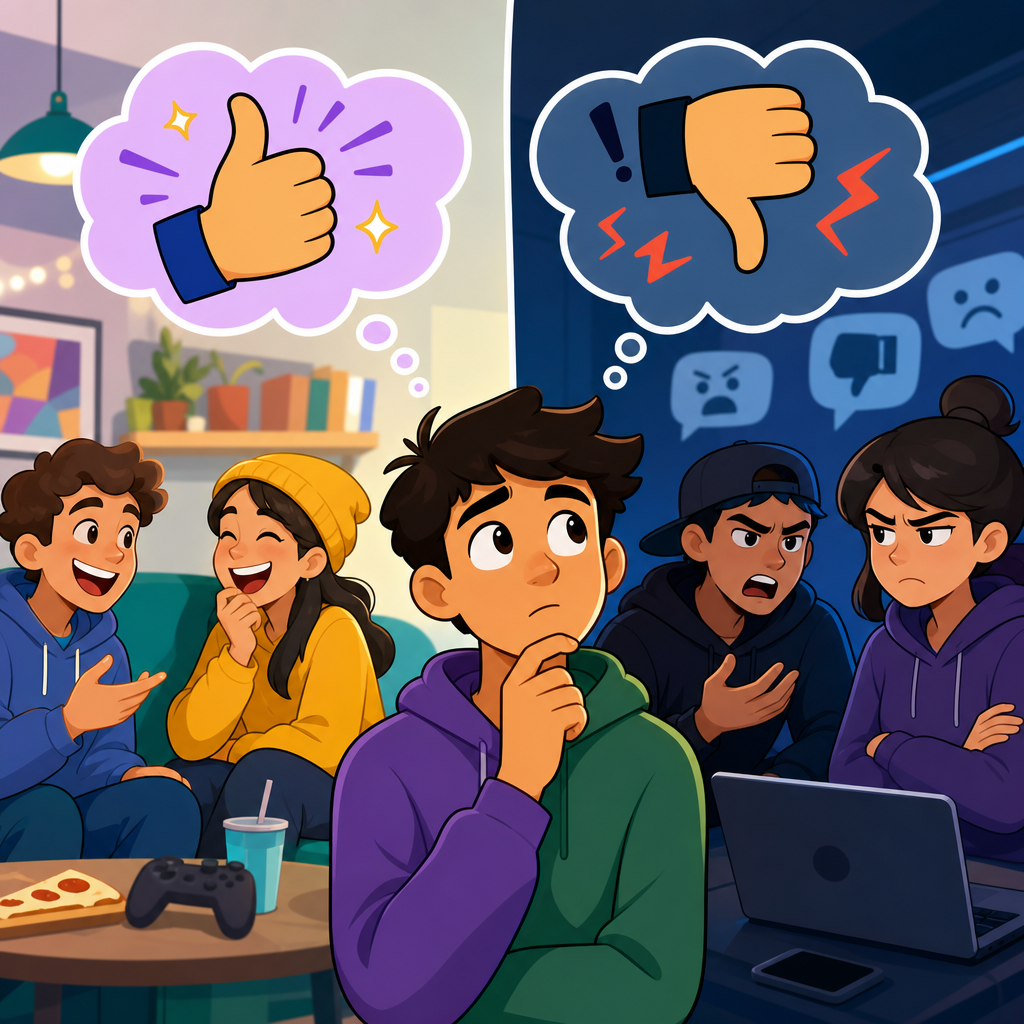
Slang looks simple on the surface, but context can completely change what the same word means. In everyday English, a slang term is an informal word or phrase whose meaning depends heavily on who says it, where it is said, and how it is delivered. That is why learners often understand every individual word in a sentence and still miss the actual message. I have seen this repeatedly when teaching conversational English: a student hears one familiar slang word, assigns one dictionary meaning, and then gets confused when native speakers react as if something very different was said.
To understand how context changes the meaning of the same slang word, it helps to define context precisely. Context includes tone of voice, facial expression, relationship between speakers, region, age group, social setting, and the words surrounding the slang term. In pragmatics, this is the difference between literal meaning and intended meaning. Slang is especially sensitive to pragmatics because it evolves fast and often signals identity, attitude, or emotion rather than simple information. A word can express praise in one conversation, contempt in another, and mild surprise in a third. The form stays the same, but the social function changes.
This matters because misunderstanding slang can create larger problems than misunderstanding standard vocabulary. In travel, school, work, and online communication, the wrong interpretation may make a speaker seem rude, naïve, or out of touch. It also matters for listening comprehension. Movies, TikTok clips, podcasts, gaming chats, and text messages are full of slang whose meaning is not fixed. If you want to follow real English, you need to interpret the scene, not just the word. Once you learn to read context systematically, slang stops feeling random and starts becoming predictable.
Tone and delivery often decide the real meaning
The fastest way to see how context changes the meaning of the same slang word is to listen to tone. Take the word “sick.” In standard English, it means ill. In slang, however, “sick” can mean excellent, impressive, or exciting. If someone says, “That trick was sick,” after a skateboard jump, the meaning is strongly positive. The speaker’s facial expression, energy, and situation make that obvious. But if a parent says, “You’ve been coughing all day; are you sick?” the meaning returns to physical illness. The same spelling carries opposite ideas depending on context.
Another useful example is “crazy.” In informal speech, “crazy” can mean mentally unwell, extremely enthusiastic, excessive, unbelievable, or simply surprising. “The prices are crazy” means very high or unreasonable. “She’s crazy about jazz” means deeply interested. “That ending was crazy” usually means shocking or intense. Because the word can touch on mental health, context also determines whether it sounds casual, insensitive, or offensive. In professional or careful conversation, many speakers avoid it when referring to people, even though they still use it freely for events, costs, or sports moments.
I tell learners to ask a simple question: what emotion is the speaker performing? Slang often works like emotional shorthand. A flat “nice” may suggest indifference, while an excited “nice!” expresses approval. The same principle applies to stronger slang words such as “wild,” “insane,” or “brutal.” In sports commentary, “brutal” may mean harsh or punishing. In casual praise, “That beat is brutal” can mean powerfully good. Without tone, transcripts often hide the intended meaning, which is why spoken examples teach slang better than word lists.
Social setting changes what a slang word can signal
Setting is just as important as tone. The same slang word can shift meaning between a classroom, a workplace, a family dinner, and a group chat. Consider “fire.” In youth slang, “fire” often means excellent: “That song is fire.” In a building evacuation, “fire” is literal and urgent. In business discussion, “to fire” someone means dismiss them from employment. Most native speakers sort these meanings instantly because the setting narrows the possibilities. Learners need to do that consciously until it becomes automatic.
Digital settings create their own meanings. The word “salty” once referred mainly to taste, but online and in gaming communities it commonly means irritated, bitter, or resentful after losing or being criticized. If a streamer says, “He’s just salty,” the claim is about attitude, not food. In a kitchen video, “too salty” returns to literal seasoning. Social media also speeds up semantic drift. A term may start in one subculture, spread widely, and then weaken or change. That is one reason older textbook examples quickly become outdated.
Audience matters too. Among close friends, a slang word may function as teasing, affection, or shared identity. In a formal meeting, the same word can sound careless or disrespectful. I have watched advanced learners use current slang accurately in pronunciation but misjudge register. They say something like “The presentation was sick” to a senior manager who expects standard professional language. Grammatically, nothing is wrong. Socially, the phrase may feel too casual. Context does not just determine meaning; it also determines appropriateness. That distinction is essential for fluent communication.
Region, generation, and community shape interpretation
Slang is not one unified system. Region, generation, and community all shape how a word is interpreted. A classic example is “bad.” In standard use, “bad” is negative. In some slang traditions, especially in music and street culture, “bad” can mean very good, impressive, or formidable. Michael Jackson’s album Bad helped popularize that reversal internationally, but even then, understanding depended on cultural context. A learner who translates every use of “bad” literally will miss the intended compliment.
British and American English also diverge. “Fit” in American English usually refers to being healthy or physically in shape. In much of British slang, “fit” can mean attractive. So “She’s fit” may describe appearance rather than fitness. Similarly, “mad” in American English often suggests anger, while in British usage it more often suggests irrationality or absurdity. These are not absolute rules, but they are strong tendencies. The broader point is clear: the same slang word can change meaning when the speech community changes.
Generational differences create another layer. Younger speakers may use “bet” to mean “okay,” “agreed,” or “I understand.” Older speakers may hear it only as a reference to gambling. “Cap” and “no cap,” widely used by younger speakers to mean lying or telling the truth, can puzzle adults who do not follow online language closely. When learners ask why slang feels unstable, my answer is that slang is a social marker first and a vocabulary item second. To interpret it well, you must know which group is using it and what that group values.
| Slang word | Context | Likely meaning |
|---|---|---|
| sick | music review among friends | excellent or impressive |
| sick | doctor’s office | ill |
| fire | social media comment on a song | very good |
| salty | gaming livestream after a loss | bitter or annoyed |
| bad | compliment in pop culture context | powerfully good |
Nearby words provide clues that fix the meaning
The surrounding sentence often tells you which meaning is active. Linguists call this co-text, and it is one of the most reliable tools for decoding slang. If someone says, “That new track is sick,” the noun “track” points toward music, making praise likely. If they say, “I feel sick after the flight,” the verb “feel” and the prepositional phrase “after the flight” point toward nausea. The slang term itself has multiple possibilities, but neighboring words sharply reduce ambiguity.
This is why memorizing isolated slang words is inefficient. Learners retain meanings better when they learn whole phrases and common collocations. “Mad at” often signals anger. “Mad about” in British English can suggest enthusiasm. “Low-key” before an adjective often softens intensity, as in “I’m low-key tired,” while “high-key” can intensify it. These patterns help you infer meaning even when a slang term is new. For broader figurative language practice, it also helps to compare slang with familiar idiomatic expressions in a resource such as this guide to hand idioms in English, where context similarly decides whether language is literal or figurative.
One practical method I use is the three-clue check: identify the topic, identify the emotion, and identify the relationship between speakers. If all three point in the same direction, your interpretation is usually right. For example, in “Don’t be salty; it was just a joke,” the topic is a reaction, the emotion is irritation, and the relationship is informal. That makes “salty” mean resentful. This method works far better than trying to assign one permanent meaning to a flexible slang term.
How to respond when a slang word seems ambiguous
When you are unsure, the safest strategy is to pause and verify meaning from context before repeating the word yourself. Native speakers do this too, especially across generations or online communities. If the stakes are low, you can ask directly: “Do you mean good or actually sick?” That question sounds natural because ambiguity is real. In professional settings, it is usually better to understand slang passively before using it actively. Receptive knowledge develops faster than productive control.
It also helps to track where you encountered the term. Was it in African American Vernacular English, gaming culture, workplace banter, London street speech, or a sitcom written ten years ago? Slang travels, but it does not travel unchanged. Some words lose force once they become mainstream. Others become dated fast. Corpus tools, YouGlish, Reddit threads, TikTok examples, and subtitle searches can show current usage, but they should be sampled critically because frequency does not guarantee appropriateness.
The key lesson is simple: a slang word does not carry meaning alone. Meaning emerges from context, and context includes tone, setting, audience, region, generation, and surrounding language. When you train yourself to notice those signals, slang becomes much easier to understand and much safer to use. Instead of asking, “What does this slang word mean?” ask, “What does it mean here?” That small change leads to better listening, fewer misunderstandings, and more natural English. Keep collecting real examples, compare them across situations, and your instinct for slang will become steadily sharper.
Frequently Asked Questions
Why can the same slang word mean completely different things in different situations?
The short answer is that slang is highly context-dependent. Unlike more formal vocabulary, which usually has a relatively stable dictionary definition, slang often gets its real meaning from the situation around it. That includes who is speaking, who is listening, the relationship between them, their age group, region, social circle, tone of voice, facial expression, and even what happened earlier in the conversation. A single slang word can be friendly in one setting, sarcastic in another, and insulting somewhere else. For example, a word that sounds like praise among close friends may sound dismissive or mocking if said by a stranger or in a tense exchange.
This is one of the main reasons English learners get confused even when they recognize every word in a sentence. They are not missing vocabulary as much as they are missing the social signal attached to that vocabulary. Slang behaves less like a fixed label and more like a flexible tool. Speakers use it to show identity, emotion, attitude, humor, distance, approval, disapproval, or belonging. That is why context changes meaning so dramatically. The word itself matters, but the surrounding clues often matter more.
What kinds of context clues help you figure out what a slang word really means?
There are several reliable clues, and strong listeners usually combine all of them at once. First, pay attention to tone of voice. A slang word said warmly can signal affection or approval, while the same word said sharply can carry criticism or annoyance. Second, look at facial expression and body language. A smile, eye roll, raised eyebrow, or laugh can completely shift the meaning. Third, notice the relationship between the speakers. Close friends often use slang more playfully and creatively than coworkers, teachers, or strangers.
Fourth, consider the setting. Slang used at a party, in a text message, in a workplace meeting, or on social media may not mean exactly the same thing. Fifth, listen to the sentence around the word. Nearby words often reveal whether the speaker is complimenting, joking, complaining, exaggerating, or softening a message. Finally, pay attention to broader cultural context, including age, region, and online trends. Some slang meanings are common in one city, country, or generation but sound unusual somewhere else. If you train yourself to read these clues together instead of isolating the word, your understanding improves much faster.
Why do English learners often misunderstand slang even when they know the dictionary meaning of the word?
This happens because dictionary knowledge and real conversational understanding are not the same skill. A dictionary can tell you the basic meaning of a word, but slang often works beyond that level. It can carry implied meanings, emotional shades, or social messages that are not obvious from the definition alone. Learners frequently hear a familiar slang word, connect it to the first meaning they learned, and stop there. The problem is that native speakers do not always use slang in a literal or stable way. They bend meanings for humor, irony, exaggeration, and group identity.
Another issue is that many learners are taught language mainly through written examples, where context is limited. Real spoken English moves quickly and includes stress patterns, pauses, facial expressions, and shared background knowledge. If those signals are unfamiliar, the learner may understand the vocabulary but still miss the speaker’s intention. This is especially common with slang because intention is often the entire point. A learner may think the speaker is simply describing something, when the speaker is actually teasing, praising, dismissing, or warning. To improve, learners need exposure to real conversations, not just word lists. They should study examples in dialogue, compare different uses of the same term, and ask not only “What does this word mean?” but also “What does it mean here?”
How can you tell whether a slang word is being used positively, negatively, or sarcastically?
The key is to listen for attitude, not just vocabulary. Positive uses of slang are often supported by enthusiastic tone, agreement, laughter, or approving follow-up comments. Negative uses usually come with frustration, criticism, distance, or a colder delivery. Sarcasm is trickier because the surface meaning and intended meaning often conflict. A speaker may use a slang word that normally sounds positive, but deliver it with a flat tone, exaggerated emphasis, or an eye roll that signals the opposite. In other words, sarcasm often depends on mismatch. The words say one thing, but the performance says another.
Conversation history also helps. If people are already arguing, complaining, or making jokes, the same slang term will likely take on that emotional direction. You should also pay attention to audience reaction. If others laugh, go quiet, look uncomfortable, or respond defensively, that reaction may reveal the intended meaning more clearly than the word itself. When you are unsure, avoid forcing a literal interpretation. It is often better to pause and gather more evidence from the next sentence or the speaker’s tone. Over time, this habit helps you hear whether a slang word is functioning as praise, insult, teasing, exaggeration, or irony.
What is the best way to learn slang accurately without copying it in the wrong context?
The safest and most effective method is to learn slang as part of complete situations rather than as isolated vocabulary. When you encounter a slang word, do not only record its definition. Also note who used it, with whom, in what setting, with what tone, and with what effect. That kind of observation teaches you the word’s social boundaries. It shows you whether the term is casual, risky, playful, rude, age-specific, regional, or mostly online. This matters because using slang correctly is not just about meaning. It is about timing, audience, and appropriateness.
A good strategy is to listen first and use later. Watch interviews, podcasts, films, and natural conversations, and collect multiple examples of the same slang term. Compare how its meaning shifts across situations. If possible, ask a fluent speaker questions like, “Would this sound friendly, aggressive, or awkward here?” or “Who would normally say this?” That kind of feedback is more useful than a simple translation. It is also wise to begin with low-risk slang that is widely understood and not likely to offend. Until you are confident, avoid slang that sounds strongly tied to a specific group, carries sexual or insulting undertones, or depends heavily on irony. The goal is not to memorize trendy words as fast as possible. The goal is to understand how meaning changes with context so that when you do use slang, it sounds natural, accurate, and socially aware.