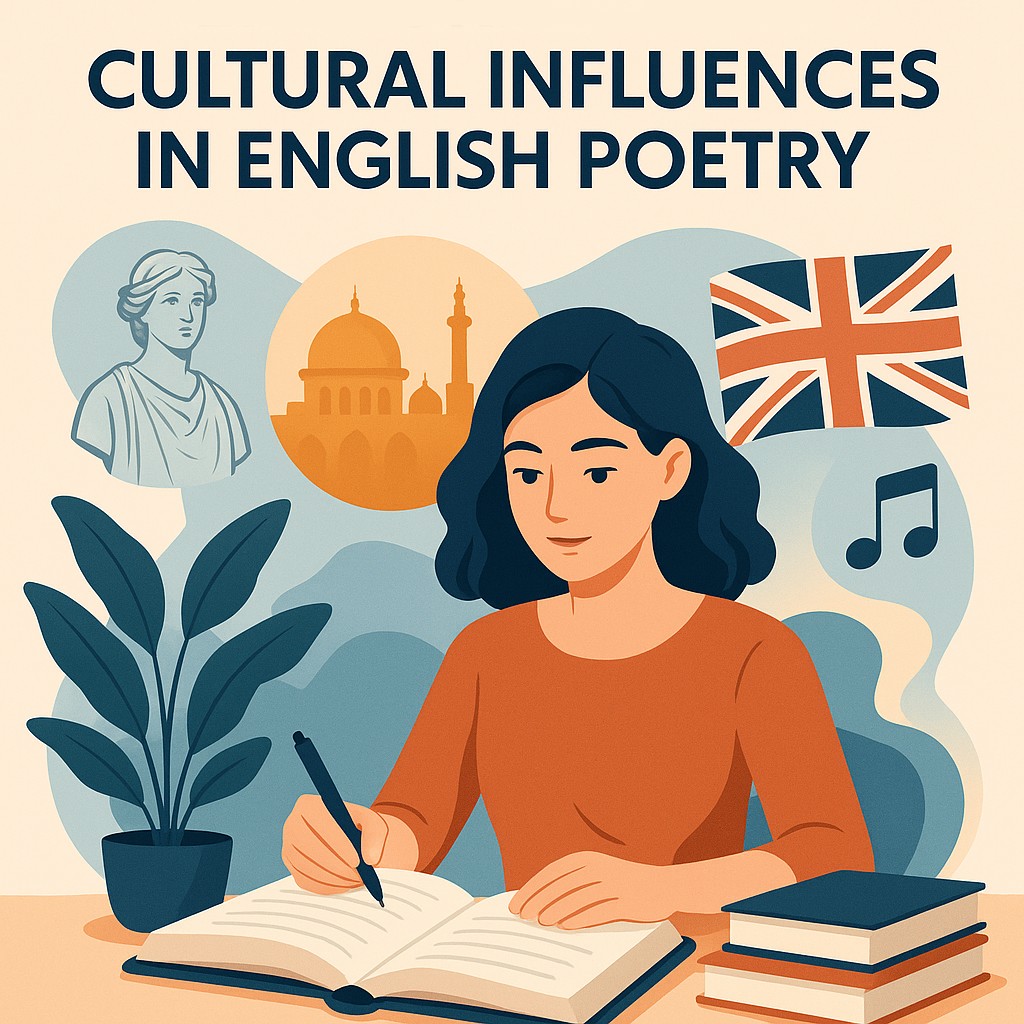
English poetry possesses a rich and diverse history that dates back several centuries. It is a treasure trove of artistic expression that reflects the intricacies of human emotion and thought. This art form, like many others, is profoundly shaped by the cultures from which it emerges. Culture, in this context, refers to the social practices, traditions, beliefs, and values that characterize a society or community. Furthermore, poetry serves as a lens through which we can observe the way historical and cultural changes influence artistic expression. Understanding these cultural influences is crucial for appreciating the depth and breadth of English poetry.
The importance of exploring the cultural influences in English poetry lies in gaining insight into the myriad of factors that inspire poets and shape their work. By appreciating these influences, readers can develop a more profound understanding and appreciation of poetry. Additionally, this exploration allows for a deeper connection with the societies and historical contexts from which these works emerge. Ultimately, exploring cultural influences in poetry provides a better understanding of the universality and diversity of human experience as expressed through the written word.
The Renaissance Influence on English Poetry
The Renaissance period, spanning from the 14th to the 17th century, was a time of significant cultural renewal and transformation across Europe. This era witnessed a rebirth of interest in the classical learning of ancient Greece and Rome. Within the realm of English poetry, the Renaissance introduced humanism, which emphasized human agency, individualism, and a keen interest in the natural world. These ideas were pivotal in changing how poets approached their craft during this time.
William Shakespeare, a renowned poet and playwright of the Renaissance, is a quintessential example of this cultural period’s impact on poetry. Through his sonnets and plays, Shakespeare embodied the Renaissance spirit by exploring themes of love, beauty, politics, and mortality. The influence of the humanist movement can be seen in his focus on the depth of human emotion and his intricate exploration of the human condition. His works continue to represent enduring examples of how Renaissance ideas elevated English poetry to new heights.
Romanticism and the Embrace of Nature
The late 18th century gave rise to the Romantic movement, which emphasized emotion, nature, and individualism. This cultural movement was a reaction against the industrial revolution and enlightenment thinking, which prioritized reason over emotion. Romantic poets sought to capture the beauty and sublime power of nature, advocating for a return to personal reflection and emotional expression.
One iconic figure of the Romantic era is William Wordsworth. His poem, “Lines Composed a Few Miles Above Tintern Abbey,” illustrates the profound connection between nature and emotion. In this work, Wordsworth reflects on the serene beauty of the landscape and its ability to elevate the human spirit. Wordsworth’s poetry often explores the interplay between natural beauty and personal reflection, embodying the central tenets of Romanticism.
Victorian Views: Industrialization and Morality
The Victorian era, spanning from the mid-19th century to the early 20th century, was marked by rapid industrialization, social change, and a strong emphasis on moral values. This period of cultural evolution greatly influenced English poetry, which often reflected social concerns and the dichotomy between progress and tradition.
Alfred, Lord Tennyson, was a prominent figure whose work explored the tensions of the Victorian age. In “The Charge of the Light Brigade,” Tennyson delves into themes of duty, bravery, and the harsh reality of war. The poem captures the courage and sacrifice of soldiers, reflecting the patriotic and moral values prevalent during this time. Tennyson’s poetry deftly encapsulates the challenges and contradictions of the Victorian era.
Modernism and the Break with Tradition
Modernism, a cultural movement that emerged in the late 19th and early 20th centuries, sought to break away from traditional forms and conventions. Inspired by rapid technological advancements, world wars, and changing social structures, modernist poets experimented with new styles and forms to express the complexities of the modern world.
The work of T.S. Eliot is emblematic of modernist poetry. In his poem “The Waste Land,” Eliot employs fragmented structure and diverse literary allusions to depict a sense of disillusionment and alienation experienced in the aftermath of World War I. Through innovative techniques, such as stream of consciousness and shifting perspectives, Eliot exemplified the modernist desire to redefine poetic expression in an era of uncertainty.
| Era | Main Influences | Key Poets |
|---|---|---|
| Renaissance | Humanism, Classical Learning | William Shakespeare |
| Romanticism | Nature, Emotion, Individualism | William Wordsworth |
| Victorian | Industrialization, Morality | Alfred, Lord Tennyson |
| Modernism | Break with Tradition, Technological Advancements | T.S. Eliot |
Postmodern Poetry and Cultural Diversity
Following Modernism, the latter half of the 20th century gave rise to Postmodernism, which subverted established norms and embraced plurality and diversity. In an era marked by global communication and cultural exchange, postmodern poets often experimented with blending different cultural elements and forms, highlighting the multiplicity of voices and perspectives.
Carol Ann Duffy, the first female Poet Laureate of the United Kingdom, exemplifies postmodern attributes in her work. Her poetry often challenges traditional narratives and incorporates diverse cultural viewpoints. In her collection “The World’s Wife,” Duffy reinterprets well-known tales and myths by providing alternative perspectives, often emphasizing female voices. By doing so, she underscores the importance of cultural diversity and inclusivity in contemporary poetry.
Conclusion: Embracing Diversity in English Poetry
Exploring the cultural influences in English poetry reveals the profound depth and transformative power of this art form. From the humanism of the Renaissance to the emotional emphasis of Romanticism, the social consciousness of the Victorian era, and the innovative spirit of Modernism, each era of poetry brings to light new ways of understanding the human experience. In the current age of Postmodernism, the incorporation of cultural diversity continues to expand the boundaries of what poetry can achieve.
Recognizing these cultural influences not only enriches our understanding of poetry but also fosters a greater appreciation for the interconnectedness of human experiences across time and place. By immersing ourselves in the world of English poetry, we embrace a journey through history, culture, and emotion. This journey encourages us to explore new perspectives and creates a more multifaceted view of the world.
To further explore the endless possibilities of English poetry, readers can delve into different eras and familiarize themselves with various poets, thereby developing a comprehensive understanding of how culture continues to shape this timeless art form. Ultimately, this exploration encourages a lifelong appreciation for the way poetry mirrors the vast and complex tapestry of human culture.
Frequently Asked Questions
1. How do cultural influences shape English poetry?
Cultural influences profoundly shape English poetry by imbuing it with elements unique to different societies and historical periods. The social practices, traditions, beliefs, and values of a community are often woven into the fabric of poetry, creating a tapestry of cultural richness. For example, the works of Geoffrey Chaucer are heavily influenced by the medieval world, reflecting the societal norms, religious beliefs, and the social hierarchy of the period. Similarly, the Romantic poets, like Wordsworth and Coleridge, draw upon their response to industrialization and a return to nature, influencing their thematic focus and style. Every era’s cultural context contributes distinct nuances to the poetry of that time, providing a lens into the past and shaping poetic form, language, and thematic concerns.
2. What are some examples of how historical events have influenced English poetry?
Historical events have left an indelible mark on English poetry, serving as both background and catalyst for creative expression. The Elizabethan era, marked by the reign of Queen Elizabeth I, was a time of exploration and artistic flourishing, inspiring the works of Shakespeare and his contemporaries with themes of love, power, and political intrigue. The World Wars deeply influenced poets such as Wilfred Owen and T.S. Eliot, whose verses echo the harrowing realities and existential questions brought about by conflict. Cultural movements, like the Harlem Renaissance, also found expression in English poetry through the contributions of writers like Claude McKay, who navigated themes of identity, race, and resilience. These examples showcase how history intertwined with culture fuels the evolution of poetry, reflecting society’s evolving consciousness.
3. How do specific cultural elements get reflected in the language of English poetry?
The language of English poetry often mirrors specific cultural elements, capturing the essence of the society from which it originates. These might include idiomatic expressions, metaphors, and allegorical references unique to a culture. For instance, the use of classical mythology in the works of poets like John Milton demonstrates how cultural narratives and symbols are employed to convey complex ideas and emotions. Similarly, the incorporation of vernacular and dialects, as seen in Robert Burns’ Scots poetry, adds authenticity and cultural identity to the verse. Such linguistic nuances not only enhance the aesthetic quality of poetry but also serve as a crucial document of cultural and linguistic heritage, allowing readers to experience the diverse tapestry of human experience across time and place.
4. How do English poets engage with foreign cultural influences in their work?
English poets have long engaged with foreign cultural influences by integrating ideas, themes, and styles from other literary traditions into their work. This interplay of cultures often leads to a unique synthesis that enriches English poetry. For instance, the Transcendentalism movement in America inspired poets like Ralph Waldo Emerson and Henry David Thoreau, who explored themes of nature, individualism, and spirituality, reflecting both Eastern philosophies and Western thoughts. Additionally, the French Symbolists, such as Baudelaire, had a significant impact on English Modernist poets like T.S. Eliot, influencing their exploration of symbolism, imagery, and free verse. By assimilating elements from various cultures, English poets expand their creative horizons, fostering cross-cultural dialogue through their art.
5. In what ways do contemporary English poets integrate cultural diversity into their work?
Contemporary English poets celebrate cultural diversity by embracing a multitude of voices, experiences, and perspectives that reflect the world’s interconnected nature. This inclusivity is evident in the poetry of authors like Carol Ann Duffy, who tackles themes of gender, identity, and societal norms, often drawing upon a rich tapestry of cultural references and myths. Likewise, poets such as Warsan Shire weave the experiences of diaspora and migration into their work, using vivid imagery and personal narrative to explore themes of displacement and belonging. Through the integration of diverse cultural elements, modern English poetry becomes a communal space for dialogue, allowing readers to engage with a rich mosaic of global stories and perspectives, ultimately fostering a deeper understanding of the human condition in all its complexity and diversity.