
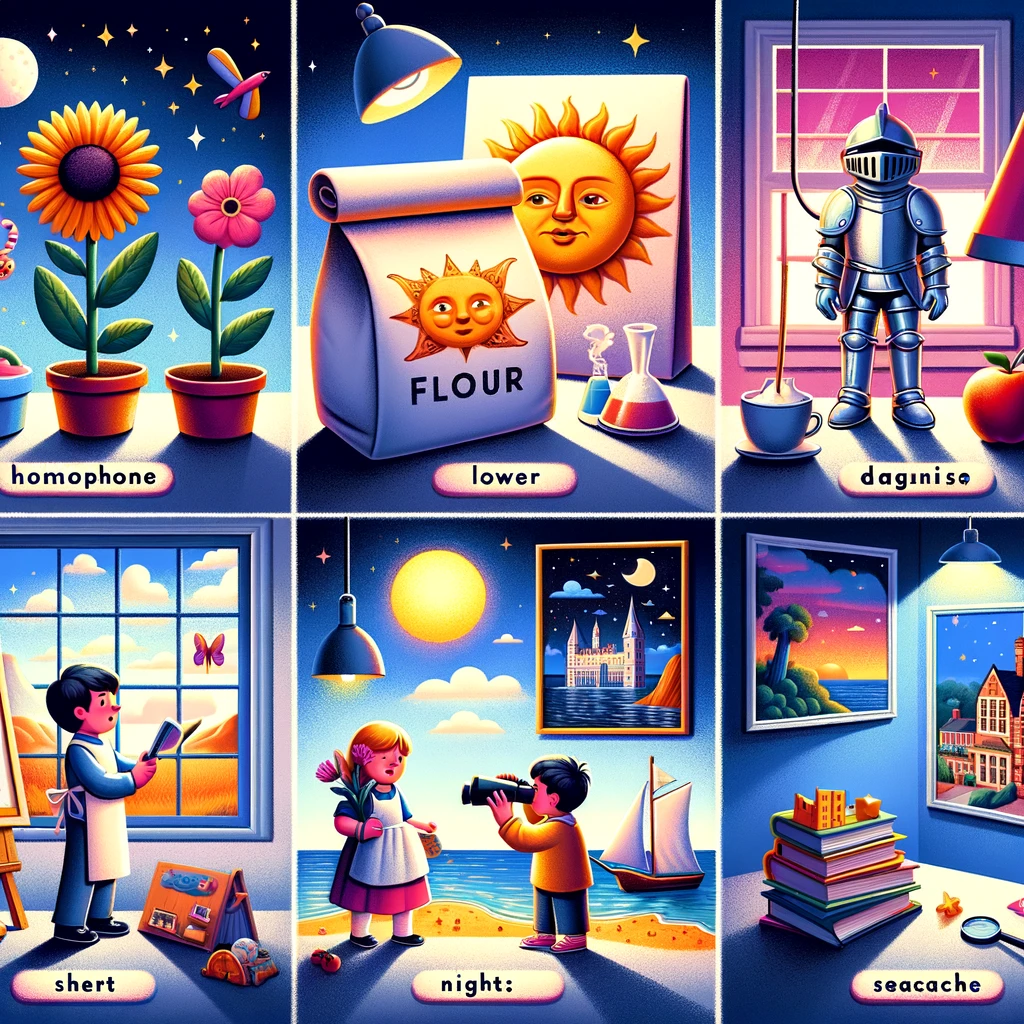
English, with its rich history and diverse influences, is a language full of peculiarities, one of which is the prevalence of homophones. Homophones are words that sound alike but have different meanings and sometimes different spellings. For English as a Second Language (ESL) learners, understanding and using homophones correctly can be both challenging and fascinating. This article delves into the world of English homophones, offering insights and strategies to master them.
What Are Homophones?
Homophones come from two Greek words: ‘homo,’ meaning same, and ‘phone,’ meaning sound. They are words that share the same pronunciation but have different meanings, and sometimes, different spellings. Examples include “flower” (the blossom of a plant) and “flour” (the ground-up grain used in baking).
Types of Homophones
Homophones can be categorized into two types:
- Homographs: These are words that are spelled the same but have different pronunciations and meanings, such as “lead” (to go in front) and “lead” (a metal).
- Homophones with Different Spellings: These are words that sound the same but are spelled differently, like “knight” (a medieval warrior) and “night” (the time after sunset).
Why Are Homophones Important?
Language Precision
Homophones are crucial for precision in language. Misusing a homophone can lead to misunderstandings and confusion. For instance, mixing up “compliment” (a praise) with “complement” (something that completes) can change the meaning of a sentence entirely.
Literary Devices
Homophones are also used as literary devices. Puns and wordplay often rely on homophones to add humor or depth to writing. For example, “Time flies like an arrow; fruit flies like a banana” plays on the word “flies.”
Cultural Understanding
Understanding homophones enhances cultural literacy. Many idioms and phrases in English use homophones, and missing these subtleties can hinder full comprehension of the language.
Common Homophones in English
English is replete with homophones. Here are some common ones:
- “Their,” “There,” and “They’re”:
- “Their” indicates possession (e.g., Their house is big).
- “There” refers to a place (e.g., I live there).
- “They’re” is a contraction of “they are” (e.g., They’re happy).
- “Your” and “You’re”:
- “Your” shows possession (e.g., Your book).
- “You’re” is a contraction of “you are” (e.g., You’re going).
- “To,” “Too,” and “Two”:
- “To” is a preposition (e.g., Go to the park).
- “Too” means also or excessively (e.g., Too much).
- “Two” is the number 2 (e.g., Two apples).
Strategies for Mastering Homophones
Contextual Learning
Learn homophones in context. Understanding how they are used in sentences can clarify their meanings and appropriate usage. Read extensively and pay attention to how homophones are employed in different contexts.
Visual Associations
Create visual associations to remember the differences between homophones. For example, remembering that “flower” has “flow” in it and plants flow with growth can help distinguish it from “flour.”
Practice and Repetition
Regular practice through writing and speaking exercises can solidify your understanding of homophones. Try creating sentences using different homophones to reinforce their meanings.
Use Mnemonic Devices
Mnemonics are memory aids. For example, “StationEry is for Envelopes” helps remember that “stationery” with an ‘e’ is related to writing materials, as opposed to “stationary” meaning not moving.
Engage in Language Games
Language games, like crossword puzzles and word quizzes, are enjoyable ways to test your knowledge of homophones and learn new ones.
Challenges and Tips for ESL Learners
Pronunciation Variations
Accents and regional dialects can affect pronunciation, making it hard to identify homophones. Listening to a variety of English accents can help you become more attuned to these differences.
Homophones with Multiple Meanings
Some homophones have multiple meanings, adding to the complexity. For example, “right” can mean correct, a direction, or a legal entitlement. Context becomes crucial in these cases.
Spelling and Usage
Since some homophones have different spellings, it’s important to pay attention to spelling rules and patterns in English. Tools like spell checkers and grammar apps can be helpful, but they are not foolproof. Understanding the context and meaning is key.
Tips for ESL Learners
- Listen Actively: Pay attention to spoken English in movies, songs, and conversations to understand how homophones are used in real life.
- Speak and Write Regularly: Practice using homophones in your speech and writing. Don’t be afraid of making mistakes, as they are part of the learning process.
- Seek Feedback: Ask teachers or native speakers to correct your usage of homophones. Constructive feedback is invaluable.
Homophones are a fascinating aspect of the English language, offering both a challenge and an opportunity for ESL learners. By understanding their nuances, practicing regularly, and engaging with the language in diverse ways, you can master homophones and enhance your English proficiency. Remember, language learning is a journey – embrace the quirks and enjoy the process.
Exploring Further: Advanced Homophones
As you progress in your English language journey, you’ll encounter more advanced homophones. These are not just tricky for learners, but often for native speakers as well. Examples include:
- “Principal” and “Principle”:
- “Principal” can refer to the head of a school or the primary part of something.
- “Principle” denotes a fundamental belief or rule.
- “Stationary” and “Stationery”:
- “Stationary” means not moving.
- “Stationery” refers to writing materials.
- “Cite,” “Site,” and “Sight”:
- “Cite” means to reference something as an authority.
- “Site” is a location or place.
- “Sight” relates to vision.
Exploring Homophones in Literature
Literature is a rich resource for exploring the use of homophones. Authors often use them to add a layer of meaning or humor. For example, Shakespeare was known for his clever use of wordplay, including homophones. Reading literature not only helps in understanding the usage of homophones but also enriches your overall language skills.
Homophones in Everyday Communication
In everyday communication, especially in informal contexts like texting or social media, homophones can lead to amusing misunderstandings. Being aware of these common errors can help you avoid them and also understand native speakers better. For instance, confusing “weather” with “whether,” or “brake” with “break” can lead to humorous or confusing situations.
Beyond Homophones: Homonyms and Homographs
While focusing on homophones, it’s also useful to understand related concepts:
- Homonyms are words that share the same spelling and pronunciation but have different meanings. For example, “bat” (the flying mammal) and “bat” (the piece of equipment used in sports).
- Homographs, as mentioned earlier, are words that are spelled the same but have different pronunciations and meanings, such as “tear” (to rip) and “tear” (a drop of liquid from the eye).
Understanding these variations enriches your comprehension of the complexities of English.
Tips for Advanced Mastery of Homophones
- Keep a Homophones List: Maintain a personal list of homophones and their meanings. Regularly review and update this list.
- Engage in Writing Exercises: Write short stories or paragraphs using homophones. This not only tests your understanding but also improves your writing skills.
- Use Language Apps: Language learning apps often have specific exercises for homophones and can provide immediate feedback.
- Join Language Forums: Online forums or language exchange groups can be a great way to learn from others and ask questions about confusing homophones.
Conclusion
Mastering homophones is a crucial part of becoming proficient in English. It enhances not only your understanding of the language but also your ability to communicate clearly and effectively. Remember, learning homophones is not just about memorization; it’s about understanding the nuances of English and appreciating its richness. With patience, practice, and a sense of curiosity, you can navigate the world of homophones and enjoy the diversity and depth they bring to the English language.





