
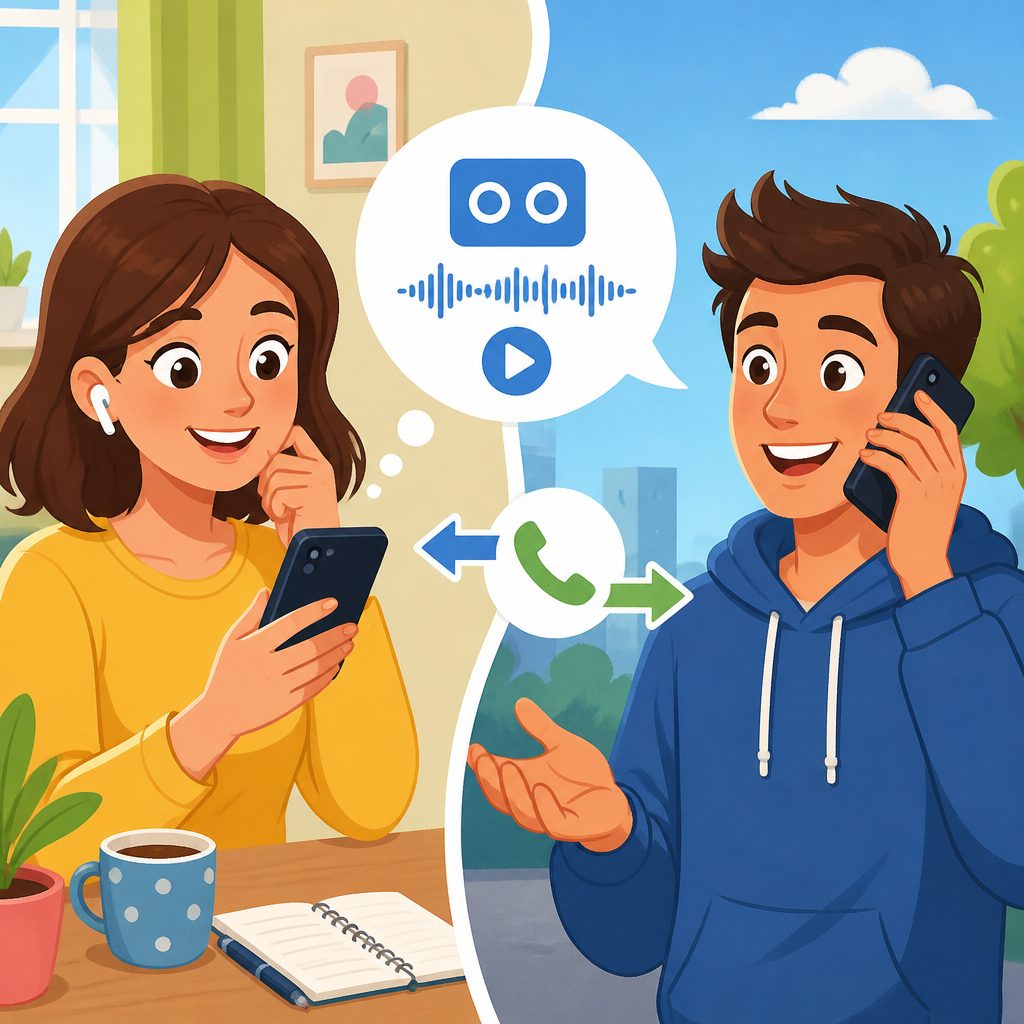
A2 listening practice with simple voicemails and call backs helps learners understand short spoken messages, catch essential details, and respond appropriately in everyday situations. At A2 level, listening tasks usually involve familiar topics, slow to natural speech, and predictable language, but voicemails still cause problems because learners cannot ask the speaker to repeat information in real time. A voicemail is a recorded phone message left when someone does not answer. A call back is the return call made after listening to that message. In practical English, this skill matters at work, at school, with delivery services, and in personal life. I have taught this lesson type many times, and the same pattern appears: students often understand the general purpose of a message but miss one key detail such as a phone number, time, address, or reason for calling. Good A2 listening practice does not mean using long, difficult audio. It means using short, realistic recordings with clear goals. Learners need to identify who called, why they called, what action is needed, and when to respond. When practice is structured well, voicemail listening builds confidence fast because the language is repetitive and highly functional.
The best A2 materials use common voicemail phrases, controlled speed, and tasks that focus attention on key information. Learners should hear expressions like “Please call me back,” “I’m calling about,” “Can you ring me this afternoon?” and “My number is…” again and again until recognition becomes automatic. This is not about memorizing scripts only. It is about building a listening routine: predict the topic, listen for the main idea, listen again for details, and then prepare a simple spoken response. That process mirrors real life. A person may hear a dentist reminder, a message from a classmate, or a missed delivery notice and then decide whether to return the call immediately. Because phone audio removes facial expressions and body language, students must rely on pronunciation, stress, numbers, dates, and context clues. That is why this narrow area of listening deserves focused practice. It trains bottom-up listening, such as catching sounds and words, and top-down listening, such as using context to infer meaning, in one compact lesson format.
Why simple voicemails are ideal for A2 listening practice
Simple voicemails are ideal because they repeat the same communication pattern in manageable language. Most recordings contain five predictable parts: greeting, identity, reason for calling, action request, and contact detail. For an A2 learner, that structure reduces cognitive load. Instead of trying to understand every word, the learner knows what information is probably coming next. In class, I often start with messages under twenty seconds. For example: “Hi Marta, it’s Ben from the gym. Your class is at six, not seven, today. Please call me back if you can’t come.” Even when students miss a word, they can often still capture the main meaning by recognizing “it’s Ben,” “class,” “six,” and “call me back.”
Another advantage is that voicemail language is highly transferable. The same verbs and time phrases appear across situations: call, meet, come, leave, bring, tomorrow, this morning, after lunch, at five thirty. This lets learners recycle vocabulary without feeling they are doing isolated drills. It also supports confidence. When students succeed with one voicemail, they quickly notice that the next message uses similar phrases. That sense of pattern recognition is crucial at A2, where motivation can rise or fall based on whether tasks feel possible.
What learners must understand in a voicemail
A2 learners do not need to catch every word. They need to extract the message accurately enough to act on it. The essential questions are simple: Who is speaking? Why are they calling? What does the speaker want? When should the listener respond? Is there a phone number or other specific detail? Those are the details that make listening functional. A learner who hears “The meeting moved to Thursday at ten” has succeeded even if they do not understand every filler phrase around it.
Teachers and self-study learners should prioritize the detail types that most often break comprehension. Numbers are the first challenge, especially phone numbers, times, prices, room numbers, and dates. Reduced pronunciation makes “fifteen” and “fifty,” or “thirteen” and “thirty,” easy to confuse. Names are another challenge because they are less predictable than common vocabulary. Short reasons for calling can also be missed when the speaker talks quickly, as in “I’m calling about your order” or “I’m calling to confirm tomorrow’s lesson.” Focused practice should therefore include repeated exposure to numbers, names, and purpose statements.
Common language patterns in call back situations
Call back practice works best when learners recognize the formulaic expressions that native and fluent speakers use on the phone. Typical voicemail openers include “Hi, this is…,” “Hello, it’s…,” and “I’m calling because….” Request phrases include “Can you call me back?,” “Please give me a ring,” and “Let me know.” Endings often include “Thanks,” “Speak to you soon,” or “Bye.” These chunks are important because learners process them as whole units. Once a phrase is familiar, they can spend more attention on the new information inside the message.
On the return call, the language should stay equally simple. A2 learners need practical sentence frames such as “Hi, this is Ana. I’m calling back about your message,” “Sorry I missed your call,” “You said the appointment is at two, right?,” and “I can come tomorrow afternoon.” This is where listening and speaking connect. If students cannot repeat the message in their own words, they probably did not fully understand it. A brief call back role-play after listening is one of the most reliable ways to check real comprehension.
Effective practice methods for short recorded messages
The strongest listening routines use three stages: before listening, while listening, and after listening. Before listening, activate likely context. If the topic is a doctor’s office, pre-teach appointment, cancel, reschedule, and available. While listening, set one task at a time. First listen for the main purpose only. Second listen for details such as day, time, and number. Third listen to confirm. After listening, have learners write a one-sentence note or prepare a return call. This sequencing prevents overload and reflects established listening pedagogy used in course series such as Oxford, Cambridge, and Pearson materials.
| Practice focus | Example task | Why it helps A2 learners |
|---|---|---|
| Main idea | Choose the reason for the call: class change, delivery, family plan | Builds confidence before detail work |
| Key details | Write the day, time, and phone number | Targets the information needed for action |
| Language chunks | Underline phrases such as “call me back” or “I’m calling about” | Improves recognition of common phone expressions |
| Response | Record a short return call | Checks understanding in a realistic way |
Short dictation can also help, but it should be selective. Do not ask learners to transcribe entire voicemails at this level. Instead, dictate only the target phrases or details that matter. Digital tools make this easier. Voice memo apps, messaging platforms, and learning sites with replay and speed control allow learners to listen several times without frustration. However, overusing slow playback can create dependence. A better approach is to use normal speed first, then slower speed only to confirm problem sections.
Real-world voicemail examples that fit A2 level
The best examples are ordinary and short. A school message might say, “Hi Leo, it’s Emma from English class. The room changed today. We’re in Room 12, not Room 8. Please call me back if you can’t find it.” A work-related message might be, “Hello Sara, this is Tom from Green Market. Can you start at ten tomorrow instead of nine? Please call me back this evening.” A personal message could be, “Hi Dad, it’s Nina. I’m at the station. The bus is late, so I’ll be home at seven thirty.” These samples are realistic because they contain one clear purpose and one or two critical details.
Use contrast to make practice sharper. Pair two similar messages that differ by one detail, such as “Tuesday at 3:15” versus “Thursday at 3:50.” This trains careful listening instead of guessing from context alone. Another useful variation is background realism. In real life, phone audio may include slight hiss or traffic noise, but at A2 the interference should be minimal. The goal is not to trick learners. The goal is to prepare them for authentic speech while keeping success achievable.
Frequent listening problems and how to fix them
When learners struggle with voicemails, the cause is usually specific, not general. One common problem is weak number recognition. The fix is repeated micro-practice with times, dates, and phone numbers spoken by different voices. Another problem is missing unstressed words in connected speech, for example hearing “callmeback” as one unclear sound. The fix is chunk training: play the phrase, show the written form, and have learners repeat it naturally. A third problem is panic. Students hear one unknown word and stop listening mentally. The fix is strategy training: ignore the unknown word, keep listening, and search for the action point.
Accent variation should be introduced carefully. A2 learners benefit from hearing more than one speaker, including male and female voices and small differences in rhythm, but extreme accent variety too early can reduce confidence. It is better to vary one factor at a time. Also, correction should focus on outcomes. If the learner understood the callback time and reason, that is a meaningful success. Total word-for-word understanding is not the target at this stage.
How to build steady improvement with call back practice
Progress comes from frequency and repetition with variation. Two or three short voicemail tasks each week are more effective than one long listening session. Keep recordings between fifteen and thirty seconds, recycle the same phone phrases, and change the context slightly each time. Ask learners to keep a message log with five fields: caller, reason, key detail, action, and confidence level. This simple record makes progress visible and shows which detail types still cause errors.
Simple voicemails and call backs are one of the most efficient ways to strengthen A2 listening because they train comprehension for immediate action. Learners practice recognizing common phone expressions, catching important details, and responding with short, useful English. The method works because the task is narrow, realistic, and repeatable. Start with very short messages, focus on purpose before details, and follow every listening task with a simple call back response. If you build that routine consistently, voicemail listening becomes less stressful and far more accurate. Use a few well-designed recordings this week and track what details you can catch after each replay.
Frequently Asked Questions
What does A2 listening practice with simple voicemails and call backs usually include?
A2 listening practice with simple voicemails and call backs usually focuses on short, clear recorded messages about everyday situations. These can include messages from friends, family members, classmates, neighbors, or work contacts. Common topics are meeting times, appointment changes, delivery updates, invitations, requests for a call back, and simple reminders. At this level, learners are expected to understand the main idea of the message and pick out important details such as names, times, dates, phone numbers, places, and reasons for calling.
In many A2 activities, the speaker uses familiar vocabulary and fairly predictable sentence patterns. For example, a voicemail may say who is calling, why they are calling, what the listener needs to do next, and when to respond. Learners may listen for specific information, complete notes, choose the correct answer, or decide how to respond. Call back practice often includes understanding what was said in the voicemail and then preparing a short spoken reply. This combination helps learners build confidence with both listening and speaking in realistic phone communication.
Why are voicemails often difficult for A2 learners to understand?
Voicemails can be challenging for A2 learners because they are recorded messages, so the listener cannot stop the speaker and ask for repetition or clarification in real time. In a face-to-face conversation, learners can use body language, lip movements, and immediate questions to support understanding. With a voicemail, those helpful clues are missing. The learner must rely only on listening, memory, and the ability to catch key words quickly.
Another reason voicemails are difficult is that even simple phone messages often contain several important details in a short time. A speaker may say their name, the reason for calling, a time, a place, and a request for a call back all in one message. If the learner misses one piece of information, the whole message may become confusing. Also, phone audio can sound less clear than normal conversation, and some speakers talk at a natural speed rather than a slow classroom speed. For A2 learners, this means they need practice identifying essential information without understanding every single word. Learning to listen for the main message first, and then for details on a second listening, is especially important for success with voicemails.
What key information should learners listen for in a simple voicemail?
When listening to a simple voicemail, A2 learners should train themselves to focus on a small group of essential details. The most important questions are: Who is calling? Why are they calling? What action is needed? When should the person respond or meet? Where is the event or appointment? If learners can answer these questions, they usually understand the message well enough to respond appropriately. They should also listen carefully for contact details such as a phone number, especially if the speaker asks for a call back.
It is helpful to think of voicemails as messages with a simple structure. Many follow this pattern: greeting, name, reason for the call, important details, and request for action. For example, a caller might say, “Hi, this is Anna. I’m calling about our English class tomorrow. The time has changed to 3:30. Please call me back this evening.” In this kind of message, the learner should catch the caller’s name, the topic, the changed time, and the request to return the call. Taking brief notes while listening can make a big difference. Writing down only keywords such as “Anna,” “English class,” “tomorrow,” “3:30,” and “call back tonight” is often enough to understand and remember the message clearly.
How can learners improve their ability to understand call backs and respond correctly?
Learners can improve by practicing with short recordings regularly and following a clear listening process. First, they should listen once for the general meaning without worrying about every word. On the second listening, they should focus on key details like names, times, and requests. On the third listening, if available, they can confirm anything they were unsure about. This step-by-step approach helps reduce stress and teaches learners to separate the main idea from supporting information. Repeating this kind of practice with common everyday topics builds stronger listening habits over time.
Responding correctly to a call back request also requires simple speaking practice. After understanding the voicemail, learners should practice giving short, polite responses such as confirming a time, asking one clear question, or saying they received the message. Useful phrases include “Hi, this is…,” “I got your message,” “I’m calling you back,” “That time is fine,” and “Please call me again.” Role-plays are especially effective because they connect listening and speaking in one task. Learners hear a message, take notes, and then give a realistic response. This develops not only comprehension but also confidence, which is essential for handling real phone communication in daily life.
What are the best strategies for A2 learners during voicemail listening practice?
The best strategies for A2 learners are simple, practical, and focused on essential understanding. One strong strategy is predicting the content before listening. If learners know the topic is an appointment, a meeting, or a delivery, they can expect words about times, places, and changes. This makes it easier to recognize familiar language when they hear it. Another useful strategy is listening for signal phrases such as “This is…,” “I’m calling because…,” “Can you call me back…,” and “See you at….” These phrases often introduce the most important information in the message.
Note-taking is another very effective strategy, but it should stay simple. Learners do not need to write full sentences. They should write only the details that matter most, such as a person’s name, a number, a day, or a location. It is also important for learners to stay calm if they miss a word. In voicemail listening, understanding every word is not the goal. The goal is to understand enough to act correctly. Finally, learners should practice with a variety of voices and recordings, moving from slow speech to more natural speech over time. This gradual increase in difficulty helps them become more flexible listeners and better prepared for real-world voicemails and call backs.





