Expanding one’s vocabulary is a critical aspect of mastering a language, enabling individuals to communicate more effectively and understand others more comprehensively. Key to this process is familiarizing oneself with words and phrases through various techniques. One such effective method is the use of themed flashcard sets. But what exactly are themed flashcard sets, and why do they matter? In this article, we delve into the intricacies of these educational tools and how they can enhance vocabulary acquisition. Themed flashcard sets are collections of flashcards organized around a central theme or topic. Unlike random assortments of words, themed sets place words in a context that can help deepen understanding and retention. For instance, a set on “Nature” might include words such as “forest”, “canopy”, and “endangered”. Themed sets can be particularly beneficial for learners, providing them with contextual clues that make new vocabulary more memorable. Understanding the value of themed flashcard sets is essential, as they offer an interactive and practical approach to vocabulary building. In light of the technological advances and pedagogical developments, utilizing themed flashcard sets can lead to more efficient and effective language learning. Let’s explore this concept further and see how these tools can be leveraged to build a robust vocabulary.
The Concept of Themed Flashcard Sets
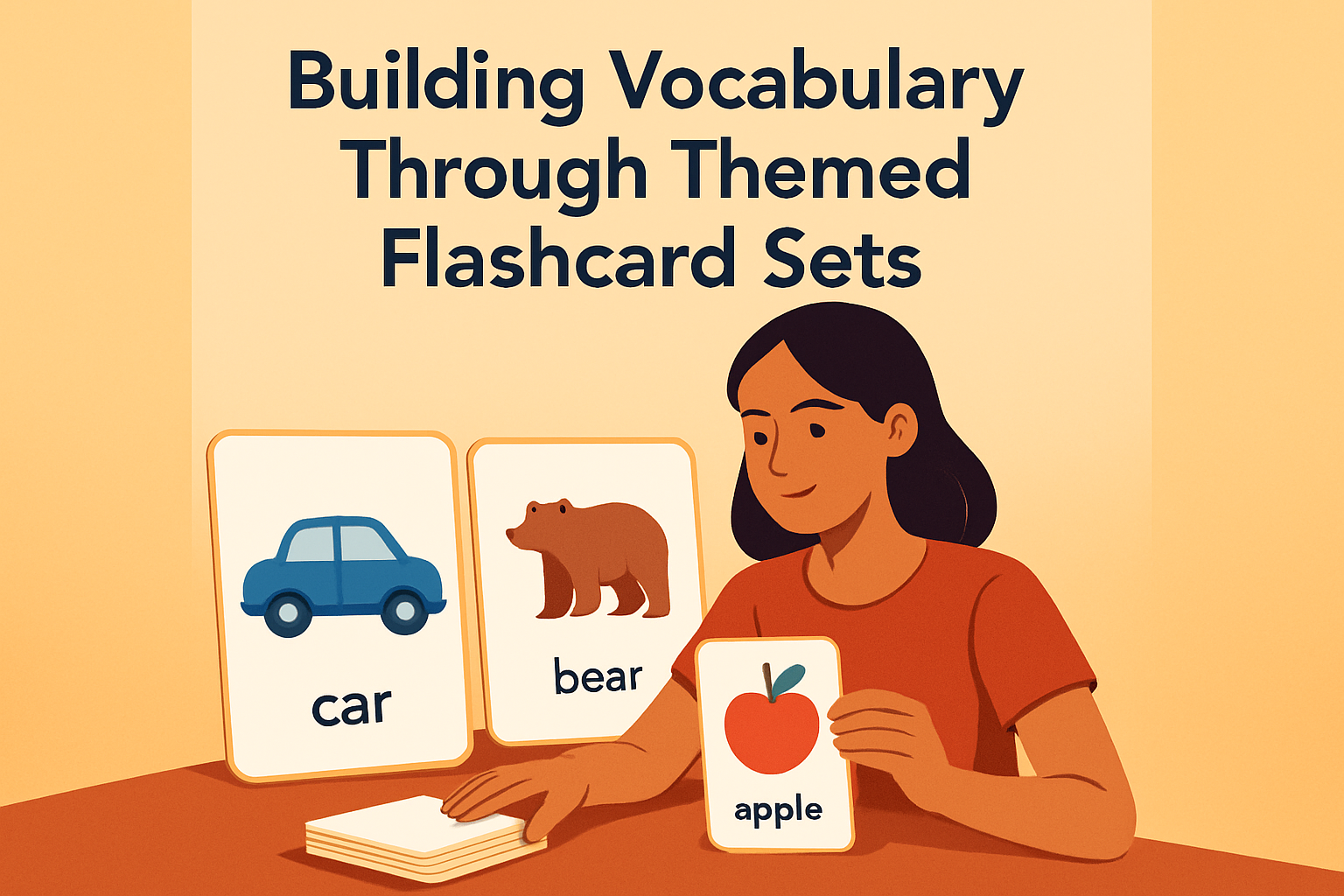
Themed flashcard sets are collections of flashcards that are centered around a specific topic or idea. These sets are carefully curated to include words and phrases that share a common thread, providing learners with an interconnected understanding of related terms. By grouping vocabulary in themes, it becomes easier to identify word patterns, root meanings, and contextual applications. This concept takes vocabulary learning beyond the rote memorization tactic, engaging learners in a meaningful way.
For example, consider a themed flashcard set focusing on culinary terms. Such a set might contain cards with words like “sauté”, “simmer”, “whisk”, and “julienne”. By learning these words within the culinary context, learners can better understand how these actions relate to cooking processes. Not only does this thematic strategy make learning more engaging, but it also aids in memorizing these terms more naturally.
Benefits of Learning Vocabulary with Themed Flashcard Sets
The use of themed flashcard sets offers several benefits crucial for effective vocabulary acquisition. Firstly, organizing vocabulary thematically aids in establishing connections between words. These connections help learners create associations that are easier to recall, as opposed to learning isolated words. Such sets can also boost cognitive engagement through interactive learning experiences. The clarity and focus provided by these themes enhance the motivation of the learner.
To illustrate, consider a themed flashcard set focused on “Weather”. Words like “humidity”, “precipitation”, “drought”, and “forecast” are all thematically associated, and understanding them as a group clarifies their relational meanings. By grouping these terms together around the “Weather” theme, the learner can easily draw logical connections between them.
Using a Themed Flashcard Set: A Practical Example
Let’s consider a detailed example of using themed flashcard sets in an educational scenario. Suppose a language instructor is working with students to expand their vocabulary related to travel. The instructor can create a themed flashcard set focused on “Travel”. The set might include vocabulary such as “itinerary”, “tourist”, “embark”, and “voyage”. Students are encouraged to not only learn the definitions but also to use them in sentences or scenarios related to travel.
By practicing vocabulary within a theme, learners can simulate real-world usage of the language. This helps with both retention and application, since the words are learned in context. Additionally, students might engage in activities like role-playing, using the flashcards to practice dialogues that involve travel scenarios. Here, the themed flashcard set acts as a springboard into more extensive language practices.
Creating Effective Themed Flashcard Sets
Themed flashcard sets are not only a resource for learners but also a creative exercise for educators and learners alike. Creating these sets requires consideration of the learner’s interests, needs, and language proficiency level. The process of crafting themed sets must ensure that vocabulary is relevant and applicable to the learner’s desired objectives.
- Choose a Theme: Select a theme that is interesting and relevant to the learner. Popular options might include themes like “Shopping”, “Gardening”, or “Science”.
- Curate Vocabulary: Select vocabulary that fits within the chosen theme and matches the learner’s proficiency level. It is important that these words be practically usable in conversations or writings related to the theme.
- Create Flashcards: Utilize tools, online platforms, or even physical index cards to create the flashcards. Be sure to include the vocabulary word, a definition, and an example use in a sentence.
- Incorporate Visuals: Visual aids can significantly enhance understanding and retention. Consider employing images, icons, or diagrams to represent the word visually.
Through this process, not only is vocabulary learning enriched, but it is also personalized to the learner’s specific needs and interests.
The Role of Technology in Themed Flashcard Sets
In recent years, technology has played a pivotal role in the evolution of vocabulary acquisition. With the advent of flashcard apps and online platforms, themed flashcard sets have become even more accessible and dynamic. Platforms like Anki or Quizlet provide users the ability to create, share, and access themed flashcard sets easily.
Using technology, learners can engage with flashcard sets in a variety of interactive ways. They can test their knowledge through games, quizzes, or even timed challenges. Additionally, users can track their progress, monitor areas for improvement, and receive feedback instantly. The versatility of digital flashcard sets accommodates different learning styles and preferences, making them a versatile tool in vocabulary building.
| Feature | Traditional Flashcards | Digital Flashcards |
|---|---|---|
| Accessibility | Limited to physical presence | Available anytime, anywhere |
| Interactivity | Lacks dynamic engagement | Offers quizzes and games |
| Personalization | Static customization | Adaptable, trackable |
Therefore, the integration of technology not only enhances the learning experience but also broadens the potential reach and effectiveness of themed flashcard sets.
Themed Flashcard Sets for Different Age Groups
Themed flashcard sets are not limited to a particular age group; they are versatile and adaptable to learners of various ages. For younger children, flashcards can focus on themes such as “Animals” or “Colors”, matching vocabulary with vibrant imagery. For teenagers, themes related to academic subjects or hobbies can be especially pertinent, offering words that are both challenging and current.
Adults can benefit from themed flashcard sets by focusing on vocational or everyday contexts including business jargon, travel phrases, or even technical terms related to their professional domain. Therefore, themed flashcard sets cater to the vocabulary learning needs across a broad spectrum of audiences, ensuring that each learner can find resources that are most relevant to their developmental stage and interests.
Conclusion and Next Steps
In conclusion, themed flashcard sets offer a unique and effective approach to vocabulary building by framing words within engaging and relevant contexts. These sets help learners make meaningful connections between words, facilitating better recall and practical application in real-world situations. By utilizing themed flashcards, learners can experience a structured yet flexible method that accommodates diverse learning needs and preferences.
The key takeaways are clear: themed flashcard sets not only enrich the vocabulary acquisition process but also make it enjoyable and applicable. Whether you are a language instructor, a student, or a self-motivated learner, themed flashcard sets provide an invaluable resource to enhance your language skills.
As a next step, consider identifying a theme that interests you and creating a personalized flashcard set. Utilize available resources, whether physical or digital, to begin strengthening your vocabulary. Embrace the challenge, and discover how themed flashcard sets can transform your language learning journey.
Frequently Asked Questions
1. What are themed flashcard sets, and how do they work?
Themed flashcard sets are collections of flashcards that focus on a specific topic or subject area, designed to help learners build their vocabulary in a structured and engaging manner. Each set revolves around a common theme, like “animals,” “kitchen vocabulary,” or “business terminology,” making the learning process more organized and relatable. By using a consistent theme, learners can connect new words to a larger conceptual framework, which aids in both memory retention and recall.
These flashcard sets work by presenting a word on one side and its definition, translation, or an image representing the concept on the other side. This dual-sided approach supports active recall, forcing the learner to think of the word’s meaning actively, thus reinforcing their understanding and memory of it. Gradually, as the learner goes through the themed flashcard set multiple times, they become more familiar with the words and confident in using them in various contexts.
2. Why is expanding vocabulary through themed flashcard sets effective?
Expanding vocabulary with themed flashcard sets is effective because it taps into several educational principles known to enhance learning. First, it leverages the power of association. By grouping words within a specific theme, learners can form connections between them, leading to a deeper understanding and easier recall. This connective thinking helps words stick in memory longer.
Secondly, themed flashcard sets promote focused learning. By limiting the scope to a certain theme, learners can concentrate on mastering a set of related vocabularies without feeling overwhelmed by the vastness of the entire language. This reduces cognitive overload and encourages steady progress.
Moreover, repetition is a critical component of successful vocabulary acquisition, and flashcards naturally facilitate this. The repeated exposure to words through a structured and consistent system helps ingrain them in memory. Also, these flashcards can be shuffled and reviewed at random, preventing the memorization of words in a specific order and ensuring a more comprehensive grasp of the vocabulary.
3. How can themed flashcard sets be customized to fit personal learning needs?
Themed flashcard sets are incredibly versatile and can be customized to suit individual learning preferences and goals. Depending on your current level of language proficiency or the specificities of your interests, you can create flashcards on virtually any theme. Begin by identifying your personal language objectives, such as enhancing conversational skills, passing a professional examination, or acquiring terminology relevant to a new hobby or career.
Once the theme is decided, curate a list of words to include in the flashcards. Tools like vocabulary lists, textbooks, or even language-learning apps can provide helpful resources for selecting appropriate words. Alongside these words, you can include helpful tools on the cards, such as phonetic pronunciations, example sentences, or even images and audio clips for auditory learning.
Furthermore, technology offers a multitude of ways to create and adapt flashcards. Digital flashcard apps allow you to adjust themes easily, add multimedia elements, or integrate spaced repetition systems that help optimize learning based on your recall performance.
4. What are some tips for effectively using themed flashcard sets to build vocabulary?
Effectively using themed flashcard sets involves strategic engagement and consistent practice. Here are some tips to maximize their educational potential:
- Set specific learning goals: Decide what you want to achieve with your flashcard practice. Whether it’s retaining a certain number of words per week or mastering a set theme, having clear objectives can keep you motivated and focused.
- Review regularly: To reap the benefits of spaced repetition, incorporate regular review sessions. This could be daily for new learners or weekly for those revisiting familiar vocabulary. Consistency is key to ensuring that the information transitions from short-term to long-term memory.
- Incorporate multiple senses: Engage more senses by using flashcards with visual elements like pictures, and if available, add audio elements for pronunciation practice. This multi-sensory approach can help reinforce learning and accommodate different learning styles.
- Test yourself: Use the flashcards for self-assessment by attempting to recall definitions or translations before flipping the card. This active recall practice strengthens memory and boosts confidence.
- Mix up the order: Shuffle your flashcard sets to prevent memorizing words based on their sequence, which can cause difficulties when encountering them in different contexts.
5. Are there any limitations to using themed flashcard sets for building vocabulary?
While themed flashcard sets offer numerous advantages, there are some limitations to be mindful of. One potential pitfall is their reliance on rote memorization. Learning through repetition without context can sometimes lead to superficial understanding, making it difficult to use vocabulary effectively in real-life situations. Therefore, it’s crucial to complement flashcard learning with activities that provide context, such as reading, speaking, and writing exercises.
Another limitation is that flashcards, particularly physical ones, may cover only a limited scope of vocabulary. As your language skills advance, you may require a wider variety of words and expressions that single-themed sets might not fully capture. A solution is to continually expand your sets with new words and incorporate more themes.
Finally, some learners might find flashcards monotonous when used excessively, leading to a loss of interest over time. It’s essential to vary your language practice methods, combining flashcards with other engaging resources like language apps, games, or conversation groups to maintain enthusiasm and motivation.