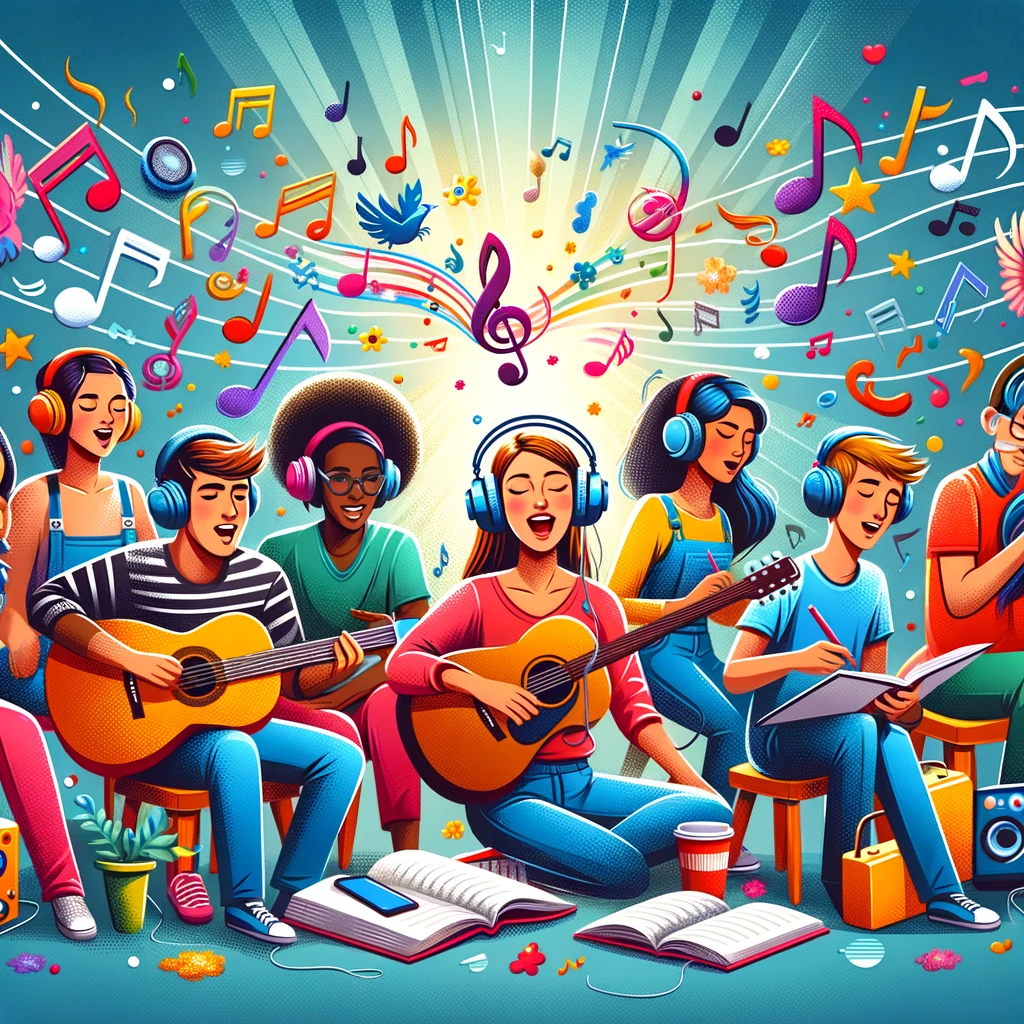
Language is the cornerstone of human connection, allowing individuals to communicate, share emotions, ideas, and knowledge. A robust vocabulary doesn’t just facilitate these interactions but enriches them, offering nuance and clarity. The process of building one’s vocabulary, however, is often misunderstood as a solitary exercise involving memorization of dictionary words. In reality, community interactions provide a dynamic and engaging platform to learn new words, understand their contexts, and apply them effectively. Learning vocabulary within a community not only aids personal growth but also enhances one’s ability to share and comprehend complex ideas, making it an essential life skill.
Community interactions, in essence, are exchanges between individuals or groups within a shared environment, such as social networks, educational institutions, workplaces, and cultural or religious gatherings. These interactions explore shared interests or activities, where language naturally evolves and vocabulary expands. The significance of community interactions in vocabulary building extends beyond mere word acquisition; it fosters deeper understanding and retention by providing real-world context and repeated exposure.
This journey of enhancing vocabulary through community doesn’t just belong to students or writers, but to anyone seeking to navigate today’s globalized society. A strong vocabulary opens doors, facilitating effective communication, boosting self-confidence, and enhancing professional prospects. Whether you’re conversing with colleagues, engaging in social events, or even consuming diverse media, a rich vocabulary enriches your experience and competence.
The Role of Community in Vocabulary Acquisition
Learning vocabulary within a community setting enhances the educational process by providing multiple contexts for communication. For example, in a book club, members discuss themes, characters, and narratives, which allows participants to encounter and utilize new terms within a storyline they understand. The benefits of such settings are manifold. Firstly, they provide real-life usage of words, moving beyond theoretical definitions. Secondly, speaking or writing in these groups offers repetition and practice, crucial for ingraining new vocabulary.
Moreover, community interactions often involve feedback and correction, essential components of language learning. When club members discuss an unfamiliar word, more experienced participants provide definitions or suggest better synonyms, which deepens understanding and memory. Importantly, the diverse perspectives within a community can introduce words from varied cultures or regions, significantly broadening one’s linguistic scope.
Informal Conversations as Vocabulary Builders
Informal gatherings, such as casual meet-ups with friends or family, are surprisingly fertile grounds for vocabulary development. Consider a group of friends sharing dinner; the conversation may span various topics like cuisine, current events, or travel. Here, individuals are likely to encounter and adopt slang, idiomatic expressions, or foreign phrases introduced by others. These terms often reflect cultural influences and language trends, offering a refreshingly contemporary lexicon to learn.
For instance, if a friend recently traveled abroad, they might bring back new words or phrases from that culture, enriching the vocabulary of everyone in the group. These casual settings lower the stakes and enhance comfort, making people more willing to try out new words without fear of judgment. Through these relaxed interactions, vocabulary-building becomes an ongoing, informal learning experience seamlessly integrated into everyday life.
Leveraging Digital Communities
In the digital age, online communities have become a powerful tool for vocabulary expansion. Platforms like social media, online forums, and virtual study groups are not just spaces for interaction but rich resources loaded with diverse language styles and expressions. Engaging in online communities essentially exposes individuals to varied kinds of jargon and specialized vocabularies ranging from technical to the artistic.
Participating in professional forums related to fields such as technology, medicine, or literature, for instance, can introduce an individual to industry-specific terminology. A tech forum, for example, might involve discussions around new software updates, where members frequently use technical terms and abbreviations. In such environments, newcomers can learn unfamiliar words through context, participation, and direct queries to more knowledgeable members.
| Community Type | Vocabulary Benefits |
|---|---|
| Book Clubs | Contextual learning and discussion of themes |
| Informal Gatherings | Exposure to slang and idioms |
| Online Forums | Access to specialized vocabulary |
Formal Education and Community Learning
Formal educational settings naturally provide a framework for vocabulary building, but when complemented by community interactions, the process is significantly enhanced. Study groups, project collaborations, and extracurricular activities within educational institutions are prime opportunities for students to engage with each other, swap insights, and broaden their vocabulary.
For example, during group projects, students must communicate ideas clearly and efficiently, often necessitating the use of precise and varied vocabulary. The collaborative nature of these projects means students are exposed to different perspectives and terminologies, often needing to explain or learn new terms from their peers. This practical application ensures that vocabulary is not just learned but understood and retained.
Cultural Events and Interactions
Cultural events, such as art exhibitions, concerts, and festivals, offer a unique platform for vocabulary enhancement. These settings expose individuals to artistic and cultural terminologies, enhancing their descriptive and expressive capabilities. Engaging with others at these events naturally leads to exchanging ideas and interpretations, often necessitating the use of new vocabulary to articulate thoughts effectively.
Consider attending a local art exhibition where the conversation might revolve around artistic techniques or thematic elements. Participants often find themselves drawing on more descriptive and varied vocabulary to discuss colors, emotions, and artist intentions. This setting encourages learning through observation and dialogue, turning these cultural interactions into educational experiences.
Conclusion: Embracing Community for Vocabulary Growth
In conclusion, community interactions stand as powerful allies in the journey of vocabulary development. By moving beyond the traditional solitary learning methods, individuals who engage with community settings benefit from real-world applications and contexts, enriching their linguistic abilities significantly. Through the discussions, feedback, and cultural exchanges facilitated by communities, vocabulary learning becomes an interactive, engaging, and sustained activity.
The key takeaway for readers is the importance of actively seeking and participating in communities, whether physical or digital, to nurture their language skills continually. By integrating into diverse groups, one can naturally absorb new vocabulary, enabling more nuanced and effective communication. Therefore, consider finding a local group or an online platform that aligns with your interests and commit to participating regularly. Your vocabulary will not only expand, but your confidence in using it will grow manifold.
Embrace this practical leap toward language mastery, and witness the transformation it brings to your personal and professional life. Start today by identifying a community or gathering that intrigues you, and initiate a conversation with the goal of learning something new.
Frequently Asked Questions
1. How can community interactions help in building vocabulary?
Community interactions are a treasure trove for learning new vocabulary because they provide real-world contexts for words and expressions. When you engage in conversations with others, you’re exposed to different perspectives, cultural nuances, and terminologies that you might not encounter otherwise. For instance, attending community events, joining local clubs, or participating in social gatherings can introduce you to the language unique to those groups. This dynamic environment encourages you to learn not only the meanings of new words but also their appropriate usage. Additionally, listening to how others articulate their thoughts or emotions can inspire you to integrate new expressions into your own vocabulary. Engaging actively in these settings means you’re more likely to remember and understand words in a meaningful context, rather than through rote memorization.
2. What role does listening play in vocabulary building through community interactions?
Listening plays a crucial role in vocabulary acquisition and is often the first step in learning any new language skill. Through attentive listening in community interactions, you absorb not just the specifics of word usage but also the subtleties of tone, pitch, and rhythm. For example, hearing a diverse range of speech patterns and accents can aid in recognizing different pronunciations and colloquial terms. By paying attention to how others discuss topics and express ideas, you also gain insight into the necessary vocabulary to communicate effectively within similar contexts. This skill is significant as it allows you to catch new words and phrases or revisit known words used in novel ways. Furthermore, listening helps you make connections with existing knowledge, facilitating learning retention and aiding in the practical application of your expanding vocabulary.
3. Is interaction with the community more beneficial than traditional study methods like reading and memorization?
Absolutely, interaction with the community offers unique advantages that purely academic study methods often lack. Traditional methods, like reading and memorization, are vital components of vocabulary learning because they establish a foundational knowledge base. However, community interaction gives context to that base, ensuring it is not only theoretically understood but also practically applicable. Community engagements compel you to use language interactively, which significantly aids in solidifying your understanding of words. They create scenarios where you have to think on your feet and apply new vocabulary in real-time conversations. Additionally, the social aspect encourages repeated exposure and practice, reinforcing memory. This comprehensive approach allows you to assimilate new words more deeply, effectively, and enjoyably. Balancing traditional study with dynamic interactions leads to more robust language acquisition.
4. How can someone overcome nervousness or fear of making mistakes when trying to learn new vocabulary through community interactions?
It’s completely normal to feel anxious about making mistakes, especially when learning new vocabulary in the presence of others. A constructive way to overcome this fear is to view interactions as learning opportunities rather than performance scenarios. Understand that everyone makes mistakes, and they are essential for learning and improving. Start by participating in smaller, more comfortable group settings where you feel less pressure. You can also prep yourself with some vocabulary related to the event or discussion topic you’re attending; this familiarity can boost confidence. Additionally, engage with empathetic, patient individuals who are willing to help you learn. Most importantly, remind yourself that your community likely appreciates your effort to engage and use new language. Mistakes, when made frequently and corrected, pave the way toward mastery. Keeping a relaxed attitude helps you remain open to feedback and enhances your learning experience.
5. What strategies can be employed to maximize vocabulary gains during community interactions?
Maximizing vocabulary gains during community interactions involves active engagement and a strategic approach. First, immerse yourself in diverse settings—volunteer at local events, join interest-based groups, or attend community workshops to expose yourself to varied language uses. Take note of any unfamiliar words or phrases. Don’t hesitate to ask for clarifications; people generally enjoy teaching and sharing knowledge. Remember to jot down new vocabulary, along with any context cues, and review these notes regularly. Moreover, practice using new words in different settings to ensure they become part of your active vocabulary. To reinforce what you learn, share newly acquired terms or concepts with friends or family outside of those community contexts, teaching them can solidify your understanding. Lastly, remain patient and persistent—learning vocabulary is an ongoing process, and each interaction plays a valuable part in your language journey.